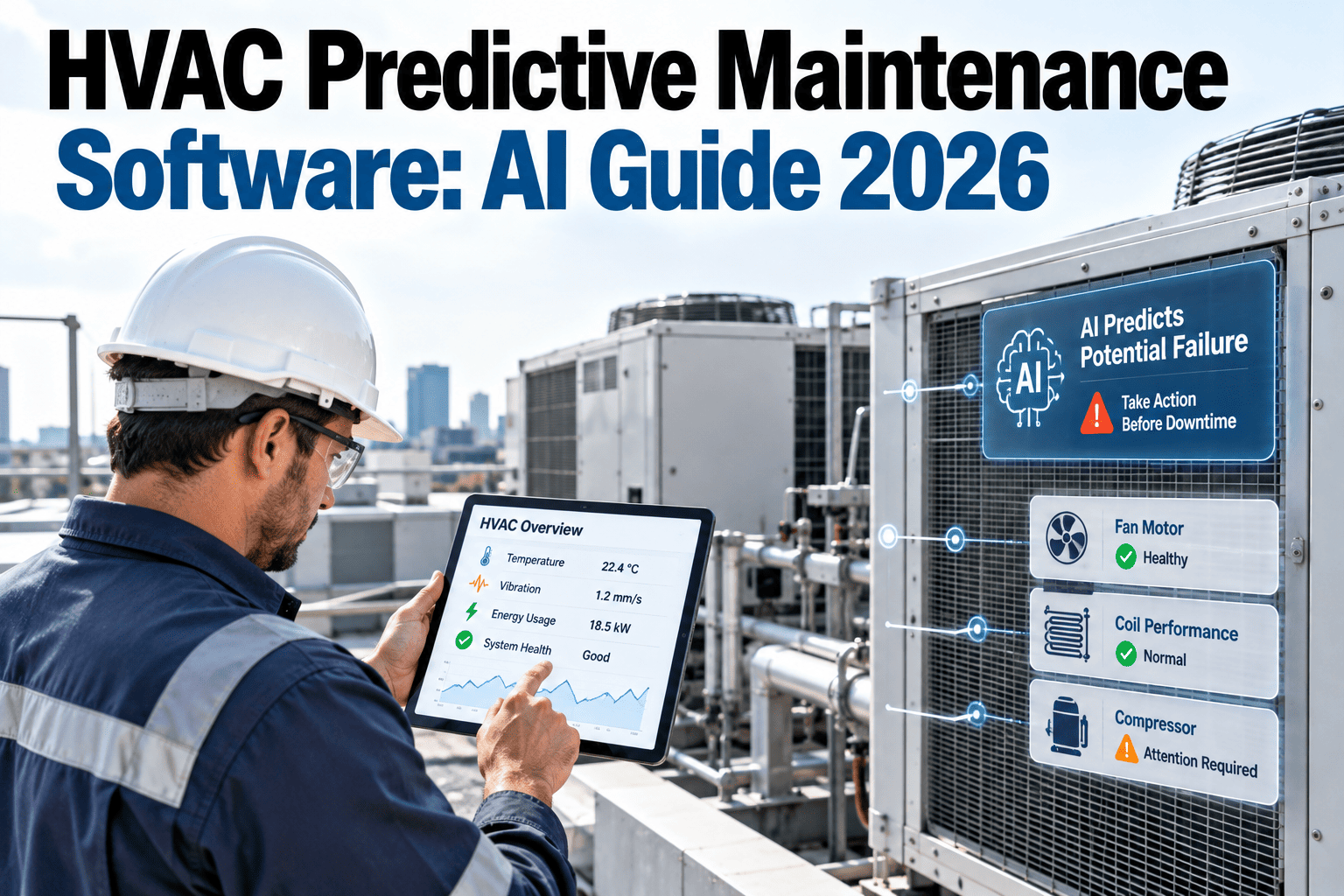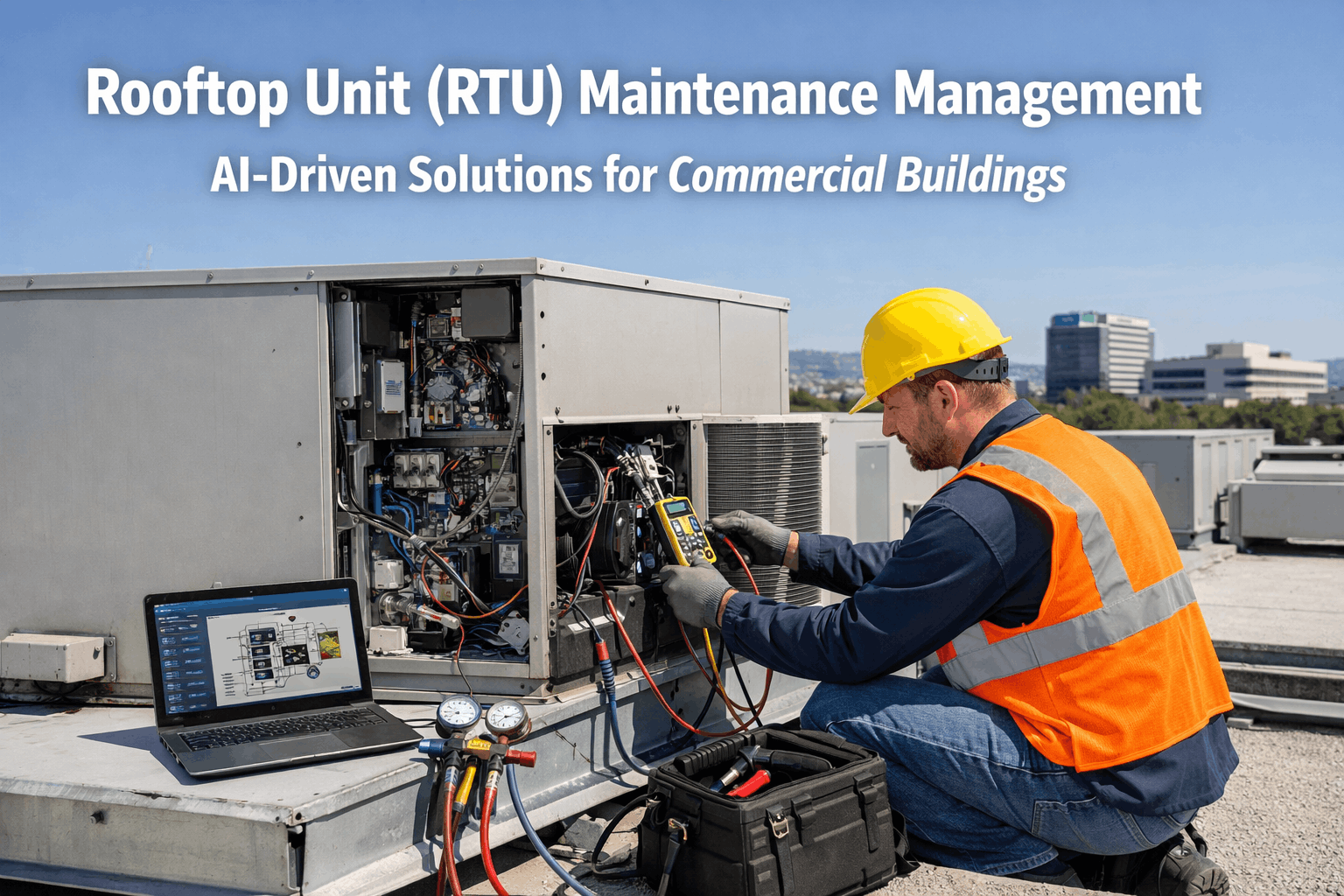
Rooftop units are the workhorses of commercial climate control — quietly conditioning the air for 60% of commercial buildings across the United States. They're self-contained, they're powerful, and they're almost completely invisible to the people responsible for maintaining them. Mounted on rooftops and inspected only during scheduled PM visits, RTUs spend the vast majority of their operating hours unmonitored. Belts wear, economizer dampers stick, refrigerant charges drop, and condenser coils foul — all while generating no alarm, triggering no work order, and producing no complaint until something fails completely and tenants start calling. AI-driven RTU maintenance management changes this equation entirely, replacing the rooftop visit cycle with continuous remote monitoring that detects developing faults weeks before breakdown and prevents the emergency repairs that drain maintenance budgets and erode tenant relationships.
The Rooftop Blind Spot Costing Facilities Managers Millions
Unlike chiller plants or building automation system components installed at eye level, RTUs sit on rooftops — out of sight and largely out of mind. Most commercial buildings operate on quarterly PM schedules that give each RTU roughly 3 to 4 hours of human attention per year. During the other 8,740+ operating hours, compressor amp draws creep upward, belt tension slackens, economizer actuators bind, and condensate drains clog — all invisible to a maintenance team that has no data and no reason to climb to the roof.
Research confirms this neglect has real consequences. Most building owners resort to reactive maintenance only, and the majority remain unaware of RTU health status until catastrophic failure occurs. A single compressor replacement runs $3,000 to $12,000 in parts and labor. An emergency after-hours call during a summer heatwave often costs 2 to 3 times the standard rate. Multiply these costs across a portfolio of 10, 50, or 200 rooftop units, and the financial argument for AI-driven monitoring becomes self-evident.
If you're managing commercial buildings with aging RTU fleets and want to stop paying for surprises, get support and connect remote RTU monitoring to automated maintenance workflows today.
The 5 RTU Failures AI Detects Before They Become Disasters
Each of these failure modes follows a predictable degradation trajectory — producing measurable data signals weeks or months before the equipment stops working. AI monitoring reads those signals continuously. Traditional scheduled maintenance misses them entirely.
iFactory's AI monitoring platform tracks all five of these failure patterns across your entire RTU fleet in real time. Book a demo to see how fault detection alerts flow directly into scheduled work orders without manual triage.
Stop Climbing to the Roof to Find Out What's Already Broken
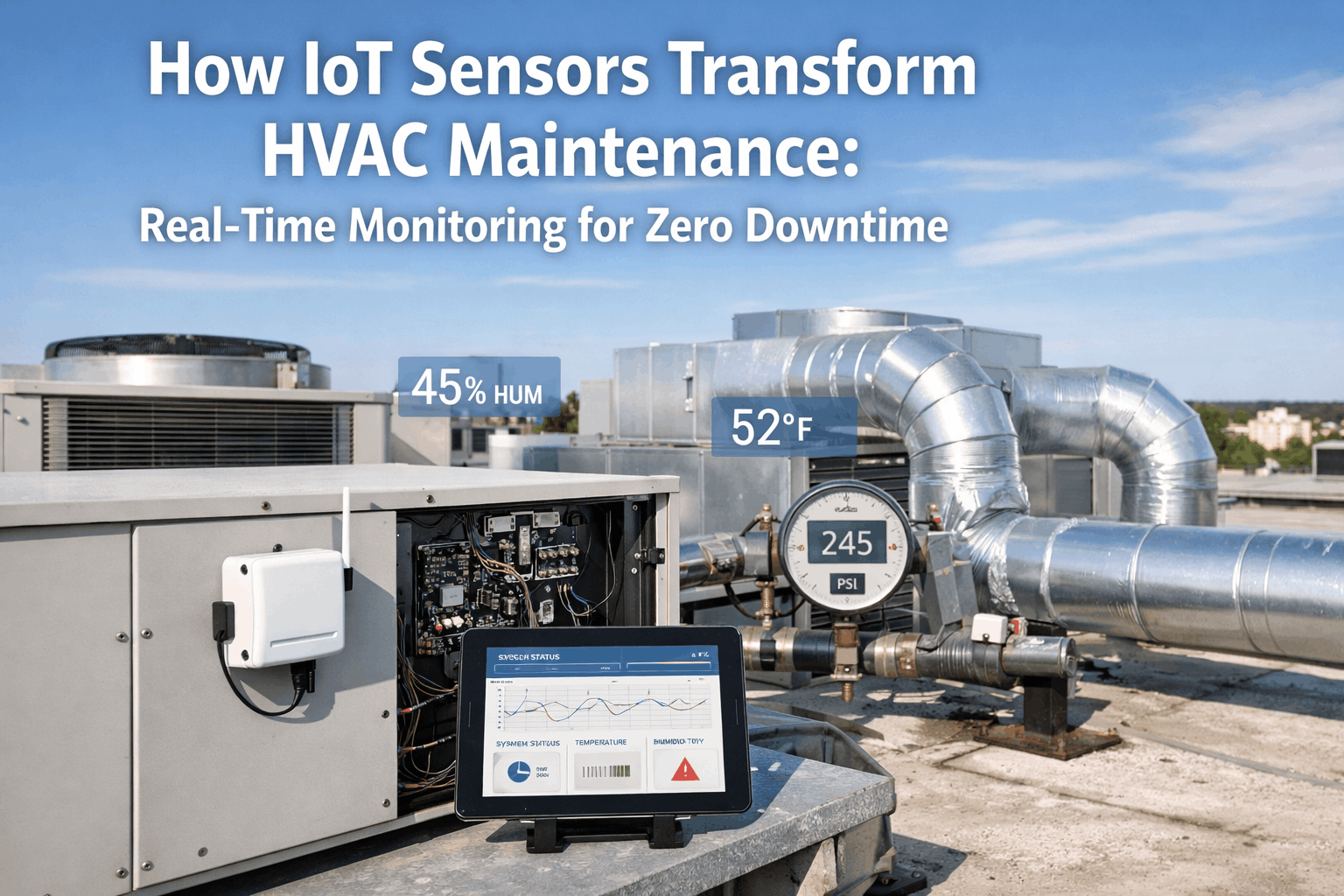
iFactory connects IoT sensors on your RTU fleet to AI-driven fault detection and automatic CMMS work order generation — giving you rooftop visibility from the control room, 24 hours a day.
AI-Driven RTU Maintenance: From Sensor Signal to Resolved Work Order
The architecture of AI-driven RTU maintenance management has three interconnected layers — sensing, analysis, and action. Each layer depends on the next. Sensors without analysis produce data overload. Analysis without action produces reports nobody reads. The complete loop converts a developing fault into a resolved maintenance event with minimal human involvement at each transition.
Want to see the full flow from sensor alert to resolved work order in a live demo environment? contact support and our team will walk through the complete RTU monitoring workflow with your building portfolio in mind.
Reactive vs. Calendar PM vs. AI-Driven: RTU Cost Comparison
The three maintenance strategies available to commercial building operators produce dramatically different outcomes across the same RTU fleet. The numbers below reflect documented industry data on a reference portfolio of 20 rooftop units across a 150,000 sq ft commercial building.
| Metric | Reactive Only | Calendar PM | AI-Driven (iFactory) |
|---|---|---|---|
| Annual Emergency Calls | 8–14 per year | 4–7 per year | 1–2 per year |
| Avg. Repair Cost Per Incident | $2,800–$8,500 | $1,200–$4,000 | $300–$900 |
| First-Time Fix Rate | 55–65% | 65–75% | 84–91% |
| Average Equipment Life | 10–13 years | 14–17 years | 18–22+ years |
| Energy Efficiency Over Time | Degrades 3–5%/yr | Degrades 1–2%/yr | Maintained at peak |
| Rooftop Visits Required | Unpredictable emergency | 4 scheduled/year | Condition-based only |
| Fault Detection Lead Time | At failure | At next PM visit | 10–30 days before failure |
Managing RTU Fleets Across Multiple Buildings
Single-building RTU monitoring delivers significant value on its own. But the compound benefit of AI-driven maintenance becomes truly transformative when scaled across a multi-building commercial portfolio. Facility managers overseeing 10, 50, or 200 RTUs across dozens of properties face a version of the same impossible task — they cannot physically visit every unit, cannot review every alert manually, and cannot build a complete picture of fleet health from spreadsheets and quarterly inspection reports.
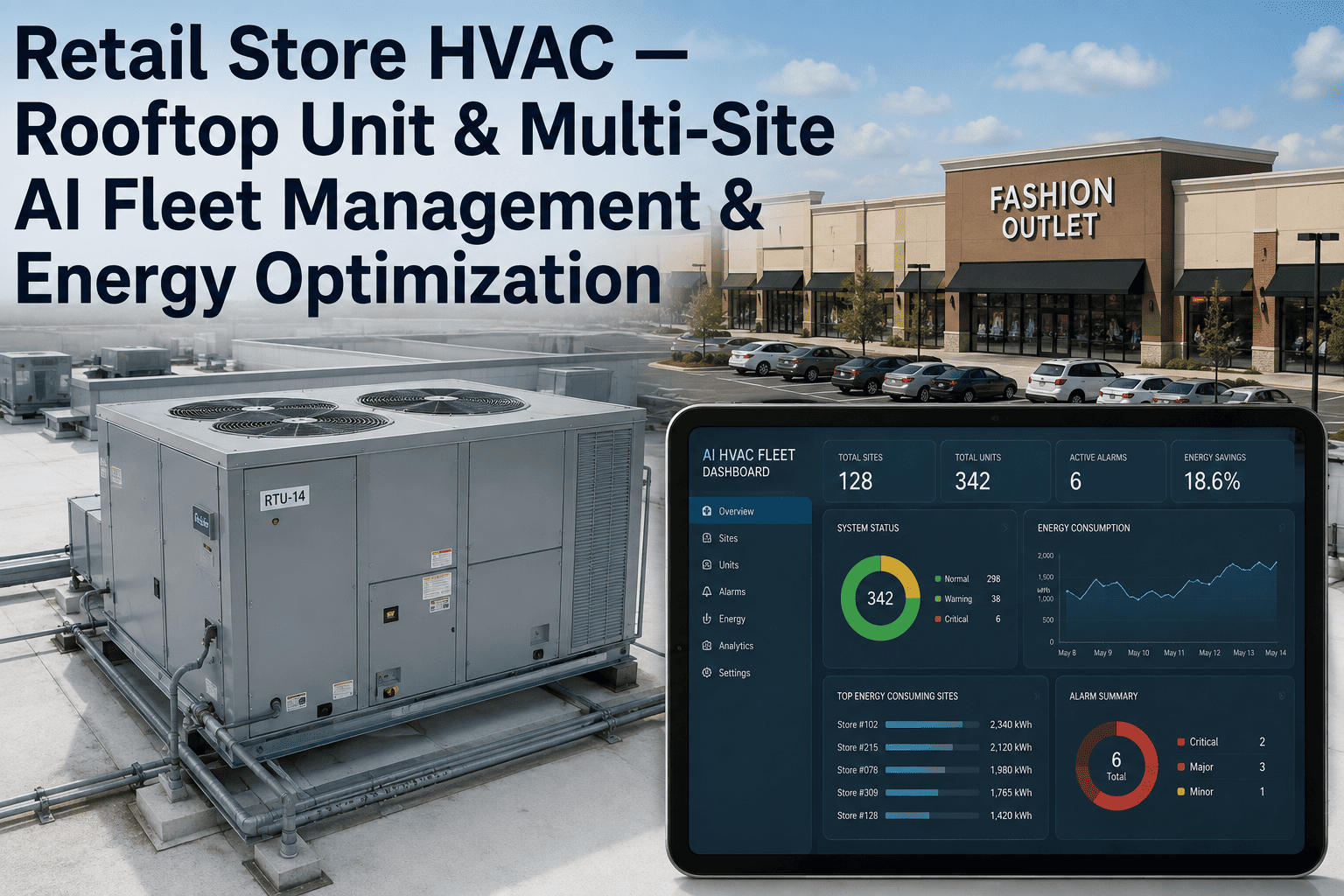
AI monitoring platforms like iFactory aggregate data from every RTU across every property into a single fleet-level dashboard. Fault severity scoring automatically surfaces the units requiring immediate attention — whether that's a compressor in Building 7 showing a 12-day failure trajectory or a fouled condenser coil in Building 3 driving a 22% efficiency drop. Portfolio-level benchmarking also identifies units performing below their fleet peers, guiding capital replacement decisions with real performance data instead of age-based assumptions.
Managing RTUs across multiple sites and want to see how a unified AI dashboard transforms visibility? Book a demo with iFactory and we'll show you fleet-level RTU management built for your portfolio size.
Your RTUs Are Failing in Slow Motion. AI Sees It Coming.
iFactory gives every commercial building operator the power to monitor RTU health remotely, receive fault alerts weeks before breakdown, and dispatch technicians with a complete diagnosis — without a single unscheduled rooftop visit.