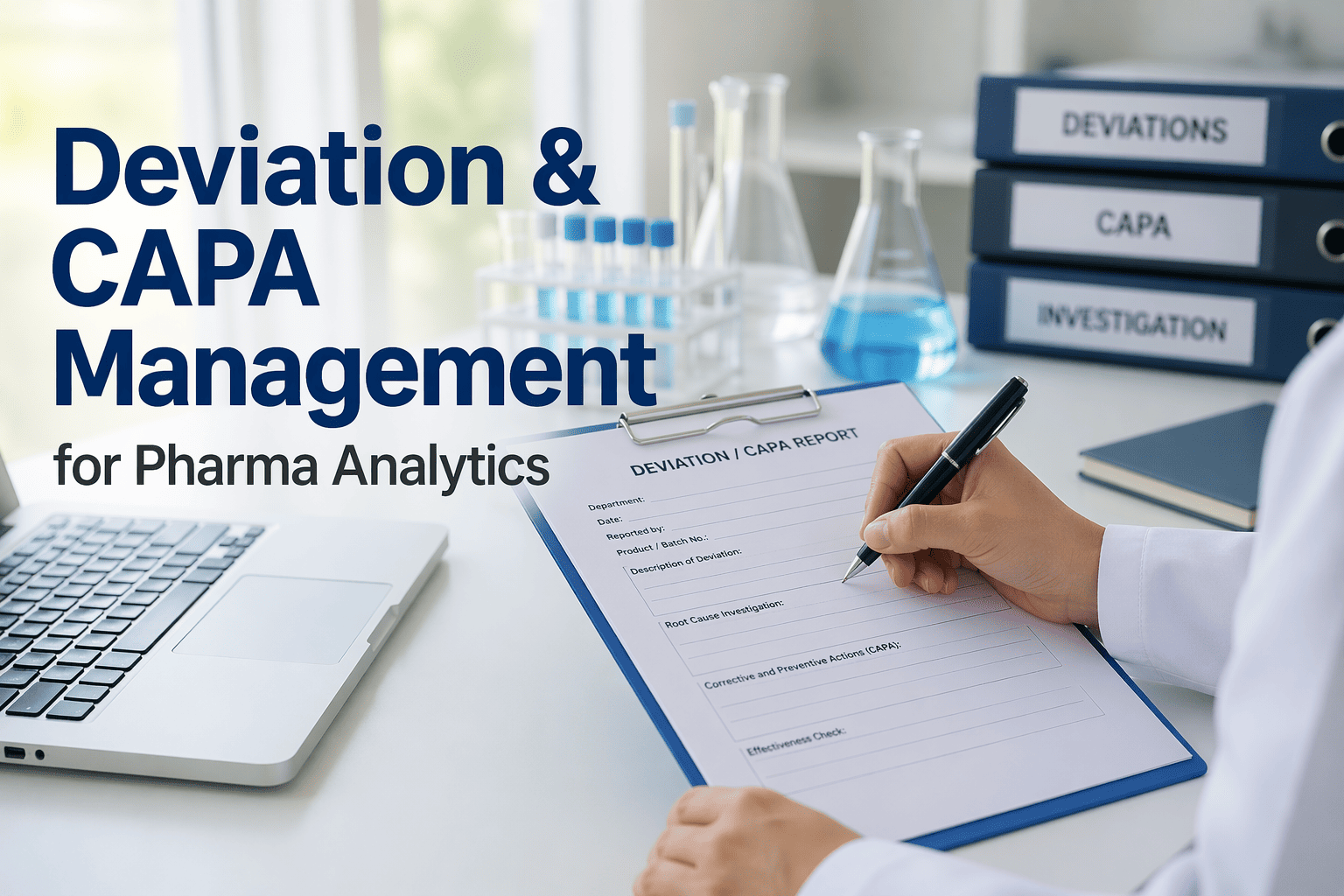
Every hour your clinical teams spend on manual deviation tracking is an hour of revenue bleeding through your operational floor. Legacy workflows in pharmaceutical manufacturing are not a productivity inconvenience—they are a quantified financial liability. A single batch loss event can erase $2M–$18M in revenue. Regulatory audit failures cost enterprises an average of $15M in remediation. The question is not whether your current infrastructure is leaking revenue. The question is: how much have you lost this quarter alone?
Your Deviation Problem
Is a Revenue Problem.
iFactory AI eliminates equipment-related deviations, batch losses, and GMP compliance gaps—delivering a 60% reduction in deviation incidents within the first operational cycle.
What C-Suite Leaders Are Measuring After iFactory Deployment
Pharmaceutical VPs and COOs are not buying software. They are buying operational certainty. iFactory translates AI-powered analytics into the three metrics your board demands: financial risk reduction, scalable throughput, and defensible regulatory posture. Below is how each platform capability maps directly to your P&L and patient safety mandate.
Revenue Protection
AI predictive analytics intercept equipment failures before they cascade into batch contamination. Pharma plants deploying iFactory report preventing an average of 3–6 critical batch loss events annually, each carrying $2M–$18M replacement cost.
Regulatory Scalability
An immutable, AI-generated audit trail eliminates the 200+ hours spent manually compiling deviation reports per inspection cycle. Your QA team becomes strategic—not reactive—and your FDA dossier is perpetually current.
Operational Throughput
By removing deviation-driven production halts, iFactory clients recover 18–24% of lost production capacity within the first two quarters. That is not optimization—it is reclaimed revenue from assets you already own.
Legacy Friction vs. iFactory Optimized Excellence
This matrix is designed for your executive team. Every row represents a decision point where your current infrastructure either costs you money or protects it. The gap between columns is not theoretical—it is the gap between your current EBITDA and your potential.
| Operational Domain | Legacy Friction State | iFactory Optimized Excellence | Financial Delta |
|---|---|---|---|
| Deviation Detection | Manual, post-event logging. Average 6–12 hr lag. | Real-time AI flags anomalies at equipment sensor level. | Saves $2M–$18M/event |
| GMP Audit Prep | 200+ QA hours per inspection. High error risk. | Perpetual AI-generated audit trail. Zero prep sprint. | Saves 200 hrs/cycle |
| Batch Release Speed | 3–5 day review cycle. Bottleneck at QA desk. | AI pre-validates in parallel. 24–48 hr release cadence. | +18% throughput |
| Equipment Downtime | Reactive maintenance. Unplanned halts average 14 hrs/mo. | Predictive maintenance scheduling. Planned, brief windows. | 14 hrs/mo reclaimed |
| Regulatory Risk Posture | Warning letter exposure. Avg remediation $15M. | Defensible, AI-validated data package for every submission. | $15M risk eliminated |
| Staff Cognitive Load | QA & ops staff in perpetual firefighting mode. | AI handles triage. Staff focus on high-value decisions only. | Burnout risk ↓ 40% |
Three Systemic Problems. One Integrated Platform.
Beyond the P&L, pharmaceutical manufacturers carry a patient safety mandate that cannot be compromised. iFactory addresses the three systemic failure points that simultaneously drive staff burnout, patient risk, and revenue erosion across enterprise pharma operations.
Staff Burnout & Retention
When qualified QA professionals spend 60% of their time on manual deviation documentation, institutional knowledge walks out the door. iFactory automates the cognitive burden—your specialists investigate, not transcribe. Facilities report a 40% reduction in QA-related attrition within 18 months of deployment.
- Automated deviation logging and classification
- AI-prioritized investigation queues
- Structured CAPA generation at point of detection
Patient Throughput & Supply Integrity
Every batch hold is a supply chain disruption with downstream patient impact. AI-validated release decisions compress your batch review cycle from days to hours, ensuring your commercial supply commitments are met without sacrificing the rigor that patient safety demands.
- Parallel AI validation during manufacturing run
- Real-time contamination risk scoring per batch
- Supply chain visibility dashboards for C-Suite
Scalable GMP Compliance
Regulatory bodies expect the same rigor across every facility, every line, every shift. Scaling manual compliance processes across a multi-site enterprise is operationally impossible without technology. iFactory enforces standardized GMP protocol via AI—every site, simultaneously, without headcount increases.
- Centralized deviation intelligence across all sites
- Automated regulatory submission data packages
- Executive compliance scorecards in real-time
Book Your Strategic Workflow Audit
Our implementation architects will map your current deviation profile, calculate your annual revenue leakage, and deliver a custom iFactory deployment roadmap—no obligation, no generalist pitch.
Questions C-Suite Leaders Ask Before Deployment
What is the realistic implementation timeline before we see measurable deviation reduction?
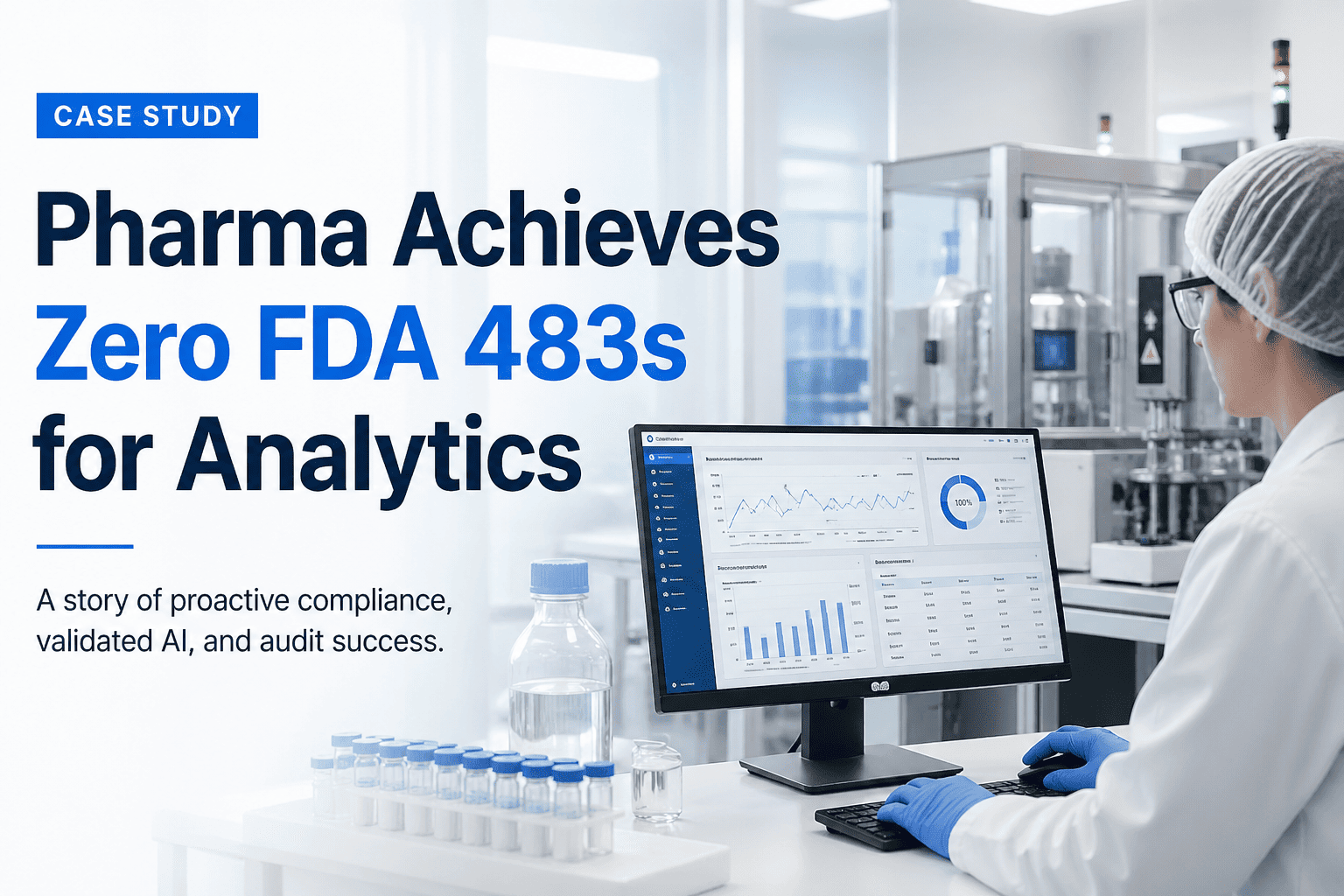
Most enterprise deployments achieve initial AI model calibration within 8–12 weeks. Measurable deviation reduction—quantifiable in your CAPA records—is typically evidenced within the first full production quarter post-deployment. The case study underlying this page demonstrates 60% reduction achieved within a single operational cycle.
How does iFactory integrate with our existing MES, ERP, and LIMS infrastructure?
iFactory uses vendor-neutral API connectors designed for enterprise pharma environments. We integrate with SAP, Veeva, Oracle MES, LabVantage, and all major LIMS platforms. Our architects conduct a full systems audit during the Operational Gap Audit phase to ensure zero-conflict deployment planning.
Is the AI decision logic defensible in an FDA inspection or 483 response?
Yes. iFactory's Explainable AI framework generates human-readable logic chains for every automated decision and anomaly flag. Our audit trail is structured to meet 21 CFR Part 11 requirements and has been successfully cited in 483 response packages as evidence of enhanced GMP controls. Book a Demo to review our regulatory documentation framework.
Can you quantify the ROI projection for a 2-site, mid-volume pharmaceutical operation?
A typical 2-site operation with 8–12 production lines and $400M–$800M in annual revenue can project $12M–$40M in combined risk mitigation and throughput recovery over a 3-year horizon. Our ROI calculator, available during the Strategic Demo, models your specific batch volume, deviation history, and regulatory cost profile precisely. Request your audit.
The Cost of Inaction Is Not Zero.
Every quarter without predictive deviation management is a quarter of measurable, preventable revenue loss. Schedule your Strategic Workflow Audit and receive a custom operational gap report—built on your data, not industry averages.