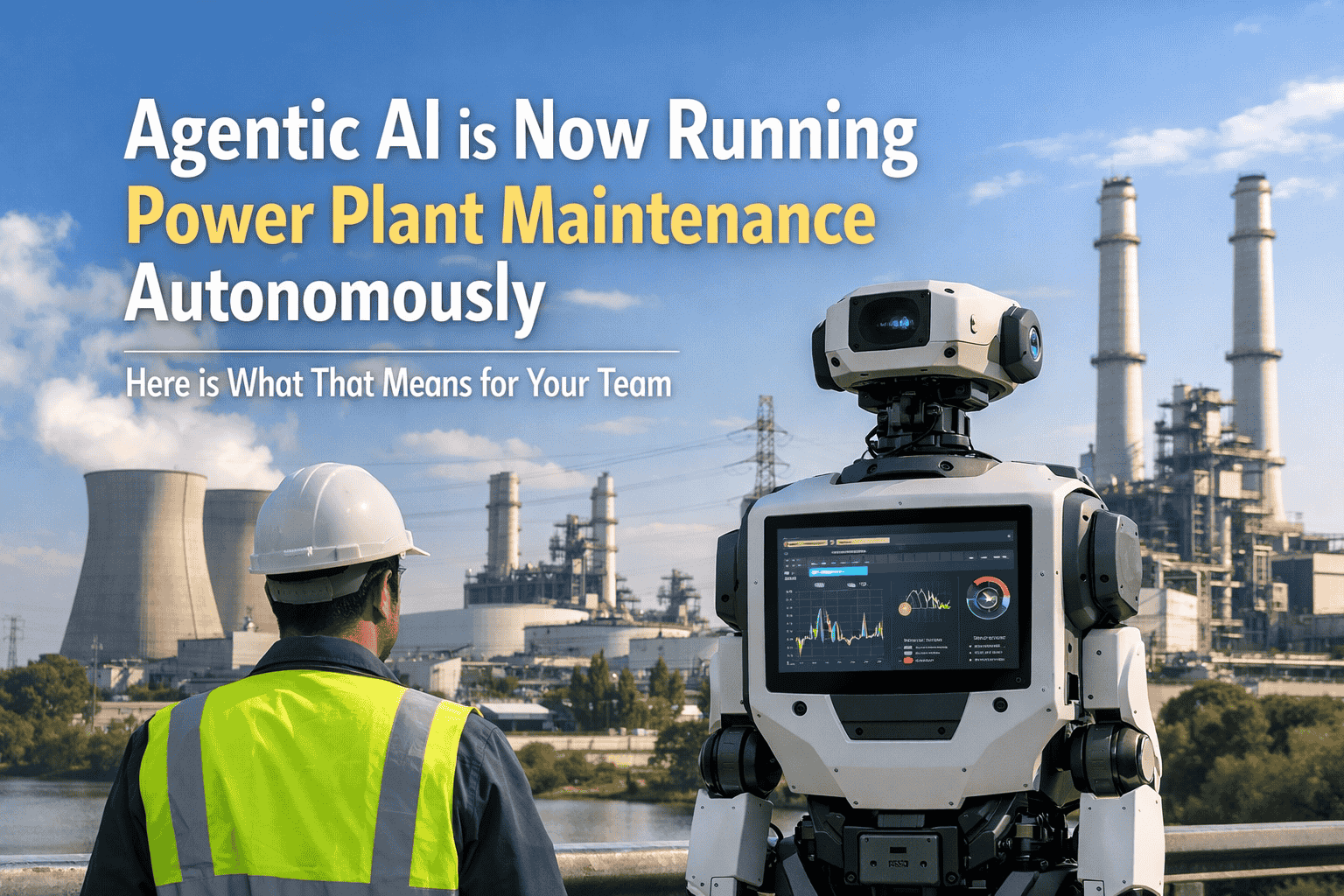
Agentic AI in power plants: autonomous maintenance is already here
By Riley Quinn on March 20, 2026
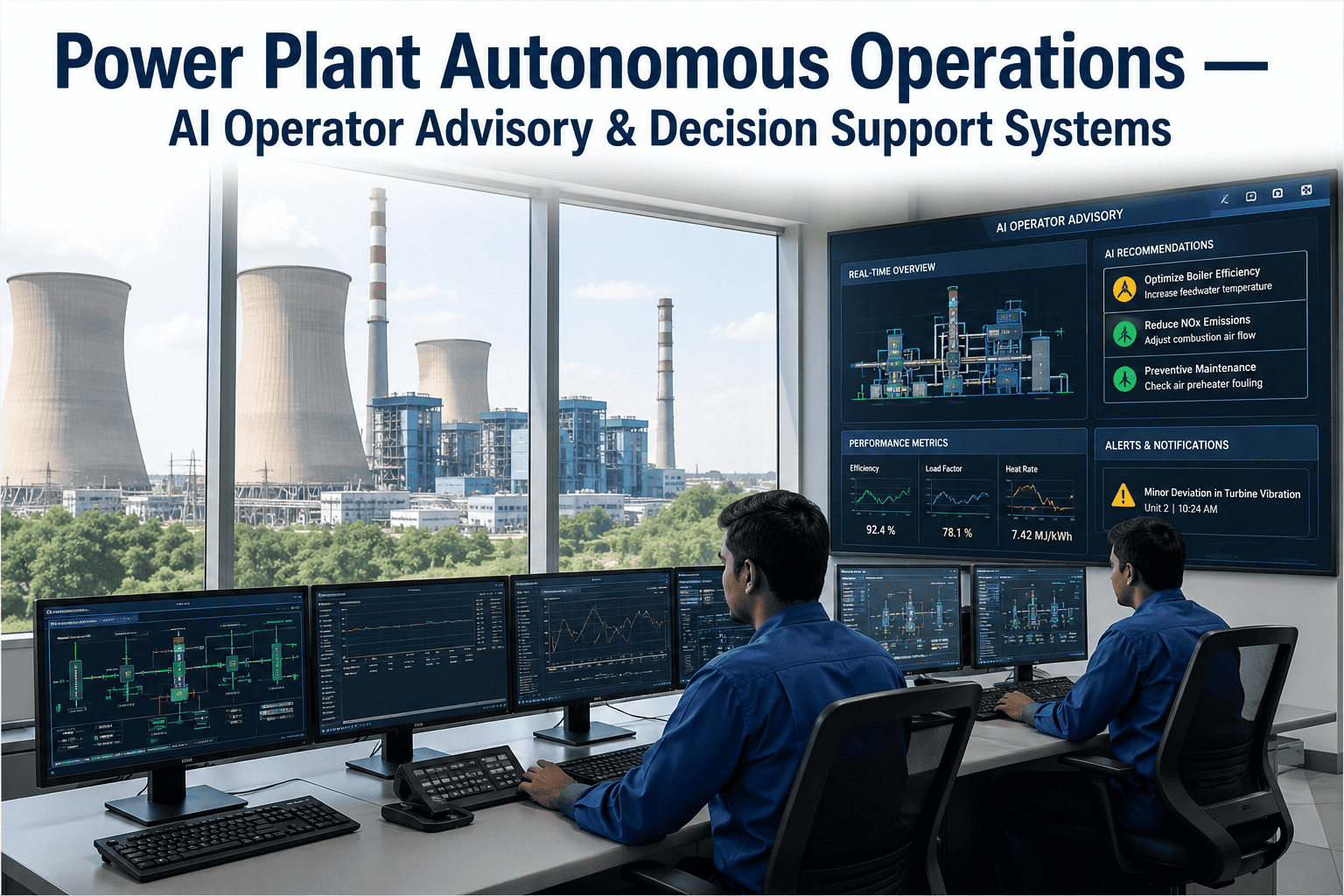
Your control room alert fires at 3 AM. A bearing is showing abnormal vibration. By the time you read it, the AI has already diagnosed the root cause, checked parts inventory, scheduled a technician for Tuesday's planned outage, and updated your ERP. You didn't need to do anything. Welcome to the new reality—where AI doesn't just predict problems, it solves them. This isn't coming in 2030. It's running in power plants right now.
The Shift from Reactive to Autonomous
How maintenance is evolving — and what it means for your team
Yesterday
Reactive
Fix it when it breaks
Today
Predictive
Know when it will break
Now Emerging
Agentic
Prevent and fix autonomously
$14.9B
Agentic AI in energy by 2035
36.6%
Annual market growth rate
33%
Enterprise apps with agentic AI by 2028
15%
Daily decisions made autonomously
What Makes "Agentic" Different from Regular AI?
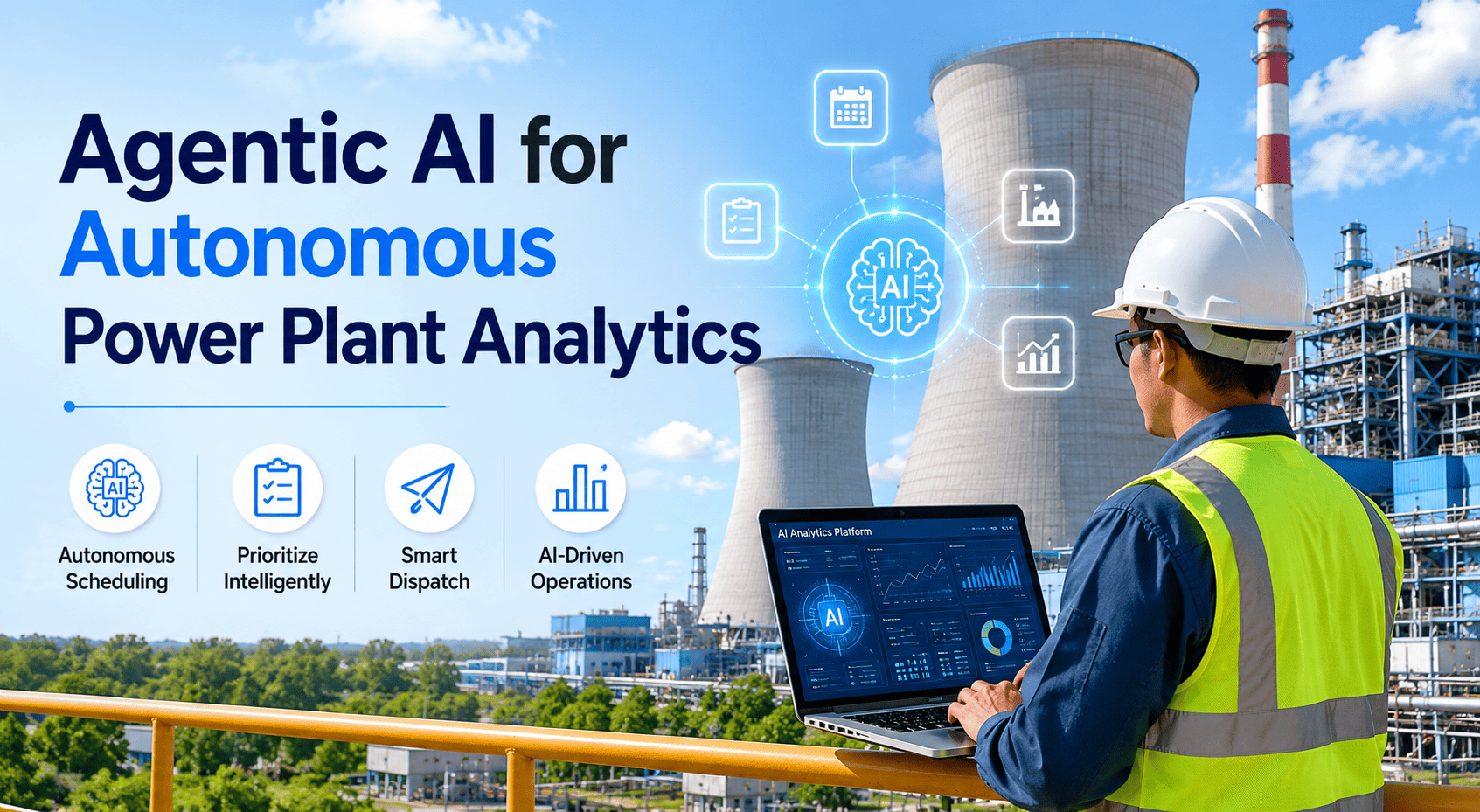
You already have AI—dashboards, alerts, analytics. But that AI waits for you to act. Agentic AI doesn't wait. It reasons through problems, makes decisions, and executes actions on its own.
Traditional AI
Detects anomaly, sends alert
Human reads alert, decides action
Human schedules maintenance
Human coordinates parts & crew
VS
Agentic AI
Detects anomaly, diagnoses root cause
Checks inventory, confirms parts
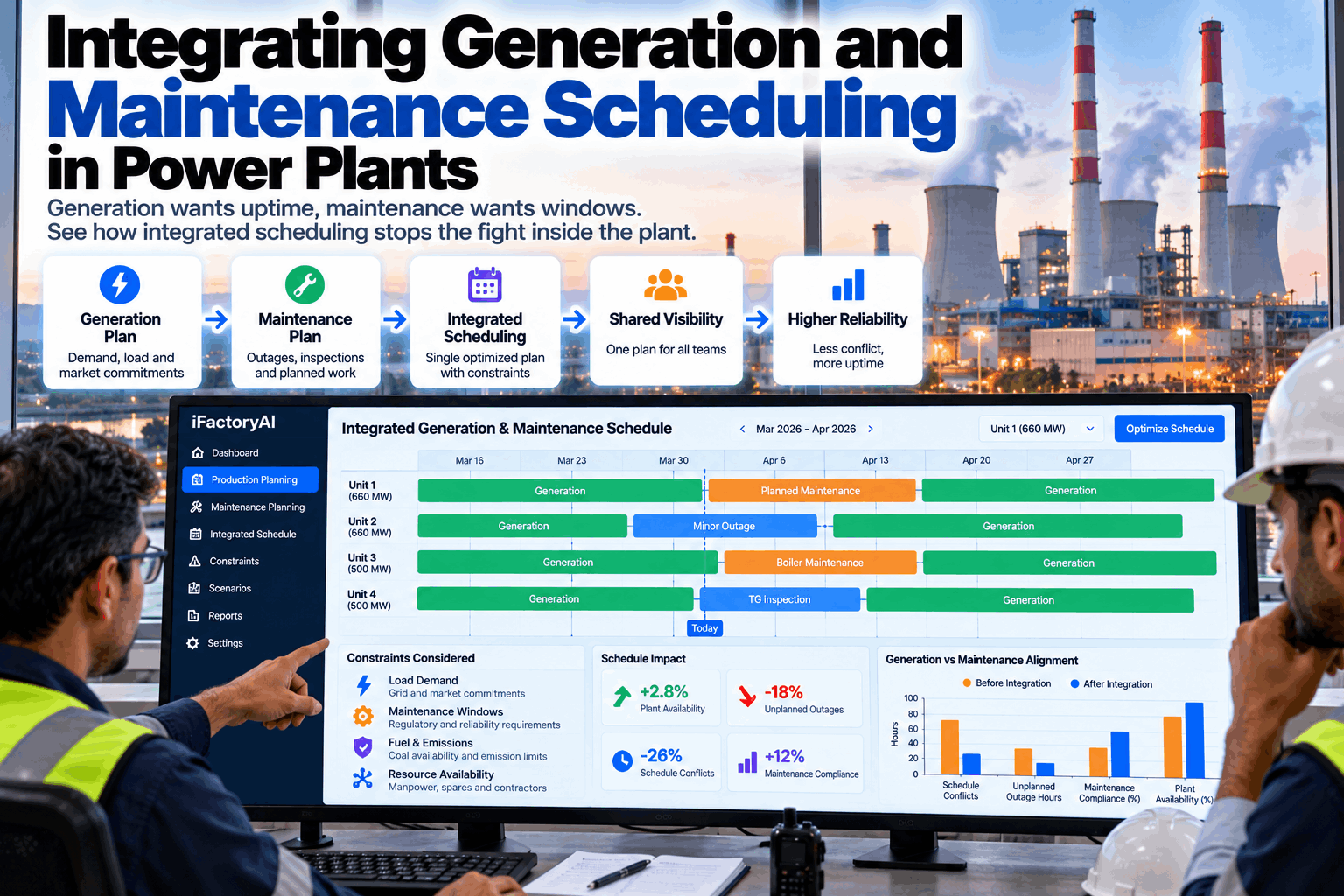
Schedules during next outage window
Assigns technician, updates systems
Want to see how autonomous scheduling works in practice? Book a live demo.
What This Actually Does in Your Plant
Self-Healing Responses
When the system detects grid stress or equipment strain, it autonomously adjusts parameters—rerouting power, reducing load, or modifying operations to prevent failures before they happen.
11% reduction in outages in European grid trials
Predictive Spare Parts
AI forecasts component end-of-life and automatically queues parts orders—or even triggers additive manufacturing jobs for custom components. No more waiting for procurement cycles.
40-60% reduction in inventory costs
Autonomous Work Orders
The system generates work orders, assigns the right technician based on skills and availability, and coordinates with production schedules—all without you opening a ticket.
72-hour advance failure prediction with 95% accuracy
Continuous Optimization
Digital twins simulate operational scenarios while AI agents coordinate across asset health, process optimization, and maintenance strategy—talking to each other to find the optimal balance.
10-15% lower operating costs with autonomous optimization
Ready to Move from Alerts to Autonomous Action?
iFactory's AI platform connects your existing sensors, SCADA, and CMMS—then adds the decision-making layer that turns data into action without manual intervention.
Let's be direct: agentic AI changes your team's work, but it doesn't replace your team. The shift is about what humans spend time on—not whether humans are needed.
How roles are evolving
Before
Reading alerts and triaging priorities
Now
Reviewing AI decisions and handling exceptions
Before
Manually scheduling and coordinating crews
Now
Validating automated schedules, overriding when needed
Before
Chasing down parts availability
Now
Approving auto-generated procurement requests
Before
Fighting fires, reactive problem-solving
Now
Strategic planning, reliability engineering, AI governance
"The goal isn't replacing operators but empowering them with AI tools that amplify their capabilities. The future of maintenance isn't about replacing human expertise—it's about preserving it, scaling it, and making it available to every operator, every shift, at every plant."
— UptimeAI Industry Research, 2025
Frequently Asked Questions
Will agentic AI replace our maintenance technicians?
No. Agentic AI handles the routine decision-making—prioritization, scheduling, coordination—so your technicians can focus on the work that actually requires human judgment: complex diagnostics, safety-critical repairs, and continuous improvement. Think of it as a highly capable assistant, not a replacement.
What if the AI makes a wrong decision?
Modern agentic systems operate at "constrained autonomy"—they handle routine issues independently while escalating complex or safety-critical decisions to human operators. You set the boundaries, and the AI operates within them. Every action is logged for audit and review.
Do we need to replace our existing CMMS or SCADA systems?
No. Agentic AI platforms are designed to layer on top of your existing infrastructure—pulling data from SCADA, IoT sensors, historians, and CMMS, then pushing decisions back into those systems. Integration, not replacement.
How long does implementation take?
Most plants see initial autonomous capabilities within 8-12 weeks, starting with specific use cases like bearing monitoring or heat exchanger optimization. Full-scale deployment typically takes 6-12 months depending on infrastructure complexity and integration scope.
Is this technology proven or still experimental?
It's operational today. The agentic AI in energy market reached $656 million in 2025 and is projected to hit $14.9 billion by 2035. Major utilities and power producers are already running these systems in production environments.
Stop Reading Alerts. Start Reviewing Decisions.
iFactory brings agentic AI to your existing plant infrastructure—turning sensor data into autonomous maintenance actions while keeping humans in control of what matters.