Underground gas storage facilities — salt caverns, depleted reservoirs, and aquifer fields — are under more operational pressure today than at any point in the past two decades. LNG export obligations, seasonal demand volatility, aging injection compressors, and tightening PHMSA integrity management regulations have made the fixed-schedule, manual-inspection approach to storage management economically unsustainable. The operators who close that gap first will carry a durable cost and reliability advantage that compounds every operating year. AI gas storage optimization underground is what closes it — continuously, automatically, and weeks before a compressor failure or regulatory violation surfaces Need see how iFactory connects to your existing SCADA infrastructure? Book a Demo to get your first asset health scores within the first operating cycle.
AI Gas Storage Optimization · Underground Facilities · Midstream Intelligence
Underground Gas Storage Is No Longer a Static Scheduling Problem. AI Makes It Dynamic.
iFactory AI connects subsurface telemetry, compressor diagnostics, and market demand signals into a unified optimization engine — so injection, withdrawal, and maintenance decisions are driven by live data, not fixed calendars or seasonal guesswork.
$4.8B
Global underground gas storage market by 2027
15–22%
Operating cost reduction with AI-driven injection scheduling
72 hrs
Advance compressor failure warning with AI predictive maintenance
60%
Reduction in manual regulatory compliance documentation time
The Problem With Traditional Operations
Why Traditional Underground Storage Management Falls Short in 2025
For decades, underground gas storage was governed by seasonal calendars, manual pressure surveys, and conservative capacity buffers built to absorb uncertainty operators couldn't model. Natural gas markets now experience intraday price volatility that makes hourly optimization economically meaningful. LNG export obligations require drawdown decisions days in advance. And the infrastructure itself — much of it built in the 1970s and 1980s — is aging into a failure risk profile that scheduled maintenance intervals cannot manage.
01
Fixed Seasonal Injection Schedules
Static seasonal plans cannot respond to intraday Henry Hub price spikes, LNG export nomination changes, or unexpected pipeline curtailments. Operators executing fixed schedules leave millions in arbitrage value on the table every operating year.
$1.5M–$4M left uncaptured per 10 Bcf field annually
02
Periodic Surveys Miss Developing Failures
Manual inspection schedules create gaps of weeks or months between condition assessments. Subsurface integrity events — casing corrosion, pressure front anomalies, gas migration — develop on timescales that scheduled visits cannot catch in time.
Failures develop between inspection windows
03
Reactive Compressor Maintenance
Injection and withdrawal compressors that fail during peak demand periods create cascading supply obligation breaches. Fixed-interval overhauls neither prevent unexpected failures nor prevent premature replacements that waste maintenance budget.
Emergency repair costs 3–8x planned maintenance
04
Manual Compliance Documentation
FERC, PHMSA, and state-level integrity management requirements generate significant documentation burden. Manual data compilation for MAOP verification, pressure testing records, and wellhead monitoring reports consumes engineering hours that should be spent on optimization.
60% of documentation time eliminated with AI automation
Before vs. After AI Optimization
Traditional Underground Storage vs. AI-Optimized Operations
Traditional Operations
Reactive · Calendar-Driven · Manual
Injection schedule fixed seasonally — cannot respond to daily market signal changes
Reservoir monitored by periodic wellhead surveys weeks apart
Compressor failures discovered when equipment stops — 3–8x emergency repair cost
Compliance documentation assembled manually for each audit — hours per report
Capacity planning uses conservative buffer reserves to absorb forecast uncertainty
Demand forecasting based on historical averages with manual weather adjustments
AI-Optimized Operations
Predictive · Dynamic · Automated
Dynamic daily injection/withdrawal schedule updated continuously on live market and reservoir data
Continuous wellhead telemetry with ML anomaly scoring — failures flagged hours to days ahead
AI detects compressor degradation 48–96 hours early — planned intervention at lowest-cost window
Compliance documentation auto-generated from operational telemetry — audit-ready in seconds
Confidence-interval modelling reduces unnecessary cushion gas — working volumes optimized
ML demand forecasting integrates weather, nominations, LNG schedules, and spot prices in real time
4 Core AI Optimization Mechanisms
How AI Optimizes Underground Gas Storage: The Complete Stack
AI optimization in underground gas storage is not a single technology. It is an integrated stack of machine learning models, real-time telemetry, and automated decision support that operates across four distinct value streams simultaneously — each measurable, each independent, and together delivering the 5–10x ROI documented across midstream deployments.
01
Dynamic Injection and Withdrawal Scheduling
AI models integrate real-time gas pricing, weather-driven demand forecasts, pipeline nomination data, and reservoir pressure readings to generate optimal daily injection and withdrawal schedules. Instead of executing a fixed seasonal plan, operators receive a continuously updated schedule that maximizes the value of stored inventory — injecting when prices and reservoir conditions favor it, withdrawing at peak-demand moments when spot prices justify.
8–14%
improvement in storage revenue per Mcf across annual cycles
02
Subsurface Reservoir Integrity Monitoring
Continuous wellhead telemetry — pressure, temperature, flow rate, and casing annulus readings — is processed by ML models that build per-well behavioral baselines. Deviations trigger anomaly scores and integrity alerts hours or days before a detectable failure event. For salt cavern storage, AI models additionally track convergence rates and sonar survey trends to predict cavern geometry changes affecting working gas capacity and structural integrity.
Days early
average advance warning before wellhead integrity events
03
Compressor Fleet Predictive Maintenance
Injection and withdrawal compressors are the highest-value mechanical assets at any underground storage facility. AI predictive maintenance monitors compressor vibration signatures, motor current profiles, discharge temperature, and valve cycle counts to identify degradation patterns 48–96 hours before failure. Work orders are auto-generated in the CMMS with recommended intervention type and optimal scheduling window relative to demand forecasts.
72 hrs
advance failure prediction window on injection compressors
04
Automated Regulatory Compliance and Reporting
FERC, PHMSA, and state-level integrity management requirements generate significant documentation burden. AI-powered compliance modules auto-generate MAOP verification records, integrity test documentation, and wellhead monitoring reports directly from operational telemetry — eliminating manual data compilation and ensuring audit trails are complete, timestamped, and inspection-ready at all times.
60%
reduction in manual compliance documentation time
The iFactory Integration Pipeline
How iFactory AI Connects to Your Underground Storage Operations
iFactory connects to the data infrastructure your storage facility already has — SCADA systems, historian databases, wellhead WITSML feeds, and compressor diagnostics — without requiring a ground-up technology overhaul. Here is the deployment path from raw data to operational optimization.
Connect
SCADA · PI Historian · WITSML
Model
Per-well ML baselines
Optimize
Schedules · Rankings · Targets
Action
Work orders · Compliance docs
Every action generates new telemetry that sharpens the next AI prediction. Storage operators accumulate operational intelligence that widens the performance gap with non-digitized competitors every operating cycle.
Documented Outcomes
Measured Results from AI-Optimized Underground Storage Operations
Storage Revenue Improvement per Mcf (AI Scheduling)
8–14%
Reduction in Manual Compliance Documentation Time
60%
Reduction in Unplanned Compressor Downtime Events
30%
Operating Cost Reduction with AI Injection Scheduling
15–22%
Typical ROI on AI Storage Optimization Platform (Annual)
5–10x
Continuous Monitoring Coverage (vs. periodic survey gaps)
24/7
Market and Regulatory Context
Why AI Adoption Is Urgent for Underground Storage Operators in 2025
The business case for AI gas storage optimization underground has strengthened materially in the last three years — driven by converging market, regulatory, and operational forces that are raising the cost of the status quo faster than technology adoption costs.
01
LNG Export Growth and Demand Volatility
U.S. LNG export capacity has doubled since 2020, creating sustained demand pull on domestic storage inventories during warm weather months. This compresses the traditional injection window and requires storage operators to make faster, smarter decisions about when to inject, hold, and withdraw — decisions that AI optimization handles in continuous real time rather than weekly planning meetings.
Injection window compressed by LNG obligations
02
FERC and PHMSA Integrity Management Tightening
Following the Aliso Canyon incident, PHMSA's underground storage safety regulations (49 CFR Part 192, Subpart S) mandate enhanced wellhead integrity monitoring and documented pressure testing at intervals that manual inspection programs struggle to sustain. AI-automated compliance systems provide the continuous monitoring and audit trail documentation these regulations require — without adding administrative headcount.
49 CFR Part 192 Subpart S compliance automated
03
Aging Infrastructure and Workforce Transition
A significant portion of U.S. underground storage infrastructure was built between 1960 and 1990. As that equipment ages into higher failure probability windows, the experienced workforce that managed it is retiring — taking tacit knowledge that compensated for the lack of formal monitoring systems. AI fills that knowledge gap with data-driven operational intelligence that stays with the organization regardless of personnel changes.
Tacit knowledge preserved in AI operational models
04
Energy Transition and Renewable Grid Balancing
As wind and solar penetration increases, natural gas storage plays an expanded role as a grid balancing resource — requiring faster injection and withdrawal response times than seasonal scheduling models were designed to deliver. AI-optimized operations enable gas storage to function as a dispatchable energy resource with sub-daily responsiveness, not just a seasonal inventory buffer managing annual supply cycles.
Sub-daily dispatch responsiveness achieved
See Your Storage Facility's AI Health Dashboard in the First Deployment Cycle
iFactory connects to your existing SCADA and historian infrastructure to deliver per-well anomaly scores, compressor health rankings, and injection/withdrawal optimization recommendations — without requiring new sensor hardware to start. Most facilities see their first actionable anomaly alert within 2–4 weeks of data ingestion.
Expert Review
What Operators Say After Deploying AI Underground Storage Monitoring
We deployed AI monitoring across our compressor fleet and wellhead telemetry network during a fall injection season. Within the first eight weeks, the system flagged an anomalous pressure differential on a well that had passed its last manual inspection. When we investigated, we found early-stage casing corrosion that would have gone undetected until the next scheduled survey — six months out. At our peak withdrawal throughput, that well serves three major industrial customers. Catching it in injection season, not withdrawal season, was operationally critical. We have since extended AI monitoring to every well in the field.
Senior Operations Engineer
Major U.S. Midstream Gas Storage Operator — depleted reservoir field, 14 active wells
Conclusion
The ROI Equation for AI Gas Storage Optimization Underground
Cost of Inaction
What Unoptimized Storage Actually Costs
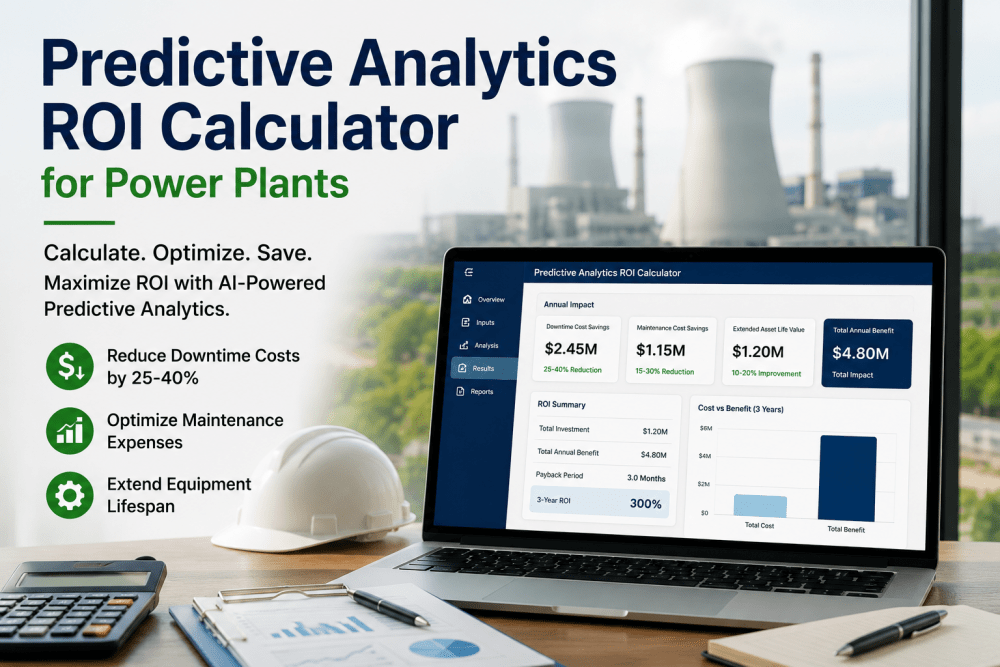
A storage field with 10 Bcf working gas capacity operating at average Henry Hub spot prices leaves $1.5M–$4M in annual arbitrage value on the table when running a fixed seasonal schedule versus an AI-optimized one. Add emergency compressor repair costs (3–8x planned maintenance), compliance violation penalties, and the cost of unplanned downtime during peak delivery obligations — and the full cost of inaction typically exceeds the platform investment within the first operating quarter.
$4M+
Annual arbitrage value uncaptured per 10 Bcf field
3–8x
Cost premium of emergency vs. planned compressor repair
Return on AI Investment
What AI Optimization Returns
Underground gas storage failures are not unpredictable events — they are the endpoint of measurable degradation processes that AI sensors capture continuously, weeks before the compressor stop or wellhead integrity breach that creates a supply obligation crisis. The facilities that deploy AI optimization first gain a durable competitive advantage: lower operating costs, higher asset availability, stronger regulatory standing, and the ability to respond to market signals that fixed-schedule operators simply cannot capture. Book a Demo to see iFactory working across your storage estate.
5–10x
Typical ROI across a full operating year
4–8 wks
Typical time to first actionable AI insight after deployment
Your Underground Storage Facility Is Generating the Data to Prevent Its Next Failure. The Question Is Whether Your Operations Platform Is Reading It.
iFactory AI connects to your existing SCADA, wellhead monitoring, and historian infrastructure to deliver continuous reservoir anomaly scoring, compressor predictive maintenance, dynamic injection/withdrawal optimization, and automated FERC/PHMSA compliance documentation — from a single operational interface.
Frequently Asked Questions
AI Gas Storage Optimization Underground — What Operations Leaders Ask First
Does AI optimization require replacing our existing SCADA infrastructure?
No. iFactory's integration layer connects to existing SCADA systems, PI/OSIsoft historians, and wellhead monitoring platforms via standard industrial protocols including OPC-UA, Modbus, and WITSML. AI optimization is deployed as an intelligence layer on top of your current control and data infrastructure — not as a replacement. Operators retain full control of their SCADA systems; AI provides recommendations and anomaly alerts acted on through existing operational workflows. No new sensor hardware is required to begin.
Book a Demo to see a live integration walkthrough with your specific system types.
How does AI handle the different subsurface behaviors between salt cavern and depleted reservoir storage?
iFactory builds per-formation-type ML models that account for the distinct physical behavior of each storage type. Salt cavern models track convergence rates, cycling frequency impacts, and brine management parameters alongside standard pressure and temperature profiles. Depleted reservoir models integrate geological heterogeneity data, multi-well interference effects, and historical deliverability curves. Each model is further individualized per-well during the initial baseline establishment period — typically 4–8 weeks of data ingestion before full anomaly scoring begins. Aquifer storage models use hybrid ML-physics approaches to compensate for the absence of prior production history.
Can AI optimization help with FERC and PHMSA underground storage compliance documentation?
Yes — this is one of the highest-impact benefits for storage operators facing increasing regulatory scrutiny. iFactory's compliance automation module auto-generates MAOP verification records, integrity test documentation, and wellhead monitoring reports directly from operational telemetry. PHMSA's 49 CFR Part 192 Subpart S requirements for continuous wellhead monitoring, pressure testing documentation, and integrity management plans are addressed through automated data capture and report generation. Documentation is timestamped, audit-ready, and exportable in standard regulatory submission formats with no manual assembly required.
How does AI demand forecasting integrate with market signals for injection and withdrawal decisions?
iFactory's demand forecasting models ingest multiple external data streams — NOAA weather forecasts, EIA weekly storage reports, Henry Hub spot and futures prices, pipeline nomination data, and LNG export terminal schedules — alongside internal reservoir condition data to generate forward-looking injection and withdrawal recommendations. Models produce 7-day, 14-day, and 30-day optimization schedules updated daily. When market conditions shift intraday, the optimization engine refreshes its recommendations to reflect the updated signal set.
Contact support for details on data integration options specific to your market participation structure.
What is the typical deployment timeline and time to first operational value?
For facilities with existing SCADA and historian data available for integration, iFactory completes data connection and initial ingestion within 2–4 weeks. Historical data from prior operating seasons accelerates the ML baseline establishment period, often reducing the time to first anomaly score to 2–3 weeks. Compressor predictive maintenance typically delivers its first actionable alerts within the first full injection or withdrawal cycle after deployment. Compliance automation documentation is available from day one of data ingestion.
Book a Demo to get a tailored deployment timeline based on your specific infrastructure and data availability.