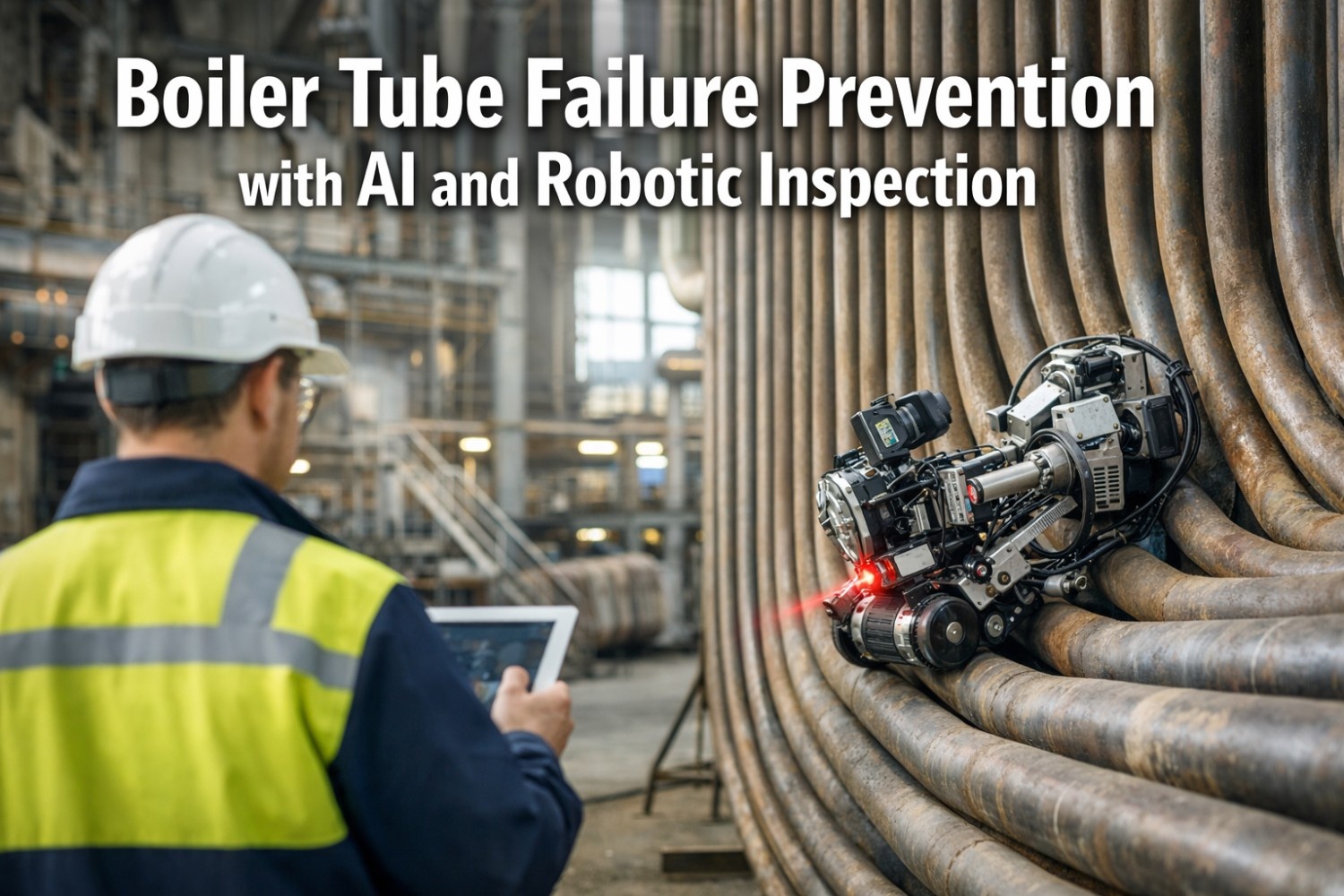
Boiler Tube Failure Prevention with AI and Robotic Inspection
By shreen on March 9, 2026
Boiler tube failures account for 52% of all forced outages in thermal power plants — costing operators an average of $200,000 per day in lost generation, emergency repairs, and replacement power purchases. The failure modes are well understood: fatigue cracking, corrosion thinning, creep rupture, and thermal stress. What has changed in 2026 is the ability to detect every one of these degradation patterns weeks before rupture using AI-powered monitoring and robotic tube inspection. Plants still relying on scheduled visual inspections are discovering failures only after steam is already escaping. This guide covers how AI and robotic inspection systems prevent boiler tube failures, reduce forced outage rates by 40% or more, and deliver measurable ROI within the first outage cycle. Sign up free to start monitoring your boiler tube health today — most plants identify their first at-risk tube within 30 days of deployment.
The #1 Cause of Plant Downtime
Boiler Tube Failure Prevention with AI & Robotic Inspection
Predictive Intelligence for Waterwall, Superheater, Reheater, and Economizer Tubes — Technology, ROI, and Implementation for 2026
52%
Of All Forced Outages Are Boiler Tube Failures
$200K
Average Daily Cost per Unplanned Boiler Shutdown
40%
Outage Reduction with AI Predictive Monitoring
Why Boiler Tubes Fail — And Why Inspections Miss It
Boiler tubes operate under extreme conditions — temperatures exceeding 1,000°F, pressures above 2,500 PSI, and continuous exposure to corrosive flue gases. Over time, four primary degradation mechanisms weaken tube walls until rupture occurs. The challenge is that most of these mechanisms produce no visible external symptoms until the final stage of failure. Traditional inspection methods — visual walkthroughs and scheduled ultrasonic thickness testing during planned outages — only capture a snapshot in time and routinely miss early-stage damage that progresses between inspection windows.
Fatigue Cracking
Repeated thermal cycling and vibration create micro-cracks that propagate through tube walls over thousands of operating hours. Cracks are invisible to visual inspection until they reach critical length.
~35% of tube failures
Corrosion Thinning
Fireside corrosion from sulfur compounds and waterside oxygen attack progressively reduce wall thickness. Loss rates of 10–30 mils per year are common in high-sulfur coal units.
~28% of tube failures
Creep Rupture
Sustained high temperature and pressure cause slow plastic deformation over years. Superheater and reheater tubes are most vulnerable — creep damage is cumulative and irreversible once started.
~22% of tube failures
Thermal Stress & Overheating
Rapid load changes, flame impingement, and restricted water flow cause localized overheating. Short-term overheating can rupture a tube in hours; long-term overheating degrades metallurgy over months.
~15% of tube failures
Key Insight
Every one of these four failure mechanisms produces detectable precursor signals — wall thickness changes, temperature anomalies, vibration pattern shifts, and chemical composition deviations — that appear weeks to months before rupture. The problem has never been a lack of warning signs. The problem has been a lack of continuous monitoring systems that can read those signals in real time and convert them into maintenance action before the tube fails. AI-powered monitoring combined with robotic internal inspection closes this gap permanently.
Conventional boiler tube inspection relies on ultrasonic thickness (UT) measurements taken during planned outages every 12–24 months. Technicians manually test a sample of tubes — typically 5–15% of the total tube population — and extrapolate results to the entire boiler. This approach has three fundamental limitations: it only captures a single point-in-time measurement, it misses tubes not in the sample set, and it cannot detect early-stage cracking or internal deposits that have not yet affected wall thickness.
5–15% tube sampling only
12–24 month inspection gaps
Misses internal deposits and early cracks
Requires full boiler shutdown
AI + Robotic Inspection
Continuous Monitoring with Targeted Robotic Verification
AI-powered systems combine continuous sensor monitoring (acoustic emission, thermal imaging, strain gauges) during operation with robotic crawlers that perform detailed internal tube inspection during shorter maintenance windows. The AI monitors 100% of instrumented tubes 24/7, flags degradation trends in real time, and directs robotic crawlers to inspect only the tubes showing anomalous behavior — eliminating the guesswork of sample-based testing.
100% tube coverage with AI monitoring
Real-time degradation tracking
Robotic internal UT and visual inspection
30–90 day advance failure warning
How AI Prevention Works
5-Stage Boiler Tube Failure Prevention Workflow
From sensor data to maintenance action — this is the closed-loop system that converts tube degradation signals into planned repairs before rupture occurs.
Stage 01
Continuous Acoustic & Thermal Monitoring
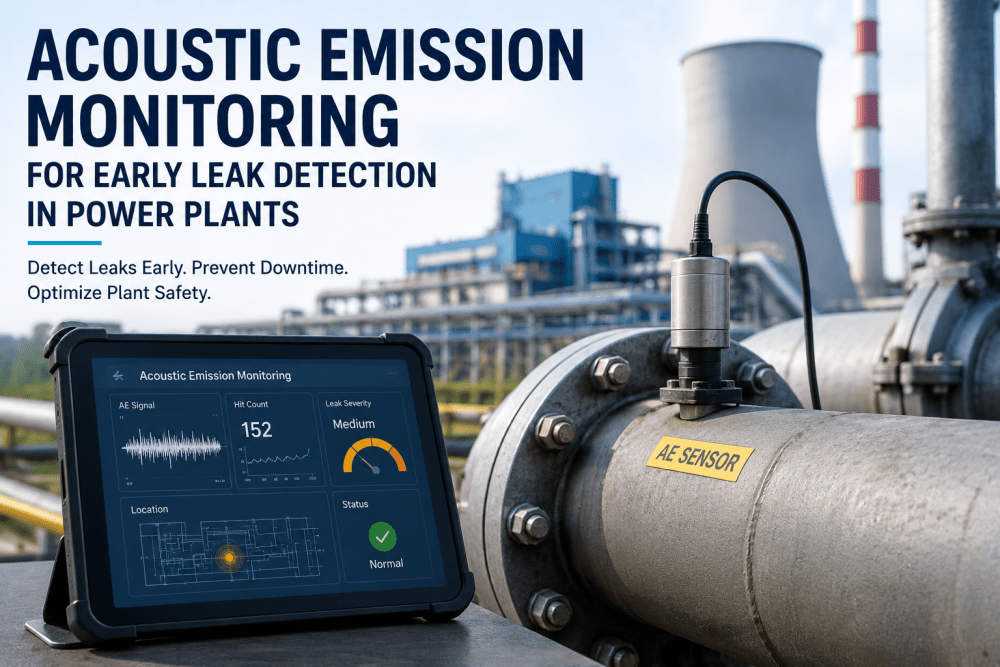
Acoustic emission sensors detect the ultrasonic signatures of active crack propagation, corrosion activity, and steam leaks at the earliest stage. Infrared thermal sensors map tube surface temperatures across the entire boiler, identifying hotspots caused by internal deposits, flow restrictions, or flame impingement. Data streams continuously during normal operation — no shutdown required.
Stage 02
AI Baseline Learning & Anomaly Detection
Machine learning models build unique degradation baselines for each monitored tube — accounting for its position, operating temperature, fuel type, and load cycling history. Deviations from baseline receive anomaly scores that increase in severity as degradation progresses. The AI learns from every tube in the fleet, so failure patterns detected at one plant improve predictions across all connected facilities.
Stage 03
Prioritized Alert & Risk Scoring
When anomaly thresholds are breached, the system generates graded alerts with predicted failure mode (fatigue, corrosion, creep, or overheating), estimated remaining useful life, and recommended inspection urgency. Alerts are ranked by production impact — a superheater tube showing accelerating creep in a high-load zone receives higher priority than a waterwall tube with stable, slow corrosion.
Stage 04
Robotic Crawler Verification Inspection
During the next available maintenance window, robotic crawlers are deployed to the specific tubes flagged by AI. Crawlers perform internal ultrasonic thickness mapping, visual inspection with HD cameras, and electromagnetic testing for subsurface cracking — delivering 100% coverage of at-risk tubes instead of random sampling. Inspection data feeds back into the AI model to refine future predictions.
Stage 05
Automated Work Order & CMMS Integration
Confirmed defects automatically generate work orders in the plant's CMMS — pre-populated with tube location, defect type, severity classification, recommended repair procedure, and required materials. Tube replacements are scheduled into the next planned outage window, and parts procurement triggers at standard lead time. The entire loop from detection to repair scheduling happens without manual data entry.
See AI Tube Monitoring in Action
Watch iFactory Detect Waterwall Corrosion 63 Days Before Scheduled UT Testing Would Have Found It
In our 30-minute demo, we walk through real acoustic emission data, AI anomaly scoring, robotic verification results, and the automated work order that prevented a $280,000 forced outage — all from a single tube.
Inspection Method Comparison: Traditional vs. AI + Robotic
Side-by-side performance data from thermal power plants that transitioned from scheduled UT sampling to AI-monitored robotic inspection programs.
Head-to-Head Performance Comparison
Metric
Scheduled UT Sampling
AI + Robotic Inspection
Improvement
Tube Coverage per Inspection
5–15% (sample-based)
100% of instrumented tubes
Full coverage
Failure Detection Lead Time
0 days (found at rupture)
30–90 days advance warning
Months of lead time
Forced Outage Rate
Baseline (WEFOR 10–12%)
6–7% WEFOR
36–40% reduction
Emergency Repair Cost
$150K–$500K per incident
$15K–$40K (planned repair)
85–90% lower
Inspection Downtime Required
3–7 days (full outage)
Continuous + targeted crawls
80% less downtime
Defect Classification Accuracy
Manual interpretation
AI-classified, human-verified
Consistent, repeatable
Data Continuity
Point-in-time snapshots
Continuous degradation curves
Full trend visibility
Documented Results from AI-Monitored Boiler Programs
Verified outcomes from coal and gas-fired plants operating AI tube monitoring integrated with iFactory's CMMS platform for 12+ months.
60%
Reduction in boiler tube forced outage events
44%
Lower total boiler maintenance spend in year one
88%
Of tube failures detected before rupture with AI monitoring
70%
Reduction in emergency boiler tube replacement costs
Sign up free and connect your boiler monitoring systems to iFactory's AI platform. Most plants identify their first at-risk tube within 30 days of deployment — before the next scheduled inspection would have caught it.
Robotic Inspection Technology
What Robotic Crawlers Detect Inside Boiler Tubes
Modern tube crawlers carry multiple sensor payloads that capture data no external inspection method can match — mapping the internal condition of every tube they enter.
Internal Visual Inspection
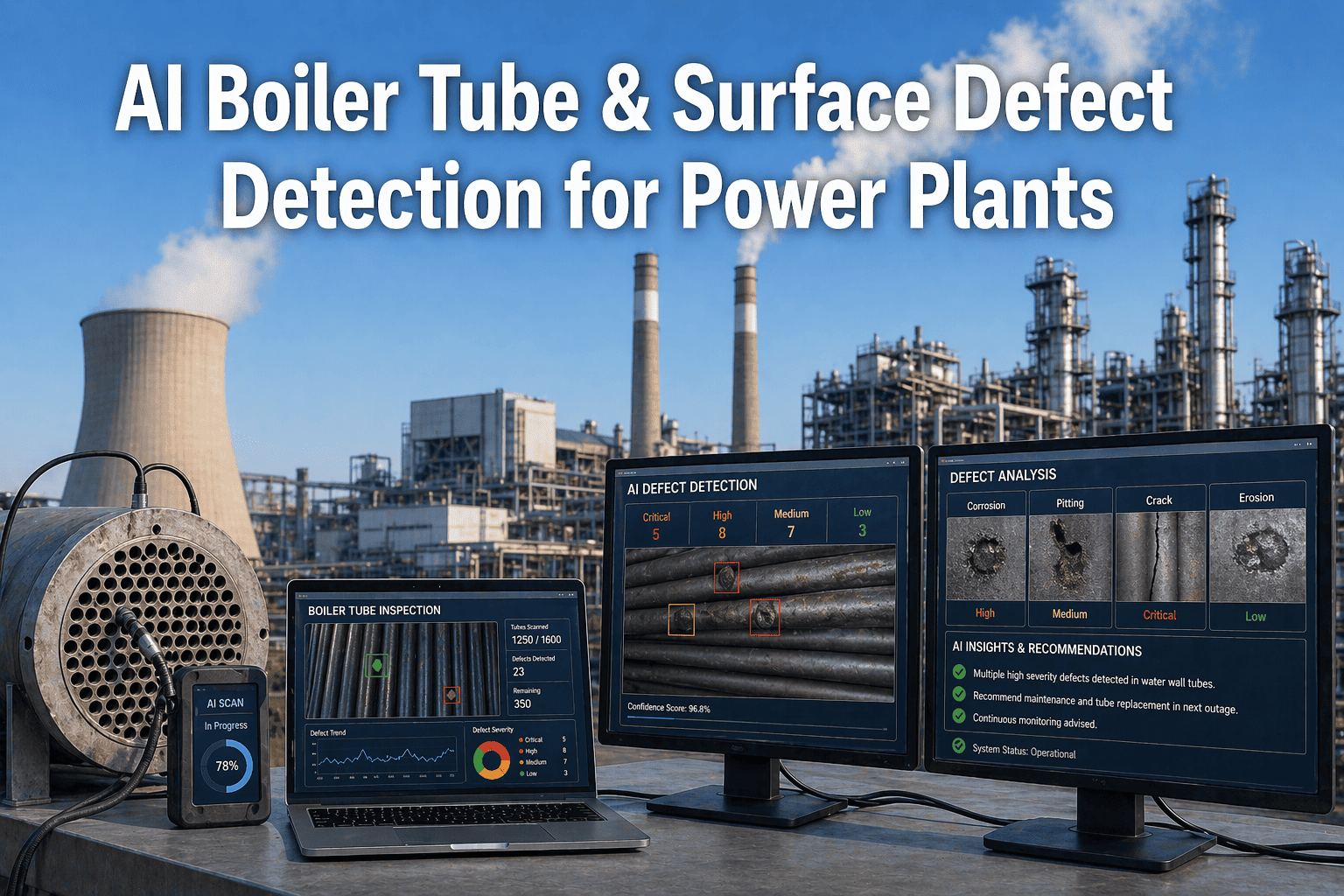
HD cameras capture high-resolution images of internal tube surfaces — revealing pitting, scale buildup, steam erosion patterns, and weld defects invisible from the fireside. Images are automatically stitched into continuous tube maps for comparison across inspection cycles.
Ultrasonic Wall Thickness Mapping
Internal UT probes measure remaining wall thickness at thousands of points per meter — creating continuous thickness profiles rather than spot measurements. This captures localized thinning from fireside corrosion, erosion grooves, and hydrogen damage that external UT sampling would miss.
Electromagnetic & Eddy Current Testing
Detects subsurface cracking, metallurgical changes from creep damage, and stress corrosion cracking that has not yet penetrated the tube wall. Particularly valuable for superheater and reheater tubes where creep is the dominant failure mode.
Internal Deposit & Scale Measurement
Measures internal deposit thickness and composition — identifying tubes at risk of under-deposit corrosion and flow restriction before they cause localized overheating. Chemical analysis of scale samples informs water treatment adjustments that prevent future buildup.
We had been scheduling full boiler UT inspections every 18 months — and still averaging three tube failures between outages. After deploying iFactory's AI monitoring with robotic crawler verification, we caught 14 tubes in active degradation before our next planned outage. Twelve of those were not in our previous sampling set. The cost of replacing those tubes during the planned window was $62,000. The cost of any one of them failing during operation would have exceeded $300,000 in downtime alone. We have not had an unplanned boiler tube failure in 14 months.
Boiler Maintenance ManagerCoal-Fired Power Station, Southeast U.S. — 2 × 600MW Units
The Business Case
ROI of AI Boiler Tube Monitoring vs. Reactive Replacement
iFactory connects your boiler sensors and robotic inspection data to a single AI-powered platform that detects tube degradation in real time, prioritizes risk by production impact, generates work orders automatically, and schedules replacements into planned outage windows. No more surprise ruptures. No more guesswork sampling. Connect your boiler monitoring systems in under 10 minutes and start preventing tube failures from day one.
AI anomaly detection across all monitored tubes
Robotic crawler integration with inspection data sync
Automated CMMS work orders with parts procurement
Full compliance documentation generated automatically
How far in advance can AI detect a boiler tube failure?
AI-powered acoustic and thermal monitoring systems typically detect active degradation 30–90 days before rupture, depending on the failure mode. Fast-progressing mechanisms like short-term overheating may provide days to weeks of warning, while slow mechanisms like corrosion thinning and creep provide months. The key advantage is that AI monitors continuously — unlike periodic UT testing, there are no gaps in coverage. Sign up free to see how early detection works with your boiler's specific tube configuration.
Do robotic crawlers work in all boiler tube sizes and configurations?
Modern robotic crawlers are designed for tube inner diameters ranging from 25mm to 100mm, covering the vast majority of waterwall, superheater, reheater, and economizer tube sizes in coal and gas-fired boilers. Crawlers navigate bends up to 90 degrees and can inspect tube runs up to 30 meters in length. For tubes outside these parameters, external robotic inspection with phased-array UT provides equivalent coverage.
Can AI monitoring work alongside our existing inspection program?
Yes — and this is the recommended approach. AI monitoring supplements your existing UT program by providing continuous coverage between planned outages. Over time, plants typically shift from blanket UT sampling to AI-directed targeted inspection, where the AI tells your UT team exactly which tubes need manual verification. This reduces inspection time by 40–60% while dramatically improving detection accuracy. Book a demo to see how AI integrates with your current inspection workflow.
What is the ROI timeline for AI boiler tube monitoring?
Most plants achieve full payback within the first outage cycle — typically 6–12 months. The math is straightforward: preventing a single forced outage that would have cost $200,000–$500,000 in downtime and emergency repairs pays for the AI monitoring platform multiple times over. Plants with higher outage frequency or higher-value generation see even faster ROI. Sign up to calculate your facility's specific payback timeline.
Does AI monitoring require installing new sensors on the boiler?
It depends on your existing instrumentation. Plants with modern DCS systems already have temperature, pressure, and flow data that AI can analyze immediately. For acoustic emission and advanced thermal monitoring, dedicated sensors are installed on the boiler casing — typically during a planned outage with minimal additional downtime. Most deployments add 20–60 sensors depending on boiler size, with installation completed in 2–3 days.
How does this integrate with our existing CMMS or SAP PM system?
iFactory provides standard API integrations and pre-built connectors for SAP PM, IBM Maximo, Fiix, eMaint, and other major CMMS platforms. When AI monitoring detects a tube requiring attention, the system automatically creates a work order in your existing CMMS with tube location, defect classification, severity, recommended repair procedure, and parts requirements. Your maintenance team works in their familiar system — the AI simply feeds intelligence into it. Book a demo to see the integration with your specific CMMS.