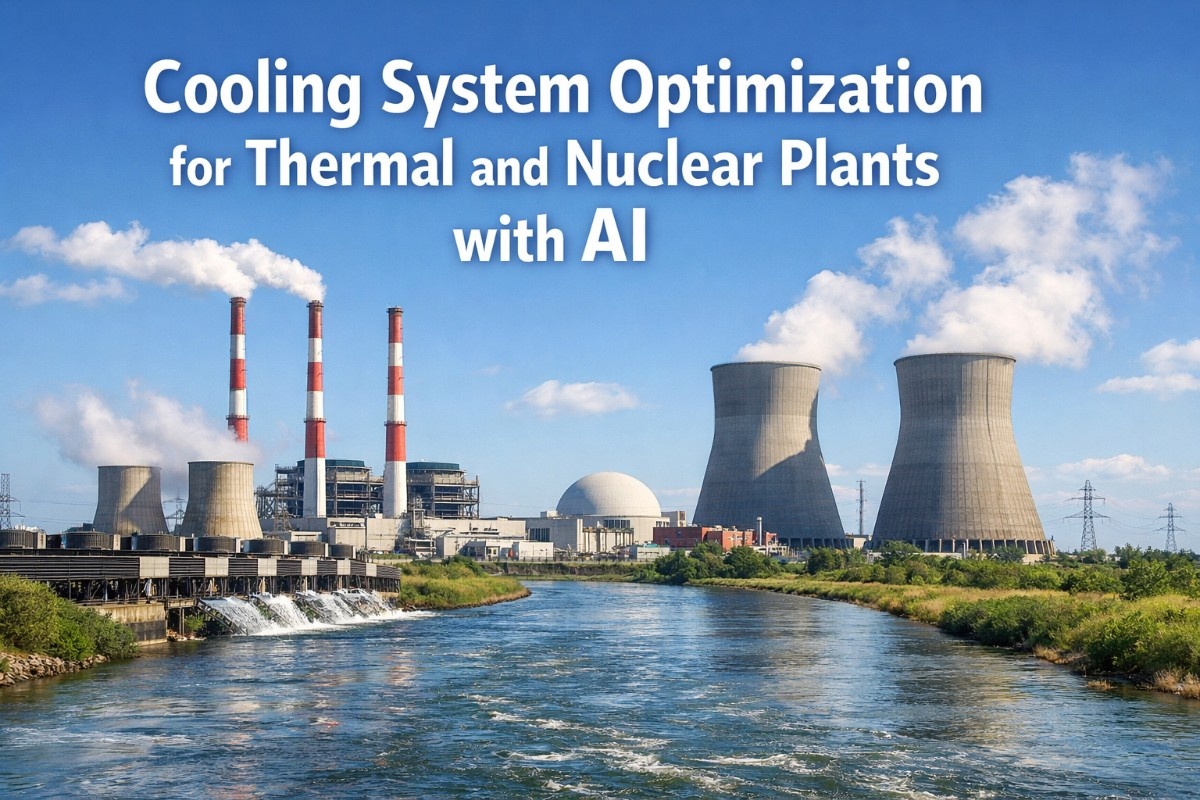
Cooling system failures account for nearly 30% of all thermal power plant forced outages, with a single condenser fouling event capable of slashing output by 5–15 MW and costing $200,000+ per week in lost generation. At nuclear facilities, the stakes are existential — cooling anomalies trigger immediate regulatory scrutiny and can force multi-week shutdowns costing $40 million or more. AI-powered cooling optimization is now the fastest path to recovering lost megawatts, extending asset life, and staying ahead of increasingly strict environmental thermal discharge limits. Sign up free to connect your cooling system data and see where efficiency losses are hiding in your plant today.
Efficiency Losses That Compound Silently
In fossil-fired plants, cooling system degradation manifests as rising condenser backpressure, reduced heat rejection efficiency, and increased auxiliary power consumption for circulating water pumps and cooling tower fans. These losses compound incrementally — a 2% heat rate degradation on a 500MW unit costs over $1.2 million annually in additional fuel alone. Most plants track turbine performance closely but lack continuous visibility into whether their cooling system is the root cause of efficiency loss.
Safety-Critical Cooling Where Margins Are Zero
Nuclear cooling systems operate under NRC regulatory oversight where anomalies trigger mandatory reporting and potential forced outages. Ultimate Heat Sink temperature exceedances, service water system biofouling, and component cooling water heat exchanger degradation are not just efficiency issues — they are operability concerns. AI monitoring provides the early-warning intelligence that keeps plants within Technical Specification limits and avoids the $1–2 million per day cost of a regulatory-driven shutdown.
6 Ways AI Recovers Lost Megawatts from Your Cooling System
Each strategy below targets a documented source of cooling inefficiency. Book a demo to see how iFactory applies all six to your plant's specific cooling configuration and operating conditions.
How AI Cooling Optimization Works: Sensor to Savings
This is the continuous optimization loop that turns raw cooling system data into recovered megawatts, extended equipment life, and documented compliance.
Manual vs. AI-Optimized Cooling: What the Data Shows
This comparison reflects documented outcomes from power plants that transitioned from periodic manual cooling system assessments to continuous AI-powered optimization over a 12-month period.
| Performance Metric | Manual / Periodic | AI-Optimized | Impact |
|---|---|---|---|
| Condenser Cleanliness Detection | Monthly manual calculation | Continuous real-time monitoring | 30x faster detection |
| MW Lost to Cooling Degradation | 5–15 MW undetected for weeks | Flagged within 24 hours | 90% faster recovery |
| Condenser Cleaning Timing | Calendar-based (often late) | Condition-based (optimal point) | $150K+ per event saved |
| Cooling Tower Efficiency Tracking | Quarterly engineering study | Continuous approach/range analysis | Real-time visibility |
| CW Pump Configuration | Fixed seasonal settings | Dynamic load-ambient optimization | 0.5–2 MW auxiliary savings |
| Thermal Discharge Compliance | Reactive (after exceedance) | Predictive (hours of lead time) | Near-zero violations |
| Heat Rate Impact Visibility | Aggregated in monthly reports | Real-time attribution to cooling | Immediate corrective action |
| Annual Fuel Cost from Cooling Loss | $800K–$1.5M unrecovered | $200K–$400K residual | 60–75% cost recovery |
Verified Results from iFactory-Optimized Plants
These outcomes are documented from thermal and nuclear facilities operating iFactory's AI cooling optimization platform for 12 months or more.
Plant-Specific AI Capabilities by Cooling Type
iFactory adapts its optimization models to your plant's specific cooling infrastructure — whether once-through, mechanical draft, natural draft, or hybrid configuration.
iFactory AI Cooling Optimization — Every Degree, Every Megawatt, Full Visibility
iFactory gives plant engineers a unified AI platform that monitors condenser performance, cooling tower efficiency, circulating water system health, and thermal discharge compliance in real time. No replacing existing DCS or historian systems. Connect your cooling data in under 15 minutes and start quantifying the megawatts your cooling system is leaving on the table.