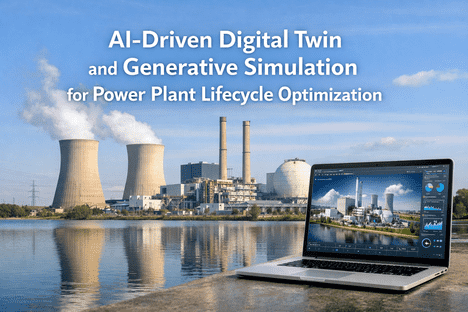
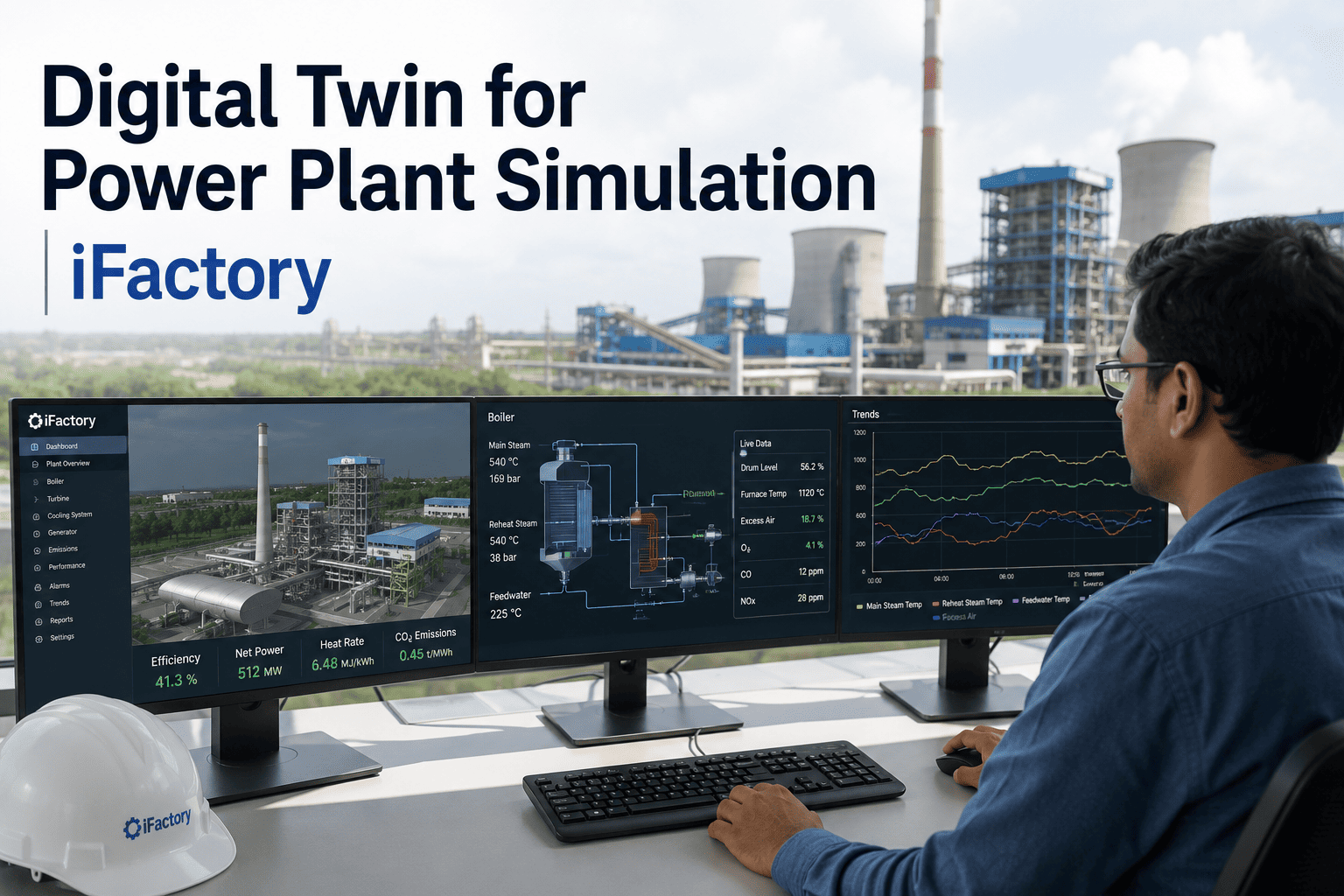
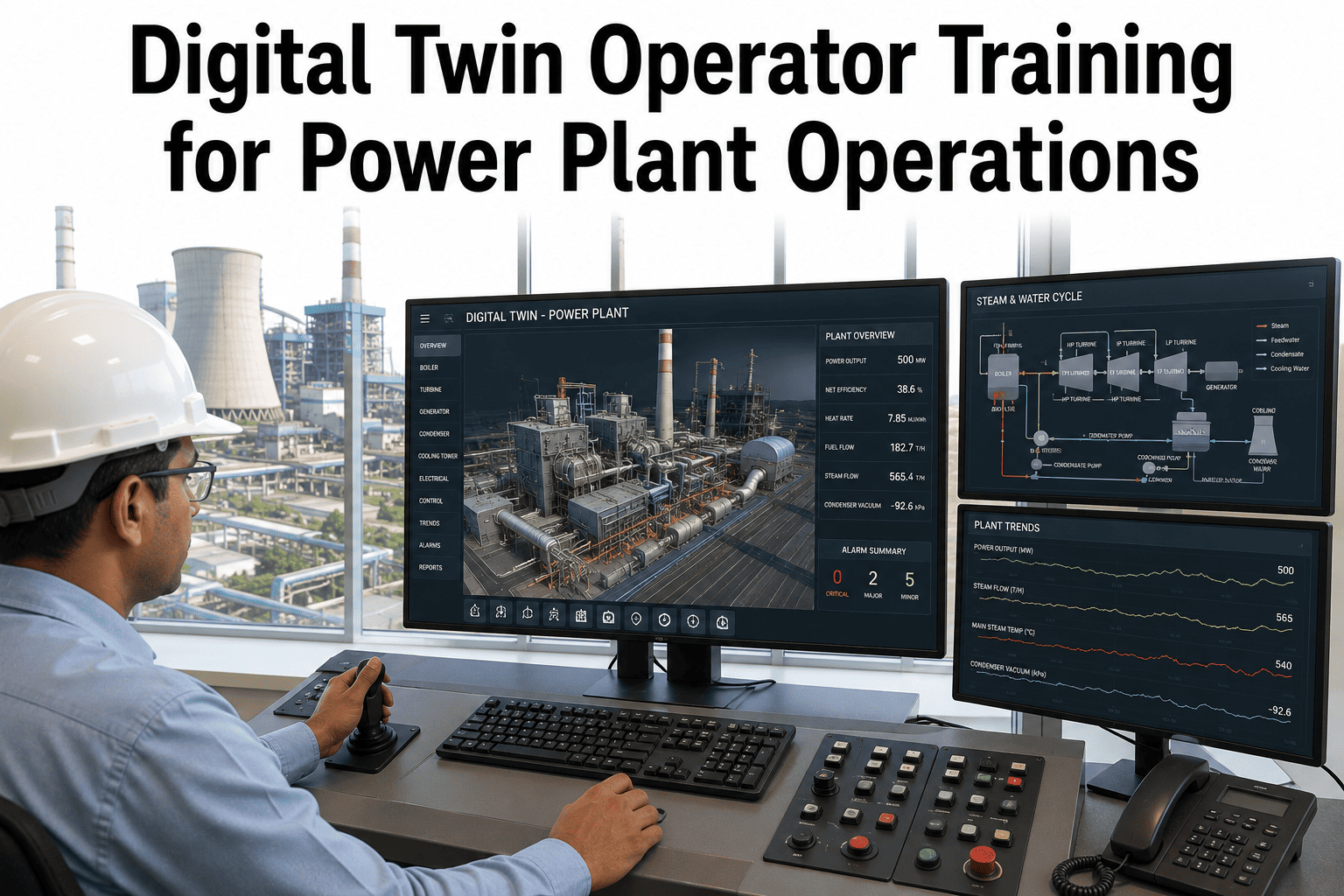
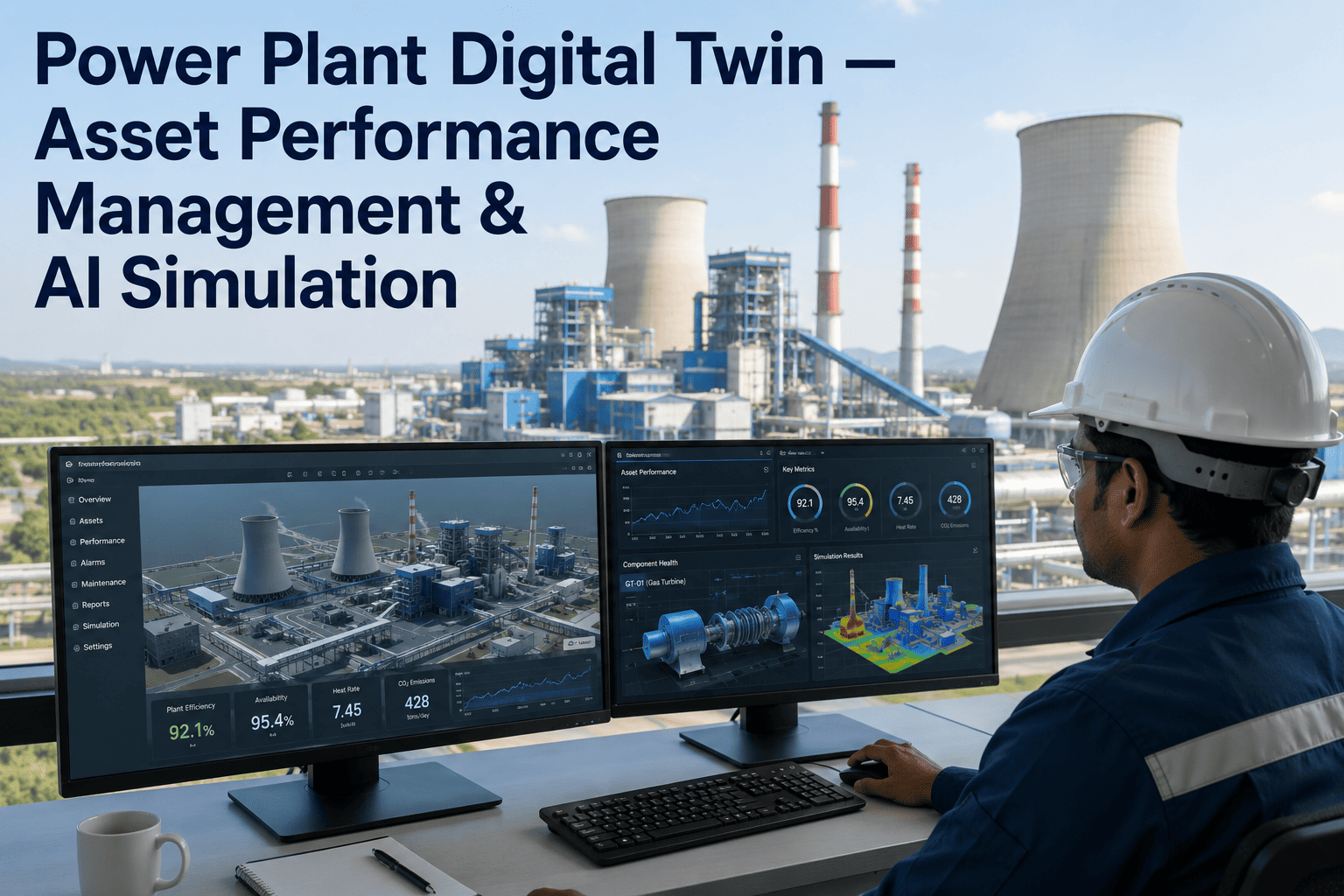
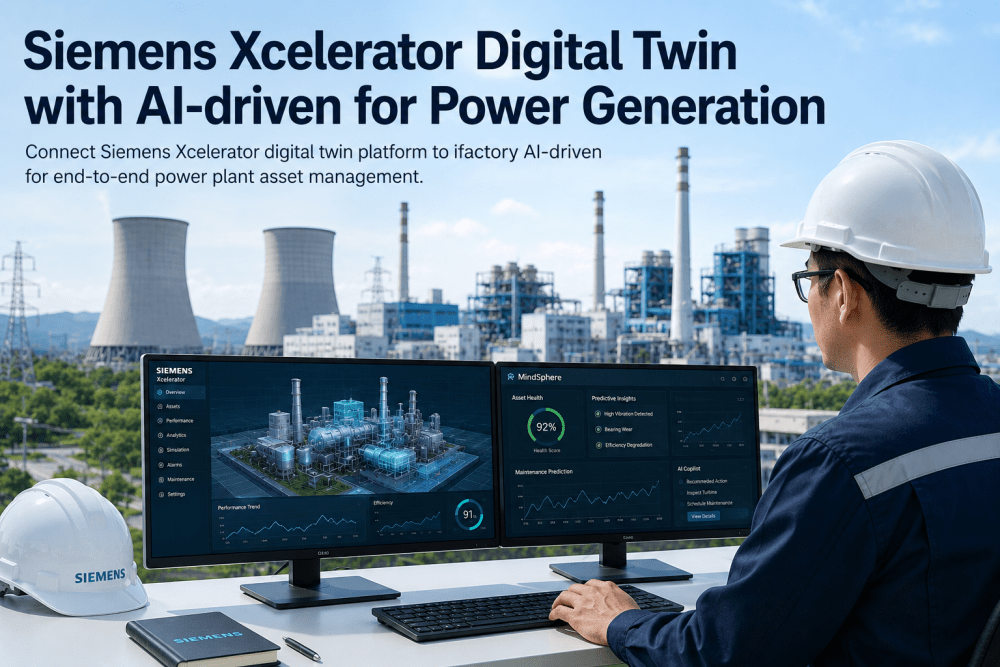
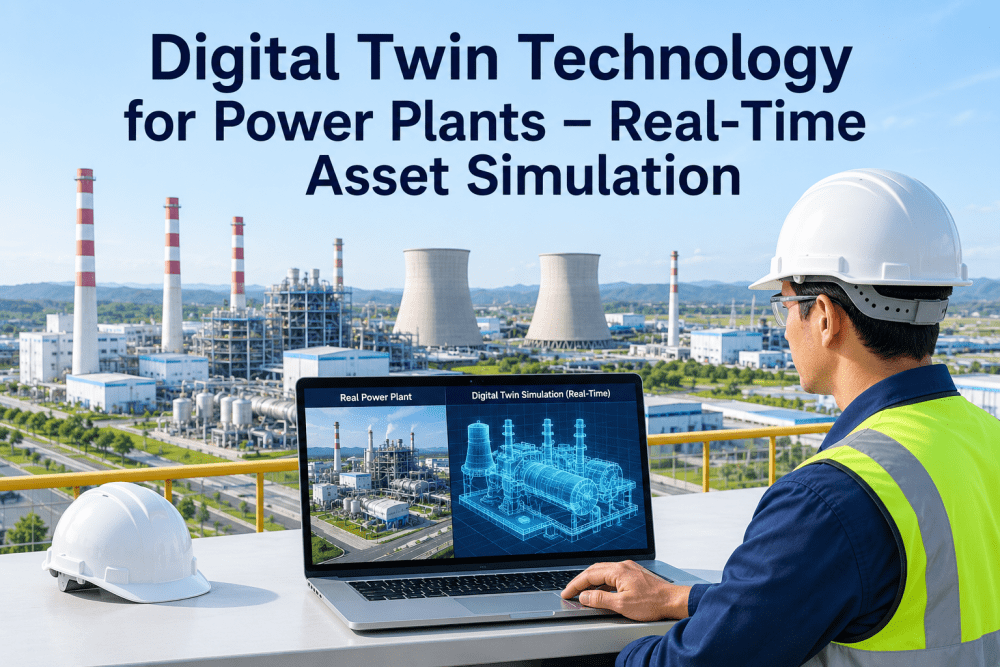
Power plants generate terabytes of operational data every month from turbines, boilers, generators, condensers, and hundreds of auxiliary systems. Yet most of this data sits in historians and spreadsheets, analyzed only after something breaks. The digital twin power plant market has already reached $2.13 billion in 2026, growing at 12.9% CAGR. Plants deploying AI-powered virtual replicas are reporting $1 million or more in annual savings through prevented failures alone. Meanwhile, 92% of energy executives plan to digitize operations through AI-powered automation. The technology exists. The ROI is proven. The only question is whether your plant will lead this shift or be forced to follow.
Power Plant Digital Intelligence
Your Plant Already Has the Data. A Digital Twin Turns It Into Foresight.
AI-driven digital twins and generative simulation that replicate your entire power plant virtually — predicting failures, testing scenarios, and optimizing lifecycle performance across gas, steam, and combined cycle operations
$2.13B
Digital twin power plant market size in 2026
35%
Reduction in unplanned downtime with AI-powered twins
22%
Average annual ROI from digital twin programs globally
What a Power Plant Digital Twin Actually Does — And Why It Matters Now
A digital twin is not a 3D model sitting on an engineer's desktop. It is a high-fidelity virtual replica of your physical power plant that mirrors real-time performance using live sensor data, physics-based thermodynamic models, and machine learning algorithms. It behaves exactly like your physical plant — responding to the same inputs, producing the same outputs — but in a virtual environment where you can test, break, optimize, and predict without touching a single piece of real equipment.
Three synchronized layers work continuously: your physical plant feeds live sensor data into a digital twin engine that runs physics models and ML algorithms, which then produces an intelligence layer of predictive alerts, scenario simulations, auto work orders, and executive dashboards — all in real time.
Physical Plant
1,000+ live SCADA/DCS sensor feeds
Twin Engine
Physics models + ML calibration
Anomaly Detection
98.3% fault detection accuracy
Scenario Simulation
1000s of what-if tests in minutes
RUL Estimation
Remaining useful life per component
Auto Work Orders
Condition-triggered CMMS integration
Thermodynamic Modeling
The twin replicates every heat balance, pressure drop, and efficiency curve in your plant. When turbine inlet temperature shifts by 2 degrees, the twin reflects it instantly — and projects the downstream impact on heat rate, emissions, and component life.
Continuous Calibration
Unlike static models, the digital twin recalibrates itself against actual plant data every cycle. As equipment ages, fouling builds, and operating conditions shift, the twin adapts — maintaining prediction accuracy above 95% throughout the asset lifecycle.
Failure Prediction
AI identifies degradation patterns 4-8 weeks before failure for gradual modes like bearing wear, fouling, and seal deterioration. For fast-developing issues like combustion dynamics shifts, detection occurs within hours. Every alert includes a specific remaining useful life estimate.
Performance Optimization
Continuous heat rate tracking against design curves reveals efficiency losses from fouling, seal degradation, and steam path deterioration. The twin quantifies losses in dollars per hour so you know exactly when intervention pays for itself.
Most plants already collect 70-80% of the sensor data needed. The gap is the analytical intelligence. See what a digital twin reveals about your plant.
Digital Twin Across the Plant Lifecycle — Where Value Compounds
The power of a digital twin is not limited to catching failures during operations. It transforms every stage of a power plant's lifecycle — from initial design through decades of operation to lifecycle extension. Each phase generates data that makes the twin smarter, and the compounding intelligence is where the real competitive advantage lives.
Simulation-Based Engineering
Test plant configurations virtually before breaking ground
AI-optimized equipment sizing and thermal cycles
Generative AI proposes layouts reducing capex 10-15%
Compress engineering timelines by months
Evaluate fuel flexibility and emissions scenarios upfront
Generative AI evaluates thousands of equipment arrangements, piping layouts, and thermal cycle variations to find configurations that maximize efficiency while minimizing capital cost — in hours, not months.
Virtual Commissioning + Real-Time Optimization
Run full startup sequences in simulation first
Catch control logic errors before energizing equipment
Continuous AI-driven anomaly detection in operations
Predict failures 4-8 weeks ahead with specific RUL
Auto-generate condition-based maintenance work orders
During commissioning, the twin catches interlock conflicts and performance gaps where fixing costs hours, not weeks. In operations, it monitors every parameter continuously — something no human team can do at that scale or speed.
Lifecycle Extension & Continuous Improvement
Remaining useful life estimation for every major component
Defer multi-million dollar replacements by years
Every maintenance event feeds back into AI models
Prediction accuracy improves continuously over time
Expand monitoring as ROI is proven on critical assets
AI recommends precise intervention timing to extend asset life beyond OEM schedules. The system never stops learning your plant — every operational hour, every maintenance event, every anomaly sharpens the model.
Where Generative AI Changes the Game
Traditional digital twins observe and predict. Generative AI creates. It generates new plant configurations, proposes maintenance strategies never tried before, synthesizes operational scenarios from sparse data, and produces engineering documentation automatically. This is the shift from reactive intelligence to creative intelligence in power plant operations.
Design Optimization
AI-Generated Configs
Generative models evaluate thousands of equipment arrangements, piping layouts, and thermal cycle variations to find configurations that maximize efficiency while minimizing capital expenditure in hours instead of months.
Scenario Simulation
Synthetic Data
AI generates realistic failure scenarios, extreme load conditions, and rare event data your plant has never experienced — training predictive models on situations they would otherwise encounter only during actual emergencies.
Maintenance Intelligence
Auto Strategies
AI analyzes degradation patterns across your fleet and generates optimized maintenance strategies including task sequencing, parts procurement timing, and crew scheduling that minimize both cost and risk simultaneously.
Knowledge Capture
Auto Documentation
Generative AI learns from historical plant reports, work plans, and operational records to draft new compliance documents, incident reports, and technical procedures — preserving knowledge as experienced engineers retire.
Performance Forecasting
Predictive Models
AI continuously models the relationship between operating conditions, fuel quality, ambient temperature, and plant output — generating optimized dispatch strategies that maximize revenue per megawatt hour generated.
Risk Assessment
Automated Analysis
Generative AI produces comprehensive risk assessments by simulating cascading failure scenarios across interconnected systems, quantifying exposure in dollars and recommending specific mitigation actions for each risk path.
92% of Energy Executives Are Digitizing Operations. Are You?
iFactory builds a living digital twin from your existing sensor infrastructure, adds generative AI for scenario simulation and optimization, and delivers measurable ROI within 90 days. One prevented forced outage pays for the entire system.
The ROI That Gets Board-Level Attention
Digital twin programs in power generation deliver the highest ROI of any industry because the consequences of failure are extraordinarily expensive. A single forced outage on a 500 MW combined-cycle plant costs between $850,000 and $1.5 million. Research across hundreds of implementations shows consistent, measurable returns that justify investment within the first year.
Unplanned Downtime Reduction
35%
AI-powered twins cut unplanned outages by detecting degradation patterns invisible to threshold-based alarms and operator rounds. 98.3% fault detection accuracy across all monitored assets.
Maintenance Cost Reduction
30%
Shift from calendar-based overhauls to condition-based interventions. Fix what is actually degrading, not what the schedule says might be degrading. Predictive maintenance replaces reactive firefighting.
Energy Cost Reduction
26.2%
Continuous heat rate optimization and thermal efficiency monitoring recover losses that erode profitability invisibly over months. AI quantifies every efficiency gap in dollars per hour.
First-Year Avoided Failures
$1M-$3M
Targeted sensor deployment on critical assets typically costs $50K-$100K and delivers 10-30x return in year one. Gas turbines alone account for $2.4M+ per major failure event prevented.
Energy Production Increase
+8.5%
Higher availability from fewer forced outages means more generation hours, more revenue, and better grid reliability commitments. Digital twins optimize dispatch for maximum output.
Payback Period
6-12 Months
Average 22% annual ROI reported across global implementations. A single prevented forced outage — avoiding $500K-$2.5M in losses — typically covers the entire implementation cost.
How iFactory Integrates With Your Plant
iFactory does not require you to rip out existing infrastructure. The platform connects to your current control and monitoring systems through standard protocols. Most plants already have the data. The missing piece is the intelligence layer that connects it all.
Data Sources
SCADA / DCS
Turbine Controls
Vibration Systems
Process Historian
IoT Sensors
Lube Oil Analysis
Gas Analyzers
Digital Twin + Gen AI Engine
Physics Models
ML Anomaly Detection
Generative Simulation
RUL Estimation
Scenario Testing
Action Layer
Auto Work Orders
Mobile Alerts
Scenario Reports
Outage Planning
Executive Dashboards
Implementation: 90 Days to a Living Digital Twin
01
Week 1-2
Connect Critical Assets
Start with the 15-20% of assets causing 60-70% of forced outages: turbines, generators, main transformers, critical pumps. Connect existing SCADA data and deploy IoT sensors where gaps exist. iFactory integrates via OPC-UA, Modbus, and open APIs. Typical initial investment: $50K-$100K.
02
Week 3-6
Baseline, Learn & Build Twin
AI establishes performance baselines for each asset, calibrates physics-based models against real operations, and learns normal operating signatures across load ranges, ambient conditions, and fuel types. The digital twin begins mirroring your plant within weeks.
03
Month 2-3
Predictive Alerts & Scenario Testing Active
AI models begin predicting failures with specific timelines, recommended actions, and cost impact projections. Generative simulation enables what-if scenario testing. Work orders auto-generate in your CMMS. First prevented failures typically occur within 90 days of deployment.
04
Ongoing
Continuous Learning & Expansion
Every maintenance event, operational shift, and anomaly feeds back into AI models. Prediction accuracy improves continuously. Generative AI produces new optimization strategies as it learns. Expand monitoring to additional assets as ROI is proven on critical equipment.
Frequently Asked Questions
How is a digital twin different from a SCADA dashboard?
SCADA displays real-time data. A digital twin uses that data to build a physics-based virtual replica that can predict future behavior, simulate scenarios, and generate optimized operating strategies. SCADA tells you what is happening now. A digital twin tells you what will happen next and what you should do about it.
What data infrastructure do we need to get started?
Most power plants already have 70-80% of the sensor data needed. If you have SCADA, a process historian, and basic vibration monitoring, you have enough to deploy a meaningful digital twin. iFactory identifies sensor gaps during assessment and recommends targeted IoT additions only where they deliver measurable value.
What types of power plants does the digital twin cover?
The platform supports gas turbines, steam turbines (HP, IP, LP sections), combined cycle units including HRSGs, generators, transformers, feedwater systems, and balance-of-plant equipment. AI models are trained on type-specific degradation patterns — gas turbine combustion dynamics differ fundamentally from steam turbine blade erosion, and the twin adapts accordingly.
Does generative AI in plant operations pose safety risks?
Generative AI operates in an advisory capacity. It generates scenarios, recommends strategies, and produces documentation. All operational decisions remain with your engineering team. AI handles the analysis at a scale no human team can match — monitoring thousands of parameters simultaneously. Your experts make the final calls.
What ROI can we expect and how quickly?
Power plants deploying digital twins report an average 22% annual ROI. Typical first-year savings range from $1M to $3M through avoided failures, reduced maintenance costs, and efficiency recovery. Most programs achieve full payback within 6-12 months. A single prevented forced outage — avoiding $500K-$2.5M in losses — typically covers the entire implementation cost.
Stop Managing Your Plant by Looking in the Rearview Mirror
iFactory builds a living digital twin from your existing sensor infrastructure and adds generative AI for scenario simulation and lifecycle optimization. Gas, steam, or combined cycle — one platform, every asset, every second. Measurable ROI within 90 days.