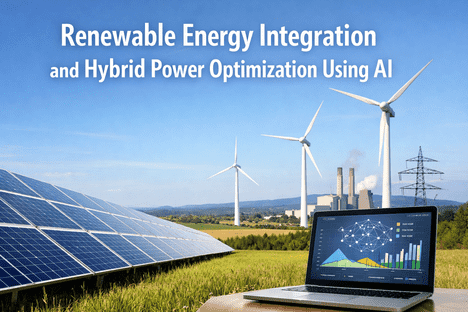
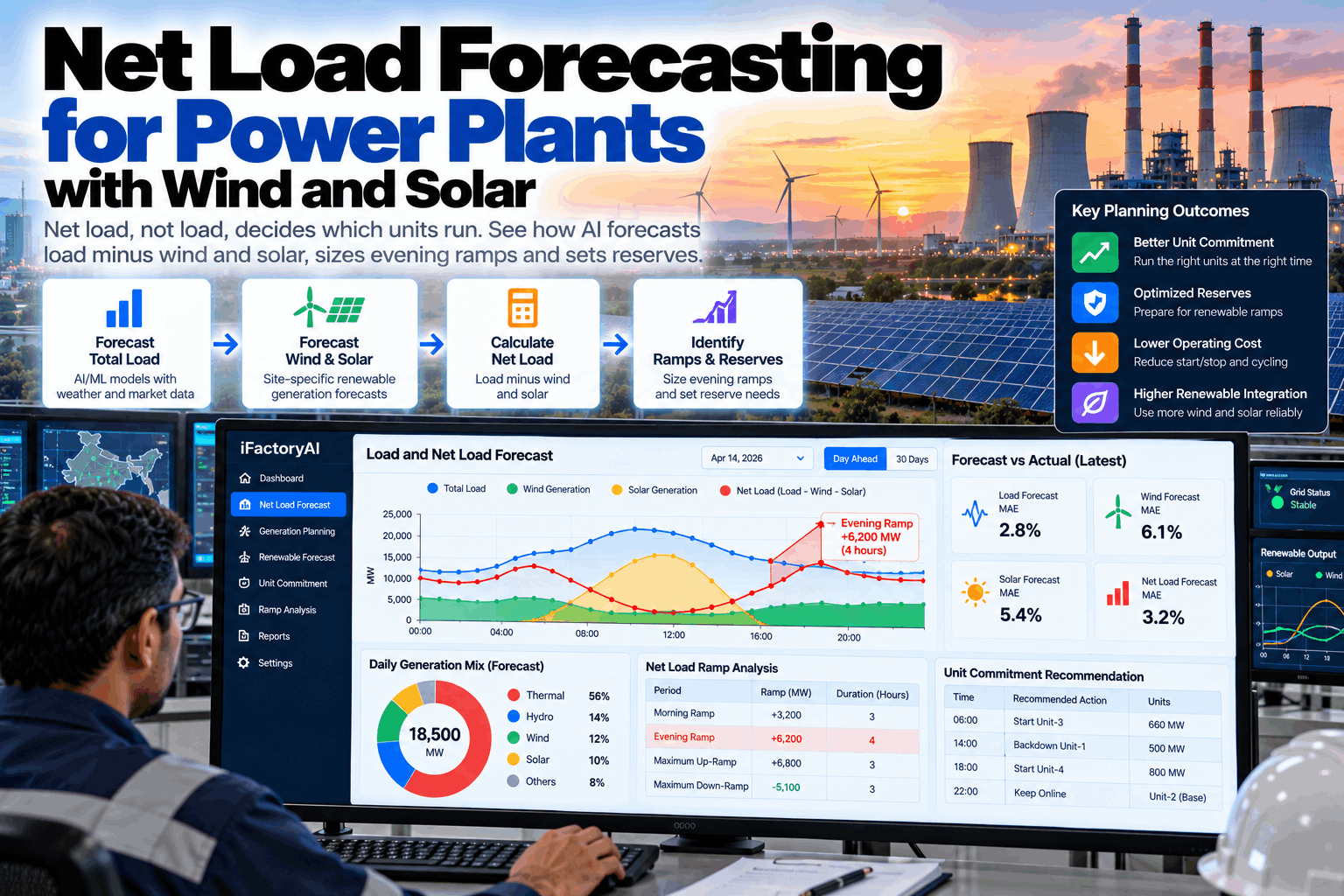
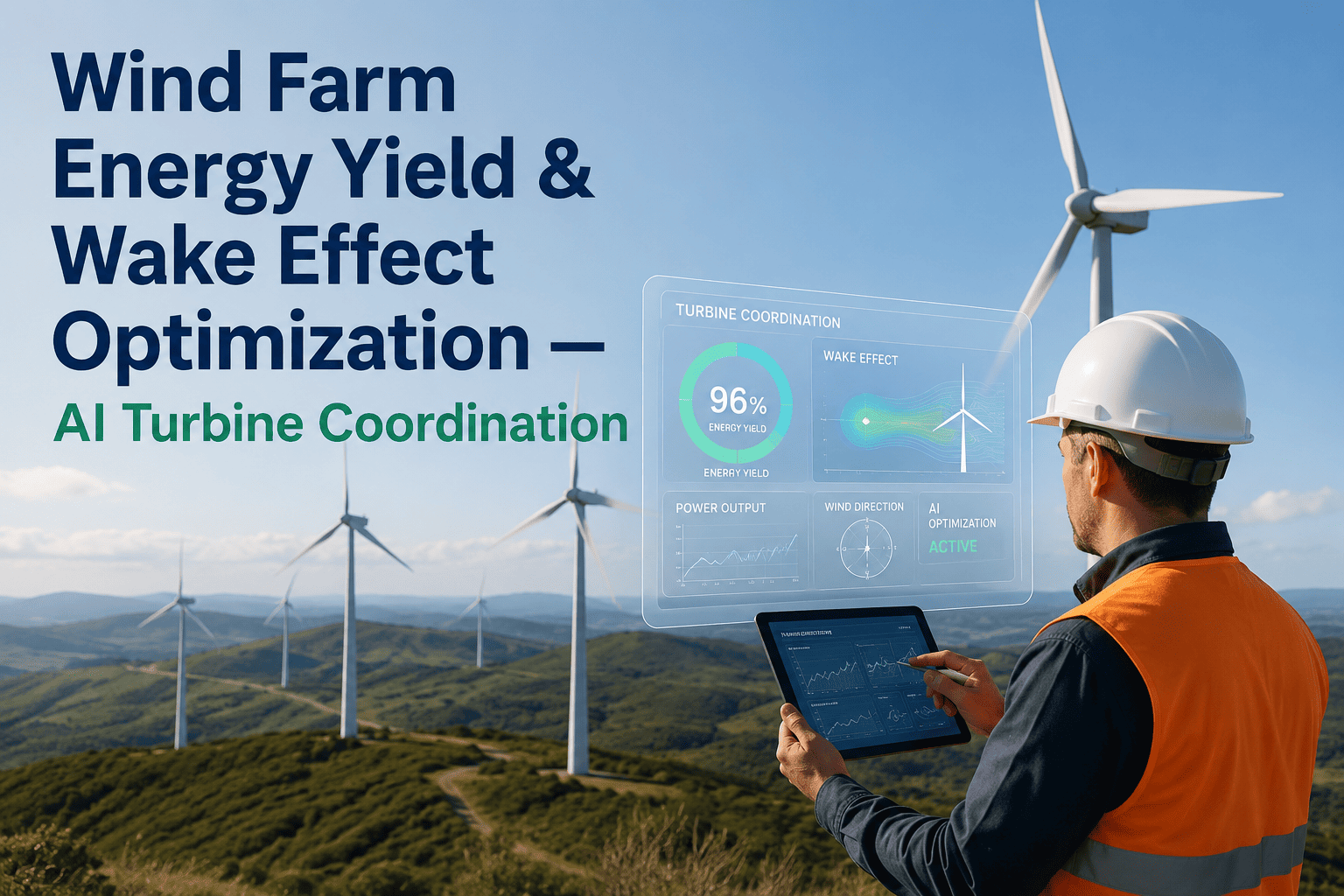
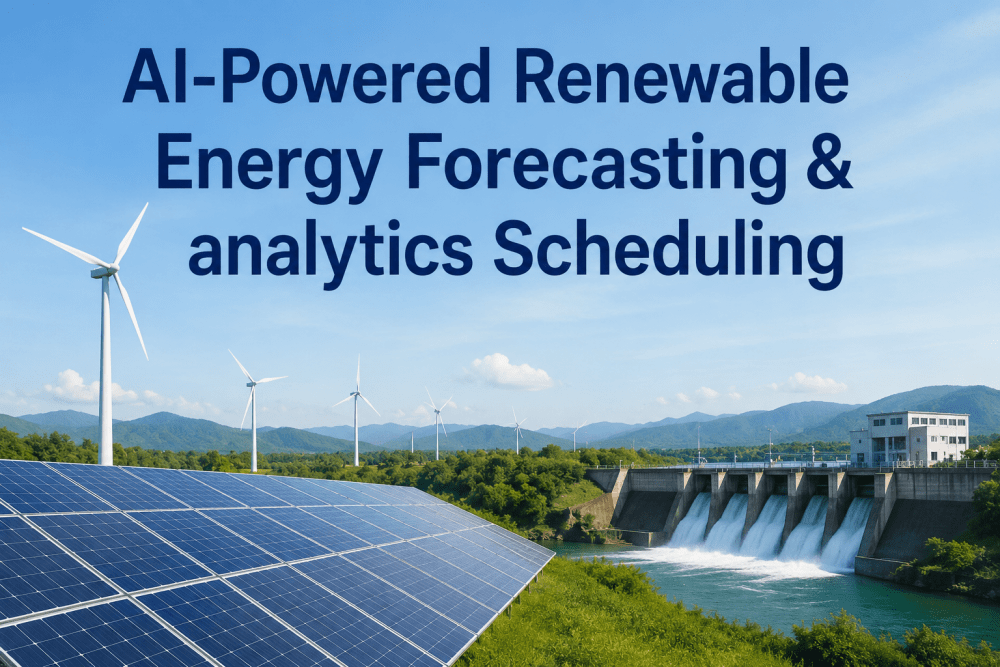
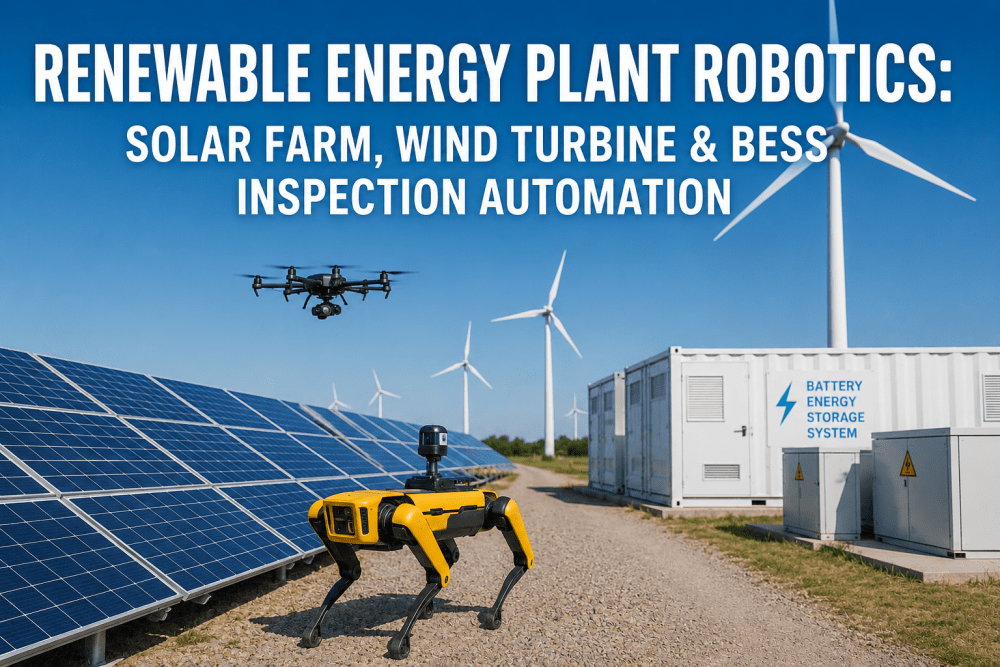
In March 2025, a 200MW hybrid power facility in Rajasthan — combining 120MW solar, 40MW wind, and a 40MW gas turbine backup — was losing 18% of its potential renewable generation to curtailment. The problem wasn't hardware. It was prediction. Their forecasting system missed a three-day cloud pattern, overcommitted gas turbine reserves, and dumped 4.2GWh of clean solar energy because the grid operator couldn't trust the plant's output stability. Annual cost of that curtailment: $3.1 million in lost revenue plus unnecessary gas fuel burn. Six months later, the same facility deployed AI-driven hybrid optimization. The system now ingests satellite weather imagery, historical generation patterns, real-time grid demand signals, and battery state-of-charge data — and produces 15-minute-ahead and 24-hour-ahead forecasts with 96.4% accuracy. When the next cloud pattern arrived, the AI pre-positioned battery reserves, ramped the gas turbine to precise partial load 22 minutes before solar output dropped, and maintained grid commitment within 1.8% of scheduled delivery. Zero curtailment. Zero grid penalty. $2.7 million recovered in the first year. The sun and wind didn't change. The intelligence managing them did.
AI-Powered Hybrid Energy Intelligence
The Sun and Wind Don't Follow Schedules.
Your Grid Commitments Do.
Renewables now account for 95% of global capacity expansion. But intermittency, forecasting errors, and grid instability still cost hybrid power operators millions annually in curtailment, penalties, and unnecessary fossil fuel burn. AI closes the gap between what nature delivers and what the grid demands — in real time, every 15 minutes, 24/7.
$18.1B
AI in energy market size, 2025
175 GW
Additional grid capacity unlockable with AI (IEA)
$110B
Potential annual savings from AI in power operations
36.9%
CAGR of AI in energy market through 2030
Sources: Precedence Research 2025 · International Energy Agency 2025 · MarketsandMarkets 2025 · Grand View Research 2025
The Intermittency Problem — Why Renewables Alone Aren't Enough
Solar panels produce nothing at night. Wind turbines stall on calm days. Cloud cover can cut solar output by 70% in minutes. A passing weather front can swing wind generation from 95% to 12% of capacity in under an hour. These aren't engineering failures — they're the physics of harvesting energy from nature. The challenge isn't generating renewable energy. It's making it reliable enough to replace fossil fuels on a grid that demands constant, predictable power.
00:00 - 06:00
Solar: 0 MW
Wind: Variable
Zero solar. Wind may or may not deliver. Grid still demands baseload. Battery or gas backup must cover 100% of commitment.
06:00 - 10:00
Solar: Ramping 0-80%
Wind: Often dropping
Solar ramps up but morning haze cuts output. Wind typically dies at sunrise. Grid demand surges. The "morning gap" is where curtailment penalties hit hardest.
10:00 - 15:00
Solar: 80-100%
Wind: Low-moderate
Peak solar. Grid may not need all of it. Without smart storage dispatch, excess generation is curtailed — clean energy wasted because timing doesn't match demand.
15:00 - 20:00
Solar: Dropping fast
Wind: Often rising
Solar crashes while demand peaks. The "duck curve" — grid needs maximum power exactly when solar disappears. Battery and gas must ramp precisely to fill the gap.
20:00 - 00:00
Solar: 0 MW
Wind: Often strong
Night wind may surge past grid capacity. Without forecasting, excess wind is curtailed. With AI, batteries charge from cheap night wind for next morning's gap.
The Cost of Getting It Wrong
$3-8M/yr
Revenue lost to renewable curtailment at a 200MW hybrid plant
15-25%
Potential generation wasted due to poor forecasting and dispatch
$50-150K
Monthly grid penalty for deviation beyond scheduled delivery
2-4x
Unnecessary fossil fuel burn from conservative backup dispatch
How AI Orchestrates the Hybrid Energy Mix
AI doesn't replace any energy source — it makes them work together intelligently. By simultaneously forecasting renewable generation, predicting demand, optimizing battery charge/discharge cycles, and dispatching thermal backup with surgical precision, AI transforms a collection of independent energy assets into a single, coordinated, grid-reliable power system.
Solar PV
Primary daytime generation. AI forecasts output 15-min and 24-hr ahead using satellite cloud imagery, panel soiling data, and temperature coefficients.
Wind Turbines
Complementary generation peaking at night and seasonal patterns. AI uses mesoscale weather models and turbine-specific power curves for precision forecasting.
Battery Storage
Time-shifting buffer. AI optimizes charge/discharge cycles to maximize arbitrage value, smooth ramp rates, and provide frequency regulation services.
Gas / Thermal Backup
Reliability anchor. AI minimizes runtime by dispatching only when renewables + storage can't meet grid commitment — at optimal partial loads for efficiency.
Forecast
96%+ accuracy solar/wind prediction using satellite imagery, NWP models, and plant-specific ML
Dispatch
Optimal source selection every 15 minutes — which asset generates, which stores, which idles
Balance
Real-time grid frequency support, ramp rate smoothing, and voltage regulation across all sources
Trade
Maximize revenue by matching generation to market price signals — store when prices are low, dispatch when high
Stable, predictable, schedulable power that meets grid commitment within 2% deviation — from inherently variable renewable sources.
Nature Is Unpredictable. Your Power Delivery Doesn't Have To Be.
iFactory's AI optimization layer connects to your solar, wind, storage, and thermal assets — and orchestrates them into a single, grid-reliable hybrid power system. Reduce curtailment, eliminate grid penalties, and maximize every kilowatt-hour your renewables produce.
The 5 AI Modules That Power Hybrid Optimization
01
Renewable Generation Forecasting
Combines satellite cloud imagery, numerical weather prediction models, historical plant data, and real-time sensor feeds to forecast solar and wind output at 15-minute, 1-hour, and 24-hour horizons. Accuracy improves continuously as the model learns your specific site's microclimate patterns, panel degradation curves, and turbine performance characteristics.
96.4%
Forecast accuracy for day-ahead solar prediction
02
Battery Storage Optimization
Manages charge/discharge cycles across the battery fleet to maximize three simultaneous value streams: energy arbitrage (buy low, sell high), ramp rate smoothing (protect grid from sudden renewable swings), and ancillary services (frequency regulation revenue). AI balances battery degradation against revenue opportunity — never sacrificing long-term asset life for short-term gains.
20-35%
Increase in battery revenue vs. rule-based dispatch
03
Thermal Backup Dispatch
Minimizes gas turbine or diesel genset runtime by dispatching fossil backup only when renewables + storage provably cannot meet grid commitment. AI calculates the minimum fuel burn required to maintain reliability — running thermal units at their most efficient partial load rather than spinning reserves at wasteful idle speeds.
40-60%
Reduction in fossil fuel consumption vs. manual dispatch
04
Grid Compliance Engine
Ensures the hybrid plant meets every grid operator requirement — scheduled delivery accuracy, ramp rate limits, frequency response obligations, and reactive power commitments. AI continuously adjusts the energy mix to maintain delivery within contractual tolerances, eliminating deviation penalties that erode renewable project economics.
<2%
Schedule deviation — within penalty-free tolerance
05
Market & Revenue Optimization
In deregulated markets, AI monitors real-time energy prices, ancillary service markets, and capacity auction signals to maximize revenue from every MWh. When prices spike, the system dispatches stored energy. When prices drop, it charges batteries. When ancillary service rates are high, it provides frequency regulation instead of energy — always chasing the highest-value use of every asset.
12-25%
Revenue uplift vs. fixed dispatch schedules
The ROI of AI-Optimized Hybrid Power
Curtailment Recovery
$2-5M/yr
At a 200MW hybrid plant, recovering even 10% of previously curtailed renewable generation translates to $2-5M in annual revenue. AI-driven forecasting and dispatch typically recovers 60-80% of avoidable curtailment.
Fossil Fuel Reduction
40-60%
Precise thermal dispatch eliminates conservative over-commitment of gas turbines. AI runs fossil backup only when mathematically necessary — and at optimal efficiency when it does run.
Grid Penalty Elimination
$600K-$1.8M/yr
Schedule deviation penalties at hybrid plants typically range $50-150K per month. AI maintains delivery within 2% tolerance, effectively eliminating these charges.
Battery Life Extension
+25-40%
AI-optimized charge/discharge cycles avoid deep discharges, thermal stress, and unnecessary cycling — extending battery warranty life and delaying capital-intensive replacements.
Carbon Offset
15,000-30,000 t/yr
Every MWh of curtailed renewable energy replaced by fossil generation adds 0.5-1.0 tonnes of CO2. Recovering that curtailment directly reduces emissions — measurable ESG value.
System Payback
4-8 Months
The combined value of curtailment recovery, fuel savings, penalty elimination, and revenue optimization typically delivers full platform ROI within the first two quarters of operation.
Why iFactory for Hybrid Energy Optimization
01
Any Source. Any Vendor. One Platform.
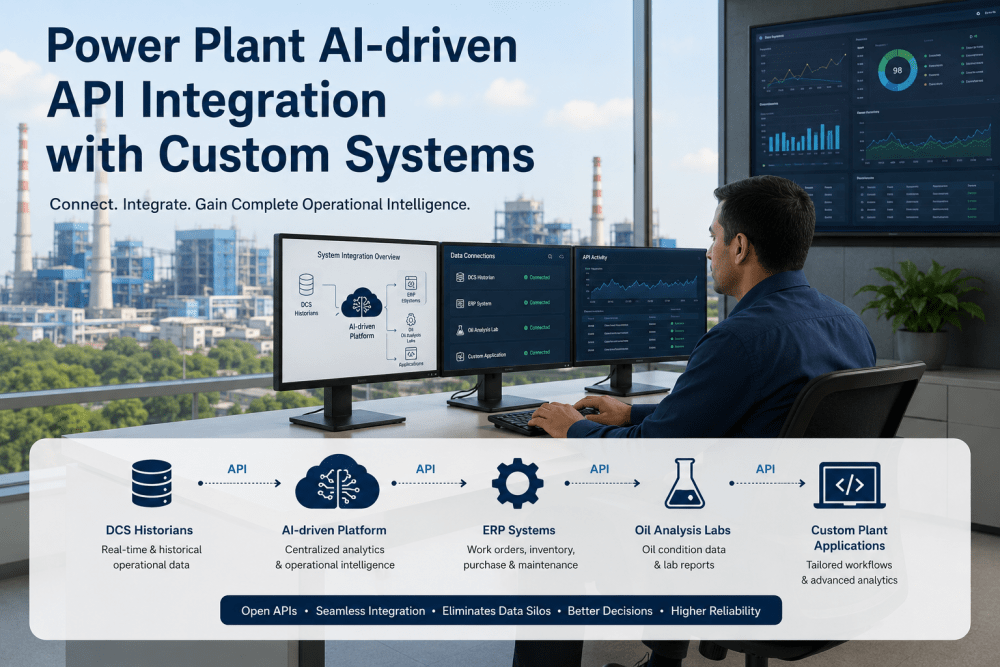
Solar inverters from SMA, Huawei, or SolarEdge. Wind turbine SCADA from Vestas, Siemens Gamesa, or GE. Battery management from Tesla, BYD, or Fluence. Gas turbine controls from any OEM. iFactory integrates across every vendor via OPC-UA, Modbus, MQTT, and REST APIs — normalizing data into a unified optimization model.
02
Edge AI — Grid-Speed Decisions
Dispatch decisions happen at the plant, not in the cloud. iFactory's edge AI calculates optimal source mix every 15 minutes with sub-second response to grid frequency events. Cloud analytics provides long-term forecasting and fleet-wide benchmarking — but your plant never depends on an internet connection for real-time operations.
03
Built for Renewable Complexity
Generic energy management systems treat renewables as simple variable inputs. iFactory understands inverter clipping losses, panel soiling degradation, wake effects between turbines, battery C-rate constraints, and gas turbine part-load efficiency curves. Domain-specific AI delivers optimization that generic platforms miss.
04
Portfolio-Wide Optimization
Operating multiple hybrid sites? iFactory aggregates generation forecasts and dispatch decisions across your entire renewable portfolio — enabling virtual power plant (VPP) operations that optimize across sites, not just within them. Trade surplus from one site to cover deficit at another before touching fossil backup.
Every Curtailed MWh Is Clean Revenue You're Throwing Away
iFactory transforms your hybrid power plant from a collection of independent assets into a single, AI-orchestrated energy system. Forecast with 96%+ accuracy, dispatch with surgical precision, and deliver grid-reliable power from inherently variable renewable sources.
Frequently Asked Questions
What types of hybrid configurations does iFactory support?
iFactory supports any combination of renewable and conventional sources — solar + wind, solar + storage, wind + storage, solar + wind + storage + gas/diesel backup, and any variation including hydro, biomass, or hydrogen fuel cells. The AI optimization engine adapts to whatever asset mix you have and scales as you add new sources. Whether you're operating a 5MW microgrid or a 500MW utility-scale hybrid plant, the platform handles the complexity.
How accurate is AI renewable forecasting compared to traditional methods?
Traditional persistence-based forecasting achieves 70-80% accuracy for day-ahead solar prediction. iFactory's AI models, combining satellite imagery, NWP data, and plant-specific machine learning, consistently deliver 94-97% accuracy for day-ahead forecasts and 97-99% for 1-hour-ahead predictions. The improvement compounds: even a 5% accuracy gain on a 200MW solar plant recovers 1,500-2,000 MWh of previously curtailed annual generation.
Does AI optimization work with existing battery management systems?
Yes. iFactory integrates with all major battery management systems (BMS) via standard communication protocols. The AI generates optimal charge/discharge setpoints and sends them to your existing BMS, which maintains cell-level safety controls. iFactory optimizes when and how much to charge or discharge; the BMS ensures the battery operates within safe voltage, current, and temperature limits. Both systems work in concert without either one overriding the other.
Can AI help with grid code compliance for renewable plants?
Absolutely. Grid codes increasingly require renewable plants to provide services traditionally delivered by thermal generators — frequency response, voltage regulation, ramp rate control, and fault ride-through. iFactory's grid compliance engine monitors all grid operator requirements in real time and adjusts the energy mix to maintain compliance. The system generates automated compliance reports with timestamped evidence of every grid service delivered.
What's the deployment timeline for a typical hybrid plant?
Phase 1 (Weeks 1-4): Integration with existing SCADA, inverters, BMS, and weather data sources. Phase 2 (Weeks 4-8): Baseline data collection and AI model training on your specific site characteristics. Phase 3 (Weeks 8-12): Shadow mode — AI generates recommendations alongside your existing dispatch for validation. Phase 4 (Week 12+): Full autonomous optimization with human oversight. Most plants begin seeing measurable improvements during Phase 2 as the AI identifies quick-win dispatch inefficiencies.