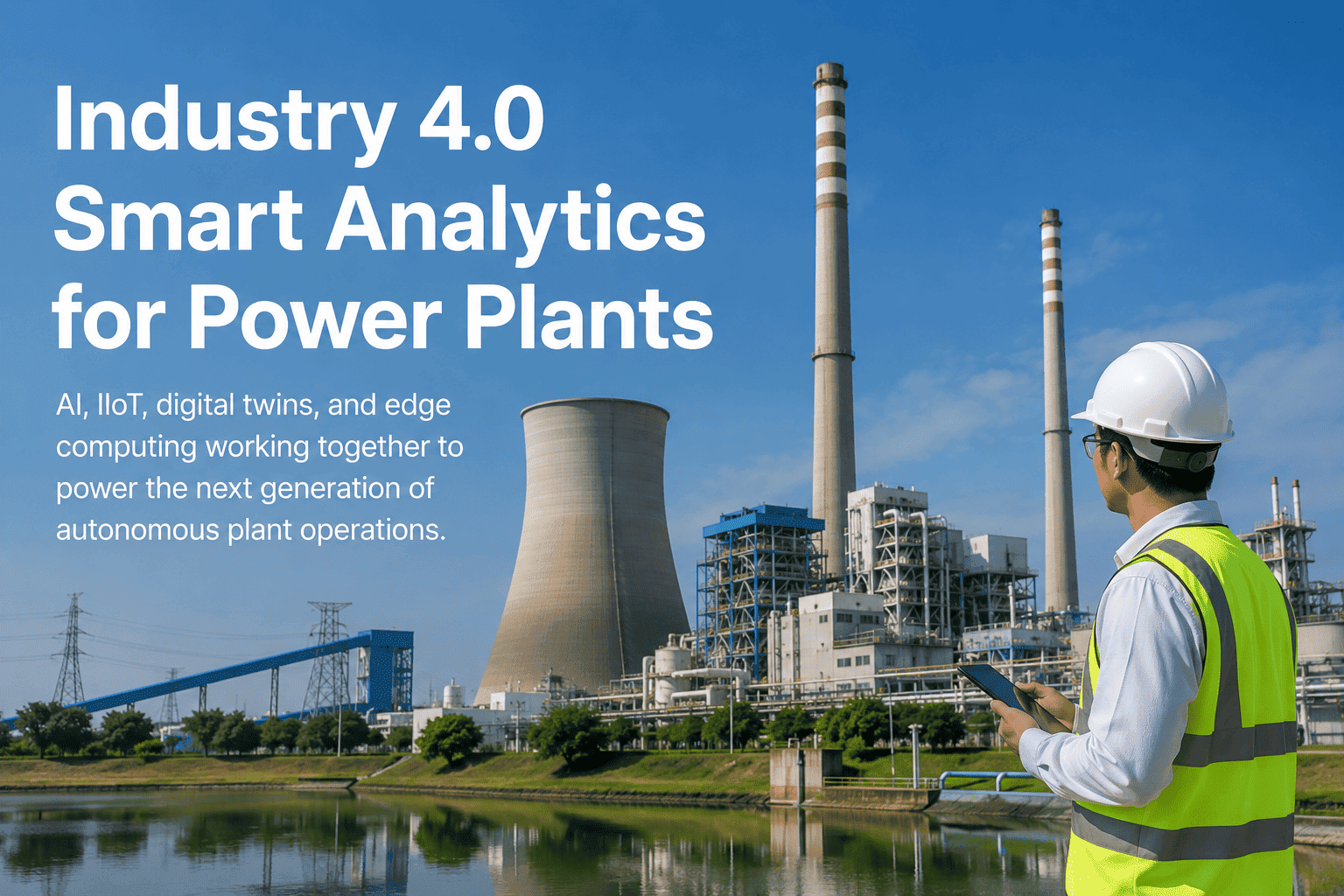
During a recent summer heatwave, a major North American utility's legacy forecasting models failed to anticipate that the typical afternoon load decrease wouldn't happen. Human operators scrambled to make manual corrections of 1,500 MW — enough to power a mid-size city. Meanwhile, their AI model, quietly running in parallel for years, predicted the anomaly perfectly. That gap between what legacy models expect and what actually happens is widening every year. Renewable intermittency, EV charging surges, data center demand spikes, and extreme weather events are making traditional load forecasting unreliable on exactly the days when accuracy matters most. The plants that win in this environment aren't the ones generating the most power. They're the ones that know exactly how much power will be needed, when, and where — before the demand arrives.
Smart Grid Intelligence
The Grid Doesn't Need More Power. It Needs Better Predictions.
AI-powered load forecasting and smart grid integration that predicts demand with minute-level accuracy, optimizes dispatch, balances renewables, and turns your power plant from a reactive generator into a predictive grid partner
15-20%
Forecast error reduction with AI vs legacy models
$1.4T
Annual global cost of unplanned energy downtime
5 min
Forecast update cycle with real-time AI adaptation
Why Traditional Load Forecasting Is Breaking Down
Legacy forecasting relies on mathematical models tuned to historical demand curves and seasonal patterns. That works on "normal" days. But the days that are bad are becoming worse and more frequent — and those are exactly the days where forecast errors cost the most.
Renewable Intermittency
Solar and wind output fluctuates with weather, injecting variability that legacy models can't handle. As renewables grow past 30% of the mix, minute-to-minute supply uncertainty increases dramatically.
Grid operators over-commit backup generation "just in case" — burning fuel to compensate for forecast uncertainty.
Extreme Weather Events
Heatwaves, cold snaps, and storms create demand spikes that have no historical precedent. Legacy models extrapolate from past patterns that no longer apply.
Manual operator corrections of 1,000-2,000 MW during peak events — reactive, stressful, and error-prone.
EV Charging & Data Centers
Electric vehicle charging creates new, unpredictable demand patterns. AI data centers add massive, bursty loads that don't follow traditional industrial consumption curves.
Load hotspots appear at substations before traditional planning can respond, risking transformer overload.
Distributed Generation
Rooftop solar, battery storage, and behind-the-meter generation make net demand harder to predict. Consumers are now also producers, reshaping grid dynamics hourly.
Visibility gaps at the distribution edge where utilities have the least data and the most volatility.
Legacy models work on easy days. AI works on the hard ones — the days that cost the most. See AI forecasting accuracy on your grid data.
How AI Load Forecasting Actually Works
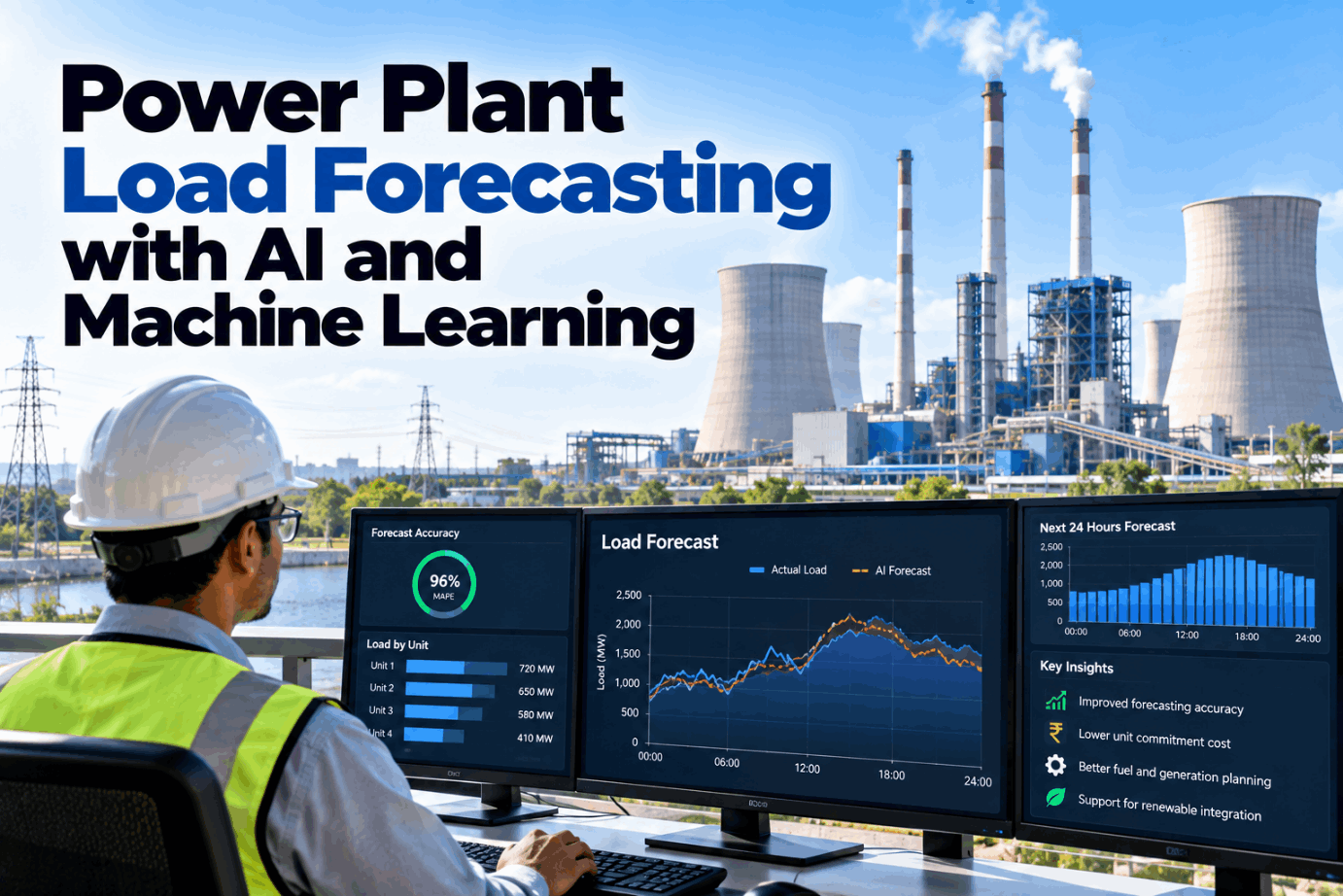
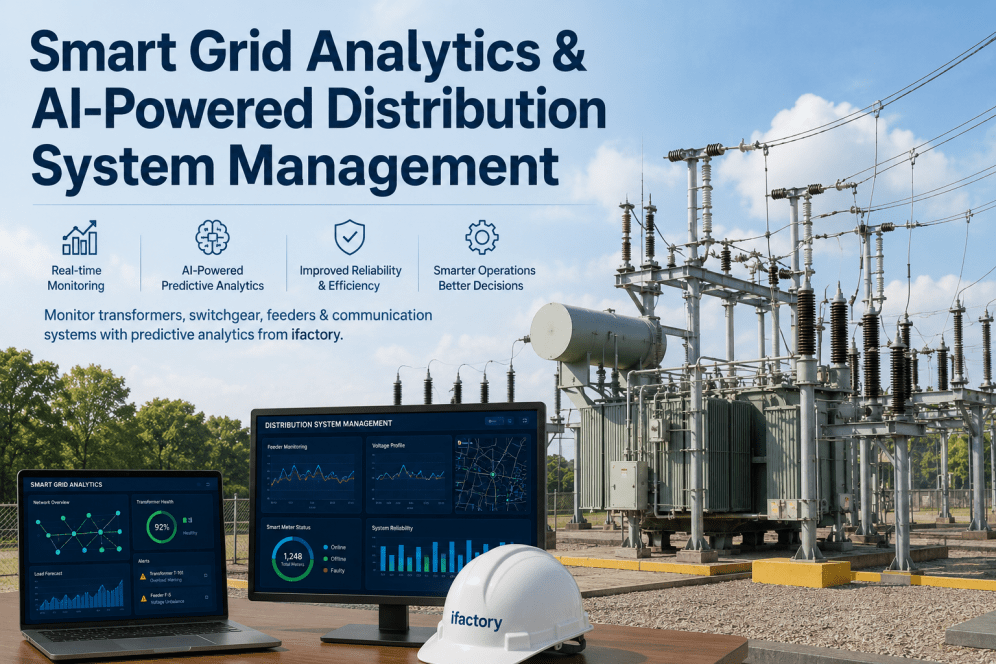
AI doesn't replace your existing energy management system. It adds a predictive intelligence layer that processes multi-source data, adapts to changing conditions in real time, and delivers forecasts at a granularity and accuracy that statistical models cannot match.
Ingest
Multi-Source Data Fusion
Historical load curves, real-time smart meter feeds, weather forecasts (temperature, humidity, wind, solar irradiance), calendar events, industrial schedules, EV charging patterns, and grid topology data flow into the AI engine continuously. The system processes data that no human team could correlate manually.
Predict
Adaptive Forecasting Models
Deep learning models (LSTM, CNN-GRU hybrids, transformer architectures) identify non-linear patterns across time horizons — from 5-minute ahead for real-time balancing, to 24-hour ahead for dispatch scheduling, to seasonal forecasting for capacity planning. Models self-update as conditions change.
Optimize
Dispatch & Balancing Intelligence
Forecasts feed directly into generation scheduling, renewable curtailment decisions, storage dispatch, and demand response activation. AI optimizes the plant-grid interface to minimize fuel cost, maximize renewable utilization, and maintain stability margins — all simultaneously.
Adapt
Continuous Learning Loop
Every forecast is compared against actual outcomes. Errors feed back into model training. The system improves over time, learning your grid's specific patterns — seasonal shifts, local weather sensitivity, industrial load cycles — getting smarter with every cycle.
Three Forecast Horizons, One Platform
Different grid decisions need different forecast windows. AI delivers accurate predictions at every time horizon, from real-time balancing to long-range planning, through a single integrated platform.
Minutes to Hours
Real-Time Balancing
Frequency regulation and AGC response
Renewable ramp management
Battery storage charge/discharge timing
Emergency reserve activation
Updates every 5 minutes with live sensor data
Hours to Days
Dispatch Scheduling
Day-ahead unit commitment
Fuel procurement optimization
Maintenance window planning
Peak demand preparation
24-hour forecasts with hourly resolution
Weeks to Seasons
Capacity Planning
Seasonal generation adequacy assessment
Transmission congestion forecasting
Capital investment planning
Regulatory compliance reporting
Monthly trends with weekly granularity
Forecast Better. Dispatch Smarter. Waste Less.
iFactory's AI forecasting platform integrates with your existing EMS, SCADA, and market systems to deliver the prediction accuracy that turns your plant from a reactive generator into a predictive grid partner — less fuel wasted, more revenue captured, better grid stability.
Renewable Integration: Turning Intermittency From Problem to Advantage
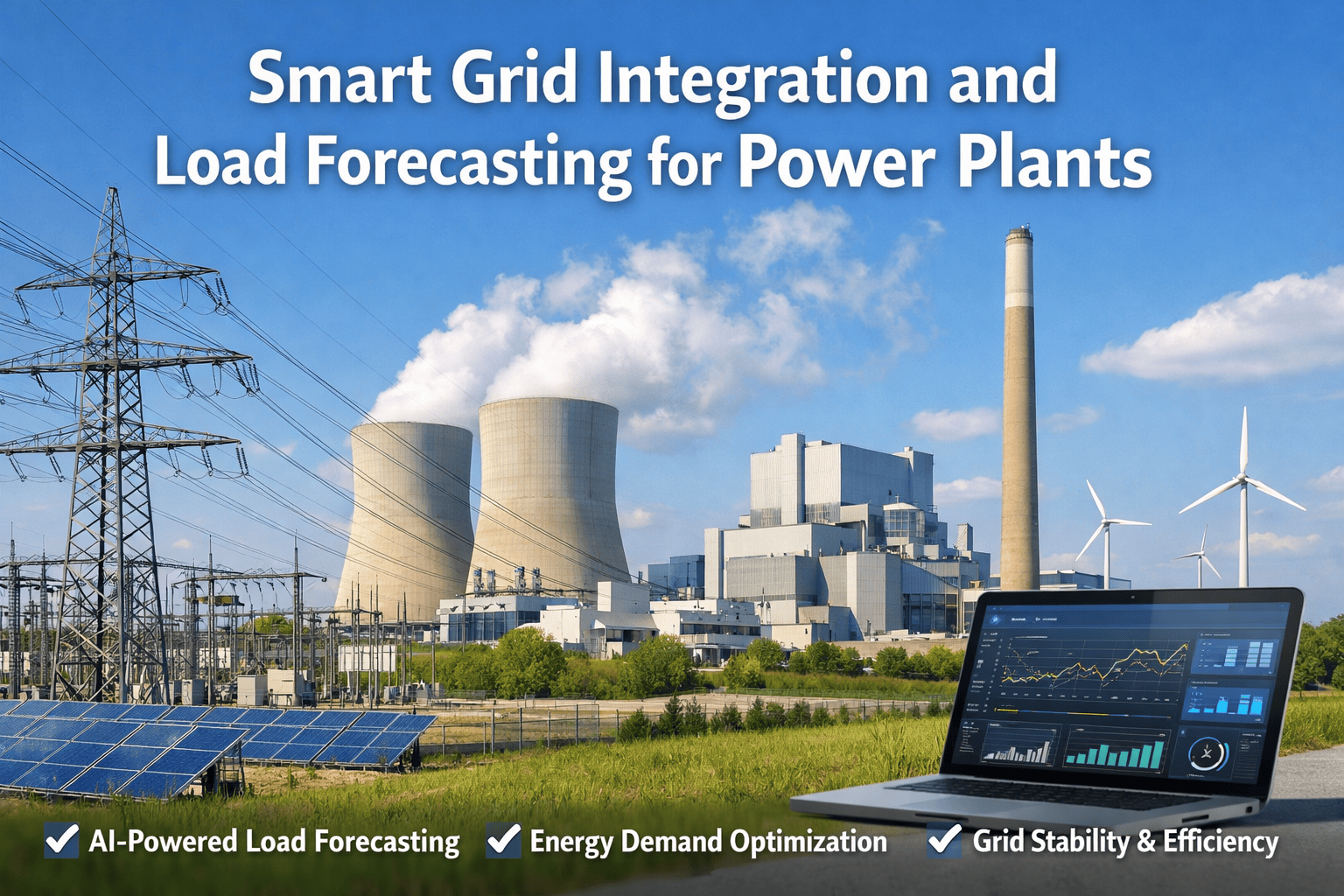
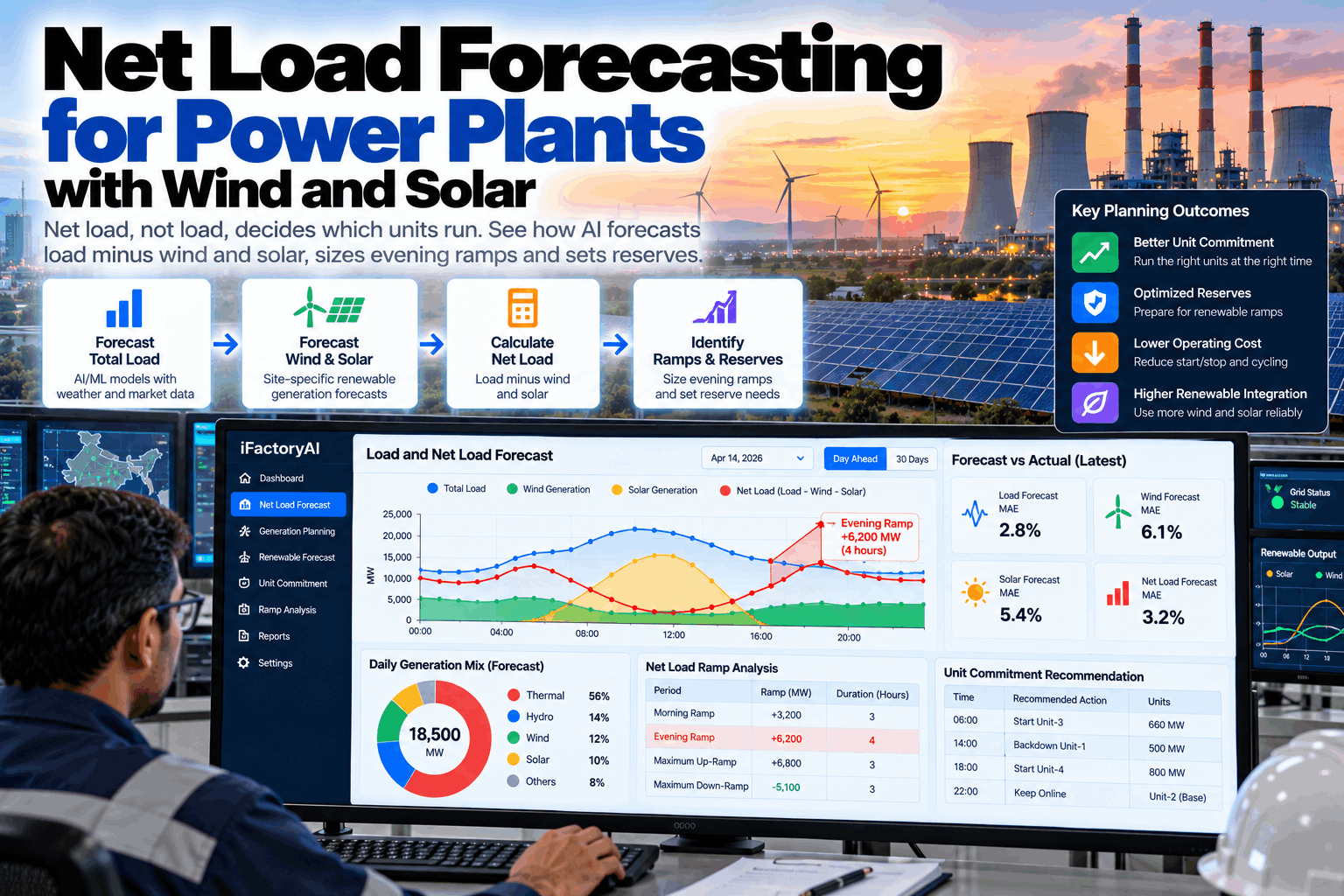
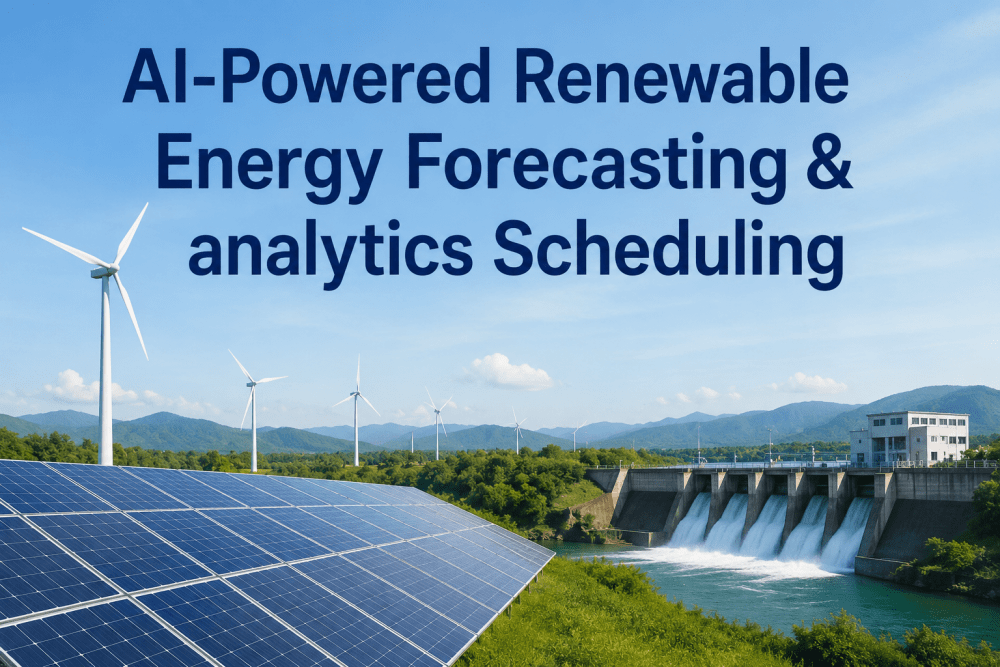
Renewables aren't unreliable. They're unpredictable with legacy tools. AI changes that equation by forecasting solar and wind output alongside demand, enabling dispatch decisions that maximize clean energy use while maintaining grid stability.
Solar output drops 80% in 20 minutes when clouds pass — ramp rates that thermal plants can't match
Wind generation varies ±40% from forecast on any given day using traditional weather models
Grid operators curtail renewables when they can't predict output — wasting clean energy and revenue
Battery storage deployed without AI guidance cycles inefficiently, degrading capacity and economics
Solar irradiance and cloud movement forecasts at 5-minute intervals reduce ramp surprise by 60-70%
Wind forecasting with AI reduces prediction error by 15-20% compared to numerical weather models
Optimal curtailment decisions that minimize wasted generation while maintaining stability margins
Storage dispatch optimization that maximizes cycle economics while extending battery life
The Business Impact: Forecast Accuracy Translates Directly to Revenue
Reduced Imbalance Costs
30-50%
Better forecasts mean fewer deviations from scheduled generation. In balancing markets, every MW of imbalance carries penalty costs that accurate prediction eliminates.
Lower Reserve Margins
15-25%
When you trust your forecast, you can reduce expensive spinning reserves. Less idle capacity means less fuel burned waiting for demand that may never come.
Higher Renewable Utilization
10-20%
Accurate renewable output prediction reduces curtailment. Every MWh of clean energy dispatched instead of curtailed is revenue captured and emissions avoided.
Grid Penalty Avoidance
Significant
Utilities face financial penalties for frequency deviations, unscheduled outages, and reliability standard violations. Better prediction prevents the events that trigger penalties.
Frequently Asked Questions
How accurate is AI load forecasting compared to traditional methods?
AI typically reduces forecast error by 15-20% compared to statistical models on normal days. On abnormal days — extreme weather, sudden demand shifts, renewable ramp events — the improvement is dramatically larger because AI adapts to conditions that have no historical precedent. Legacy models fail precisely when accuracy matters most; AI models are designed to excel in those scenarios.
How does AI forecasting integrate with our existing EMS and SCADA?
The platform connects to existing energy management systems, SCADA, market interfaces, and weather data feeds through standard APIs and protocols. AI forecasts feed directly into your dispatch scheduling, generation planning, and market bidding workflows. No replacement of existing systems required — it adds intelligence on top of your current infrastructure.
Can this handle both thermal and renewable generation in a mixed portfolio?
Yes. The platform forecasts demand and renewable output simultaneously, optimizing the dispatch of thermal units, solar, wind, and battery storage as one integrated portfolio. It determines the optimal generation mix at every time interval — minimizing fuel cost while maintaining stability margins and maximizing renewable utilization.
How fast is deployment?
Initial connection to data sources and baseline forecasting typically takes 2-4 weeks. AI models begin producing useful predictions within the first month as they learn your grid's patterns. Forecast accuracy improves continuously as the system accumulates operational data. Most operators see measurable improvement in dispatch economics within 90 days.
What about data security and grid cybersecurity?
The system supports on-premise deployment with edge computing, keeping all operational data within your network. No sensitive grid data needs to leave your infrastructure. The platform is designed with industrial cybersecurity standards in mind, including encrypted communications, role-based access control, and audit trails for all system interactions.
The Grid of 2026 Runs on Prediction, Not Reaction
iFactory's AI forecasting platform gives your power plant the predictive intelligence to anticipate demand, optimize dispatch, integrate renewables seamlessly, and turn forecast accuracy into measurable revenue. See it with your own grid data.
.png)