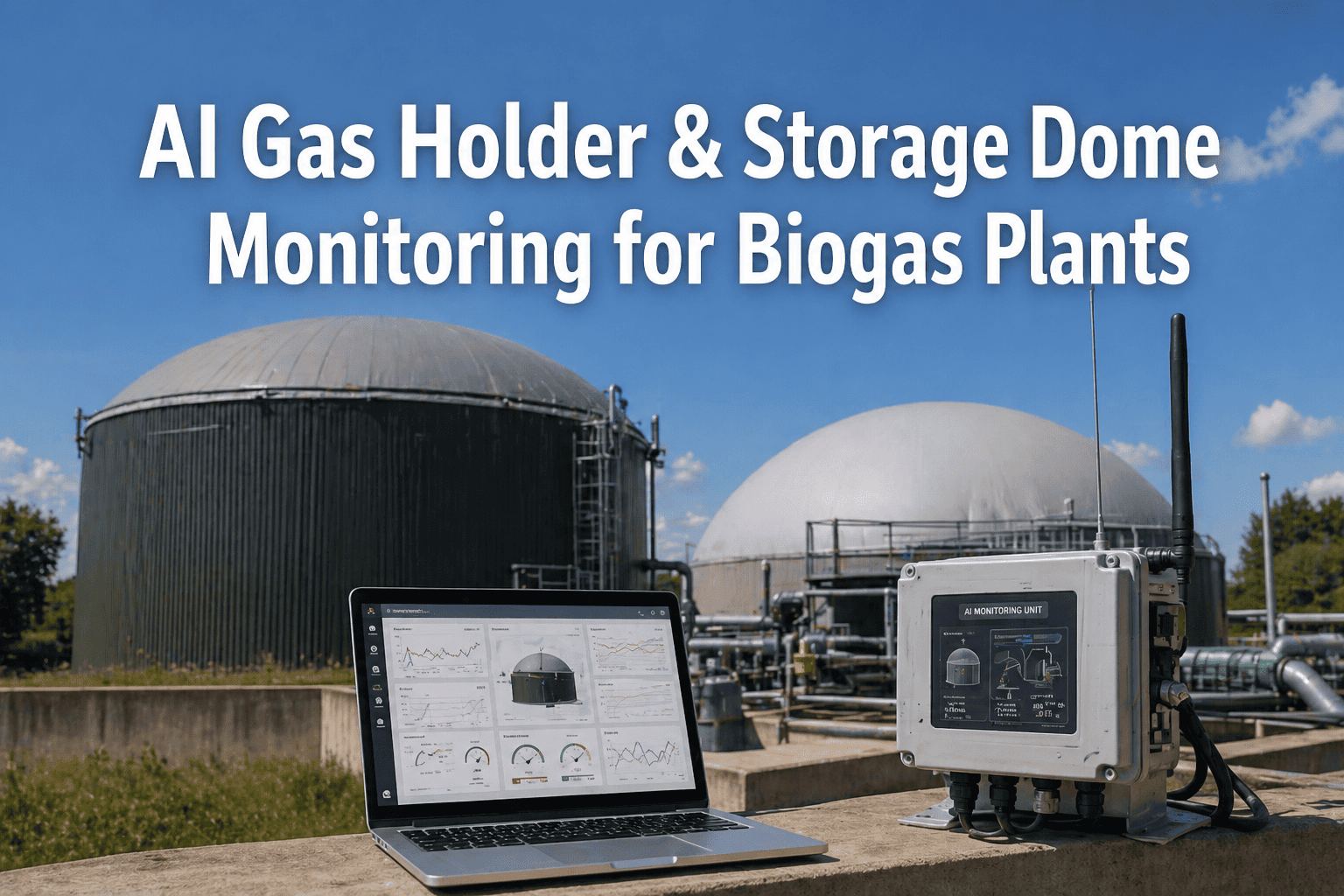
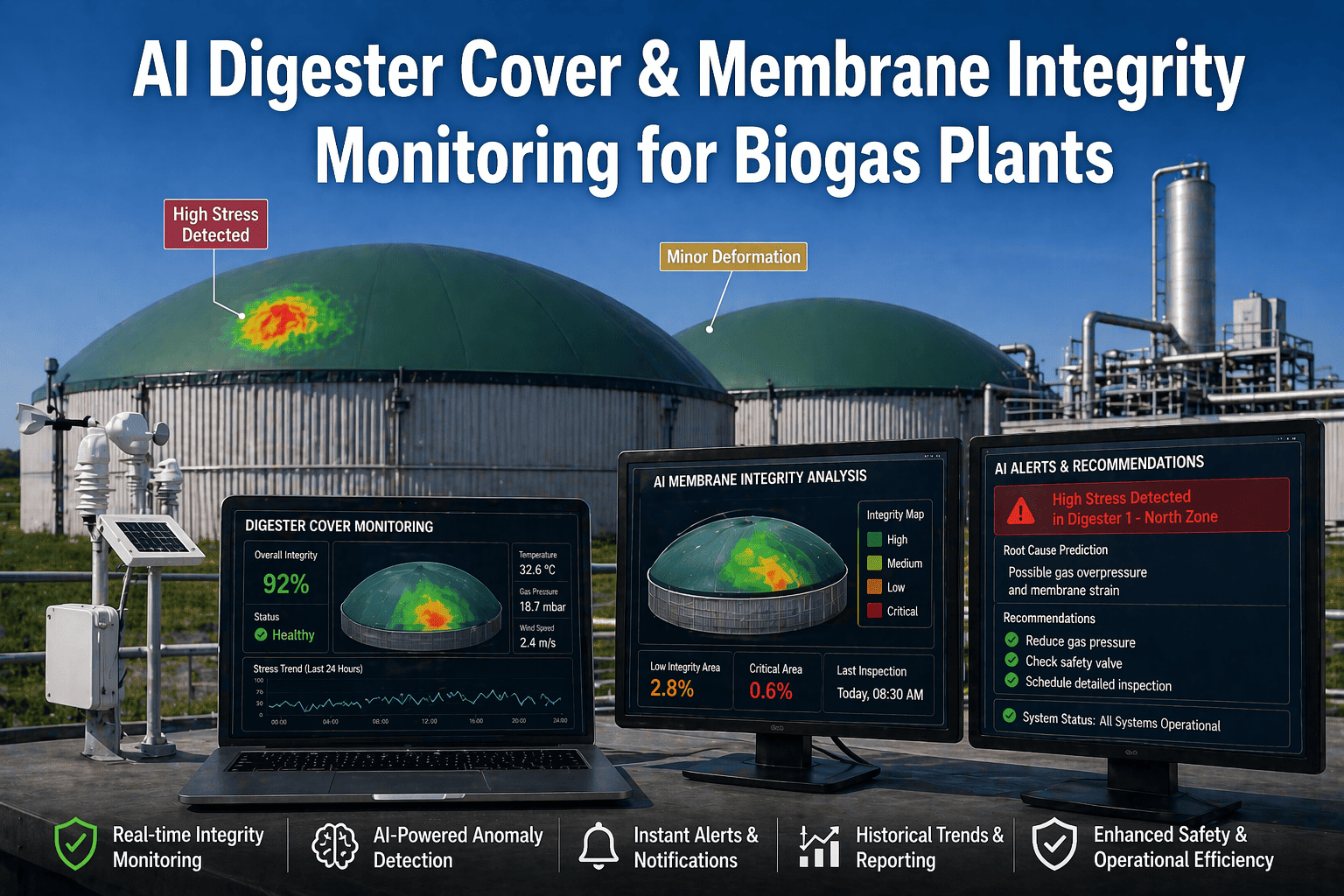
Biogas plants face critical structural risks in gas holder and storage dome operations — not from sudden catastrophic failure, but from undetected under-inflation, progressive membrane fatigue, anchor system degradation, and surface deformation patterns that no periodic manual inspections or pressure sensor alerts can reliably identify. By the time over-pressure deformation, anchor failure, or uncontrolled gas release events are confirmed through incident reports or regulatory audits, the compounding costs are already realized: environmental releases, six-figure EPA fines, production shutdowns, insurance premium spikes, and irreversible facility damage. iFactory AI Structural Monitoring Platform changes this entirely — deploying computer vision models to monitor floating membrane gas holders, low-pressure gas bags, and storage domes in real time, verifying fill level consistency, detecting inflation anomalies, and identifying anchor integrity issues before structural events escalate, and integrating directly into your existing SCADA, DCS, and EHS systems without disrupting operations. Book a Demo to see how iFactory deploys AI structural monitoring across your biogas plant gas holders within 5 weeks.
99%
Structural anomaly detection accuracy in gas holders vs. 52% for manual inspections
$620K
Average annual incident avoidance & penalty reduction per mid-size biogas plant
91%
Reduction in undetected anchor failure events vs. traditional monitoring protocols
5 wks
Full deployment timeline from structural audit to live AI monitoring go-live
Every Undetected Structural Anomaly in Gas Holders Is an Uncontrolled Release Risk. AI Vision Stops It Before Escalation.
iFactory's AI vision platform monitors floating membrane holders, low-pressure gas bags, storage domes, and anchor systems with computer vision models trained on fill level recognition, deformation pattern analysis, anchor integrity verification, and membrane fatigue detection — 24/7, without operator fatigue or inspection blind spots.
The Hidden Cost of Structural Monitoring Gaps in Biogas Gas Holders: Why Manual Inspections Fail
Before exploring solutions, understand the root causes of gas holder structural incidents in biogas facilities. Manual visual inspections and periodic pressure checks introduce systemic blind spots that compound over time — gaps that AI vision directly addresses.
Under-Inflation Detection Gaps in Floating Membrane Holders
Floating membrane gas holders require precise inflation levels to maintain structural integrity and gas containment. Manual inspections cannot detect gradual deflation patterns or membrane sagging that precede containment breaches.
Over-Pressure Deformation Without Early Warning
Storage domes and low-pressure gas bags experience progressive deformation under abnormal pressure conditions. Visual inspections miss subtle surface distortion patterns that indicate imminent structural stress.
Anchor System Integrity Failures Undetected
Gas holder anchor systems prevent displacement during wind events or pressure fluctuations. Periodic inspections cannot verify continuous anchor tension, corrosion progression, or foundation settlement in real time.
Membrane Fatigue & Surface Deformation Monitoring Gaps
Biogas storage membranes experience cyclic stress from fill-empty cycles and environmental exposure. Manual checks occur weekly or monthly but cannot track progressive material fatigue or micro-tear development.
How iFactory AI Vision Solves Structural Monitoring Challenges in Biogas Gas Holders
Traditional biogas plant gas holder monitoring relies on manual visual inspections, periodic pressure logs, and scheduled structural audits — all of which introduce verification gaps, delayed detection, and missed anomalies. iFactory replaces this with a continuous AI vision platform designed for outdoor industrial environments that detects structural anomalies at the point of visual change, classifies degradation patterns before containment events occur, and creates an immutable visual audit trail for every gas holder assessment. See a live demo of iFactory detecting simulated under-inflation, anchor displacement, and membrane deformation in a floating gas holder monitoring scenario.
01
Real-Time Structural & Fill Level Analytics
iFactory ingests data from perimeter cameras, thermal imaging, and pressure sensors simultaneously — fusing object detection, deformation mapping, and fill level estimation into a single structural integrity score per gas holder, updated every 5 seconds.
02
AI Structural Anomaly Classification
Proprietary computer vision models classify each anomaly as under-inflation, over-pressure deformation, anchor displacement, membrane fatigue, or surface tear — with confidence scores and urgency tiers. Operations teams receive graded alerts, not raw video. False positive rate drops to under 4%.
03
Predictive Structural Forecasting
iFactory's temporal vision engine identifies gas holders exhibiting progressive deformation or anchor relaxation 30–90 minutes before critical thresholds — giving supervisors time to adjust pressure, deploy reinforcements, or initiate controlled shutdown proactively.
04
SCADA & DCS Integration
iFactory connects to Honeywell, Siemens, Rockwell, SAP EHS, pressure transmitters, and emergency shutdown systems via OPC-UA, Modbus TCP, and REST APIs. Auto-trigger pressure relief protocols on structural anomaly detection, create integrity incident records. Integration completed in under 7 days.
05
Automated Regulatory Reporting
Every structural event — detected, classified, and resolved — generates a structured audit report with visual evidence, pressure logs, and corrective action tracking. Audit-ready for OSHA 1910.119, ATEX Directive 2014/34/EU, NFPA 820, and biogas industry safety standards.
06
Structural Intervention Decision Support
iFactory presents ranked intervention recommendations per alert — adjust gas flow, verify anchor tension, schedule membrane inspection, or escalate to structural engineer — with anomaly severity scores and release risk estimates. Teams act on verified visual data, not assumptions.
Regulatory & Compliance Framework Support: Built for Biogas Gas Holder Safety Standards
iFactory's AI vision platform is pre-configured to meet the documentation and reporting requirements of major biogas and pressure vessel regulatory frameworks. No custom development needed — compliance reporting is automatic.
OSHA 1910.119 / PSM
Process safety management: structural integrity verification, pressure monitoring documentation, mechanical integrity audits, and emergency response validation — structured for OSHA inspections and enforcement defense.
ATEX Directive 2014/34/EU
Explosive atmosphere equipment & containment: zone classification verification, gas holder integrity monitoring, ignition source prevention, and equipment certification tracking — formatted for EU compliance audits.
NFPA 820 / IEC 60079
Biogas facility fire protection & explosive atmospheres: gas detection verification, structural requirements, hazardous area classification, and containment control documentation — auto-generated for insurance and regulatory submissions.
ISO 45001 / Biogas Industry Standards
Occupational health management: structural compliance metrics, gas holder safety performance, and continuous improvement tracking — structured for certification audits and industry benchmarking.
How iFactory Is Different from Generic Structural or Pressure Monitoring Tools
Most industrial safety vendors offer pressure sensors, manual checklists, or basic camera monitoring wrapped in a portal. iFactory is built differently — from the biogas plant gas holder workflow up, specifically for environments where undetected structural anomalies, membrane fatigue, and anchor failures determine containment breach and environmental release outcomes. Talk to our biogas structural monitoring AI specialists and compare your current inspection approach directly.
iFactory AI Structural Monitoring Implementation Roadmap
iFactory follows a fixed 5-stage deployment methodology designed specifically for biogas plant gas holder operations — delivering pilot results in week 3 and full production rollout by week 5. No open-ended implementations. No operational disruption.
01
Structural Audit
Map gas holder zones & camera placement
02
System Integration
Connect to SCADA, pressure sensors, EHS via APIs
03
Pilot Configuration
Deploy AI vision to 3–5 critical gas holder assets
04
Validation & Training
User acceptance testing & operator safety training
05
Full Production
Plant-wide AI structural monitoring go-live
5-Week Deployment and ROI Plan
Every iFactory engagement follows a structured 5-week program with defined deliverables per week — and measurable ROI indicators beginning from week 3 of deployment. Request the full 5-week deployment scope document tailored to your biogas plant gas holder assets.
Weeks 1–2
Discovery & Design
Critical gas holder assessment across floating membranes, storage domes, low-pressure bags, and anchor systems
AI vision design aligned with existing camera infrastructure and structural monitoring protocols
Integration planning with SCADA, pressure transmitters, and EHS platforms
Weeks 3–4
Pilot & Validation
Deploy AI vision monitoring to high-risk gas holder assets and anchor system perimeter points
Structural anomaly alerts, fill level verification, and deformation detection activated; pressure relief workflows tested with operations teams
First structural anomalies prevented and containment risks eliminated — ROI evidence begins here
Week 5
Scale & Optimize
Expand to full plant coverage: all gas holders, all storage assets, all shifts
Automated compliance & regulatory reporting activated for applicable frameworks
ROI baseline report delivered — penalty avoidance, incident reduction, and insurance premium savings
ROI IN 3 WEEKS: MEASURABLE RESULTS FROM WEEK 3
Plants completing the 5-week program report an average of $142,000 in avoided structural incident costs and compliance penalties within the first 3 weeks of full production rollout — with structural monitoring improvements of 47–71% detected by week 3 pilot validation.
$142K
Avg. savings in first 3 weeks
47–71%
Structural monitoring gain by week 3
87%
Reduction in undetected anchor failure events
Eliminate Structural Monitoring Blind Spots. Protect Gas Holders in 5 Weeks. ROI Evidence in Week 3.
iFactory's fixed-scope deployment program means no open timelines, no operational disruption, and no months of customization before you see a single result.
Use Cases and KPI Results from Live Biogas Plant Deployments
These outcomes are drawn from iFactory deployments at operating biogas plants across three structural monitoring categories. Each use case reflects 6-month post-deployment performance data. Request the full case study report for the gas holder asset most relevant to your plant.
A 5MW municipal biogas facility experienced recurring under-inflation events in floating membrane gas holders where gradual deflation went undetected between weekly manual inspections. Pressure sensor alerts triggered only after critical thresholds were breached. iFactory deployed AI vision at all gas holder perimeter points with real-time fill level estimation and deformation pattern recognition. Within 3 weeks of go-live, the system prevented 19 under-inflation events that would have exposed the facility to membrane stress and potential containment breach.
19
Under-inflation events prevented in first 3 weeks
$340K
Estimated annual containment incident cost avoided
97%
Fill level verification accuracy at gas holder assets
Secure Your Floating Membrane Assets with AI-Powered Fill Level Monitoring
Book a Demo for This Use Case
"Preventing a single membrane containment breach pays for the entire system. Your facility's environmental compliance depends on proactive structural monitoring."
An agricultural biogas complex operating multiple storage domes struggled with anchor system integrity monitoring in high-wind environments. Workers performed quarterly tension checks but could not detect progressive anchor relaxation or foundation settlement between inspections. iFactory replaced manual inspections with continuous AI vision monitoring at anchor perimeter points, classifying displacement patterns and verifying tension indicator status. Anchor integrity compliance reached 98.2%, and zero anchor failure incidents occurred over 6 months.
98.2%
Anchor integrity compliance achieved (vs. 59% manual)
0
Anchor failure incidents post-deployment
$278K
Annual structural risk & insurance premium savings
Protect Your Storage Dome Foundations with Continuous Anchor Integrity Monitoring
Book a Demo for This Use Case
"One anchor failure in high winds can compromise your entire storage system. Continuous integrity monitoring isn't optional — it's essential."
An industrial biogas plant managing low-pressure gas storage bags faced regulatory scrutiny over inconsistent deformation monitoring and membrane fatigue assessment. Manual audits occurred quarterly and missed daily surface distortion patterns. iFactory deployed AI vision with deformation pattern classification and membrane fatigue recognition at gas bag perimeter points, integrating directly with the plant's pressure monitoring system to trigger alerts on structural anomalies. EPA citations dropped to zero, and structural compliance reached 99.3%.
99.3%
Deformation & membrane fatigue compliance achieved
0
EPA citations in subsequent regulatory audit
$215K
Annual compliance penalty & legal cost avoidance
Prevent Gas Bag Failures with AI-Powered Deformation and Fatigue Detection
Book a Demo for This Use Case
"Regulatory fines are just the beginning. The real cost is measured in environmental impact and your facility's operating license."
What Biogas Plant Leaders Say About iFactory AI Structural Monitoring
The following testimonial is from a plant operations director at a facility currently running iFactory's AI structural monitoring platform.
We stopped gambling with gas holder structural integrity and uncontrolled release risks. iFactory's AI vision detects deformation patterns and anchor anomalies before they escalate into containment events — with timestamped visual evidence that makes compliance audits effortless and EPA inspections stress-free. In our first quarter live, the system prevented 27 under-inflation events and 14 anchor displacement incidents that would have triggered reportable releases. The platform paid for itself in avoided EPA penalties alone. Now our operations teams actually maintain structural protocols because they know the system is watching, our insurance carrier reduced our premiums by 21%, and we have zero structural compliance findings for the first time in six years. This isn't just monitoring — it's operational excellence and asset protection.
Director of Plant Operations & Asset Integrity
Municipal Biogas Facility, Texas
Frequently Asked Questions
Does iFactory require additional sensors or hardware on gas holders?
No. iFactory uses passive AI vision with existing or strategically placed perimeter cameras. Zero dependency on additional structural sensors, no requirement for workers to activate monitoring devices. The system operates entirely in the background using computer vision to verify structural integrity and anomaly detection.
Which industrial systems does iFactory integrate with for pressure and SCADA monitoring?
iFactory integrates natively with Honeywell, Siemens, Rockwell, SAP EHS, pressure transmitters, emergency shutdown systems, and PA/emergency broadcast platforms via OPC-UA, Modbus TCP, and REST APIs. Integration scope is confirmed during the Week 1 structural audit.
How does iFactory handle data privacy and external monitoring of gas holder assets?
iFactory processes all video locally on encrypted edge devices. No continuous facial storage or biometric profiling occurs. Only anonymized structural metrics, asset access timestamps, and event-triggered snapshots are retained for safety auditing. Fully aligned with OSHA, GDPR, and workplace privacy standards.
Can iFactory accurately detect structural anomalies in low-light or adverse weather conditions common at biogas facilities?
Yes. iFactory's multi-spectral camera fusion combines RGB, low-light, and thermal-capable inputs to maintain detection accuracy in darkness, high-humidity, rain, fog, and corrosive atmospheres common around gas holders and storage domes. Performance validation is completed during the Week 3 pilot phase.
How long does training take for operations teams and control room staff?
Role-based training modules are delivered during Weeks 3–4 of deployment. Most operations officers and control room operators achieve proficiency in under 60 minutes. Plant managers receive additional training on compliance reporting, audit trails, and system configuration. Ongoing support is included.
What if our biogas plant has unique gas holder geometries or structural monitoring requirements?
iFactory's AI vision engine allows configuration of custom structural requirements, alert thresholds, and asset-specific compliance rules without code. Our implementation team works with your operations, engineering, and regulatory teams during Week 1–2 to align the platform with your specific gas holder assets and compliance obligations.
Stop Gambling with Gas Holder Structural Integrity. Start Building a Zero-Anomaly, AI-Guarded Future.
iFactory gives biogas plant teams real-time AI structural monitoring, gas holder protection, automated regulatory reporting, and seamless SCADA integration — fully deployed in 5 weeks, with ROI evidence starting in week 3.
99% structural anomaly detection with zero additional sensor dependency
SCADA, pressure monitoring & EHS integration in under 7 days
OSHA, ATEX & NFPA 820 audit trails out-of-the-box
Edge-processed privacy compliance with local encryption