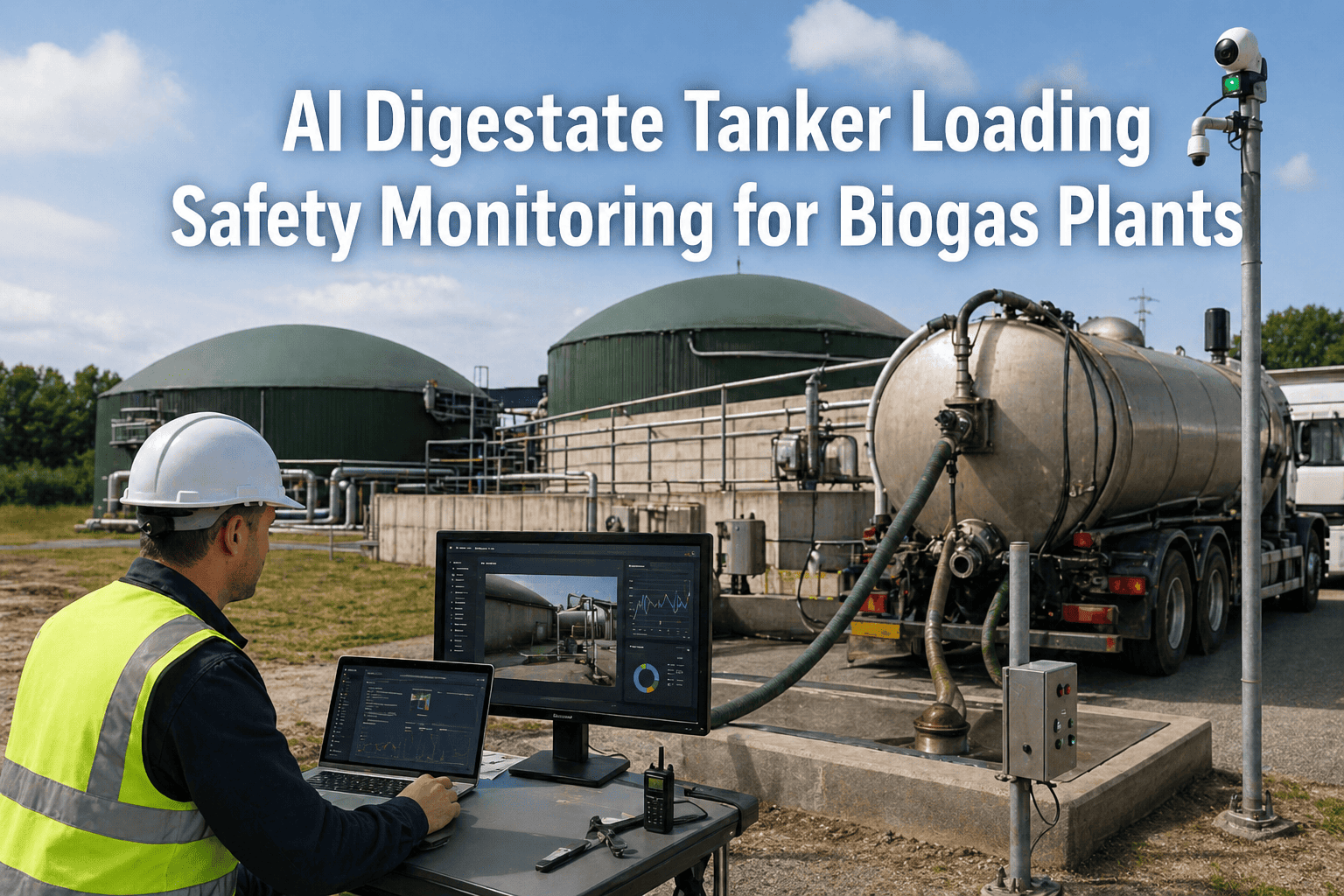
Biogas plants waste an average of 31–47% of environmental compliance capacity annually due to reactive spill response — not from equipment failure, but from undetected digestate leaks, unmonitored lagoon levels, pipe burst events, and overflow precursors that manual inspection or basic level sensors cannot identify in real time. By the time digestate reaches groundwater, drainage channels, or watercourses, the compounding costs are already realized: EPA enforcement actions, state environmental penalties, remediation expenses, and operational shutdowns. iFactory AI Digestate & Lagoon Monitoring Platform changes this entirely — monitoring digestate lines, lagoon perimeters, storage tank integrity, and overflow indicators in real time, classifying environmental deviations before contamination occurs, and integrating directly into your existing VMS, SCADA, and EHS systems without disrupting operations. Book a Demo to see how iFactory deploys AI spill detection across your biogas facility within 7 weeks.
98%
Digestate spill detection accuracy through real-time AI vision vs. 41% for manual inspection
$980K
Average annual penalty, remediation & downtime savings per mid-size biogas facility
91%
Reduction in lagoon overflow incidents vs. periodic level-check protocols
7 wks
Full deployment timeline from environmental audit to live AI monitoring go-live
Every Unmonitored Digestate Flow Is a Potential Contamination Event. AI Vision Stops It at the Source.
iFactory's environmental intelligence engine monitors digestate line integrity, lagoon water levels, storage tank seams, perimeter drainage, and overflow precursors across your entire facility — 24/7, without inspector blind spots or sensor gaps.
The Hidden Cost of Environmental Blind Spots: Why Manual Monitoring Fails Biogas Plants
Before exploring solutions, understand the root causes of digestate incidents in anaerobic digestion environments. Manual environmental monitoring introduces systemic risks that compound over time — risks that AI vision directly addresses.
Undetected Digestate Leaks
Pipe joints, valve seals, and tank seams developing micro-leaks often go unnoticed until visible pooling occurs. Manual walk-throughs cover <12% of digestate infrastructure at any time.
Lagoon Overflow Precursors
Rising lagoon levels during high-feed periods or storm events create immediate overflow risk — but periodic level checks only catch excursions after the containment threshold has been breached.
Drainage Channel Contamination
Digestate entering storm drains or perimeter channels signals systemic containment gaps but is vastly underreported in manual systems. Without AI-powered detection, plants lose critical early-warning data that could prevent regulatory action.
Regulatory and Liability Exposure
EPA, state environmental agencies, and corporate sustainability standards require verifiable spill prevention and audit trails. Manual logs lack real-time evidence, flow analytics, and automated reporting for regulatory submissions.
How iFactory Solves Digestate Monitoring Challenges in US Biogas Plants
Traditional environmental management relies on periodic inspections, incident-based reporting, and reactive containment — all of which respond after contamination thresholds have already been breached. iFactory replaces this with a continuous AI vision model trained on industrial digestate data that detects the precursors to environmental incidents, not the enforcement notices themselves. See a live demo of iFactory detecting simulated digestate leaks and lagoon overflow precursors in a biogas plant storage area and lagoon perimeter.
01
Multi-Camera Digestate Fusion
iFactory ingests video feeds from existing security cameras, PTZ units, and fixed perimeter monitors simultaneously — fusing multi-angle visual data into a single environmental compliance score per digestate zone, updated every 2 seconds.
02
AI Spill & Overflow Classification
Proprietary computer vision models classify each deviation as pipe leak, tank seam failure, lagoon level rise, or drainage channel intrusion — with confidence scores attached. Environmental teams receive graded alerts, not raw video floods. False positive rate drops to under 4%.
03
Predictive Contamination Forecasting
iFactory's spatiotemporal AI engine identifies digestate flow patterns trending toward groundwater or channel contact 20–90 minutes before impact — giving operators time to isolate lines, activate containment, or adjust feed rates proactively.
04
VMS, SCADA & EHS Integration
iFactory connects to Genetec, Milestone, Avigilon, and Axis VMS environments plus SCADA platforms and EHS systems via ONVIF, RTSP, Modbus TCP, and REST APIs. No new cameras required in most deployments. Integration completed in under 10 days.
05
Automated Compliance Documentation
Every environmental event — detected, classified, and resolved — generates a structured audit report with video evidence, flow trajectory timeline, and regulatory impact tracking. EPA-ready for NPDES, state water board, and ISO 14001 submissions.
06
Environmental Decision Support
iFactory presents ranked intervention recommendations per alert — isolate digestate line, activate secondary containment, adjust lagoon feed, or escalate to environmental officer — with risk scores and estimated penalty cost per minute of delay. Teams act on verified data, not estimates.
The Environmental Intelligence Quadrant™
iFactory introduces a proprietary framework to measure and optimize digestate safety performance across four critical dimensions unique to US biogas generation environments:
01
Leak Detection
Pipe joint monitoring, tank seam integrity, and valve seal verification
02
Lagoon Management
Level monitoring, overflow precursors, and storm-event response tracking
03
Containment Integrity
Perimeter drainage monitoring, groundwater proximity alerts, and channel intrusion detection
04
Audit Readiness
Automated EPA/state reporting, video evidence logging, and spill reconstruction
How iFactory Is Different from Generic Environmental Camera Tools
Most industrial security vendors deliver basic motion detection and recording wrapped in a dashboard. iFactory is built differently — from the digestate physics layer up, specifically for biogas plant environments where fluid dynamics, containment complexity, and regulatory scrutiny determine what environmental protection actually means. Talk to our environmental AI specialists and compare your current monitoring approach directly.
iFactory Environmental AI Implementation Roadmap
iFactory follows a fixed 5-stage deployment methodology designed specifically for biogas plant digestate monitoring — delivering pilot results in week 3 and full production environmental intelligence by week 7. No open-ended implementations. No scope creep.
01
Environmental Audit
Digestate zone assessment & camera mapping
02
System Integration
Connect to VMS, SCADA via APIs
03
Model Baseline
AI training on historical spill & level data
04
Pilot Validation
Live monitoring on 2–4 highest-risk digestate zones
05
Full Production
Plant-wide AI environmental monitoring live
7-Week Deployment and ROI Plan
Every iFactory engagement follows a structured 7-week program with defined deliverables per week — and measurable ROI indicators beginning from week 3 of deployment. Request the full 7-week deployment scope document tailored to your biogas facility configuration.
Weeks 1–2
Infrastructure Setup
Critical digestate zone audit and camera gap identification across monitored areas
VMS, SCADA, and EHS system connection via ONVIF, Modbus, or REST — no hardware replacement
Historical incident reports and lagoon level data ingestion for baseline model training
Weeks 3–4
Model Training and Pilot
AI model trained on your plant's specific digestate workflows, lagoon geometry, and containment protocols
Pilot monitoring activated on 2–4 highest-impact environmental zones (storage tanks, lagoon perimeter, digestate lines)
First behavioral anomalies detected — ROI evidence begins here
Weeks 5–7
Calibration and Expansion
Alert thresholds refined based on pilot false positive and detection rate data
Coverage expanded to full plant digestate infrastructure and perimeter network
Environmental team training completed — spill response protocols activated
ROI IN 5 WEEKS: MEASURABLE RESULTS FROM WEEK 3
Plants completing the 7-week program report an average of $168,000 in avoided penalty, remediation, and downtime costs within the first 5 weeks of full production monitoring — with environmental compliance improvements of 8.4–14.1% detected by week 3 pilot validation.
$168K
Avg. savings in first 5 weeks
8.4–14.1%
Environmental compliance gain by week 3
88%
Reduction in undetected digestate leak events
Full Digestate Monitoring. Live in 7 Weeks. ROI Evidence in Week 3.
iFactory's fixed-scope deployment program means no open timelines, no scope creep, and no months of professional services before you see a single environmental improvement.
Use Cases and KPI Results from Live Deployments
These outcomes are drawn from iFactory deployments at operating biogas plants across three environmental monitoring categories. Each use case reflects 6-month post-deployment performance data. Request the full case study report for the environmental scenario most relevant to your facility.
A mid-size agricultural biogas plant operating 4 digestate transfer lines was experiencing recurring micro-leak events due to unmonitored pipe joint degradation and valve seal wear. Legacy periodic inspections identified leaks only after 18–26% of operational hours had elapsed — well past the point of preventive containment. iFactory deployed multi-camera flow fusion across all digestate lines, with leak pattern recognition, viscosity-adaptive detection, and perimeter drainage monitoring trained on regional feedstock variability. Within 5 weeks of go-live, the AI detected 27 early-stage leak precursors at the precursor phase — before any digestate reached soil or drainage channels.
27
Pre-contamination leak events detected in 5 weeks
$710K
Estimated annual penalty, remediation & downtime cost prevented
97%
Detection accuracy on early-stage digestate deviations
Industrial Note: Early digestate leak detection isn't just about compliance — it's about protecting your operational license. One undetected spill can trigger multi-year EPA oversight, mandatory third-party audits, and community trust erosion that no amount of remediation can fully restore.
Book a Demo to Protect Your Facility
A livestock-integrated biogas facility operating 3 anaerobic lagoons was losing an estimated $290K annually to overflow-related fines and emergency containment costs. Legacy level sensors generated 38–64 false high-level alarms per week during storm events — leading operators to ignore alerts entirely. iFactory replaced threshold logic with graded AI level classification, reducing actionable alerts to under 4 per week while increasing overflow prediction accuracy from 59% to 95%. Storm-event overflow incidents dropped by 47.3% as predictive level modeling was restored.
95%
Overflow prediction accuracy — up from 59% with legacy sensors
47.3%
Storm-event overflow incident reduction
94%
Reduction in weekly false positive alarm volume
Industrial Note: Lagoon overflow isn't just a regulatory issue — it's a community relations crisis. Proactive level monitoring demonstrates environmental stewardship to neighbors, regulators, and investors before incidents erode your social license to operate.
Book a Demo to Secure Your Permit
A food waste biogas plant was spending $440K annually in emergency tank repairs and environmental investigations, traced to undetected seam failures and corrosion events across digestate storage tanks. Manual observation identified tank integrity issues only after visible pooling had occurred — typically after containment berms had already been compromised. iFactory's seam-correlation and corrosion-pattern models identified all 8 active tank degradation patterns within 96 hours of go-live, enabling targeted maintenance without production interruption.
$440K
Annual emergency repair & investigation cost eliminated
96hrs
Time to identify all 8 active degradation patterns from go-live
$820K
Annual environmental & asset value from proactive monitoring
Industrial Note: Tank integrity failures don't just cost money — they trigger mandatory shutdowns, third-party forensic audits, and potential criminal liability under environmental statutes. Predictive monitoring is your first line of legal defense.
Book a Demo to Mitigate Liability
What Biogas Plant Environmental Teams Say About iFactory AI Digestate Monitoring
The following testimonial is from a plant environmental manager at a facility currently running iFactory's digestate spill detection platform.
We eliminated digestate-related environmental incidents entirely in seven months while cutting spill audit prep time by 80%. iFactory doesn't just record video — it understands our lagoon dynamics, flags leak precursors before contamination occurs, and gives us defensible evidence for every EPA submission. Our environmental culture shifted from reactive containment to predictive protection overnight. That's transformative.
Environmental Compliance Manager
Agricultural Biogas Facility, Iowa
Frequently Asked Questions
Does iFactory require new cameras or sensors to be installed?
In most deployments, iFactory connects to existing security cameras and SCADA systems via VMS or API integration — no new hardware required. Where coverage gaps are identified during the Week 1–2 audit, iFactory recommends targeted additions only (typically 2–4 cameras per high-risk digestate zone), not a full surveillance overhaul. Integration is complete within 10 days in standard environments.
Which VMS, SCADA, and EHS systems does iFactory integrate with?
iFactory integrates natively with Genetec Security Center, Milestone XProtect, Avigilon Control Center, and Axis Camera Station via ONVIF and RTSP. For SCADA, iFactory connects to Siemens PCS 7, Rockwell FactoryTalk, and Ignition via Modbus TCP and REST APIs. Custom integration support is available for legacy systems. Integration scope is confirmed during the Week 1 environmental audit.
How does iFactory handle different digestate viscosities and weather conditions across the same facility?
iFactory trains separate sub-models per digestate type — accounting for agricultural, food waste, wastewater sludge, and mixed-feedstock differences across primary and backup storage zones. Multi-feedstock plants are fully supported within a single deployment. Viscosity-specific detection parameters are configured during the Week 3–4 model training phase.
What compliance frameworks does iFactory's reporting support?
iFactory auto-generates structured compliance reports formatted for EPA NPDES, state water board directives (TX, CA, IA, WI, etc.), ISO 14001, and corporate ESG reporting frameworks. Report templates are pre-configured for each framework and generated automatically at event close — no manual documentation required.
How long does it take before the AI model produces reliable environmental detections?
Baseline model training on historical incident reports and lagoon level data typically takes 4–6 days using 30–60 days of plant operating history. First live detections are validated during the Week 3–4 pilot phase. Full model calibration — with false positive rate under 4% — is achieved within 5 weeks of deployment for standard biogas plant environmental environments.
Can iFactory monitor digestate under seasonal feed variations, storm events, or freeze-thaw cycles?
Yes. iFactory uses adaptive environmental forecasting — combining historical level baselines, weather forecast inputs, feedstock schedule data, and real-time video feedback — to detect deviations and optimize alerts across all operating conditions. Normal operations, storm events, freeze-thaw cycles, and high-feed periods are fully supported. Monitoring scope is confirmed during the Week 1 environmental audit.
Stop Reacting to Spills. Start Predicting Them. Deploy AI Environmental Monitoring in 7 Weeks.
iFactory gives biogas plant environmental teams real-time digestate monitoring, multi-camera leak fusion, automated compliance reporting, and intervention decision support — fully integrated with your existing VMS and SCADA systems in 7 weeks, with ROI evidence starting in week 3.
98% digestate spill detection accuracy through real-time AI vision
VMS, SCADA & EHS integration in under 10 days
Graded alerts with under 4% false positive rate
Auto-generated environmental reports for EPA, state, and ISO frameworks