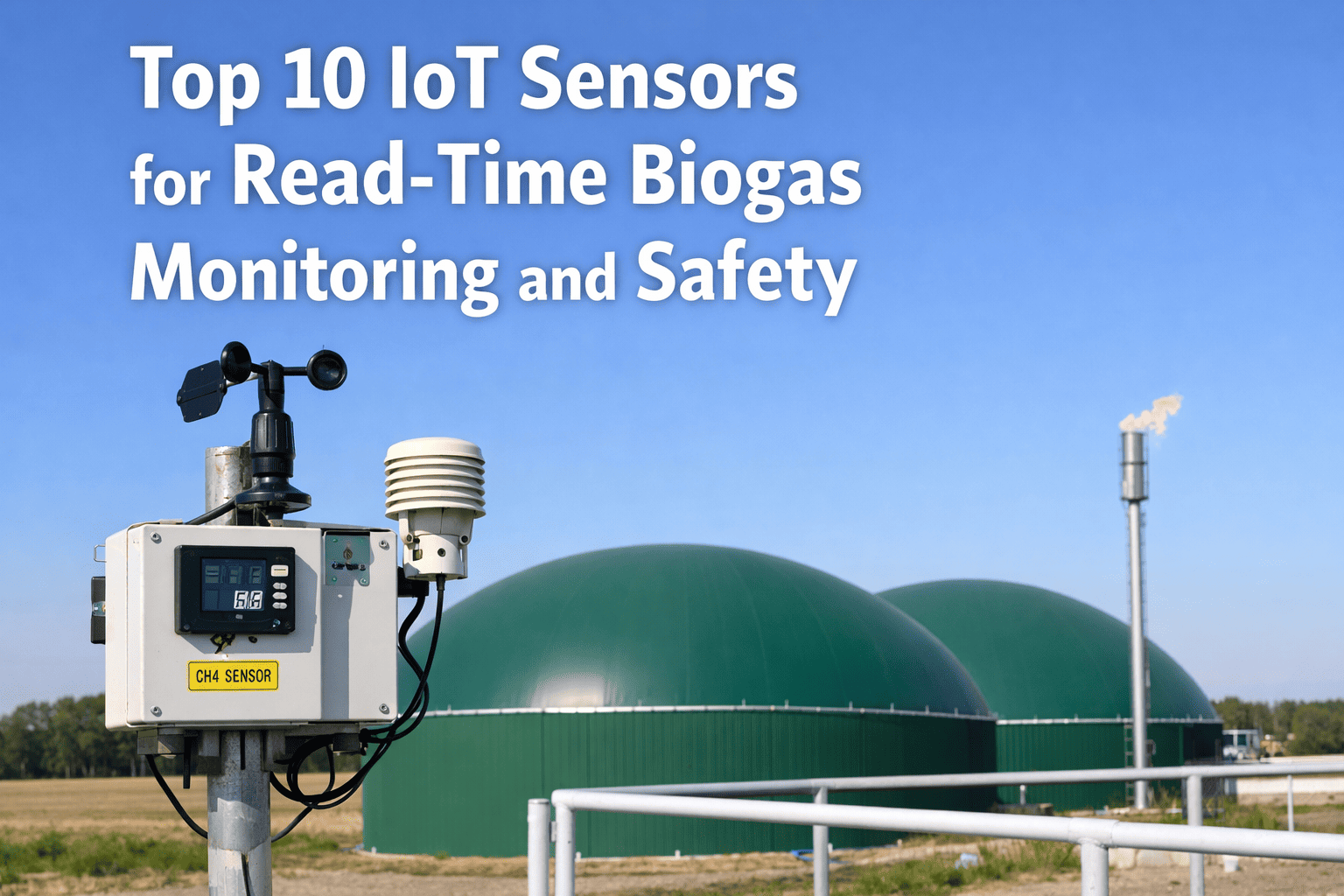
Top 10 IoT Sensors for Real-Time Biogas Monitoring and Safety
By oxmaint on March 5, 2026
Every biogas plant operates on a knife's edge between productive energy generation and dangerous gas accumulation. A single undetected methane leak, an H₂S spike above safe thresholds, or a temperature drift of just 2°C inside the digester can shut down production—or worse, put lives at risk. IoT sensors eliminate this uncertainty by streaming real-time data from every critical point in the process chain, turning invisible threats into actionable alerts and turning raw operational data into measurable efficiency gains. Schedule a free demo to explore how connected sensor networks can safeguard and optimize your biogas operations.
The Blind Spots That Put Biogas Plants at Risk
Anaerobic digestion produces a volatile cocktail—methane at 50–70% concentration (well above the upper explosive limit), toxic hydrogen sulfide, and CO₂ that silently displaces oxygen in confined spaces. Traditional monitoring relies on technicians conducting 1–3 daily spot checks with portable analyzers, leaving hours of operational blind spots between each reading. Every hour without data is an hour where a critical failure could be developing unnoticed.
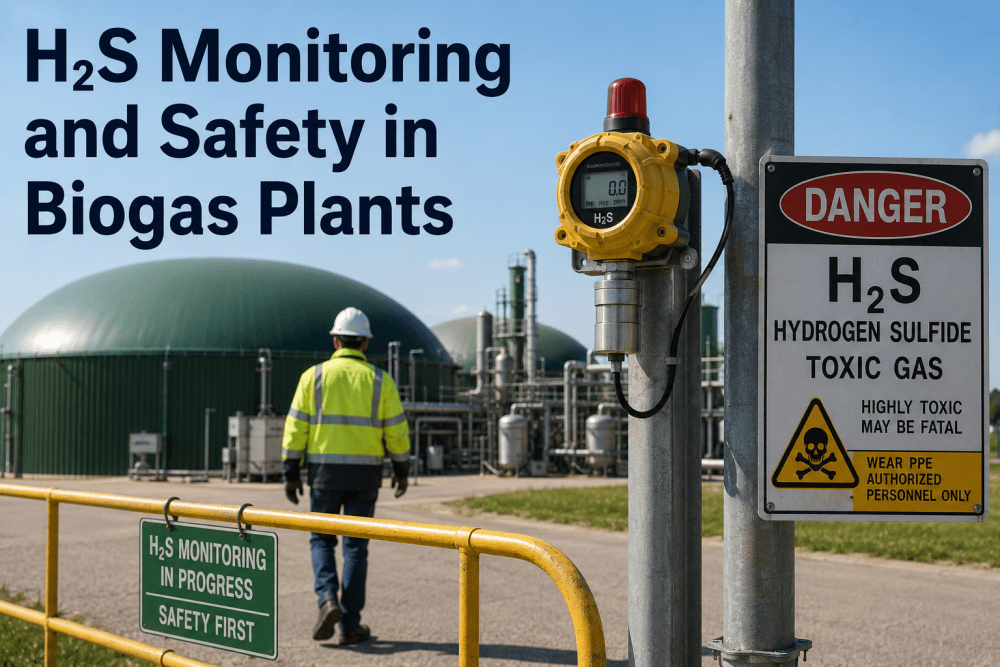
Toxic H₂S Exposure
Hydrogen sulfide reaches lethal concentrations in seconds. Manual spot checks 2–3 times per day leave 8+ hour windows where a dangerous spike goes completely undetected.
Explosive Gas Buildup
Methane-oxygen mixtures become explosive at 5–15% CH₄ in air. A gas line leak at night, during shift changes, or over a weekend has no one watching to sound the alarm.
Silent Temperature Drift
A 2°C drop inside the digester slowly kills methanogenic bacteria over 48 hours. By the time a manual reading catches it, methane production has already collapsed.
Acid Crash Without Warning
Volatile fatty acid buildup drops digester pH below 6.5—killing the entire microbial population. Recovery takes weeks. Continuous pH monitoring catches the trend hours before it becomes irreversible.
Eliminate every monitoring blind spot at your facility. Talk to our IoT team about a sensor deployment plan tailored to your plant layout.
Ranking the 10 Must-Have IoT Sensors for Biogas Facilities
A comprehensive biogas monitoring system requires layered sensor coverage—safety-critical gas detectors, process optimization instruments, and equipment protection sensors working together through a unified IoT platform. Each sensor below is ranked by operational criticality, from the ones that save lives to those that maximize your bottom line.
01Safety-Critical
Methane (CH₄) Concentration Sensor
NDIR (Non-Dispersive Infrared) | Catalytic Bead
Methane is the primary energy carrier in biogas and its most explosive component. NDIR sensors detect CH₄ by measuring infrared light absorption at the 3.3µm wavelength, delivering high accuracy across the full 0–100% range needed for in-process monitoring. Catalytic bead sensors complement NDIR by providing fast Lower Explosive Limit (LEL) detection for ambient leak surveillance around equipment and work areas. Continuous CH₄ tracking enables operators to optimize digester feeding schedules, detect production declines within minutes rather than days, and maximize energy yield per cubic meter of biogas.
0–100% vol range±1% accuracy<10s response
02Safety-Critical
Hydrogen Sulfide (H₂S) Detector
Electrochemical Cell
H₂S is the most immediately dangerous gas in biogas operations—toxic above 10 ppm and potentially lethal above 300 ppm. Electrochemical sensors generate a measurable current proportional to H₂S concentration through a controlled chemical reaction at the electrode surface. Beyond personnel safety, continuous H₂S monitoring protects engines and pipelines from severe acid corrosion, validates desulfurization system performance, and supports regulatory compliance documentation. Real-time threshold alerts enable immediate evacuation or ventilation responses.
0–500 ppm range±2 ppm accuracy<15s response
03Process-Critical
Digester Temperature Sensor
RTD (Pt100/Pt1000) | Thermocouple
Anaerobic digestion operates within narrow temperature bands—mesophilic (35–42°C) or thermophilic (50–57°C). Even a 2°C deviation disrupts microbial communities and can collapse methane production entirely. RTD sensors deliver ±0.1°C accuracy and long-term stability essential for maintaining optimal fermentation. Multi-point placement at different digester depths detects thermal stratification—cold spots that silently reduce biogas output—enabling precise heating system adjustments and consistent microbial activity across the entire substrate volume.
-50 to 200°C range±0.1°C accuracy<5s response
04Safety + Process
Pressure Sensor (Digester & Gas Lines)
Piezoresistive MEMS | Capacitive
Digester pressure monitoring prevents catastrophic structural failure and optimizes gas collection efficiency. Piezoresistive MEMS sensors detect blockages in gas lines, membrane dome over-inflation, and vacuum conditions that could collapse flexible covers. Differential pressure measurement across desulfurization filters and gas scrubbers indicates when treatment media needs replacement. Gas line pressure monitoring ensures consistent fuel delivery to CHP engines and identifies leaks through sudden pressure drop patterns.
-50 to 500 mbar±0.25% FS<1s response
05Process-Critical
Biogas Flow Rate Sensor
Thermal Mass Flow | Ultrasonic
Accurate flow measurement is fundamental to energy accounting, digester health assessment, and billing verification. Thermal mass flow sensors measure gas velocity through heat transfer between heated elements, while ultrasonic sensors use transit-time differences for non-intrusive measurement. Both technologies handle the wet, corrosive nature of raw biogas reliably. Flow data correlated with feeding schedules reveals digester response patterns and supports predictive production analytics for yield optimization. Get support to set up flow-based analytics for your plant.
0–5000 Nm³/h±1.5% accuracy<2s response
06Process-Critical
pH Sensor (Digestate Monitoring)
Glass Electrode | ISFET
Digester pH is the earliest indicator of process imbalance in anaerobic digestion. Healthy operation requires pH between 6.8 and 7.4—a drop below 6.5 signals volatile fatty acid accumulation that can kill methanogenic bacteria and halt gas production entirely. IoT-connected pH sensors detect acidification trends hours before they become critical, giving operators time to adjust alkalinity, reduce feeding rates, or introduce buffering agents. Research confirms pH as one of the most reliable parameters for real-time assessment of digester stability.
0–14 pH range±0.02 pH accuracy<10s response
07Safety + Quality
Carbon Dioxide (CO₂) Sensor
NDIR (Non-Dispersive Infrared)
CO₂ typically makes up 25–45% of biogas, and its ratio relative to methane is a key performance indicator. Rising CO₂ percentages signal declining methanogenic activity or feedstock quality changes. NDIR sensors measure CO₂ at the 4.26µm absorption band with excellent specificity. In enclosed plant areas, CO₂ monitoring serves a critical safety role—the gas is heavier than air, accumulates in low-lying spaces undetected, and creates asphyxiation hazards for plant personnel working in or near digester enclosures and gas storage areas.
0–100% vol range±1% accuracy<15s response
08Equipment Protection
Moisture / Humidity Sensor
Capacitive Polymer | Chilled Mirror
Raw biogas exits the digester fully saturated with water vapor that damages downstream equipment—corroding CHP engine internals, fouling gas compressors, and reducing combustion efficiency. Capacitive humidity sensors track moisture content before and after condensation traps and drying systems, ensuring gas quality meets engine specifications. Monitoring humidity also validates gas conditioning equipment performance and triggers maintenance alerts when drying efficiency drops, preventing expensive engine repairs and unplanned outages.
0–100% RH range±2% RH accuracy<8s response
09Safety-Critical
Oxygen (O₂) Sensor
Zirconia | Paramagnetic
Oxygen in a biogas environment is both a safety hazard and a process killer. Even trace O₂ levels above 0.5% inhibit obligate anaerobic methanogens, reducing gas output. More critically, oxygen mixed with methane creates explosive atmospheres. Zirconia oxygen sensors operate reliably at elevated temperatures and detect O₂ from ppm to percentage ranges. Continuous monitoring at digester headspaces, gas holders, and pipeline junctions is essential for explosion prevention and process protection. Book a demo to see how real-time O₂ alerts protect your facility.
0–25% vol range±0.1% accuracy<10s response
10Operations
Digester Level / Volume Sensor
Ultrasonic | Radar | Hydrostatic
Substrate level monitoring prevents digester overflow, ensures consistent hydraulic retention times, and optimizes feeding schedules. Ultrasonic sensors work well for liquid substrates, while radar handles foam and floating crust layers common in agricultural digesters. For gas holders, volume sensors track storage capacity in real-time—critical for managing CHP dispatch scheduling and flare system activation during surplus production. Accurate level data also supports mass balance calculations required for regulatory compliance reporting. Get Support for a walkthrough of automated compliance dashboards.
0–20 m range±2 mm accuracy<3s response
Not sure which sensor combination fits your plant? Our engineers will map your facility and recommend the optimal IoT configuration.
Effective biogas monitoring demands strategic sensor positioning across every stage of the production chain. Each zone has specific hazards, data frequency requirements, and alert configurations that determine which sensors belong where—and why placement matters as much as sensor selection.
Sensor Deployment Map by Plant Zone
Plant Zone
Primary Sensors
Sampling Rate
Key Alert Triggers
Feedstock Intake
Temperature, pH, level
Every 60 seconds
pH out of range, overflow risk, substrate temperature deviation
Explosive gas mixture, toxic concentration, oxygen ingress
Gas Transmission Lines
Flow rate, pressure, moisture, CH₄
Every 1 second
Flow anomaly, pressure drop indicating leak, moisture spike
Gas Conditioning Unit
H₂S post-scrubber, moisture, temperature
Every 30 seconds
Desulfurization breakthrough, drying system failure
CHP Engine Room
Ambient CH₄, H₂S, CO₂, O₂
Every 5 seconds
Gas leak detection, personnel safety threshold breach
Sampling rates reflect recommended minimums. Safety-critical zones require the highest frequencies for rapid emergency response capability.
From Spreadsheets to Smart Dashboards — The Monitoring Shift
The gap between scheduled manual rounds and always-on sensor networks extends far beyond convenience. It fundamentally changes a plant's risk profile, energy efficiency ceiling, and ability to meet strict environmental reporting requirements. Here is what changes when facilities make the switch.
The Monitoring Evolution
Before: Periodic Manual Checks
1–3 daily spot checks by trained technicians with portable analyzers
Paper logs or spreadsheet records entered hours after readings
Issues discovered only at the next scheduled inspection round
No cross-parameter correlation or trend analysis capability
Limited to parameters the portable device can measure
8–12 hrsaverage blind spot between detection of critical deviations
After: Continuous IoT Sensor Network
24/7 automated surveillance at 1–10 second intervals across all zones
Cloud dashboards with instant visualization and historical trending
Predictive alerts delivered before safety or process thresholds are breached
Full coverage of gas composition, process, and environmental parameters
<30sfrom threshold breach to automated alert across all connected systems
Replace Guesswork with Real-Time Biogas Intelligence
iFactory connects your entire sensor infrastructure into one unified platform—aggregating real-time data streams, automating safety alerts, and delivering predictive analytics that help your team prevent failures before they happen and continuously optimize methane yield.
Biogas facilities that deploy comprehensive IoT sensor networks consistently report improvements across safety, uptime, energy output, and compliance readiness. These gains compound over time as AI models trained on accumulated sensor data sharpen their predictive accuracy.
90%
Reduction in gas-related safety incidents through continuous automated monitoring
70%
Faster root-cause identification for production drops and process anomalies
55%
Decrease in unplanned maintenance costs through sensor-driven predictive alerts
40%
Improvement in environmental compliance reporting speed and audit accuracy
See these results in action at your facility. Get a custom assessment based on your plant size, gas output, and current monitoring setup.
A phased rollout delivers immediate safety improvements while building toward full process optimization. Starting with life-safety gas detection sensors generates quick wins and builds operator confidence before expanding to process and environmental instrumentation.
Implementation Roadmap
Phase 1
Week 1–2
Site Survey and Planning
Hazard zone classification and sensor location mappingExisting infrastructure and connectivity assessmentCommunication protocol and platform integration design
Phase 2
Week 3–4
Safety Sensor Installation
CH₄, H₂S, and O₂ sensors deployed at all occupied zonesEmergency alert and evacuation system configurationEdge gateway and network connectivity activation
Phase 3
Week 5–7
Process Sensor Expansion
Temperature, pH, pressure, flow, and level sensors installedCloud dashboard setup with baseline calibrationSCADA, CMMS, and operational system integration
Phase 4
Week 8+
Analytics and Continuous Optimization
Predictive models trained on accumulated operational dataAutomated yield optimization and anomaly detection activatedExpansion to additional monitoring points and secondary systems
The shift from periodic spot-checks to continuous IoT monitoring is not incremental—it is transformational. Plants that deploy connected sensor networks don't just find problems faster; they prevent problems from occurring. The data density changes everything—from how we schedule maintenance to how we optimize feeding and manage regulatory reporting.
— Biogas Operations and Safety Director
Build a Safer, Smarter Biogas Operation with IoT Sensors
Manual rounds cannot catch a sudden H₂S spike at 2 AM or detect the slow pH drift that is silently killing your methane yield. iFactory helps you deploy connected sensor networks that monitor every critical parameter around the clock, deliver predictive alerts before failures escalate, and provide the analytics dashboard your team needs to continuously optimize production safety and efficiency.
Which IoT sensor should be installed first at a biogas plant?
Hydrogen sulfide (H₂S) and methane (CH₄) sensors should always be deployed first because they address the two most immediate safety risks—toxic gas exposure and explosion potential. These sensors should be placed at every occupied zone and confined space entry point with redundancy built in. Process optimization sensors (temperature, pH, flow) can follow in a second phase once the safety layer is operational. Book a demo to get a prioritized deployment plan for your specific facility layout.
How often do biogas monitoring sensors require calibration?
Calibration frequency varies by sensor type and the harshness of the operating environment. Electrochemical H₂S sensors typically need calibration every 3–6 months due to exposure to corrosive gas. NDIR-based methane and CO₂ sensors are more drift-resistant and usually require annual calibration only. Temperature (RTD) and pressure sensors are the most stable, often needing only yearly verification. Modern IoT platforms include automated drift detection algorithms that flag sensors approaching calibration thresholds before measurement accuracy degrades.
Can IoT sensors survive the corrosive conditions inside a biogas digester?
Yes, with proper selection. Industrial-grade sensors rated IP67 or higher with corrosion-resistant housings—stainless steel 316L or PTFE-coated enclosures—are designed for continuous deployment in high-humidity, H₂S-rich biogas environments. Many biogas-specific sensor models include integrated condensation traps, chemical-resistant membranes, and self-diagnostic features. Sensor lifespan in biogas applications typically ranges from 2–5 years depending on the parameter measured, with electrochemical cells having shorter lifespans than optical (NDIR) sensors. Contact our support team for guidance on ruggedized sensor selection for your digester configuration.
What communication protocols do biogas IoT sensors typically use?
Biogas sensors commonly use 4–20 mA analog signals for integration with existing SCADA and PLC systems, Modbus RTU/TCP for industrial networking, and OPC-UA for modern IT/OT convergence architectures. For wireless connectivity across large plant sites, LoRaWAN provides long-range, low-power communication ideal for remote digester installations. Wi-Fi and cellular (4G/LTE) options serve areas with existing network infrastructure. Edge computing gateways aggregate data from sensors using mixed protocols and transmit to cloud platforms via MQTT or HTTPS for dashboard visualization and analytics.
What does a full IoT sensor deployment cost for a biogas plant?
Costs depend on plant scale, existing infrastructure, and monitoring scope. A basic safety-only system (gas detectors at critical zones) for a small agricultural digester starts under $5,000. Comprehensive monitoring with full process optimization for a medium-capacity plant typically ranges $15,000–$50,000 including sensors, edge gateways, cloud platform, and installation. Most plants achieve positive ROI within 6–12 months through improved methane yield, reduced unplanned downtime, and lower maintenance costs. Schedule a consultation for a detailed cost-benefit analysis customized to your operation.