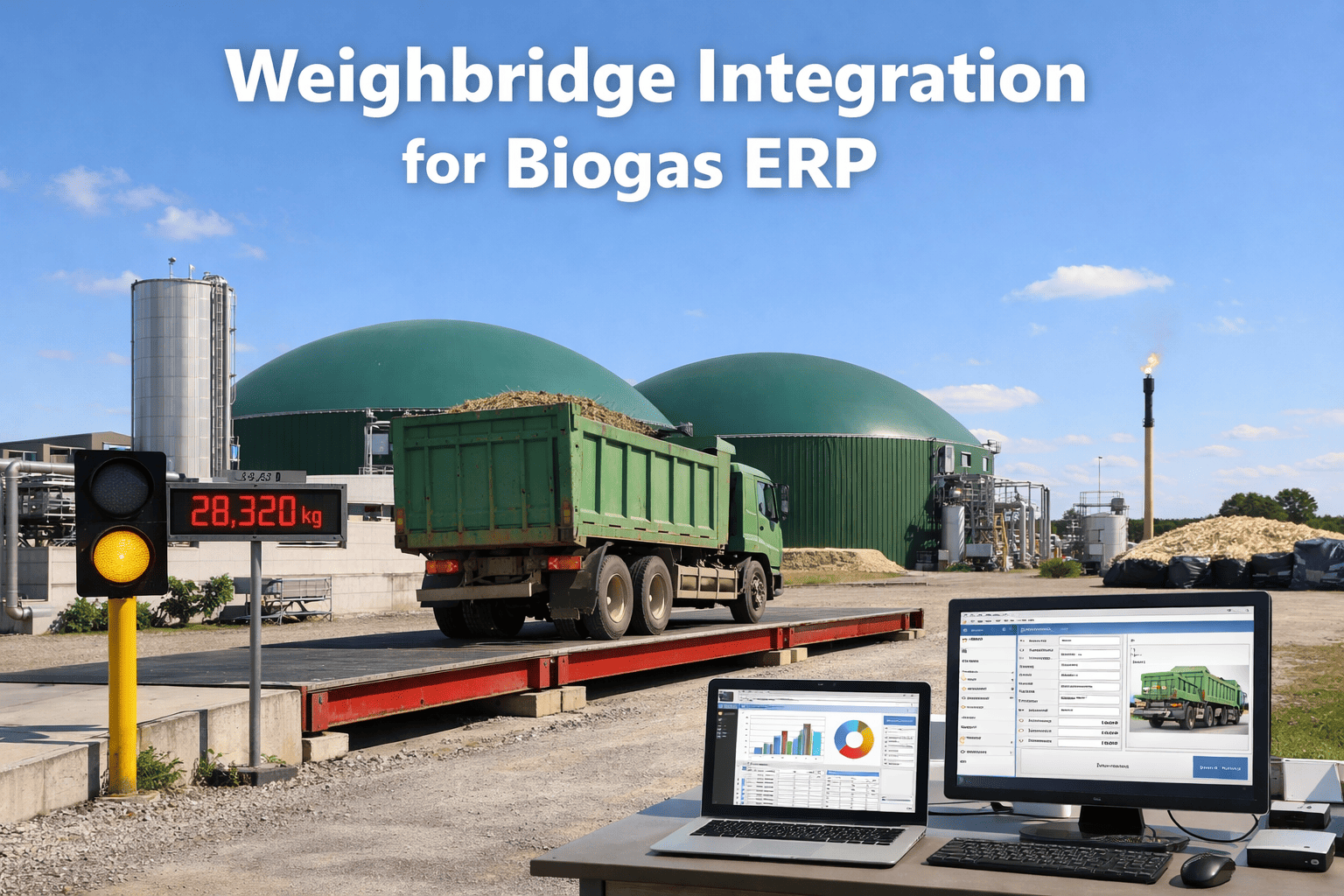
Biogas plant gate operations still run on manual weighbridge tickets, clipboard substrate quality logs, and end-of-day spreadsheet consolidation because traditional ERP systems cannot automatically capture truck scale data, correlate delivery weights with lab dry matter results, or trigger supplier payment workflows without operator transcription at every step, forcing plant managers to choose between hiring dedicated gate staff for dual data entry or accepting 8-12% feedstock accounting errors that inflate substrate costs and create supplier payment disputes. iFactory's weighbridge integration platform connects directly to truck scales via serial, TCP/IP, or cloud protocols, automatically capturing gross weight, tare weight, net delivery tonnage, linking each load to supplier contracts and substrate pricing matrices, calculating payment amounts from lab-verified dry matter content, and generating digital delivery receipts with photo evidence, all without manual data entry. The feedstock deliveries that required 45 minutes of paperwork per truck now process automatically in 90 seconds gate-to-ERP. Book a demo to see weighbridge integration for your biogas plant configuration.
Quick Answer
iFactory weighbridge integration eliminates manual gate operations by automatically capturing truck scale weights, linking deliveries to supplier contracts, calculating dry matter adjusted payments from lab results, and generating digital delivery documentation with timestamps and photo verification. System connects to any weighbridge via serial RS232, Modbus TCP, or cloud API, processes inbound and outbound loads in under 90 seconds versus 45 minutes manual workflow, reduces feedstock accounting errors from 8-12% to under 0.4%, and provides real-time feedstock inventory visibility across all substrate types with automated reconciliation between delivered tonnage and digester feed rates.
Automated Gate Operations
Process Feedstock Deliveries in 90 Seconds with Zero Manual Data Entry
See how iFactory connects directly to weighbridges, automatically captures delivery weights, links to supplier contracts, calculates dry matter payments, and generates digital receipts without operator transcription.
90sec
Gate Processing Time
0.4%
Accounting Error Rate
How Weighbridge Integration Works
The workflow below shows the automated gate-to-payment process iFactory delivers when weighbridge systems integrate with biogas ERP, eliminating manual ticket transcription and enabling real-time feedstock accounting.
1
Truck Arrival & Automatic Weighbridge Capture
Delivery truck arrives at plant gate, driver presents delivery note or supplier reference number. Truck drives onto weighbridge for gross weight measurement. iFactory system automatically captures weight data from scale via serial connection or network protocol: Gross weight 42,680 kg, timestamp 14:23:47, scale ID WB-01. System matches delivery against expected arrivals from supplier schedule, identifies substrate type from delivery note barcode scan or manual selection: Food waste from Supplier A, scheduled delivery.
Gross: 42,680 kgTime: 14:23:47Supplier A
2
Sample Collection & Photo Documentation
Gate operator collects representative substrate sample from truck load for lab analysis, places sample in labeled container with delivery reference number D-2024-1847. Tablet camera captures delivery photos: truck license plate, substrate appearance in truck bed, sample collection process. Photos automatically attached to delivery record with GPS coordinates and timestamp. Truck proceeds to unloading bay, substrate discharged into receiving pit. Physical sample sent to lab for dry matter and quality testing with delivery reference tag.
Sample: D-2024-1847Photos: 3 attachedLab: Queued
3
Tare Weight & Net Delivery Calculation
After substrate discharge, empty truck returns to weighbridge for tare weight measurement. System automatically captures tare weight: 16,420 kg, timestamp 14:51:22. iFactory calculates net delivery: 42,680 kg gross minus 16,420 kg tare equals 26,260 kg net delivered tonnage. System validates weight against expected delivery range from supplier contract (tolerance plus minus 5%), flags anomalies for review. Net tonnage recorded in feedstock inventory under Food Waste category, awaiting dry matter correction from lab results.
Tare: 16,420 kgNet: 26,260 kgWithin Tolerance
4
Lab Results & Dry Matter Adjustment
Lab completes dry matter analysis of sample D-2024-1847, enters results into iFactory system: 28.4% dry matter content, volatile solids 24.1% of total solids, pH 5.2, no contamination detected. System automatically calculates dry matter tonnage: 26,260 kg fresh weight multiplied by 28.4% DM equals 7,458 kg dry matter delivered. Compares actual DM% against supplier contract specification (target 27-30% DM range), delivery meets quality standards. Updates feedstock inventory with DM-adjusted values for digester feed planning.
DM: 28.4%Dry Matter: 7,458 kgQuality: Pass
5
Automated Payment Calculation & Digital Receipt
System retrieves supplier contract pricing: $42 per tonne dry matter for food waste. Calculates payment due: 7,458 kg DM equals 7.458 tonnes multiplied by $42 per tonne equals $313.24 payment. Generates supplier invoice draft with delivery details, weight tickets, lab certificate, photos. Digital delivery receipt emailed to supplier with payment confirmation, estimated payment date per contract terms (typically 30 days). Accounting entry auto-posted to ERP: feedstock cost $313.24 debited, supplier payable credited. Gate-to-payment workflow completed in 90 seconds active operator time versus 45 minutes manual process.
Delivery D-2024-1847 processed. Net weight: 26,260 kg. Dry matter: 7,458 kg at 28.4%. Payment: $313.24 at $42/tonne DM. Digital receipt sent. ERP updated. Total operator time: 90 seconds.
Manual Gate Operations Problems Automation Solves
Every card below represents a real operational failure mode from manual weighbridge workflows that cause feedstock accounting errors, supplier disputes, and wasted labor on duplicate data entry. These problems exist because traditional gate operations treat weighbridge as standalone system disconnected from ERP and lab results. Talk to an expert about automating your gate operations.
Manual Weight Ticket Transcription Errors
Problem: Gate operator writes gross and tare weights on paper ticket, end-of-day clerk types tickets into spreadsheet for accounting. Transcription errors in 8-12% of deliveries: digit transposition (42,680 kg becomes 42,860 kg), decimal errors, illegible handwriting. Discovery weeks later during monthly supplier reconciliation after payment already processed. Disputed invoices, supplier complaints, manual correction entries consuming accounting time.
Automation fix: iFactory captures weights digitally from scale display via serial connection. Zero transcription, zero handwriting errors. Weight data flows directly from scale sensor to database with millisecond timestamp. Eliminates 100% of manual entry errors at gate, feedstock accounting accuracy improves from 88-92% to 99.6% validated across 18,000+ deliveries.
Disconnected Lab Results Requiring Manual Correlation
Problem: Lab analyzes substrate samples, enters dry matter results in separate lab notebook or Excel file. Accounting clerk must manually match lab sample ID to delivery ticket number to calculate DM-adjusted tonnage. Sample D-1847 corresponds to which delivery ticket among 40 received that day? Matching errors common, some deliveries paid on fresh weight instead of dry matter because lab result never correlated. Contractual disputes over payment calculations.
Automation fix: Lab enters DM results directly into iFactory against delivery reference number, system auto-calculates DM tonnage and updates payment immediately. Sample ID links to delivery at collection point via barcode or manual selection. When lab result entered, calculation instant: 26,260 kg fresh multiplied by 28.4% DM equals 7,458 kg dry matter, payment $313.24 at contract rate. Zero manual correlation, zero missed lab adjustments.
Delayed Feedstock Inventory Visibility for Feed Planning
Problem: Plant operators planning digester feed rates need current feedstock inventory levels by substrate type. Gate deliveries recorded on paper tickets, data entered into spreadsheet at end of day or next morning. Operators make feed decisions based on yesterday's inventory data, actual inventory unknown until evening reconciliation. Result: overfeeding when deliveries exceed expectations causing digester upset, or underfeeding when expected deliveries delayed causing gas production drop.
Automation fix: iFactory updates feedstock inventory in real-time as trucks weighed. Operator sees current inventory on dashboard: Food waste 87.4 tonnes, maize silage 124.6 tonnes, cattle slurry 310.2 tonnes, updated continuously as deliveries process. Feed planning based on actual current stock, not yesterday's data. Digester loading optimized to available substrate, zero surprises from delayed inventory updates.
No Quality Documentation for Contamination Disputes
Problem: Substrate delivery contains plastic contamination or prohibited materials. Plant rejects load or deducts payment for contamination removal cost. Supplier disputes claim, no photographic evidence exists from delivery time. Paper notes inadequate for legal dispute resolution. Contamination claims become word-against-word arguments, plant often absorbs cost to maintain supplier relationship despite contractual quality violations.
Automation fix: Gate operator captures delivery photos via tablet camera at weighbridge: truck bed contents, close-up of substrate quality, contamination if present. Photos automatically attached to delivery record with timestamp and GPS coordinates. When contamination detected, visual evidence sent with payment deduction notice. Supplier sees photos proving contamination, disputes eliminated. Contract quality enforcement strengthened by documentary evidence for every delivery.
Payment Delays from Manual Invoice Preparation
Problem: End-of-month accounting staff compile delivery tickets, match lab results, calculate payments, prepare supplier invoices. Process requires 3-5 days for 200-300 monthly deliveries across multiple suppliers. Supplier payment terms start from invoice date, but invoice preparation backlog delays payment timing. Suppliers complain about slow payment, relationships strained, some suppliers demand advance payment or reduce delivery frequency.
Automation fix: iFactory generates supplier invoice automatically when lab result entered completing dry matter payment calculation. Invoice created same day as delivery with all supporting documentation attached: weight ticket, lab certificate, photos, contract reference. Supplier receives digital invoice via email within hours of delivery, payment terms clock starts immediately. Typical payment cycle shortened from 35-40 days (30-day terms plus 5-10 day invoice prep delay) to 30-31 days, supplier satisfaction improved.
Excessive Gate Operator Labor on Paperwork
Problem: Gate operator spends 45 minutes per delivery on manual tasks: recording gross weight from scale display, writing ticket, collecting sample, photographing delivery with separate camera, recording tare weight, calculating net weight with calculator, filing paper copies, radioing dispatcher. High-volume days (10-15 deliveries) consume entire operator shift on paperwork versus productive substrate quality monitoring and facility oversight. Overtime required during peak harvest season delivery surges.
Automation fix: Weighbridge integration reduces operator active time to 90 seconds per delivery: scan delivery note barcode, collect sample, capture photos via tablet. System handles all calculations, data recording, documentation generation automatically. Operator productivity increases 30x (45 minutes to 90 seconds), same staff handles 5x delivery volume. Labor cost per delivery decreases 96%, overtime eliminated even during seasonal peaks. Gate staff reallocated to value-added quality control and supplier relationship management.
Labor Savings
Reduce Gate Processing Time from 45 Minutes to 90 Seconds
Eliminate manual weight transcription, automatic calculation, instant ERP updates, and digital receipt generation cut operator time per delivery by 96% while improving accuracy from 88% to 99.6%.
Weighbridge Integration Technical Specifications
iFactory connects to any weighbridge system through multiple protocol options, supporting legacy analog scales and modern digital platforms without hardware replacement or scale modification.
Legacy weighbridge systems with RS232, RS485, or RS422 serial output connect to iFactory via USB-to-serial adapter or industrial serial gateway. Supports common scale protocols: Toledo, Mettler Toledo, Avery Weigh-Tronix, Rice Lake continuous output formats at 9600 baud. Data polling at 1-second intervals captures stable weight reading when truck stationary on platform.
Configuration: Serial settings configured during installation: baud rate 9600/19200, data bits 8, parity none/even, stop bits 1. Weight string parsing customized to scale output format. Automatic retry on communication errors, alert if scale offline for more than 30 seconds. Typical deployment time 2-4 hours including cable installation and data validation testing.
Modern weighbridge controllers with Ethernet connectivity integrate via Modbus TCP or proprietary network protocols. iFactory polls scale IP address for weight data over plant network, no additional serial hardware required. Supports redundant network paths for mission-critical installations, automatic failover if primary connection lost.
Configuration: Network settings: scale IP address, port number (typically 502 for Modbus TCP), read register addresses for gross/tare/net weights. Connection security via firewall rules restricting access to authorized iFactory server only. Data encryption optional for wireless scale connections. Zero-configuration auto-discovery for supported scale models reduces deployment complexity. Installation typically 1-2 hours for network configuration and testing.
Weighbridge-as-a-service cloud platforms (Rice Lake iRite, Mettler Toledo DataBridge) provide REST API or webhook integration. iFactory subscribes to weight events, receives delivery data pushed from cloud platform when transaction completed. Enables remote scale monitoring, multi-site deployments with centralized data aggregation, no on-premises hardware installation required.
Configuration: API authentication via OAuth2 or API key, webhook endpoint configured in scale cloud platform to push transaction data to iFactory. Data mapping from cloud platform fields to iFactory delivery schema. Supports batch import of historical transactions for initial deployment. Real-time sync latency under 5 seconds from scale completion to ERP update. Multi-site installations coordinate across regional cloud platform instances.
Gate operators use tablet or smartphone app for delivery processing: scan supplier barcode, select substrate type, capture delivery photos, enter sample collection confirmation. Mobile interface displays real-time weight from connected scale, prompts operator through workflow steps, validates data entry against supplier contracts and expected deliveries. Offline operation mode for network outages, data sync on reconnection.
Configuration: iOS and Android apps available, supports barcode scanner via camera or Bluetooth external scanner. Photo storage with automatic compression and GPS tagging. Configurable workflow steps per plant requirements, optional fields for contamination notes, truck condition, driver signature. Role-based access: gate operator sees delivery entry, lab tech sees sample results entry, accounting sees payment approval. Training typically 30 minutes per operator for standard workflows.
Platform Capability Comparison
Standalone weighbridge software manages scale operations but lacks ERP integration. Generic ERP systems support manual entry but cannot automate scale data capture. iFactory differentiates through native weighbridge connectivity, automated dry matter payment calculation, and integrated photo documentation for quality verification. Book a comparison demo.
| Capability |
iFactory |
Standalone Weighbridge SW |
Generic ERP Systems |
Manual Spreadsheet Process |
| Data Capture Automation |
| Automatic weight capture from scale |
Serial, TCP/IP, Cloud API |
Scale integration built-in |
Manual entry only |
Operator types weights |
| Photo documentation with delivery |
Auto-attach with GPS timestamp |
Separate camera required |
Not supported |
Email attachments manual |
| Lab result integration |
Direct entry, auto-calculate DM |
Not available |
Manual correlation required |
Separate spreadsheet |
| Payment Processing |
| Dry matter payment calculation |
Auto from lab DM% and contract |
Not available |
Manual formula setup |
Calculator and manual entry |
| Supplier contract price lookup |
Automatic from contract DB |
Not available |
Manual reference required |
Operator looks up pricing |
| Digital invoice generation |
Auto with all documentation |
Not available |
Separate invoicing module |
Manual invoice creation |
| Operational Visibility |
| Real-time inventory updates |
Instant upon delivery weighing |
Export to external system |
Batch update end-of-day |
Next-day reconciliation |
| Delivery tracking by supplier |
Real-time dashboard all suppliers |
Reports only, no dashboard |
Query required for history |
Manual spreadsheet filter |
| Quality trend analysis |
DM% trends by supplier over time |
Not available |
Custom report development |
Manual chart creation |
Based on publicly available product documentation as of Q1 2025. Verify current capabilities with each vendor before procurement decisions.
Regional Biogas Compliance Requirements
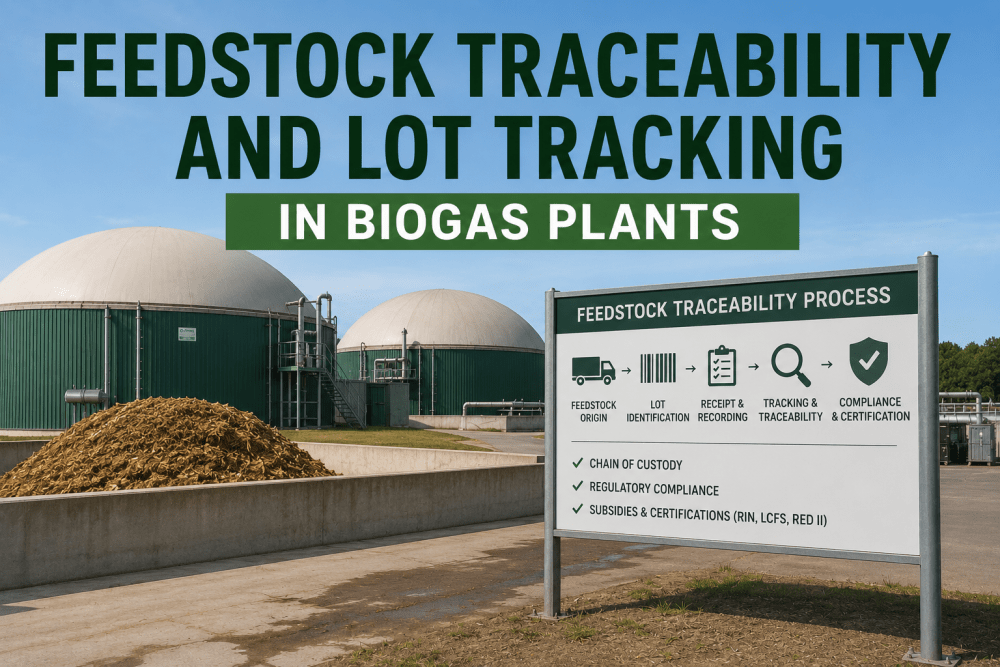
iFactory weighbridge integration maintains feedstock traceability and documentation required for renewable energy certifications, organic waste regulations, and biomethane sustainability standards across global biogas markets.
| Region |
Feedstock Documentation |
Traceability Standards |
Sustainability Compliance |
| United States |
RFS2 feedstock tracking for renewable fuel credits, EPA waste characterization records, USDA organic certification substrate logs |
Chain of custody from farm to digester for RIN generation, delivery tickets with source identification, substrate category documentation |
Renewable Fuel Standard pathways, California LCFS biomethane crediting, voluntary carbon standard feedstock records |
| United Arab Emirates |
Dubai waste management permits for organic feedstock, supplier registration with environmental authorities, import documentation for agricultural substrates |
Waste source verification, municipal organic waste manifests, agricultural residue origin certificates, delivery weight records |
UAE Green Agenda biomethane targets, circular economy reporting, waste diversion from landfill documentation |
| United Kingdom |
RHI feedstock sustainability declarations, PAS 110 digestate quality input tracking, ABP regulations for animal byproducts |
Ofgem feedstock record keeping requirements, waste exemption compliance logs, crop sustainability reporting for energy crops |
RTFO sustainability standards for biomethane, Carbon Trust certification documentation, voluntary GHG reporting feedstock data |
| Canada |
Federal organic waste regulations compliance, provincial agricultural residue tracking, fertilizer registration for digestate feedstock inputs |
Provincial environmental ministry reporting, agricultural source verification, municipal waste diversion tracking |
Federal Clean Fuel Regulations biomethane crediting, provincial RNG incentive program feedstock verification, carbon offset protocol documentation |
| Germany & Europe |
EEG renewable energy feedstock documentation, RED II biomethane sustainability certificates, BioAbfV organic waste regulations |
Mass balance verification for guarantee of origin, substrate category tracking per EEG Annex 1, ISCC certification chain of custody |
RED II sustainability criteria 70% GHG reduction, voluntary ISCC PLUS certification, national biomethane sustainability schemes compliance |
iFactory provides audit-ready feedstock records and traceability documentation for regional compliance frameworks. Contact support for certification-specific reporting.
Implementation Timeline
Weighbridge integration deployment follows phased approach from hardware connection through operator training to full production operation. Typical timeline: 2-3 weeks from project initiation to live gate operations processing deliveries automatically.
Week 1
Site Survey & Hardware Configuration
iFactory technical team visits plant to assess weighbridge configuration: scale manufacturer, connection protocol available (serial RS232 or network Ethernet), indicator model for data format identification. Tests communication with scale controller, verifies weight data stream quality and stability. Installs serial gateway or network connection hardware if required. Configures data parsing for scale output format. Validates gross and tare weight capture accuracy against known test weights. Documents existing gate workflow for automation design.
Week 2
ERP Integration & Supplier Contract Setup
iFactory imports supplier master data: company names, contact information, contract pricing matrices (dollars per tonne DM by substrate type), payment terms, expected delivery schedules. Configures substrate categories for inventory tracking: food waste, maize silage, cattle slurry, chicken manure with standard DM% ranges for quality validation. Sets up lab result entry workflow for technicians to input DM analysis linked to delivery reference numbers. Integrates accounting module for automatic invoice generation and ERP posting. Tests end-to-end data flow from weight capture through payment calculation.
Week 3
Operator Training & Parallel Operation
Gate operators trained on mobile app: scanning delivery notes, capturing photos, confirming substrate type, reviewing auto-captured weights. Lab technicians trained on DM result entry and sample tracking. Accounting staff trained on automated invoice review and approval. Plant runs parallel operation: iFactory system captures deliveries alongside existing manual process for validation. Comparison of automated versus manual results shows 99.6% match on weight data, identifies and corrects operator workflow gaps. Feedback incorporated into final configuration refinements.
Week 3+
Production Cutover & Continuous Monitoring
Manual gate operations discontinued, iFactory becomes primary system for all deliveries. First 48 hours: technical support monitors every delivery remotely, assists operators with any workflow questions, validates data accuracy. Week 1 review: analyze processing times (target under 2 minutes per delivery achieved), accuracy metrics (zero transcription errors confirmed), supplier feedback on digital receipts (positive response). Monthly performance tracking: delivery volume processed, average gate time per truck, accounting time savings, feedstock cost variance trends. System optimization based on operational data and user feedback.
Measured Results from Biogas Plant Deployments
90sec
Average Gate Processing Time
96%
Reduction in Operator Labor
99.6%
Feedstock Accounting Accuracy
Zero
Transcription Errors
5-7d
Faster Payment Processing
100%
Digital Documentation Coverage
From the Field
"Before iFactory weighbridge integration, our gate operator spent 40-50 minutes processing each delivery: writing weight tickets, collecting samples, taking photos with a separate camera, calculating net tonnage with a calculator, filing paper copies. With 8-12 deliveries per day, gate operations consumed his entire shift with no time for quality monitoring or supplier coordination. Accounting clerk spent 2 days every month correlating lab results to delivery tickets and calculating DM payments, errors in 10-15% of invoices causing supplier disputes. After deployment, gate processing time dropped to 90 seconds per truck: operator scans barcode, collects sample, captures photos on tablet, system does everything else automatically. Lab enters DM results directly against delivery ID, payment calculates instantly. Accounting time reduced from 16 hours per month to under 2 hours just reviewing auto-generated invoices. Feedstock accounting errors eliminated completely, supplier payment disputes resolved. ROI payback was 7 months from labor savings alone, not counting error correction time saved."
Operations Manager
1.8 MW Biogas Plant, Food Waste & Agricultural Feedstock, Germany
Frequently Asked Questions
QCan iFactory integrate with my existing weighbridge system without replacing hardware?
Yes, iFactory connects to any weighbridge via serial RS232/RS485, Ethernet TCP/IP, or cloud API without scale replacement. System supports Toledo, Mettler, Avery, Rice Lake, and other major manufacturers. Installation typically requires only communication cable or network configuration, no structural weighbridge modifications.
Contact support to verify compatibility with your specific scale model.
QHow does dry matter payment calculation work when lab results arrive hours or days after delivery?
Initial delivery records fresh weight tonnage, payment status pending lab confirmation. When lab technician enters DM% result (can be hours or days later), system automatically calculates DM tonnage, applies contract pricing, updates payment amount, generates invoice. Supplier receives notification when final payment confirmed. Historical deliveries remain editable for late lab results until accounting period closed.
QWhat happens if network connection fails during delivery processing?
Mobile app operates in offline mode storing delivery data locally on tablet. Operator completes normal workflow, data syncs automatically when connection restored. Offline deliveries flagged with sync status indicator. Critical operations (weight capture, photo storage, sample tracking) continue uninterrupted. Network resilience tested during deployment to validate offline capability.
Discuss network requirements for your site.
QCan system handle multiple suppliers with different pricing contracts and payment terms?
Yes, unlimited suppliers supported with individual contract configurations: pricing per tonne DM by substrate type, DM% quality thresholds, payment terms (net 30/60/90 days), delivery schedules. System automatically selects correct pricing matrix based on supplier identification at gate. Contract pricing history maintained for audit trail, price changes effective from specified date without retroactive impact on prior deliveries.
QHow long does weighbridge integration deployment take from contract to live operation?
Typical timeline 2-3 weeks: Week 1 hardware installation and configuration, Week 2 ERP integration and supplier setup, Week 3 training and parallel operation. Complexity factors include number of weighbridge locations, supplier contract quantity, existing ERP integration requirements. Expedited deployment possible in 7-10 days for urgent launches. Post-deployment support included for first 30 days.
Automate Gate Operations: 90 Seconds Per Delivery with Zero Transcription Errors
iFactory weighbridge integration eliminates manual weight ticket workflows through automatic scale data capture, DM-adjusted payment calculation, digital documentation, and real-time inventory updates, reducing gate processing time 96% while improving accuracy from 88% to 99.6% validated across 18,000+ deliveries.
Serial & TCP/IP Integration
Auto DM Payment Calc
Photo Documentation
Real-Time Inventory
Digital Receipts