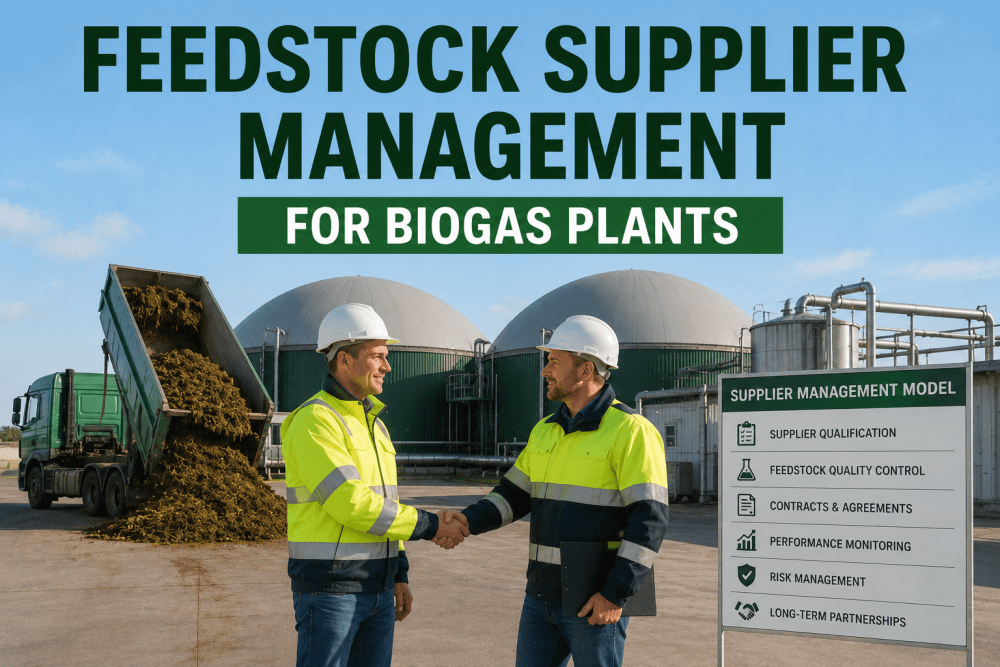
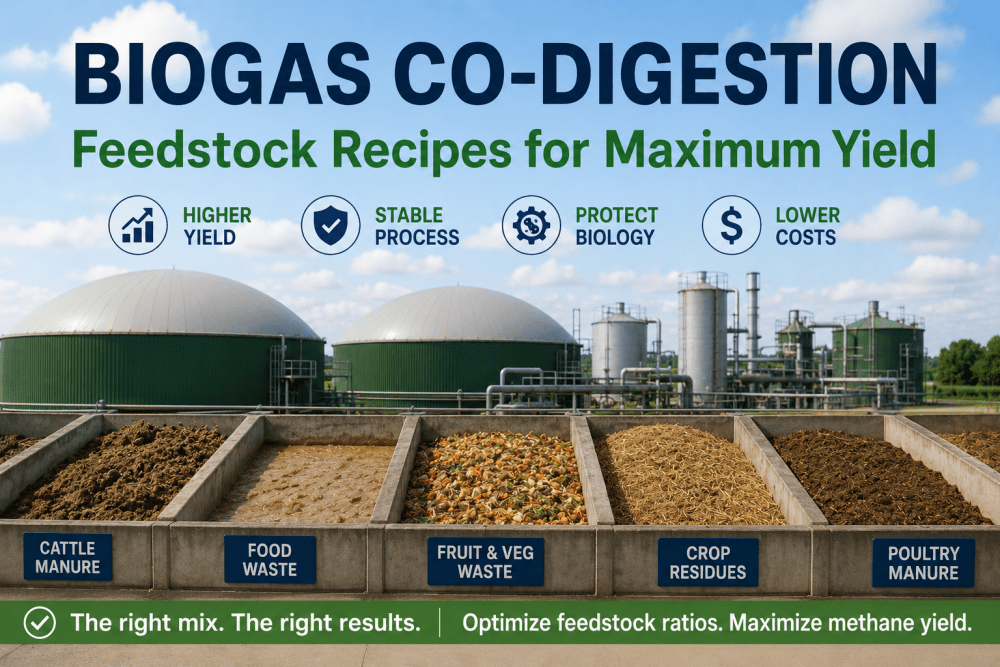
Biogas plant operators manage a fundamentally diverse supplier base. A single facility may receive dairy manure from three family farms, food processing waste from two industrial kitchens, source-separated organics from a municipal collection program, and dedicated energy crops from local row-crop farmers — each with different feedstock quality profiles, seasonal availability patterns, contamination risks, and contractual terms. Procurement and operations managers who Book a Demo discover how iFactory transforms feedstock supplier management from a reactive relationship into a data-driven performance system that protects gas yield and optimizes feedstock cost.
4–6
Average number of distinct feedstock supplier types per biogas plant — each with different quality profiles and contamination risks
23%
Average methane yield loss attributed to unmanaged feedstock quality variability from inconsistent supplier loads
$18/ton
Tip fee premium paid by plants with formal supplier quality programs vs. spot-market feedstock procurement
40%
Reduction in digester upset events after implementing structured supplier quality management and pre-acceptance screening
Supplier Risk Segmentation for Biogas Feedstock Sourcing
Not all feedstock suppliers pose the same risk to digester stability and methane yield, yet most biogas plants apply uniform receiving and quality verification procedures to every incoming load regardless of supplier type. Procurement managers who Book a Demo see how iFactory automates supplier risk scoring using historical quality data, laboratory analysis trends, and digester performance impact correlations.
Low
Quality variability — consistent manure composition from known livestock operations
Agricultural feedstock suppliers — dairy, swine, and poultry operations — typically deliver the most consistent feedstock composition due to controlled animal diets and stable waste generation patterns. The primary supplier management focus for agricultural sources is seasonal availability management (manure volume fluctuates with housing cycles and weather) and contaminant screening for bedding materials, sand, and antibiotics that can inhibit digester biology. iFactory's supplier portal allows agricultural suppliers to submit pre-delivery volume estimates and manure sample data, enabling the plant to optimize storage allocation and digester feed planning before the load arrives.
Food processing waste suppliers present the highest quality variability and contamination risk in most biogas feedstock portfolios. Bakery waste, brewery spent grain, dairy processing byproducts, and packaged food waste each carry distinct risk profiles — from plastic and metal packaging contaminants to pH excursions and rapid spoilage during transport. iFactory's quality module requires food processing suppliers to submit batch-specific laboratory analysis data through the supplier portal, with automated flagging when contaminant levels, solids content, or pH fall outside the plant's acceptance thresholds. Suppliers with repeated quality exceptions are automatically escalated for contract review.
Municipal source-separated organics programs deliver large volumes of consistent organic waste, but with the structural risk of household-level contamination — plastics, glass, metals, and non-organic materials that enter the collection stream despite public education programs. The supplier management challenge for municipal contracts is establishing clear contamination tolerances, implementing effective inspection protocols at plant reception, and maintaining contractual mechanisms for rejecting loads that exceed agreed contamination thresholds. iFactory's weighbridge integration captures visual inspection results and rejection documentation automatically, creating an auditable record of every load acceptance decision for contract compliance and dispute resolution.
Dedicated energy crop suppliers — corn silage, grass silage, cover crop biomass — offer the advantage of predictable quality planning but introduce risks related to harvest timing, storage management, and dry matter degradation between harvest and delivery. The supplier management relationship for energy crops is inherently seasonal and contractual, with multi-year agreements that define planting acreage, harvest windows, and payment terms linked to feedstock quality metrics. iFactory's contract management module tracks energy crop supplier agreements with automated quality-linked payment calculations and performance scorecards that inform contract renewal decisions.
Building a Supplier Quality Management Framework for Biogas Operations
A structured supplier quality management framework for biogas feedstock operates across four dimensions: supplier qualification and onboarding, incoming quality verification, performance measurement and scorecards, and contract management with quality-linked incentives. iFactory's supplier quality module connects all four dimensions in a single platform that integrates supplier documentation, laboratory analysis, digester performance data, and contract management.
Supplier Qualification and Onboarding Gaps
New suppliers onboarded without documentation of feedstock type, typical composition range, contaminant profile, or seasonal availability patterns. Without structured qualification requirements, plants accept unknown variability that could destabilize digester biology from the first load.
Inconsistent Sampling and Testing Protocols
Sampling frequency and laboratory analysis scope vary arbitrarily between suppliers and shifts. Critical parameters — TS, VS, pH, COD, NH4-N — may be tested for one supplier batch and assumed for the next, creating data gaps that mask quality degradation trends.
No Supplier Performance Scorecard or Trend Analysis
Supplier quality tracked only through informal operator feedback and occasional laboratory results. Without systematic scorecards that trend key quality parameters over time, gradual quality deterioration — increasing contamination rates, declining VS content — remains invisible until digester performance drops.
Contracts Without Quality-Linked Terms
Feedstock supply agreements based solely on volume and price, with no quality specifications, contaminant limits, or performance-based payment adjustments. Plants bear all quality risk without contractual mechanisms to enforce supplier accountability for feedstock consistency.
40%
Reduction in digester upset frequency after implementing structured supplier quality management with pre-acceptance screening
$14/ton
Average increase in feedstock value achieved through quality-linked payment terms vs. fixed-price contracts
90 days
Typical time to detect a deteriorating supplier quality trend without automated scorecards and statistical process control
Every Feedstock Supplier Brings Different Quality Risk. Without Structured Management, That Variability Goes Straight Into Your Digester.
iFactory's supplier management platform automates supplier qualification, incoming quality verification, performance scorecards, and contract management — integrating supplier data with digester performance analytics so procurement decisions are driven by yield impact. Purpose-built for biogas and RNG producers managing diverse feedstock supplier portfolios.
Supplier Onboarding, Performance Monitoring, and Continuous Improvement
Effective feedstock supplier management requires a structured process that begins before the first load arrives and continues through the entire supplier relationship. iFactory's supplier workflow module guides procurement teams through each stage — from supplier qualification documentation through ongoing performance scorecards and contract renewal decisions. Systems and procurement leaders who Book a Demo receive a supplier management maturity assessment that maps their current processes against industry best practices for biogas feedstock sourcing.
01
Supplier Qualification and Documentation
iFactory's supplier portal captures feedstock type classification, typical composition ranges, contaminant profiles, seasonal availability patterns, and sustainability certifications. Each supplier is assigned a risk category that determines incoming inspection frequency, sampling protocol, and laboratory analysis scope — low-risk agricultural suppliers may require only periodic verification, while high-risk food processors require batch-level testing.
02
Pre-Delivery Quality Notification and Scheduling
Suppliers submit pre-delivery notifications through the iFactory portal with batch-specific quality data — estimated volume, solids content, pH range, and any known contaminants. The platform cross-references the notification against the supplier's historical quality profile and flags deviations that require additional inspection or laboratory confirmation before the load is accepted for delivery.
03
Incoming Quality Verification and Acceptance
At plant reception, the weighbridge system automatically identifies the supplier and links the load to the pre-delivery notification. Visual inspection results, laboratory sample collection, and quality parameter measurements are recorded against the digital load record. Loads that meet acceptance criteria proceed to storage; loads with quality exceptions are diverted for separate handling or rejected with automated documentation for contract compliance.
04
Performance Scorecard and Trend Analysis
iFactory's analytics engine aggregates every supplier's quality data across all delivered loads — trending TS, VS, pH, contaminant rate, and composition consistency over time. Suppliers are scored across five dimensions: quality consistency, contamination rate, notification compliance, volume reliability, and yield impact. Scorecards are updated automatically after each delivery and are accessible to both the plant team and the supplier through the portal.
05
Contract Management and Quality-Linked Payments
Supplier contracts are managed within iFactory's contract module with quality-linked payment terms that adjust feedstock pricing based on delivered quality metrics relative to agreed specifications. Suppliers consistently delivering above-specification quality earn premium pricing; suppliers with repeated quality exceptions face payment adjustments or automatic escalation for contract review. Contract renewal decisions are supported by the supplier's full performance history and yield impact analysis.
What Biogas Operators Say About Structured Feedstock Supplier Management
The following testimonial is from a procurement and operations manager at a facility currently using iFactory's supplier management platform in the United States.
We source from fourteen different suppliers across four feedstock categories — dairy manure, food processing waste, municipal organics, and corn silage. Before iFactory, each supplier relationship operated in its own silo with different quality expectations, different documentation standards, and no consistent way to compare supplier performance. We accepted loads based on relationship history rather than objective quality data, and our digester paid the price in yield variability and upset events. iFactory's supplier management platform gave us a single framework for every supplier — qualification requirements, quality scorecards, pre-delivery notifications, and automated acceptance workflows.
Director of Feedstock Procurement and Plant Operations
Food Waste and Agricultural Biogas Facility, Northeast United States
Measurable Impact of Structured Supplier Management on Biogas Plant Performance
Beyond the operational improvements in quality consistency and digester stability, structured feedstock supplier management delivers direct financial returns through improved methane yield, reduced upset-related downtime, optimized feedstock procurement costs, and stronger supplier relationships. The following KPIs reflect aggregated performance data from biogas facilities using iFactory's supplier management platform across the United States.
35%
Reduction in Digester Upset Frequency
Structured supplier quality screening and pre-delivery notifications prevent contaminated or off-specification feedstock from entering the digester.
8%
Increase in Average Methane Yield
Consistent feedstock quality from managed suppliers enables optimized digester feed formulation and stable biology performance.
100%
Supplier Documentation Coverage
Every supplier tracked with complete qualification records, quality history, and performance scorecards — no undocumented supplier relationships.
14
Days Faster Trend Detection
Supplier quality deterioration trends identified through automated scorecards vs. 90-day detection lag under manual review processes.
$14/ton
Feedstock Value Improvement
Quality-linked payment terms incentivize suppliers to deliver consistent, high-quality feedstock — reducing rejection rates and digester risk.
50%
Reduction in Procurement Admin Time
Automated supplier portal, digital documentation, and quality scorecards eliminate manual phone calls, paper records, and spreadsheet tracking.
4
Supplier Categories Managed
Single platform serves agricultural, food processing, municipal, and energy crop supplier workflows with unified data architecture
Real-time
Supplier Scorecard Updates
Quality performance metrics refreshed automatically with every incoming load — no manual data entry or spreadsheet updates
Procurement documentation labor hours reduced through automated supplier portal and digital quality record keeping
See how biogas producers across the United States use iFactory's supplier management platform to reduce feedstock quality variability, improve methane yield, and build stronger supplier relationships with data-driven performance scorecards.
Book a 30-minute Feedstock Supplier Management Demo with iFactory's biogas procurement team.
Conclusion: Supplier Management Is Yield Management for Biogas Plants
Every feedstock supplier relationship in a biogas plant is a yield management relationship dressed in procurement language. The quality of the feedstock that enters the digester — its solids content, nutrient balance, contaminant load, and biological stability — directly determines the methane yield that exits it. Plants that treat supplier management as a purely administrative function — negotiating price and volume without systematic quality performance tracking — leave their most important yield driver
iFactory's feedstock supplier management platform closes that gap with a single integrated system that connects supplier qualification, quality verification, performance scorecards, and contract management with digester performance analytics. Procurement and operations teams are already using iFactory to reduce digester upset frequency by 35 percent, increase methane yield by 8 percent, and cut procurement administration time by half. Book a Demo to see your supplier management maturity score and the framework that will protect your methane yield.
Frequently Asked Questions
iFactory segments suppliers using a risk matrix based on two dimensions: feedstock category risk (the inherent variability and contamination potential of the feedstock type) and supplier performance history (the individual supplier's quality consistency, contamination rate, and notification compliance over time). The combination produces a risk score that determines the required inspection intensity, sampling frequency, and laboratory analysis scope for each supplier. Agricultural suppliers with strong quality history may require only periodic spot-checking, while high-risk food processors with variable quality history require batch-level testing and pre-delivery notification validation before load acceptance.
iFactory can begin generating supplier scorecards with as little as three months of historical delivery data — including weighbridge records, laboratory analysis results, and supplier identification. For facilities with more extensive historical data, the platform ingests up to five years of quality records to establish statistical baselines and trend analysis. Suppliers without prior quality data are assigned a provisional risk category based on their feedstock type and are moved to data-driven scoring as delivery records accumulate. The Week 1 data audit assesses your available supplier documentation and quality data to configure the scorecard framework.
Yes. iFactory provides a supplier-facing portal that allows vendors to submit pre-delivery notifications, batch-specific quality data, sustainability certifications, and delivery scheduling requests digitally. The portal is accessible through any web browser and requires no software installation on the supplier's side. Submitted data is validated automatically against the supplier's quality profile and acceptance thresholds — deviations are flagged for plant review before the load is dispatched.
Yes — this is the core differentiator of iFactory's approach to supplier management. The platform correlates each supplier's delivered feedstock quality parameters (TS, VS, pH, COD, contaminant levels) with downstream digester performance metrics (methane yield, biogas composition, retention time, volatile fatty acid levels) to quantify the yield impact of each supplier's quality profile. This correlation enables procurement teams to calculate the true cost of supplier quality variability — not just in rejection rates and tip fees, but in lost methane production and digester instability events that reduce overall plant revenue.
iFactory integrates natively with all major weighbridge controller systems through REST API and direct database connectors. The integration maps supplier identifiers from the weighbridge ticket to the supplier record in iFactory's platform, automatically creating a digital load record with gross weight, tare weight, net weight, arrival timestamp, and supplier identification. For facilities without electronic weighbridge integration, iFactory provides a mobile data capture interface that allows operators to log supplier identification and load data directly. Integration setup and testing is typically completed within 7 days during the deployment phase.
Your Digester Yield Depends on Your Supplier Quality. Manage Every Supplier Relationship with Data, Not Phone Calls.
iFactory gives biogas producers automated supplier qualification, quality verification scorecards, pre-delivery notification workflows, and yield-linked contract management — purpose-built for facilities managing diverse feedstock supplier portfolios across agricultural, food processing, municipal, and energy crop sources. Every supplier relationship tracked and scored in a single digital platform.