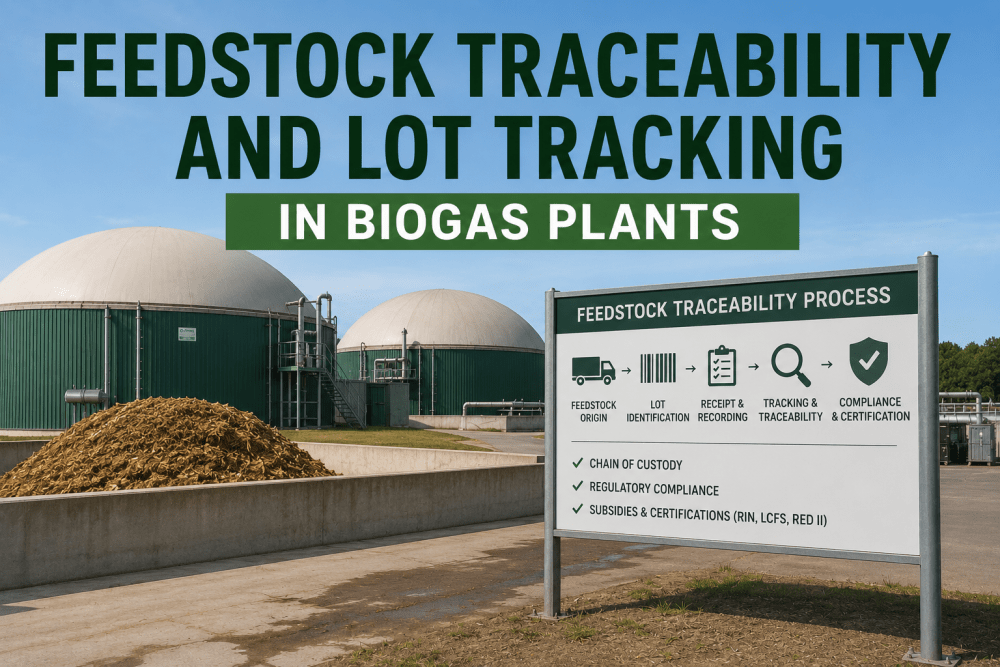
Biogas plant operators across the United States and Europe are discovering that feedstock traceability is no longer just a compliance checkbox — it is a revenue-critical capability that determines access to the highest-value subsidy and credit programs. iFactory's AI platform delivers a comprehensive feedstock traceability and lot tracking solution — integrating weighbridge records, supplier documentation, laboratory analysis results, and digestate output data into a single defensible chain-of-custody system. Operations and compliance teams that Book a Demo discover how iFactory transforms feedstock tracking from a manual record-keeping burden into an automated compliance engine that protects and maximizes credit revenue.
The Regulatory Imperative for Feedstock Traceability in Biogas Operations
Biogas and RNG producers operate within an increasingly complex regulatory environment where feedstock provenance directly determines the value of environmental credits. Under the EPA Renewable Fuel Standard, D3 cellulosic biofuel RINs require that feedstock be sourced from qualifying agricultural residues, separated food waste, or dedicated energy crops with documented sustainable harvesting practices.
The consequence of inadequate traceability is not just a failed audit — it is retroactive invalidation of RINs or LCFS credits that were already sold and monetized, creating a direct financial liability that can exceed the operational margin of the biogas plant itself. Procurement and compliance managers who Book a Demo see how iFactory's lot tracking module automates documentation collection, supplier data validation, and chain-of-custody reconciliation to eliminate audit risk.
The EPA Renewable Fuel Standard assigns RIN values based on feedstock classification and lifecycle greenhouse gas reduction. D3 cellulosic biofuel RINs trade at a significant premium over D5 advanced biofuel RINs precisely because they require documented proof of feedstock origin and sustainability. iFactory's traceability module captures supplier declarations, feedstock category classifications, and mass balance records that satisfy EPA verification requirements for RIN generation. Automated documentation collection ensures every RIN pathway is backed by auditable evidence from feedstock receipt through RIN separation.
The California and Oregon Low Carbon Fuel Standard programs calculate carbon intensity scores based on full lifecycle analysis from feedstock production through combustion. Tier 2 pathway certification requires detailed feedstock-specific data including transportation mode, distance, preprocessing energy inputs, and land use change classification. iFactory's chain-of-custody engine aggregates feedstock lot data from weighbridge receipts, supplier manifests, and transport records into a single CI score calculation feed — eliminating manual data assembly for pathway certification and quarterly verification reporting.
The European Union's Renewable Energy Directive II mandates that biogas and biomethane producers meet strict sustainability criteria including greenhouse gas reduction thresholds, land use change tracking, and detailed chain-of-custody documentation. RED II recognizes three chain-of-custody models: physical segregation, mass balance, and book-and-claim. iFactory supports all three models with automated mass balance accounting that tracks feedstock volumes, sustainability attributes, and GHG reduction claims across multiple feedstock intake streams simultaneously.
The International Sustainability and Carbon Certification (ISCC) system is the most widely recognized certification framework for biomass and biofuel supply chains. ISCC EU certification requires operators to maintain a fully documented management system covering feedstock sourcing, supplier evaluation, mass balance accounting, and greenhouse gas calculation. iFactory's ISCC compliance module automates the documentation workflow — generating audit-ready records that reduce certification maintenance labor by up to 60 percent while eliminating the documentation gaps that cause non-conformities during annual audits.
Building a Defensible Feedstock Chain of Custody
A defensible chain of custody for biogas feedstock requires documented traceability at every stage from feedstock origin through digestion and digestate disposal. Each handoff between supplier, transporter, plant reception, storage, and digester feed creates a documentation requirement that, if unfulfilled, breaks the chain and compromises the compliance value of every credit generated from that batch. iFactory's Digital Twin platform models the full feedstock flow as a connected data graph — every lot's composition, origin certification, transport emissions, and digestion performance tracked as attributes of a single digital feedstock record from acceptance through credit monetization. Operations teams that Book a Demo receive a full feedstock flow mapping that identifies documentation gaps in their current chain of custody.
Lot Tracking Technologies and Data Architecture for Biogas Facilities
Implementing a digital feedstock traceability system requires selecting and integrating the right combination of lot identification technologies, data capture infrastructure, and compliance documentation workflows. iFactory's integration-first architecture connects to existing plant systems and fills technology gaps with purpose-built feedstock tracking modules. Engineering and compliance leaders who Book a demo receive a feedstock technology assessment that maps their current data capture infrastructure to the compliance requirements of their target credit pathways.
| Lot Tracking Technology | Data Captured | Compliance Application | iFactory Integration |
|---|---|---|---|
| Weighbridge Integration | Gross weight, tare weight, net weight, arrival time, vehicle ID, supplier ID | Mass balance accounting, feedstock volume reporting, transport emissions calculation | Native API integration with all major weighbridge controllers — automatic lot creation on ticket generation |
| GPS Tracking and Geofencing | Origin coordinates, route path, distance, border crossing timestamps | Land use change documentation, transport mode CI calculation, cross-border compliance | Integration with fleet management APIs and ELD platforms — transport chain data linked to lot record |
| Laboratory Analysis Integration | TS, VS, COD, pH, nutrient content, contaminant screening results | Feedstock quality verification, digester feed optimization, GHG reduction calculation | LIMS connector captures analysis results and links to lot record — automatic quality flagging and specification alerts |
| Supplier Documentation Portal | Sustainability declarations, origin certificates, feedstock classification, batch numbers | RFS pathway qualification, RED II sustainability criteria, ISCC certification documentation | Supplier-facing portal with automated document validation, expiration alerts, and certification renewal workflows |
| Digital Twin Lot Graph | Full lifecycle data graph from origin through digestate — all attributes connected to single persistent lot ID | End-to-end audit trail for all credit pathways, mass balance reconciliation, CI score tracking and attribution | iFactory Digital Twin creates a persistent digital record for every feedstock lot with all chain-of-custody attributes linked in a queryable data graph |
What Biogas Operators Say About Systematic Feedstock Traceability
The following testimonial is from an operations and compliance manager at a facility currently running iFactory's feedstock traceability and lot tracking platform in the United States.
Measurable Impact of Systematic Feedstock Traceability on Compliance and Revenue
Beyond the operational benefits of digital lot tracking, systematic feedstock traceability delivers direct financial returns through improved credit pathway access, reduced documentation labor, and elimination of compliance risk. The following KPIs reflect aggregated performance data from biogas and RNG facilities using iFactory's feedstock traceability and lot tracking platform across the United States and Europe.
Conclusion: Feedstock Traceability Is the Foundation of Biogas Credit Revenue
The rapid expansion of renewable fuel standards, low carbon fuel programs, and sustainability certification frameworks has transformed feedstock traceability from an operational convenience into a revenue-critical compliance capability. Biogas and RNG producers that invest in systematic lot tracking and chain-of-custody documentation gain access to the highest-value credit pathways — D3 cellulosic RINs, LCFS Tier 2 credits, and RED II certified biomethane premiums — while eliminating the audit risk that threatens retroactive credit invalidation.
iFactory's feedstock traceability and lot tracking platform closes that gap with a single integrated system that captures chain-of-custody documentation from supplier declaration through RIN separation. Operations and compliance teams across the United States and Europe are already using iFactory to reduce compliance labor by 60 percent, eliminate audit non-conformities, and unlock the credit value that properly documented feedstock pathways deliver. Book a Demo to see your current feedstock documentation coverage and the traceability framework that will protect and maximize your credit revenue.