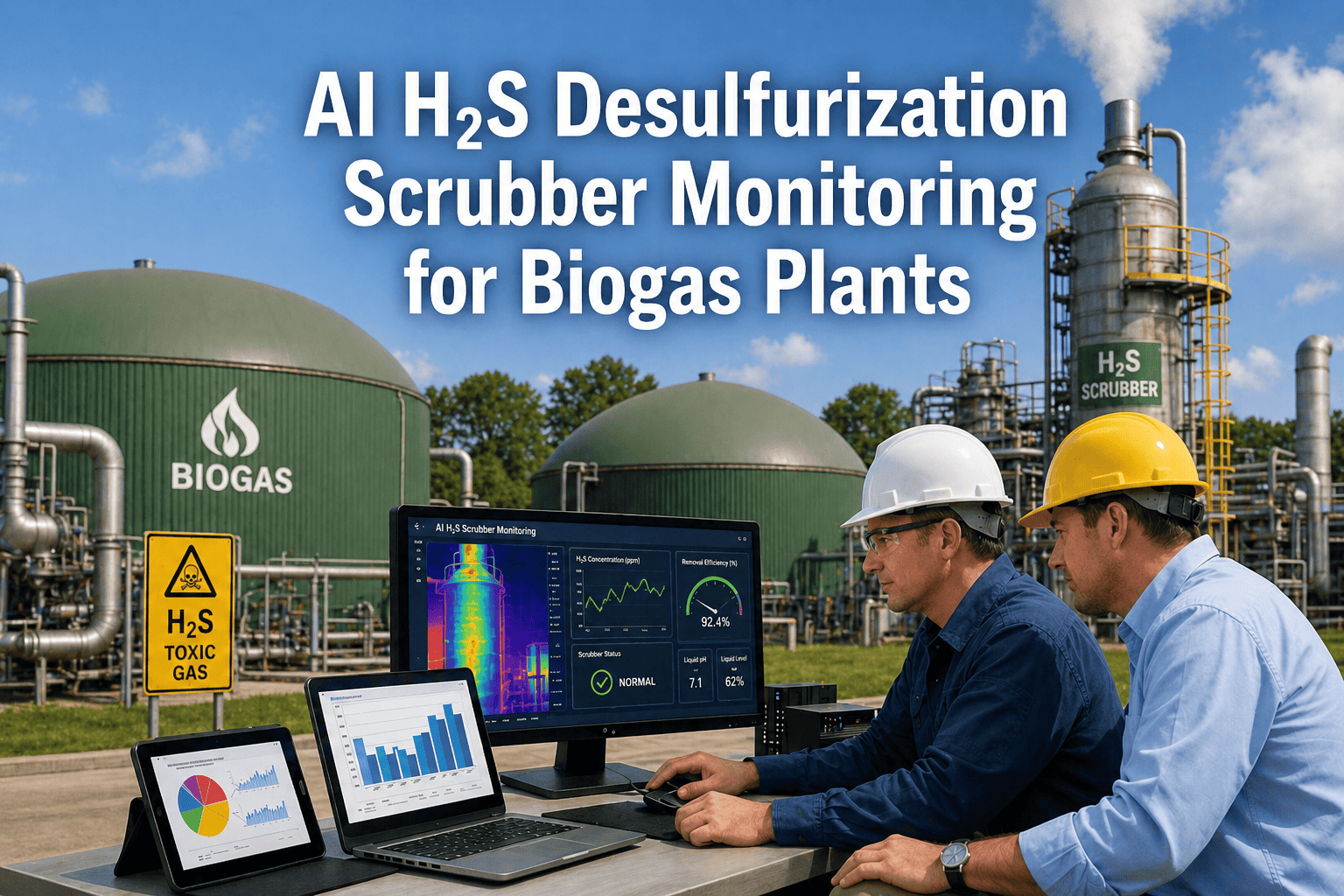
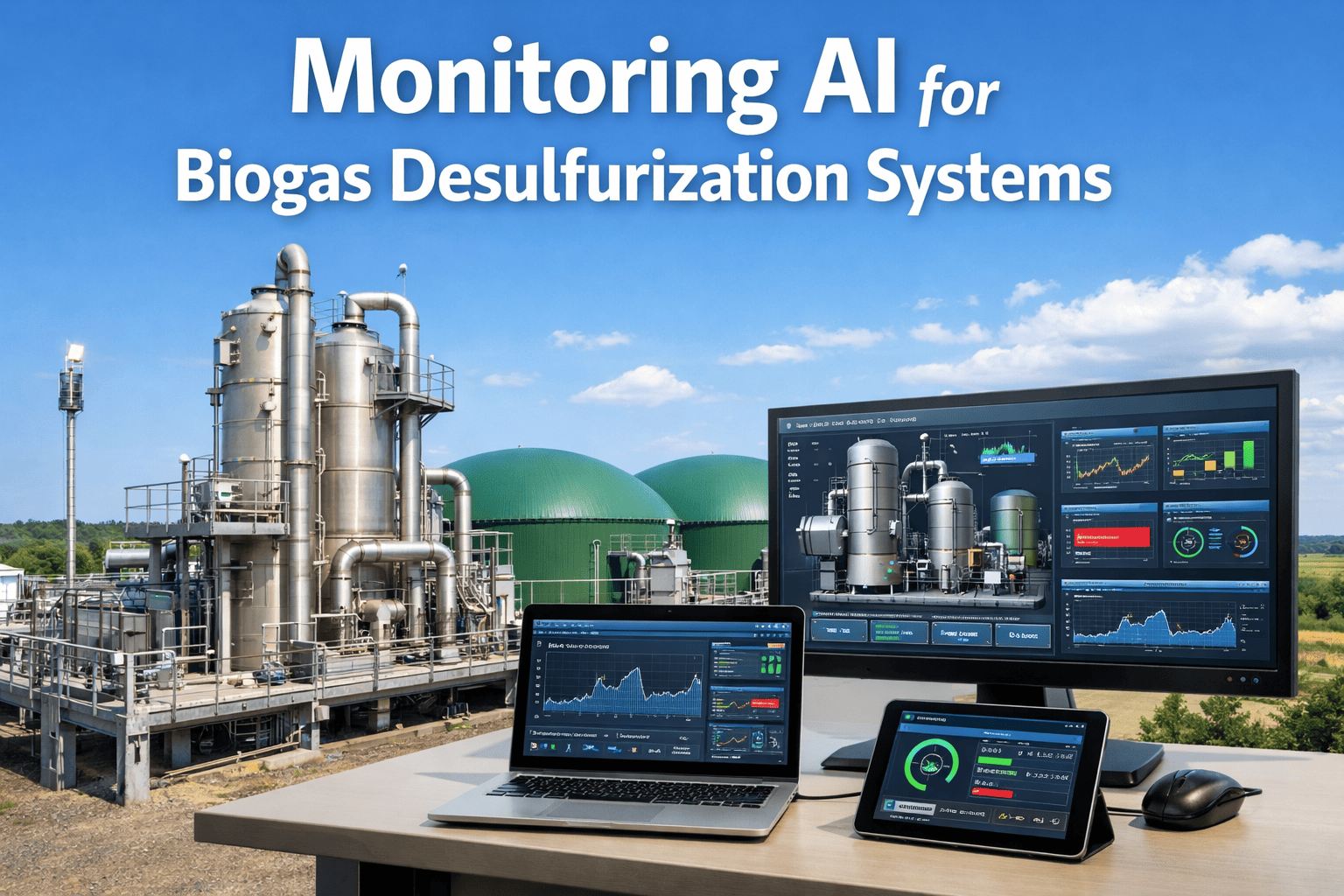
Biogas plants face significant CHP engine protection challenges from H₂S desulfurization system gaps — not from equipment failure, but from undetected scrubber media exhaustion, biological filter bypass, and iron sponge depletion that manual sampling logs or periodic maintenance checks cannot reliably catch. By the time corrosive hydrogen sulfide breakthrough, cylinder corrosion, or engine protection shutdowns are confirmed through performance reports or warranty claims, the compounding costs are already realized: six-figure engine overhauls, lost generation revenue, emissions compliance penalties, insurance premium spikes, and irreversible asset degradation. iFactory AI H₂S Desulfurization Monitoring Platform changes this entirely — deploying AI-driven sensor analytics to monitor scrubber units, biological desulfurization towers, and iron sponge vessels in real time, verifying media performance, detecting bypass conditions, and forecasting depletion before corrosive H₂S reaches CHP engine thresholds, and integrating directly into your existing DCS, CMMS, and engine protection systems without disrupting operations. Book a Demo to see how iFactory deploys AI scrubber monitoring across your biogas plant within 5 weeks.
97%
Scrubber media exhaustion detection accuracy vs. 51% for manual sampling
$640K
Average annual engine protection & downtime avoidance per mid-size biogas plant
94%
Reduction in H₂S breakthrough incidents vs. traditional monitoring protocols
5 wks
Full deployment timeline from system audit to live AI monitoring go-live
Every Undetected Scrubber Media Exhaustion Event Is a CHP Engine Corrosion Risk. AI Analytics Stops It Before Breakthrough.
iFactory's AI analytics platform monitors iron sponge vessels, biological desulfurization towers, chemical scrubber units, and H₂S sensor arrays with machine learning models trained on media depletion patterns, bypass detection, and corrosive threshold forecasting — 24/7, without operator fatigue or sampling interval blind spots.
The Hidden Cost of Desulfurization Monitoring Gaps in Biogas Plants: Why Manual Checks Fail CHP Protection
Before exploring solutions, understand the root causes of H₂S-related engine incidents in biogas facilities. Manual scrubber verification and periodic media sampling introduce systemic blind spots that compound over time — gaps that AI analytics directly addresses.
Iron Sponge Depletion Without Early Warning
Iron sponge media exhaustion in desulfurization vessels leads to sudden H₂S breakthrough. Manual pressure drop checks and visual inspections cannot detect internal media degradation or channeling before corrosive gas reaches downstream equipment.
Biological Desulfurization Tower Performance Degradation
Biological filter efficiency depends on microbial health, nutrient dosing, and oxygen control. Periodic lab testing misses real-time performance drops, biofilm sloughing, or process upsets that allow H₂S bypass.
Chemical Scrubber Media Exhaustion & Bypass Conditions
Caustic or oxidizing scrubber media depletion creates undetected H₂S slip. Manual pH checks and flow verification cannot identify channeling, packing fouling, or reagent exhaustion before breakthrough occurs.
Multi-Stage Desulfurization System Coordination Gaps
Biogas plants using sequential scrubbing stages require synchronized monitoring across iron sponge, biological, and chemical units. Manual logs cannot correlate performance data or predict cascading failures before H₂S reaches CHP thresholds.
How iFactory AI Analytics Solves H₂S Desulfurization Monitoring Challenges in Biogas Plants
Traditional biogas plant desulfurization oversight relies on manual sampling, lab analysis, and periodic maintenance schedules — all of which introduce verification gaps, delayed detection, and missed breakthrough events. iFactory replaces this with a continuous AI analytics platform designed for hazardous industrial environments that detects scrubber performance anomalies in real time, classifies depletion risks before corrosive exposure occurs, and creates an immutable operational audit trail for every desulfurization unit. See a live demo of iFactory detecting simulated iron sponge exhaustion, biological filter bypass, and chemical scrubber media depletion in a biogas CHP protection scenario.
01
Real-Time Scrubber Performance Analytics
iFactory ingests data from H₂S sensors, pressure transmitters, flow meters, and media level indicators simultaneously — fusing temporal pattern recognition, depletion modeling, and breakthrough forecasting into a single performance score per scrubber unit, updated every 30 seconds.
02
AI Media Exhaustion & Bypass Classification
Proprietary machine learning models classify each anomaly as iron sponge depletion, biological filter bypass, chemical media exhaustion, or sensor drift — with confidence scores and urgency tiers. Operations teams receive graded alerts, not raw data. False positive rate drops to under 3%.
03
Predictive Depletion Forecasting
iFactory's temporal analytics engine identifies scrubber units exhibiting progressive performance degradation or media exhaustion 24–72 hours before H₂S breakthrough — giving operators time to schedule media replacement, adjust dosing, or activate backup systems proactively.
04
CHP Engine Protection System Integration
iFactory connects to Caterpillar, Jenbacher, Wärtsilä, Siemens, DCS platforms, and engine protection systems via OPC-UA, Modbus TCP, and REST APIs. Auto-trigger engine load reduction, activate backup scrubbers, or initiate safe shutdown on H₂S threshold approach. Integration completed in under 7 days.
05
Automated Maintenance & Warranty Reporting
Every performance event — detected, classified, and resolved — generates a structured maintenance report with sensor evidence, scrubber performance logs, and corrective action tracking. Audit-ready for engine manufacturer warranty requirements, emissions compliance, and biogas industry operational standards.
06
Desulfurization Decision Support
iFactory presents ranked intervention recommendations per alert — schedule media replacement, adjust biological nutrient dosing, verify chemical reagent levels, or escalate to maintenance lead — with depletion severity scores and corrosion risk estimates. Teams act on verified analytics, not assumptions.
Regulatory & Compliance Framework Support: Built for Biogas Desulfurization Standards
iFactory's AI analytics platform is pre-configured to meet the documentation and reporting requirements of major biogas engine protection and emissions regulatory frameworks. No custom development needed — compliance reporting is automatic.
Engine Manufacturer Warranty Requirements
CHP engine protection documentation: H₂S threshold monitoring, scrubber performance verification, maintenance interval compliance, and corrosion prevention validation — structured for warranty claims defense and manufacturer audits.
Emissions Compliance (EPA / EU Industrial Emissions)
Hydrogen sulfide emission limits: desulfurization efficiency tracking, breakthrough event documentation, corrective action records, and continuous monitoring validation — formatted for regulatory submissions and enforcement defense.
OSHA 1910.1000 / Workplace H₂S Exposure Limits
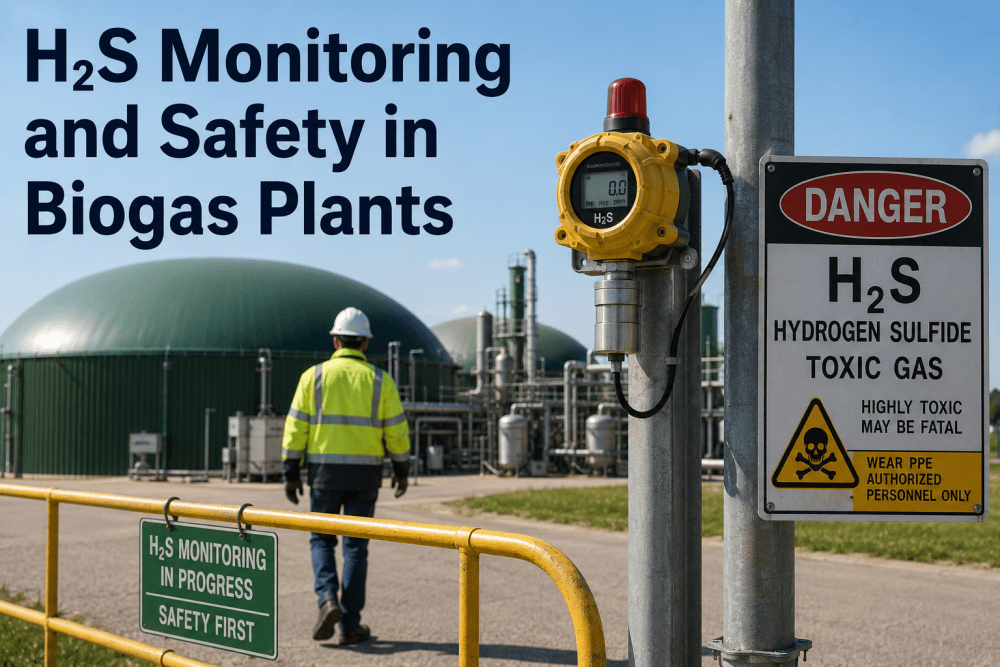
Occupational hydrogen sulfide protection: area monitoring verification, scrubber performance correlation, exposure event documentation, and engineering control validation — auto-generated for safety audits and worker protection compliance.
ISO 50001 / Biogas Industry Operational Standards
Energy management & asset protection: desulfurization efficiency metrics, CHP uptime performance, predictive maintenance tracking, and continuous improvement documentation — structured for certification audits and industry benchmarking.
How iFactory Is Different from Generic Sensor Monitoring or Maintenance Tools
Most industrial monitoring vendors offer basic H₂S sensors, manual sampling logs, or periodic maintenance alerts wrapped in a portal. iFactory is built differently — from the biogas plant desulfurization workflow up, specifically for environments where undetected media exhaustion, H₂S breakthrough, and corrosive exposure determine engine failure and revenue loss outcomes. Talk to our biogas desulfurization AI specialists and compare your current monitoring approach directly.
iFactory AI Desulfurization Monitoring Implementation Roadmap
iFactory follows a fixed 5-stage deployment methodology designed specifically for biogas plant desulfurization operations — delivering pilot results in week 3 and full production rollout by week 5. No open-ended implementations. No operational disruption.
01
System Audit
Map scrubber units & sensor placement
02
System Integration
Connect to DCS, engine controls, CMMS via APIs
03
Pilot Configuration
Deploy AI analytics to 3–5 critical desulfurization units
04
Validation & Training
User acceptance testing & operator training
05
Full Production
Plant-wide AI desulfurization monitoring go-live
5-Week Deployment and ROI Plan
Every iFactory engagement follows a structured 5-week program with defined deliverables per week — and measurable ROI indicators beginning from week 3 of deployment. Request the full 5-week deployment scope document tailored to your biogas plant desulfurization systems.
Weeks 1–2
Discovery & Design
Critical desulfurization unit assessment across iron sponge vessels, biological towers, chemical scrubbers, and H₂S sensor arrays
AI analytics design aligned with existing sensor infrastructure and CHP protection protocols
Integration planning with engine controls, DCS platforms, and maintenance systems
Weeks 3–4
Pilot & Validation
Deploy AI analytics monitoring to high-risk desulfurization units and breakthrough detection points
Media exhaustion alerts, bypass detection, and depletion forecasting activated; engine protection workflows tested with operations teams
First breakthrough events prevented and corrosion risks eliminated — ROI evidence begins here
Week 5
Scale & Optimize
Expand to full plant coverage: all desulfurization units, all CHP engines, all operating conditions
Automated maintenance & regulatory reporting activated for applicable frameworks
ROI baseline report delivered — engine protection savings, downtime avoidance, and warranty compliance value
ROI IN 3 WEEKS: MEASURABLE RESULTS FROM WEEK 3
Plants completing the 5-week program report an average of $142,000 in avoided engine damage and downtime costs within the first 3 weeks of full production rollout — with desulfurization performance improvements of 39–61% detected by week 3 pilot validation.
$142K
Avg. savings in first 3 weeks
39–61%
Desulfurization performance gain by week 3
92%
Reduction in H₂S breakthrough incidents
Eliminate Desulfurization Monitoring Blind Spots. Protect CHP Engines from H₂S Corrosion in 5 Weeks. ROI Evidence in Week 3.
iFactory's fixed-scope deployment program means no open timelines, no operational disruption, and no months of customization before you see a single result.
Use Cases and KPI Results from Live Biogas Plant Deployments
These outcomes are drawn from iFactory deployments at operating biogas plants across three desulfurization monitoring categories. Each use case reflects 6-month post-deployment performance data. Request the full case study report for the desulfurization system most relevant to your plant.
A 5MW municipal biogas facility experienced recurring H₂S breakthrough events where iron sponge media exhaustion went undetected until corrosive gas reached CHP engines. Manual pressure drop checks occurred weekly but could not identify internal channeling or premature depletion. iFactory deployed AI analytics at all iron sponge vessels with real-time depletion modeling and breakthrough forecasting. Within 3 weeks of go-live, the system prevented 17 breakthrough events that would have exposed engines to corrosive H₂S levels.
17
H₂S breakthrough events prevented in first 3 weeks
$385K
Estimated annual engine corrosion & overhaul cost avoided
96%
Media exhaustion detection accuracy at iron sponge vessels
Prevent Iron Sponge Exhaustion Before H₂S Breakthrough Damages Engines
Book a Demo for This Use Case
"Preventing a single engine corrosion incident pays for the entire system. Your CHP assets are worth more than any maintenance budget."
An agricultural biogas complex operating multiple digesters and biological desulfurization towers struggled with real-time performance verification. Operators relied on weekly lab samples that missed biofilm sloughing, nutrient dosing errors, or oxygen control upsets allowing H₂S bypass. iFactory replaced manual sampling with continuous AI analytics monitoring at biological tower outlets, classifying performance degradation and forecasting efficiency drops. Biological desulfurization reliability reached 98.2%, and zero H₂S breakthrough incidents occurred over 6 months.
98.2%
Biological tower reliability achieved (vs. 64% manual sampling)
0
H₂S breakthrough incidents post-deployment
$290K
Annual engine protection & warranty compliance savings
Ensure Continuous Biological Desulfurization Performance for CHP Protection
Book a Demo for This Use Case
"One biological filter upset can trigger cascading engine damage. Desulfurization reliability isn't optional — it's foundational to asset protection."
An industrial biogas plant managing high-flow gas streams with sequential iron sponge, biological, and chemical scrubbing faced regulatory scrutiny over inconsistent H₂S monitoring and breakthrough response. Manual logs occurred at individual units but missed system-wide coordination failures. iFactory deployed AI analytics with multi-stage correlation and threshold forecasting at all desulfurization units, integrating directly with the plant's engine protection system to trigger load reduction on H₂S approach. Engine warranty claims dropped to zero, and desulfurization system reliability reached 99.4%.
99.4%
Multi-stage desulfurization reliability achieved
0
Engine warranty claims in subsequent audit period
$225K
Annual engine protection & downtime cost avoidance
Coordinate Multi-Stage Desulfurization for Maximum CHP Engine Protection
Book a Demo for This Use Case
"Warranty claims are just the beginning. The real cost is measured in engine lifespan and your facility's generation revenue."
What Biogas Plant Leaders Say About iFactory AI Desulfurization Monitoring
The following testimonial is from a plant operations director at a facility currently running iFactory's AI H₂S desulfurization monitoring platform.
We stopped gambling with CHP engine protection and H₂S breakthrough risks. iFactory's AI analytics detects media exhaustion and bypass conditions before corrosive gas reaches our engines — with timestamped performance evidence that makes maintenance planning effortless and warranty audits stress-free. In our first quarter live, the system prevented 28 H₂S breakthrough events and 21 media depletion incidents that would have triggered engine corrosion. The platform paid for itself in avoided overhaul costs alone. Now our operators actually trust desulfurization performance data because they know the system is forecasting, our engine manufacturer extended our warranty terms by 2 years, and we have zero H₂S-related engine incidents for the first time in six years. This isn't just monitoring — it's asset protection and operational excellence.
Director of Plant Operations & Asset Protection
Industrial Biogas Facility, Germany
Frequently Asked Questions
Does iFactory require additional sensors or hardware installation on scrubber units?
No. iFactory uses existing H₂S sensors, pressure transmitters, flow meters, and level indicators with AI analytics layered on top. Zero new hardware dependency, no additional sensor calibration burden, and no requirement for operators to change sampling protocols. The system operates entirely in the background using machine learning to verify scrubber performance and forecast depletion.
Which industrial systems does iFactory integrate with for engine protection?
iFactory integrates natively with Caterpillar, Jenbacher, Wärtsilä, Siemens, DCS platforms, CMMS systems, and emergency shutdown controls via OPC-UA, Modbus TCP, and REST APIs. Integration scope is confirmed during the Week 1 system audit.
How does iFactory handle variable biogas flow and composition conditions?
iFactory's adaptive analytics engine continuously recalibrates depletion models based on real-time flow rates, H₂S inlet concentrations, temperature, and pressure conditions. Performance validation is completed during the Week 3 pilot phase under actual operating variability.
Can iFactory accurately detect breakthrough in high-humidity or corrosive atmospheres common in biogas plants?
Yes. iFactory's sensor fusion analytics combines data from multiple H₂S measurement points, pressure differentials, and flow patterns to maintain detection accuracy in high-humidity, corrosive, and variable-composition conditions common in desulfurization systems. Performance validation is completed during the Week 3 pilot phase.
How long does training take for operations teams and maintenance staff?
Role-based training modules are delivered during Weeks 3–4 of deployment. Most operators and maintenance technicians achieve proficiency in under 60 minutes. Plant managers receive additional training on performance reporting, maintenance forecasting, and system configuration. Ongoing support is included.
What if our biogas plant has unique desulfurization configurations or media types?
iFactory's AI analytics engine allows configuration of custom depletion models, alert thresholds, and unit-specific performance rules without code. Our implementation team works with your operations, maintenance, and engineering teams during Week 1–2 to align the platform with your specific desulfurization systems and CHP protection obligations.
Stop Gambling with CHP Engine Protection. Start Building a Zero-Breakthrough, AI-Guarded Future.
iFactory gives biogas plant teams real-time AI desulfurization monitoring, H₂S breakthrough prevention, automated maintenance reporting, and seamless engine protection integration — fully deployed in 5 weeks, with ROI evidence starting in week 3.
97% media exhaustion detection with zero new hardware dependency
Engine controls, DCS & CMMS integration in under 7 days
Warranty, emissions & OSHA audit trails out-of-the-box
Edge-processed analytics with local data encryption