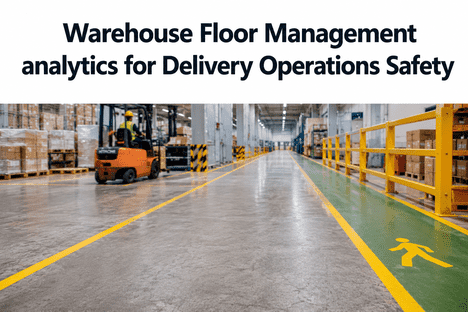
Uncoordinated analytics technicians in warehouse delivery operations waste 30–40% of every shift on administrative overhead — manual job logging, physical parts hunting, re-work caused by incomplete work orders, and reactive dispatch that sends the wrong skill to the wrong asset. AI-driven workforce management eliminates that waste systematically: routing the right certified technician to every job with parts pre-staged, work context delivered to their mobile device, and every completed task feeding directly into your maintenance intelligence layer. This is how iFactory AI transforms warehouse delivery technician operations from a cost centre into a measurably productive, data-generating function — with no additional headcount. For a facility-specific assessment, Book a Demo.
AI Workforce Scheduling · Skill-Based Dispatch · CMMS Work Orders · Real-Time Technician Analytics
iFactory AI Routes the Right Technician to Every Job — Parts Pre-Staged, Context Pre-Loaded, Zero Admin Overhead.
iFactory's AI workforce management platform connects technician skills, live job queues, parts inventory, and delivery schedules into a single intelligence layer — eliminating the dispatch inefficiencies and administrative waste that cost warehouse delivery operations 30–40% of shift productivity every day.
30–40%
Shift time lost to admin tasks, dispatch delays, and parts hunting in unmanaged technician teams
25–35%
Average maintenance "wrench time" in unoptimised warehouse operations — AI planning raises this to 55–60%
35%
Effective workforce capacity increase achievable without hiring — through AI planning and scheduling alone
$1.5M+
Annual productivity value unlocked by moving from 30% to 45% wrench time in a 50-technician operation
Where Warehouse Delivery Technician Productivity Goes Missing — and Why It Stays Missing Without AI
The gap between what warehouse delivery technicians are capable of and what they actually deliver in a given shift is not a people problem — it is a systems problem. When dispatch is reactive, job context is incomplete, parts are not pre-staged, and every completed task requires manual logging, the average technician spends less than a third of their shift on actual technical work. Three structural failures drive this waste in virtually every unmanaged warehouse delivery technician operation.
~40%
Admin & Travel Overhead Per Shift
Manual job card logging, verbal dispatch, and paper-based parts requests consume between 30–40% of every technician shift — time that generates zero maintenance output and zero data for future planning decisions.
Skill Mismatch
Wrong Technician Dispatched to Job
Without skill-based AI routing, dispatch assigns by proximity or availability alone — sending a certified conveyor technician to a forklift hydraulic fault, or an uncertified technician to a job requiring ATEX clearance, creating re-work, safety exposure, and SLA breach.
Blind Spots
No Real-Time Shift Visibility
Static reports and end-of-day summaries leave warehouse managers responding to technician bottlenecks and workload imbalances hours after they develop — by which point missed SLAs and delivery failures have already cascaded through the operation.
How iFactory AI Transforms Warehouse Delivery Technician Workforce Management
iFactory's AI workforce management platform addresses each layer of technician inefficiency simultaneously — from intelligent job dispatch and skill-based routing to real-time shift analytics, mobile work order delivery, and parts pre-staging aligned to the delivery schedule. The result is a technician team that spends its shift fixing assets rather than chasing paperwork, parts, and dispatch instructions.
AI Dispatch
Skill-Based Intelligent Job Routing
iFactory AI matches every incoming work order to the technician whose certified skill set, current workload, and physical location make them the optimal choice — not just the nearest available person. Certifications, training records, and equipment-specific authorisations are validated automatically before dispatch.
↓ Re-work rate eliminated
Mobile
Mobile Work Orders With Full Job Context
Technicians receive structured CMMS work orders on their mobile devices — with asset history, fault description, required parts, safety procedures, and step-by-step task guidance pre-loaded. Manual job card completion is eliminated; task logging happens through mobile scan and confirmation at the asset.
↑ Wrench time to 55–60%
Parts
Automated Parts Pre-Staging
When a work order is generated, iFactory AI simultaneously verifies parts availability, reserves the required inventory, and triggers a staging pick — so technicians arrive at the job with parts in hand rather than spending 20–40 minutes searching the storeroom or waiting for emergency procurement.
↓ Parts hunting eliminated
Scheduling
Delivery-Calendar-Aware Shift Planning
iFactory AI aligns planned maintenance windows to your outbound delivery schedule — ensuring maintenance activities never overlap with peak carrier collection windows. Shift plans are generated dynamically against fulfilment calendar data, carrier cut-offs, and inbound volume forecasts.
↓ SLA conflicts eliminated
Analytics
Real-Time Technician Performance Dashboard
Live dashboards show wrench time, job completion rates, mean-time-to-repair by technician and asset class, backlog age, and skill utilisation across the shift — giving operations managers the visibility to rebalance workloads and intervene before bottlenecks cascade into delivery failures.
↑ Real-time shift visibility
Compliance
Automated Compliance & Audit Trail
Every technician action, work order completion, and parts consumption event is logged with timestamp, asset ID, and technician ID — generating a complete maintenance audit trail automatically. OSHA compliance documentation, insurance records, and warranty evidence are produced without manual assembly.
↓ Reporting burden eliminated
The AI Workforce Management Loop: From Asset Fault to Completed Repair — With Zero Admin Overhead
Traditional warehouse technician management requires a dispatcher, a planner, a storeroom clerk, and a manual job card process to move a fault from detection to repair. iFactory AI compresses that chain into a continuous automated loop — from fault detection through parts staging, dispatch, mobile task delivery, completion logging, and performance analytics — without manual handoffs at any step.
01
Fault or scheduled task enters the system
An AI-detected fault from predictive maintenance sensors, a reactive breakdown report from a warehouse operative, a scheduled PM due date, or an incoming inspection flag generates a structured work order automatically — with fault description, asset ID, priority level, and required skill classification pre-populated.
02
AI selects and dispatches the optimal technician
iFactory AI evaluates every available technician against the job's required certifications, current workload, location, and shift availability — selecting and dispatching the optimal match. No dispatcher required. No radio calls. Technician receives the work order on their mobile device with full job context immediately.
03
Parts verified, reserved, and staged automatically
Simultaneously with dispatch, iFactory checks parts inventory, reserves the required components, and triggers a storeroom staging pick — so the technician arrives with everything needed to complete the job in a single visit. Emergency procurement and storeroom hunting trips are eliminated from the workflow.
04
Technician completes job via mobile — data captured automatically
Task completion, parts consumed, time logged, and any observations or follow-up flags are captured through mobile scan and confirmation at the asset — no paper job cards, no end-of-shift data entry, and no information loss between field and management system. The work order closes automatically on completion.
05
Performance data feeds planning and predictive intelligence
Completion time, parts consumption, MTTR, and technician utilisation data feed back into iFactory's AI planning model — improving future dispatch decisions, identifying skills gaps that require training, and building the asset maintenance history that powers predictive fault detection accuracy over time.
Manual Technician Management vs. iFactory AI: A Direct Operational Comparison
| Operational Area |
Manual / Reactive Management |
iFactory AI Workforce Management |
| Job Dispatch |
Radio-based, proximity-driven — wrong skills regularly dispatched |
AI skill-match routing — certified technician dispatched every time |
| Work Order Delivery |
Verbal briefing or paper card — incomplete context, frequent re-visits |
Structured mobile work order with asset history, fault context, and safety steps |
| Parts Availability |
Technician hunts parts on arrival — 20–40 min per job wasted |
Parts reserved, picked, and staged at asset before technician arrives |
| Shift Visibility |
End-of-day static reports — bottlenecks visible only after delivery impact |
Live dashboard: wrench time, MTTR, backlog, utilisation per technician |
| Maintenance Scheduling |
Fixed calendar PMs, no alignment to carrier cut-offs or delivery peaks |
Dynamic scheduling against fulfilment calendar — no SLA conflicts |
| Task Completion Logging |
Manual paper cards, end-of-shift data entry, frequent omissions |
Mobile scan-and-confirm at asset — zero manual entry, zero data loss |
| Compliance Documentation |
Manual audit assembly — days of effort per reporting cycle |
Auto-generated audit trail — OSHA, insurance, warranty records produced instantly |
Skill-Based Dispatch · Mobile Work Orders · Parts Pre-Staging · Shift Analytics · CMMS Integration
iFactory AI Turns Your Technician Team Into a Precision Delivery Asset.
Book a demo to see how iFactory AI's workforce management platform routes, tracks, and optimises your warehouse delivery technician operation — from intelligent dispatch through real-time shift analytics, all connected to your CMMS and parts inventory in one platform.
What Warehouse Delivery Operations Leaders Gain From iFactory AI Workforce Management
The operational impact is felt at every level of the organisation — from the technician who spends their shift fixing assets rather than navigating administrative friction, to the operations director whose delivery SLA compliance no longer depends on whether the right person happened to be standing near the right asset at the right time.
1
35% effective workforce capacity increase — no new hires
Moving technician wrench time from the industry average of 30% to a managed 45% delivers the equivalent of a 35% workforce expansion — in a 50-technician operation, this represents over $1.5M in annual productivity value without a single additional hire or salary cost.
2
Zero carrier cut-off conflicts from maintenance scheduling
Maintenance windows are dynamically scheduled against your outbound carrier collection calendar — ensuring planned work never overlaps with peak dispatch periods. Unplanned downtime during fulfilment is eliminated through predictive fault detection connected directly to the workforce dispatch system.
3
First-time fix rate improvement through skill-based dispatch
Every job dispatched by iFactory AI is matched to a certified, qualified technician with the skills and authorisations the specific fault requires. Re-work caused by mismatched dispatch — the most expensive and time-consuming form of maintenance waste in delivery operations — is structurally eliminated.
4
Skills gap identification and training prioritisation
iFactory AI analytics identify patterns in re-work rates, first-time fix failures, and MTTR by technician and skill class — surfacing which certifications and training investments will deliver the greatest operational return. Training decisions become data-driven rather than managerial guesswork.
5
Complete asset maintenance history built automatically
Every completed work order, every parts consumption event, and every fault resolution is logged against the asset record without manual entry. The accumulated maintenance history feeds iFactory's predictive fault detection — making AI predictions more accurate and lead times longer with every repair completed.
6
Technician workload balance and burnout prevention
iFactory AI monitors workload distribution in real time — preventing individual technicians from being overloaded while others sit idle. Balanced workloads reduce fatigue-related errors, improve retention in a sector with persistently high turnover, and maintain consistent output throughout peak operational periods.
"
The single biggest productivity gap in our operation was not headcount — it was coordination. Technicians were working hard, but they were spending the first 40 minutes of every job getting the right parts, understanding the fault context, and logging the previous job. When AI managed that coordination layer for us, the same technician team started delivering what would have taken 35% more people under the old system.
— Head of Maintenance Operations, E-commerce Fulfilment Centre — 340,000 sq ft, 38 analytics technicians
Ready to see what the coordination improvement looks like modelled against your own technician headcount and current productivity metrics? Book a demo and the iFactory team will run the productivity calculation for your specific operation within the session.
Conclusion: The Productivity Gap Is a Coordination Gap — And AI Closes It
Warehouse delivery operations that run technician teams on manual dispatch, paper job cards, and reactive parts management are not facing a staffing problem — they are facing a coordination problem. The industry benchmark of 25–35% wrench time is not a ceiling determined by technician capability; it is a floor created by administrative friction. Remove that friction with AI-driven workforce management and the same team delivers 55–60% wrench time — the equivalent of hiring 35% more technicians, without the salary cost.
iFactory AI's workforce management platform addresses every layer of that coordination gap simultaneously: AI skill-based dispatch, mobile work order delivery, automated parts pre-staging, delivery-calendar-aware shift scheduling, and real-time technician performance analytics — all connected to your CMMS and parts inventory in a single platform that deploys without replacing your existing systems.
The technicians you already have are capable of far more than your current system lets them deliver. Book a Demo to see iFactory AI running in a live warehouse delivery technician operation, or Talk to an Expert to discuss your specific workforce management requirements.
Frequently Asked Questions
Your Technician Team Is Capable of 55–60% Wrench Time. The Coordination Layer Is What's Missing.
iFactory AI delivers the skill-based dispatch, mobile work orders, automated parts staging, and real-time shift analytics that move your warehouse delivery technician team from reactive overhead to precision operational performance — measurably, from the first week of deployment. Book a demo to see the platform running on your technician profile and asset inventory.