Six Sigma set the bar at 3.4 defects per million opportunities decades ago, and the DMAIC framework built to hit that number still holds up. What's changed is that Measure and Analyze — the two phases that quietly kill most Six Sigma projects — have always depended on data most manufacturers collect manually or not at all. Layer machine learning onto DMAIC and Measure stops waiting on manual sampling while Analyze starts finding variable interactions no pairwise regression table would surface. Process engineers running this combination find variation sources a classic DMAIC study would never have reached. See what that looks like on your own line when you book a demo.
Six Sigma Targeted 3.4 Defects Per Million. AI Finds the Variation Sources DMAIC Studies Miss.
The DMAIC framework hasn't changed. What feeds it has. Real-time process data and machine learning turn Measure and Control from the weakest links in a Six Sigma project into its most reliable phases.
Where AI Actually Plugs Into a Six Sigma Project
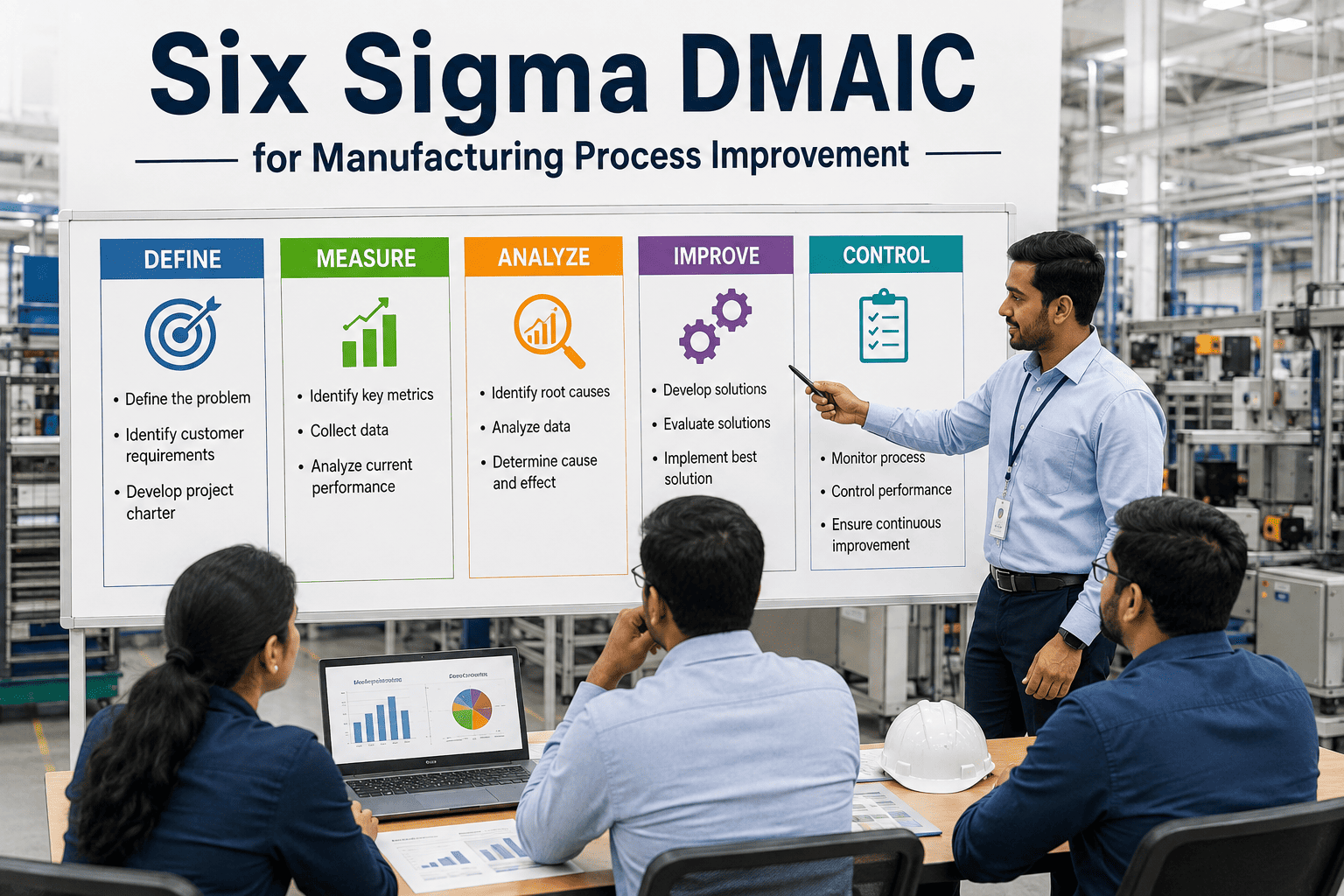
DMAIC's five phases haven't changed since Motorola introduced the framework, but what powers each phase has shifted from manual sampling to continuous, machine-learned analysis.
Define
Problem scoping stays a human judgment call, since AI has nothing to analyze until the process problem is framed.
Measure
An MES automatically captures OEE, cycle times, process parameters, and defect rates instead of relying on manual sampling sheets.
Analyze
Machine learning evaluates dozens of parameters simultaneously, surfacing non-linear interactions traditional pairwise regression cannot see.
Improve
Predictive regression models flag which process variables actually contribute to defects before a fix is even tested on the line.
Control
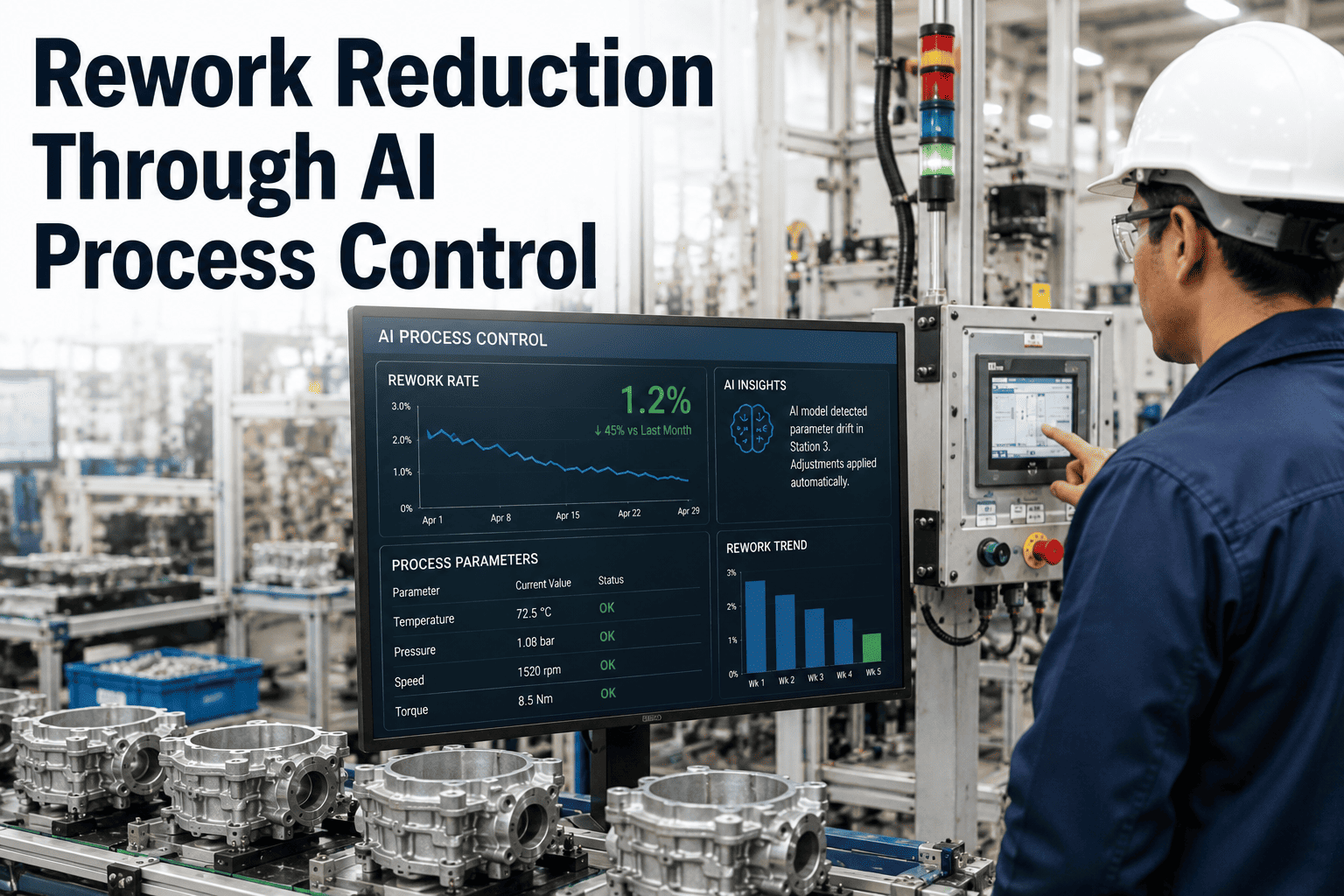
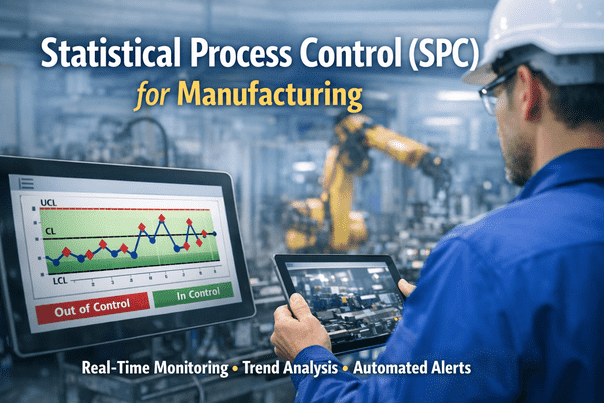
Continuous monitoring makes Control automatic rather than aspirational, catching drift within hours instead of the next scheduled audit.
Your Analyze Phase Is Only as Good as Its Data
A DMAIC project running on manually sampled data can take months to reach a fix. Real-time process capture accelerates that same project to weeks.
The Same Framework, Running on Different Data
| DMAIC Element | Traditional Approach | AI-Augmented Approach |
|---|---|---|
| Data collection | Manual sampling, periodic sheets | Continuous MES and sensor capture |
| Variable analysis | Pairwise or small-group regression | Simultaneous multi-variable ML models |
| Root cause discovery | Hypothesis-driven, iterative testing | Pattern discovery across full dataset |
| Control phase | Scheduled audits, control charts reviewed weekly | Real-time drift alerts, hour by hour |
| Typical project timeline | Months per cycle | Weeks per cycle |
What Actually Happens to a Process Distribution
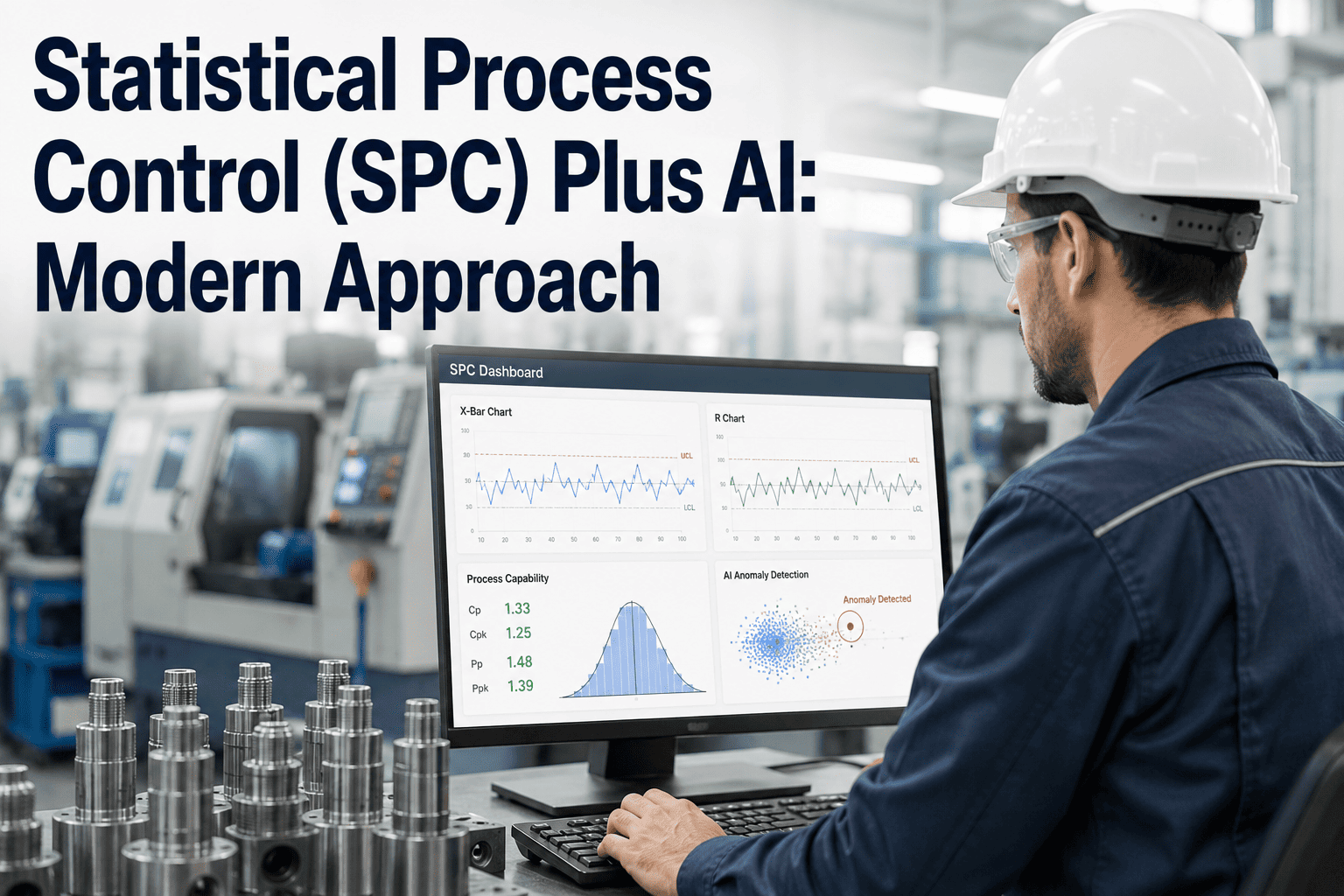
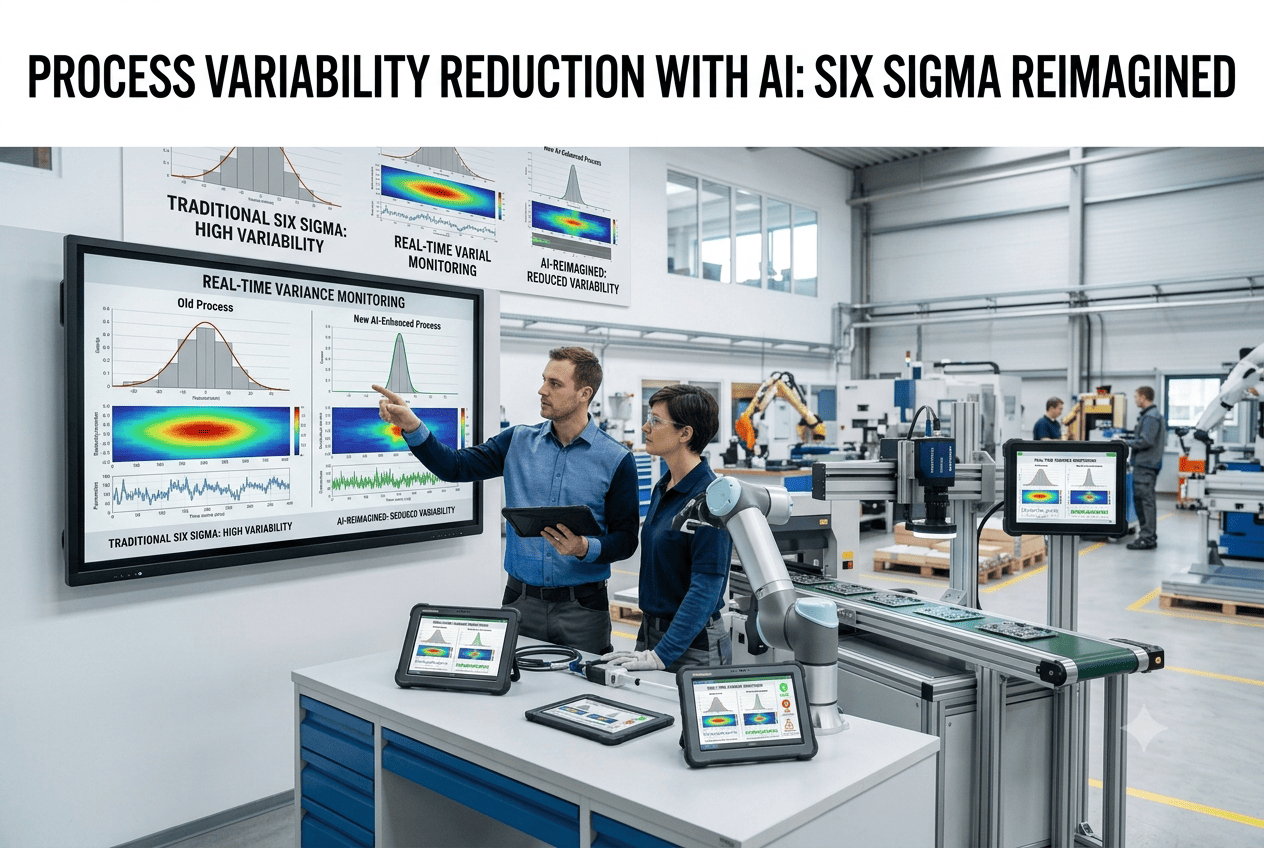
The goal of variability reduction isn't shifting the average, it's narrowing the spread around it so fewer parts land outside spec at either tail.
Narrower spread around the target value is exactly what a higher sigma level represents. One documented DMAIC study on electronic component manufacturing raised the process from 4.91 to 5.02 sigma, cutting the defect rate from 200 to 180 defects per million just by tightening a single process parameter identified during Analyze.
A Real Example: Package Weight Variation
A packaged food producer was seeing weight variation across individual packages trigger customer complaints and regulatory compliance issues. Quality personnel had been periodically sampling packages, weighing them, and manually adjusting filling equipment whenever weights drifted outside specification. Feeding the filling line's real-time process data into a model instead let the system flag drift and adjust automatically, closing the loop that manual sampling could only ever catch after the fact.
Which Process Should Get Your First AI-Augmented DMAIC Project
Not every process is the right first candidate. The strongest starting points share a few traits that make the AI-augmented approach pay off fastest.
Highest Scrap Cost
A process where variation already translates directly into measurable scrap or rework dollars justifies the investment fastest.
A CTQ That Resisted Manual DMAIC
A critical-to-quality characteristic that a prior manual project couldn't fully resolve is often hiding a multi-variable interaction only ML can surface.
Many Interacting Parameters
Processes with more than five or six variables in play are exactly where pairwise regression runs out of practical reach.
Existing Sensor Data
A line already feeding an MES or historian shortens the Measure phase dramatically, since the data foundation is already there.
Clear Ownership
A process with an engaged process engineer or Six Sigma belt already assigned keeps the project moving past the analysis phase.
Stop Waiting for the Next Sampling Cycle to Find Your Variation Source
iFactory feeds real-time process data directly into your DMAIC projects, so Measure and Control stop being the phases that stall your Six Sigma program.
Questions Process Engineers Ask About AI-Augmented DMAIC
Give Your Next DMAIC Project the Data It Actually Needs
iFactory turns Measure and Control from your weakest DMAIC phases into your most reliable ones. Book a demo and see the variation sources hiding in your own process data.