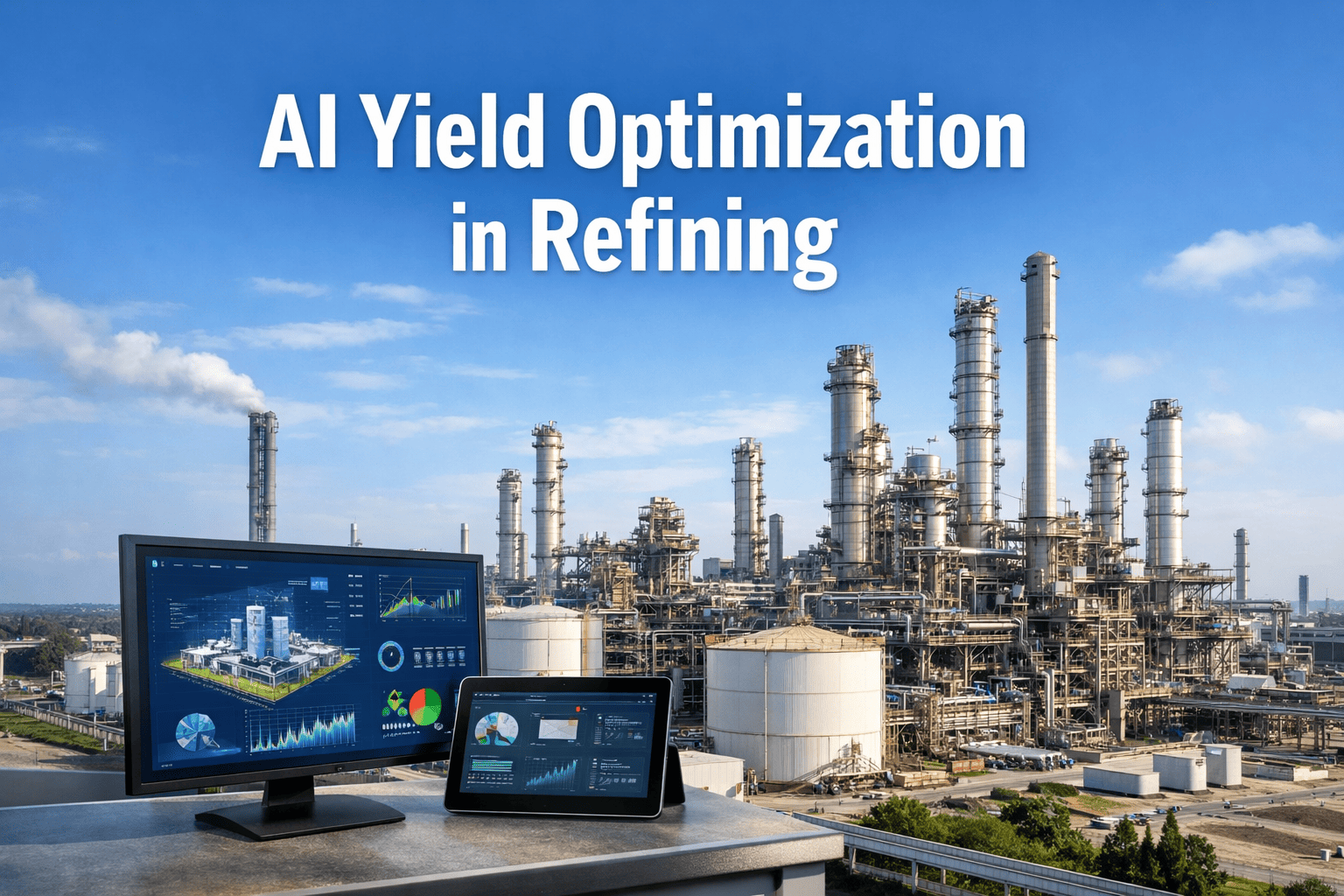
Deploying AI across refinery operations to optimize catalyst performance, reduce unplanned downtime, improve product yields, and enhance safety requires systematic planning covering data infrastructure assessment, system integration scoping, stakeholder alignment, and phased implementation timelines. This comprehensive checklist guides refinery technical teams through every critical decision point from initial feasibility evaluation through full production deployment, ensuring nothing gets overlooked during your AI transformation journey. Use this step-by-step framework to evaluate readiness, identify gaps, prioritize investments, and execute deployment minimizing risk while maximizing ROI from day one of operations. Book a Demo to discuss your specific refinery AI deployment roadmap with our technical specialists.
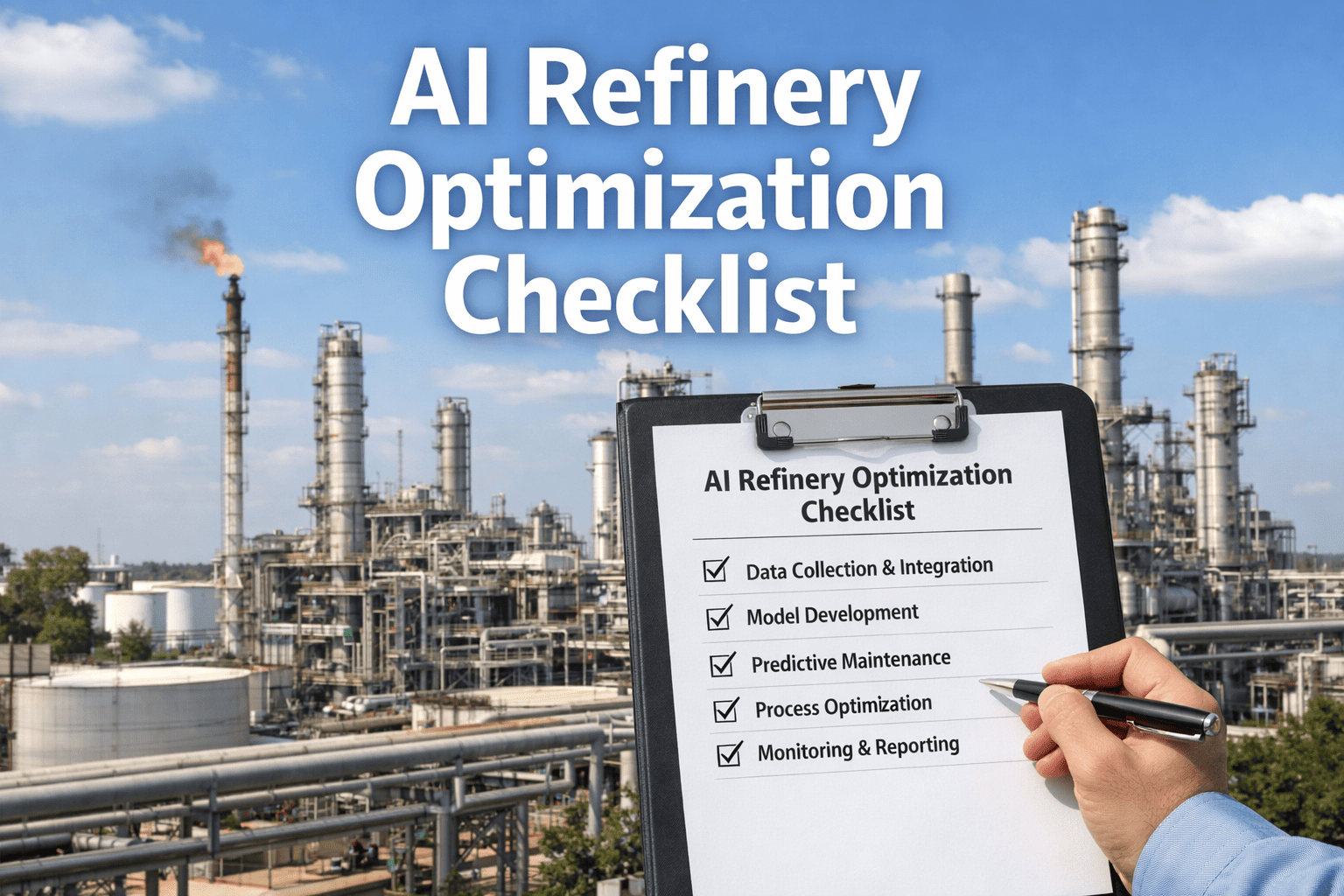
Complete AI Refinery Optimization Deployment Checklist
Follow this proven framework used by 50+ refineries worldwide to deploy AI monitoring, predictive analytics, and process optimization across catalytic units, treating operations, and utility systems.
8-18%
Catalyst efficiency recovered through AI optimization
$8.3M
Average annual value per 100K BPD refinery
8 weeks
Typical deployment timeline from audit to go-live
Phase 1: Pre-Deployment Assessment and Readiness Evaluation
Before initiating AI deployment, complete this comprehensive assessment identifying current state capabilities, data infrastructure gaps, and organizational readiness factors determining deployment scope and timeline.
Data Infrastructure and Availability Assessment
Process and Technical Capability Assessment
Organizational Readiness and Change Management
Complete Your Assessment. Get Expert Gap Analysis and Deployment Roadmap.
Share your completed assessment with iFactory technical specialists who will provide customized gap analysis, integration architecture recommendations, and detailed implementation timeline tailored to your refinery configuration.
Phase 2: System Integration and Data Pipeline Configuration
Execute technical integration establishing reliable data flows from operational systems into AI platform while maintaining security, performance, and reliability standards required for production refinery environments.
DCS and Historian Integration
Infrastructure and Platform Deployment
Phase 3: AI Model Development and Training
Develop, train, and validate AI models specific to your refinery units, catalyst types, feedstocks, and operating strategies ensuring accurate predictions and actionable recommendations aligned with process realities.
Data Preparation and Feature Engineering
Model Training and Optimization
AI Models Pretrained on Refinery Data. Weeks to Deploy, Not Months.
iFactory's AI platform includes pretrained models for FCC, hydrotreating, reforming, and utility operations fine-tuned to your specific equipment and feedstocks in weeks versus building from scratch.
Execute controlled pilot deployment on limited equipment scope validating AI performance, refining alert thresholds, training operations teams, and demonstrating measurable value before full-scale rollout.
Pilot Scope and Success Criteria
Performance Monitoring and Validation
Phase 5: Full Production Deployment and Scale
Execute systematic rollout across remaining refinery units, utility systems, and support operations leveraging pilot learnings while managing organizational change and operational risk.
Expansion Planning and Execution
Continuous Improvement and Optimization
Ready to Start Your AI Refinery Transformation?
Download this checklist as PDF, share with your technical team, and schedule consultation with iFactory specialists who will help customize deployment roadmap for your specific refinery configuration.
Frequently Asked Questions About AI Refinery Deployment
How long does typical AI refinery deployment take from initial assessment to full production?
Most refineries complete full deployment across critical units within 6-12 months including assessment (4-6 weeks), pilot deployment (8-12 weeks), and phased rollout (3-6 months) depending on scope and resource availability. Initial value realization begins during pilot phase, typically 10-14 weeks from project kickoff. Book a Demo to discuss timeline for your specific configuration.
What data infrastructure is required before AI deployment can begin?
Minimum requirements include DCS historian with 12+ months of process data at 1-minute or better resolution, LIMS analytical results with API access or automated exports, and network connectivity enabling secure data transfer. Many refineries successfully deploy with existing infrastructure through edge computing approaches minimizing IT dependencies and security concerns while maintaining full AI capabilities.
How much process engineering and operations time is required during deployment?
Pilot phase requires approximately 5-10 hours weekly from process engineering SMEs for data validation, model review, and threshold calibration plus 2-3 hours weekly from operations leadership for feedback and change management. Time commitment decreases 60-70% after pilot completion as procedures standardize and organizational learning curve flattens. Most teams find deployment workload manageable alongside normal responsibilities with proper project management and vendor support. Talk to Support about resource planning.
Can AI models handle opportunity crudes, feedstock variations, and unit configuration changes?
Yes when properly designed. Advanced AI platforms incorporate feedstock characterization, adapt to operating mode changes, and retrain on new data patterns. Best practice includes periodic model updates (quarterly to annually) incorporating major feedstock shifts, process modifications, or equipment changes. Transfer learning techniques enable rapid adaptation to new conditions using limited data versus complete retraining from scratch.
What cybersecurity measures protect refinery operations from AI system vulnerabilities?
Enterprise-grade AI platforms implement defense-in-depth including network segmentation separating AI systems from control networks, encrypted data transfer, role-based access control, multi-factor authentication for administrative functions, and comprehensive audit logging. Many deployments use unidirectional data flow from OT to AI platform preventing any potential compromise propagating to control systems. Regular security assessments, penetration testing, and compliance validation ensure ongoing protection aligned with IEC 62443 industrial cybersecurity standards.
How do we measure and validate AI system ROI during pilot and full deployment?
Establish baseline measurements before AI activation across metrics including yields, energy consumption, catalyst cycle length, and downtime frequency. Track AI-triggered interventions documenting predictions, actions taken, and measured outcomes. Compare pilot unit performance against control units and historical baseline using statistical methods isolating AI impact from external factors. Typical refineries document 10-20 discrete value events during 90-day pilots with cumulative benefits of $200,000-$800,000 depending on unit type and throughput providing clear ROI evidence supporting full deployment investment. Book a Demo to discuss ROI measurement framework.
Transform Your Refinery with AI. Start with Expert-Guided Assessment.
Use this comprehensive checklist to evaluate readiness, identify gaps, and build deployment roadmap. iFactory technical specialists provide complimentary assessment review, architecture recommendations, and customized implementation timeline tailored to your refinery configuration and business objectives.
Pretrained AI models for FCC, hydrotreating, reforming