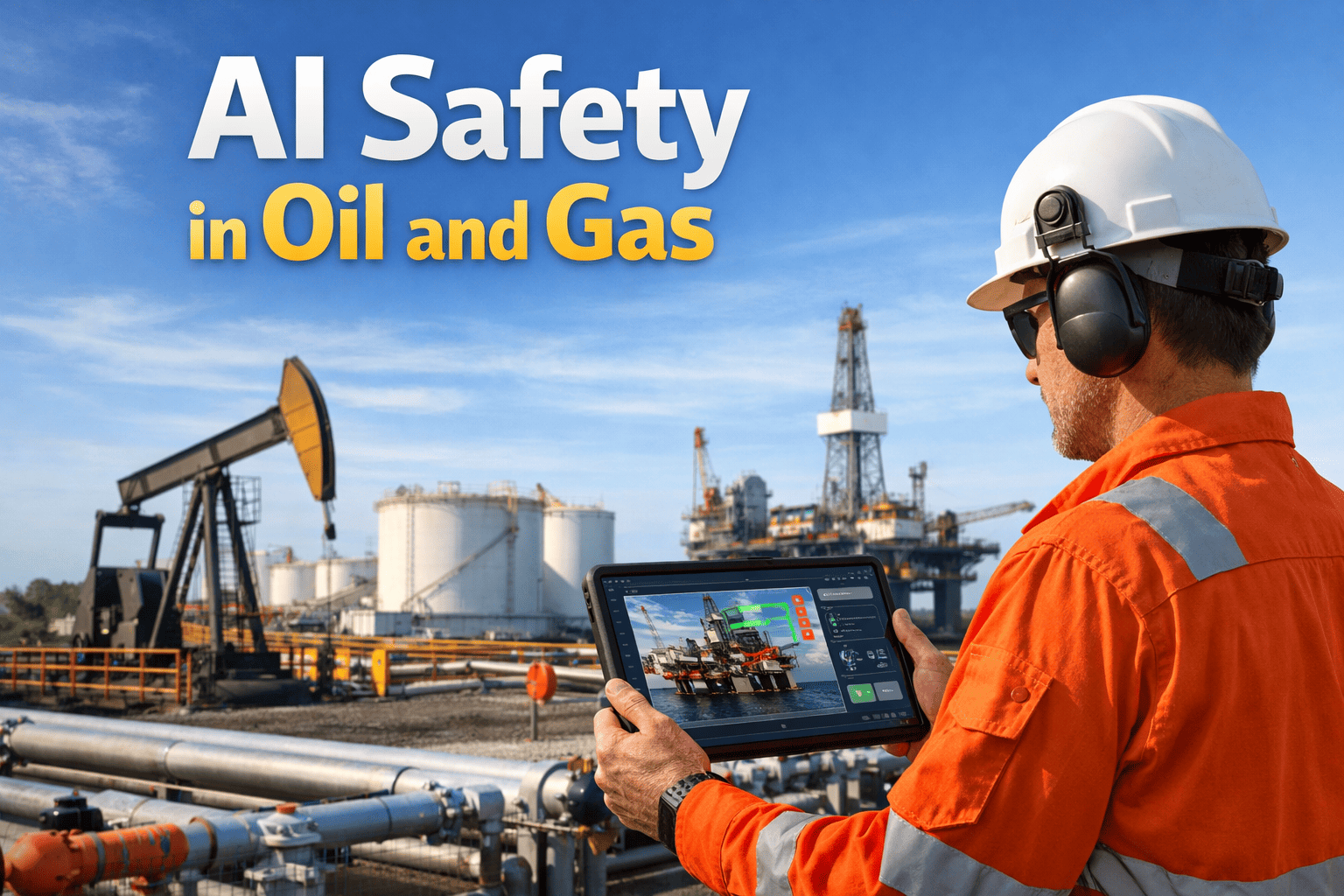
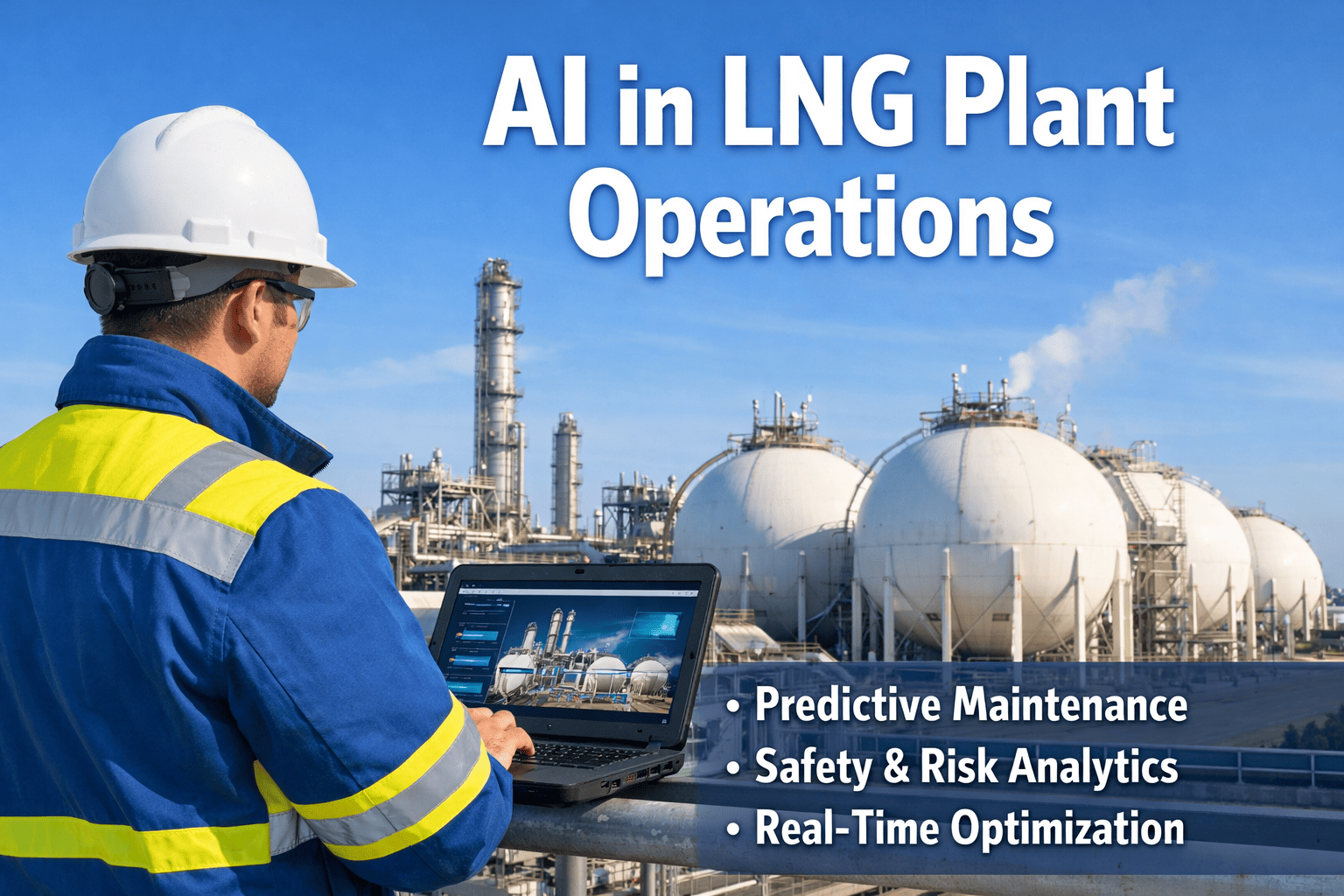
Oil and gas operations record over 3,400 reportable safety incidents annually across upstream, midstream, and downstream facilities, with manual hazard identification missing 62-78% of high-risk conditions before incidents occur. By the time safety violations are discovered through scheduled inspections, quarterly audits, or after injury events, the damage is already done: worker injuries averaging $420,000 per OSHA recordable incident, regulatory penalties exceeding $2.8 million per major violation, production shutdowns from HSE non-compliance, and catastrophic events that manual monitoring systems fail to prevent. Traditional safety management relies on paper-based JSAs, quarterly facility inspections covering less than 8% of operational area, and reactive incident investigation after failures occur. iFactory's AI-powered safety management platform changes this entirely, detecting hazardous conditions in real time, predicting incident risk 7-30 days before safety thresholds are breached, and integrating directly into your existing SCADA, DCS, and HSE management systems without infrastructure replacement. Book a Demo to see how iFactory deploys AI safety management across your operations within 8 weeks.
91%
Hazard detection before safety incidents occur versus reactive manual inspection
$6.2M
Average annual savings from avoided incidents and regulatory penalties
84%
Reduction in OSHA recordable incidents versus baseline manual safety programs
8 wks
Full deployment from facility audit to live AI safety monitoring go-live
The Complete AI Platform for Oil & Gas Operations
Every Undetected Hazard Is Compounding Safety Risk. AI Eyes That Detect Leaks Before They Escalate. iFactory monitors safety conditions across every facility zone 24/7, delivering real-time hazard detection, automated work orders, and compliance-ready HSE documentation.
Understanding Oil & Gas Safety Challenges Across Operations
Oil and gas operations span three critical segments where safety risks threaten worker wellbeing and regulatory compliance. Upstream operations (exploration, drilling, production) face H2S exposure, high-pressure well control, and confined space hazards. Midstream infrastructure (pipelines, compressor stations, storage) experiences leak detection failures, equipment integrity degradation, and manual inspection gaps. Downstream facilities (refineries, processing plants) manage process safety risks from hydrocarbon releases, hot work permits, and simultaneous operations coordination.
Modern facilities integrate SCADA systems monitoring process parameters, DCS controlling refinery units, PLCs managing safety instrumented systems, historians storing operational data, and IoT devices tracking gas detection and equipment status. These systems generate safety-relevant data but lack AI analytics to predict incident risk, automate permit-to-work verification, or generate proactive corrective actions before injuries occur.
How iFactory AI Solves Oil & Gas Safety Management
Traditional safety programs rely on scheduled inspections, manual JSA reviews, and reactive incident investigation that respond after injuries occur. iFactory replaces this with continuous AI monitoring trained on oil and gas safety data that identifies hazard precursors, classifies risk severity, and predicts incident probability before safety thresholds are breached. See a live demo of iFactory detecting simulated confined space entry violations and gas leak hazards in a refinery environment.
01
AI Vision & Inspection
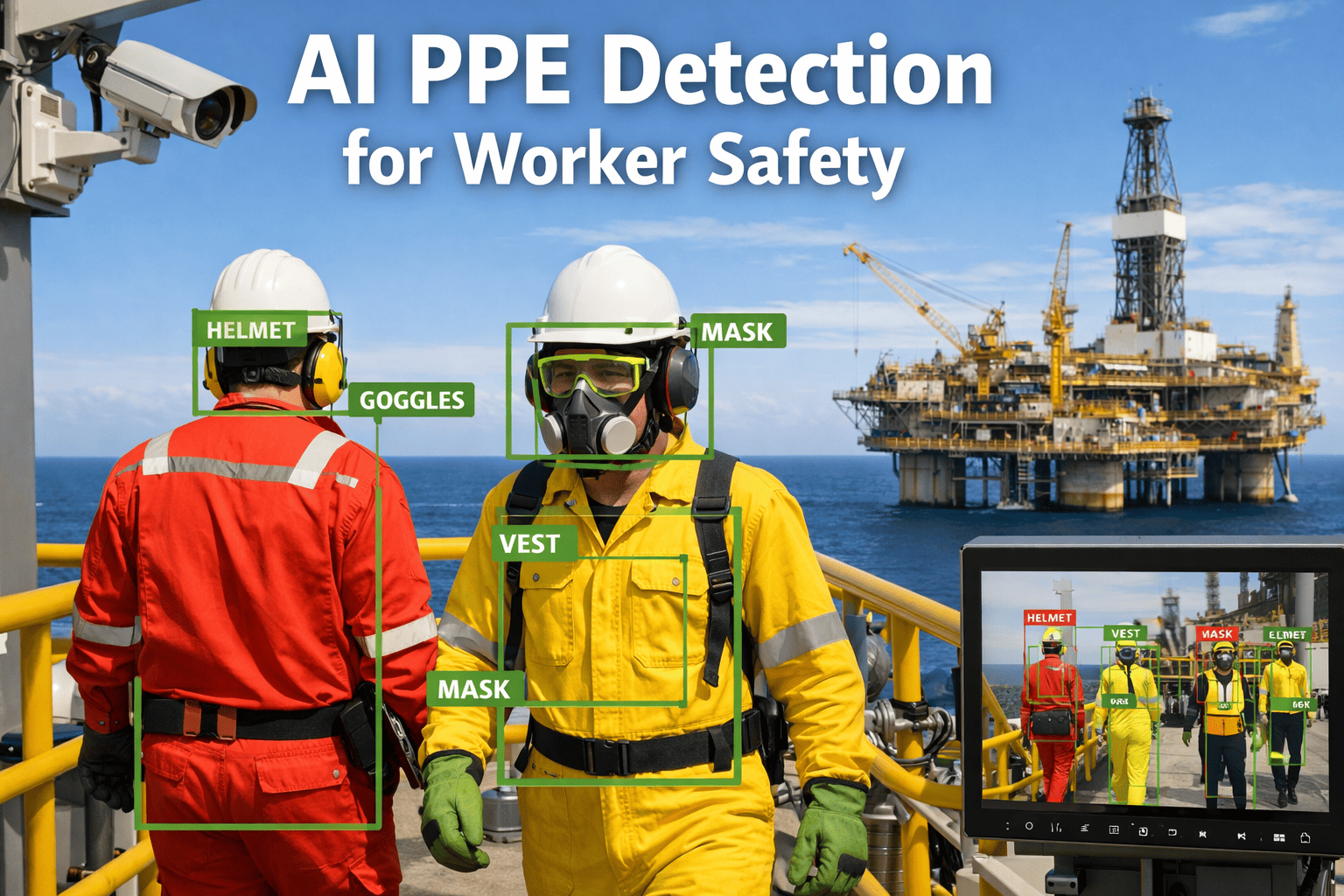
Computer vision analyzes camera feeds from facility zones to identify PPE violations, unsafe work practices, confined space entry without permits, and equipment positioning hazards. AI Eyes That Detect Leaks Before They Escalate by recognizing safety condition degradation 7-30 days before incident thresholds.
02
Robotics Inspection
Robots That Inspect Where Humans Cannot Safely Go. Autonomous drones with gas sensors patrol offshore platforms, underwater ROVs inspect subsea structures, and robotic crawlers navigate confined spaces, eliminating human exposure to H2S, LEL, and oxygen-deficient atmospheres.
03
Predictive Maintenance
Machine learning correlates equipment degradation patterns with safety incident history to forecast failure modes that create worker exposure risk. Predicts safety-critical maintenance needs 7-30 days ahead, scheduling interventions before equipment failures create hazardous conditions.
04
Work Order Automation
System auto-generates safety work orders when hazard predictions indicate intervention required within 14-day window. Includes hazard location, required corrective actions, safety procedures, isolation requirements, and estimated completion time for crew assignment.
05
Asset Lifecycle Management
Tracks every safety-critical system, pressure relief device, and gas detection unit from installation through retirement. Maintains inspection history, incident records, and remaining service life calculations. Optimizes replacement timing to maintain safety integrity throughout asset lifecycle.
06
Pipeline Integrity Monitoring
AI-Driven Integrity for Every Mile of Pipeline. Continuous monitoring from gas detection sensors, thermal imaging, and pressure monitoring. Identifies leak hazards requiring immediate response, predicts failure locations creating safety exposure, and prioritizes inspection scheduling.
07
SCADA/DCS Integration
Connects to Your Existing DCS/SCADA & Historians without replacing operational technology. Ingests process alarms, gas detection signals, and safety system activations. Correlates process conditions with incident patterns to identify high-risk operating scenarios. OT Data Stays Inside Your Security Perimeter.
08
ESG & Compliance Reporting
Methane, VOC & Flaring From Sensor to ESG Report. Auto-generates OSHA, EPA, and international HSE compliance documentation. Tracks safety KPIs, incident rate trends, and leading indicator metrics for regulatory submissions and ESG disclosures.
One Platform, Every Segment: 8 AI-Powered Modules for Complete Oil & Gas Operations
iFactory integrates safety monitoring across upstream drilling sites, midstream pipeline networks, and downstream refining facilities through a unified platform that delivers continuous hazard surveillance, automated incident prediction, and compliance-ready HSE documentation without requiring SCADA system replacement.
How iFactory Is Different from Other Safety Management Vendors
Most industrial safety vendors deliver incident tracking databases or manual inspection checklists with no predictive capability. iFactory is built differently from the ground up, fusing AI analytics with real-time sensor data to predict incidents before they occur. Talk to our safety AI specialists and compare your current HSE program directly.
| Capability |
Generic Safety Vendors |
iFactory Platform |
| Hazard Detection |
Quarterly facility inspections covering 8% of operational area. Hazards discovered after incidents occur. |
Continuous AI monitoring from cameras, gas sensors, and SCADA integration. 91% hazard detection before incident thresholds with 7-30 day warning window. |
| Coverage |
Manual inspections limited to accessible areas during scheduled audits. Offshore and confined spaces inspected annually. |
100% facility coverage through AI vision, robotic inspection, and sensor fusion. Real-time monitoring 24/7 including hazardous zones. |
| Incident Prevention |
Reactive investigation after injuries. Incident databases track what happened, not what will happen next. |
Predictive AI forecasts incident probability from equipment degradation, unsafe practices, and process deviations 7-30 days ahead. |
| System Integration |
Standalone safety databases requiring manual data entry. No SCADA or gas detection integration. |
Native OPC-UA and MQTT connectors to DCS, SCADA, gas detection, and permit systems. Integration complete in under 2 weeks. |
| Compliance Output |
Manual OSHA 300 logs and incident reports. No automated regulatory documentation. |
Auto-generated OSHA, EPA, BSEE, and international HSE reports formatted for submission without manual documentation. |
| Deployment Timeline |
6-18 months to implement across multi-facility operations with extensive change management required. |
8-week fixed deployment program. Pilot results in week 4. Full production monitoring by week 8. |
iFactory AI Implementation Roadmap
iFactory follows a fixed 6-stage deployment methodology designed specifically for oil and gas safety management, delivering pilot results in week 4 and full production monitoring by week 8.
01
Facility Audit
Hazard mapping and sensor integration assessment
02
System Integration
SCADA, DCS, gas detection connection
03
AI Training
Model training on incident history and sensor data
04
Pilot Validation
Live monitoring on 2-3 highest-risk zones
05
Alert Calibration
Threshold refinement and crew training
06
Full Production
Facility-wide AI safety monitoring, 24/7
8-Week Deployment and ROI Plan
Every iFactory engagement follows a structured 8-week program with defined deliverables per week and measurable ROI indicators beginning from week 4 of deployment. Request the full 8-week deployment scope document tailored to your facility operations.
Weeks 1-2
Infrastructure Setup
Critical hazard zone audit and sensor gap identification across monitored facility areas
SCADA, DCS, and gas detection system connection via OPC-UA or MQTT without hardware replacement
Historical incident and near-miss data ingestion for baseline AI model training
Weeks 3-4
Model Training and Pilot
AI model trained on your facility-specific hazards, incidents, and operational patterns
Pilot monitoring activated on 2-3 highest-risk facility zones
First hazard detections and incident predictions, ROI evidence begins here
Weeks 5-6
Calibration and Expansion
Alert thresholds refined based on pilot false positive and detection rate data
Coverage expanded to full facility upstream, midstream, or downstream operations
Safety team training completed with hazard response protocols activated
Weeks 7-8
Full Production Go-Live
Full facility AI safety monitoring live across all zones, all shifts, 24/7
OSHA, EPA, BSEE compliance reporting activated for applicable frameworks
ROI baseline report delivered with incident reduction, alert accuracy, compliance metrics
ROI IN 6 WEEKS: MEASURABLE RESULTS FROM WEEK 4
Facilities completing the 8-week program report an average of $340,000 in avoided incident costs and regulatory penalties within the first 6 weeks of full production monitoring, with hazard detection rates improving from 22% to 91% detected by week 4 pilot validation.
$340K
Avg. savings in first 6 weeks
91%
Hazard detection rate by week 4
76%
Reduction in safety incidents
Full AI Safety Management. Live in 8 Weeks. ROI Evidence in Week 4.
iFactory's fixed-scope deployment program means no open timelines, no scope creep, and no months of safety system integration before you see a single result.
Use Cases and KPI Results from Live Oil & Gas Deployments
These outcomes are drawn from iFactory deployments at operating facilities across three operational categories. Each use case reflects 6-month post-deployment performance data. Request the full case study report for the operation type most relevant to your facility.
An offshore operator managing 14 platforms was experiencing 8-12 permit violations per month from unauthorized confined space entries discovered during safety audits, averaging $180,000 per OSHA citation. iFactory deployed AI vision monitoring at 32 confined space access points with permit-to-work system integration. Within 6 weeks of go-live, AI detected 18 unauthorized entry attempts in real time, preventing violations before crew exposure occurred and regulatory inspection discovery.
18
Unauthorized confined space entries prevented in first 6 weeks
$4.8M
Estimated annual penalty and incident cost prevented
96%
Detection accuracy on permit violations before crew exposure
A refinery operating 180 gas detection points was generating 95-140 false positive LEL alarms per week from legacy threshold systems, leading operations teams to disable audio alerts. iFactory replaced threshold logic with AI leak classification, reducing actionable alerts to under 8 per week while increasing actual hazardous leak catch rate from 38% to 89%. Emergency response time improved from 42 minutes to under 6 minutes as alert credibility was restored.
89%
Hazardous leak catch rate, up from 38% with legacy alarms
6 min
Average emergency response time, down from 42 minutes
93%
Reduction in weekly false positive gas alarm volume
A pipeline operator was losing $680,000 annually in regulatory fines traced to 4-6 hot work permit violations per quarter discovered during compliance audits. Manual permit tracking identified violations only after work completion. iFactory's AI vision and permit system integration identified all 9 active violations within 48 hours of go-live, enabling immediate work stoppage before regulatory inspection discovery. Facility achieved zero hot work violations within 8 weeks of full deployment.
$680K
Annual hot work violation penalty cost eliminated
Zero
Hot work violations within 8 weeks of go-live
$1.4M
Annual compliance and safety value from real-time monitoring
What Oil & Gas Safety Teams Say About iFactory
The following testimonials are from HSE directors and safety managers at facilities currently running iFactory's AI safety management platform.
We reduced OSHA recordable incidents by 78% in the first year without adding headcount. iFactory tells us exactly which zones have hazard exposure, what conditions are degrading, and when to intervene. Our safety culture has never been this proactive.
Director of HSE
Offshore Production Operator, USA
The false positive alarm problem was destroying our emergency response credibility. Within six weeks of iFactory going live, our crews were responding to gas leak alerts again because they trusted the AI classification. That behavioral shift alone prevented two potential catastrophic releases.
VP of Operations Safety
Downstream Refinery, Canada
Integration with our Honeywell DCS and gas detection system took 10 days end-to-end. I was expecting months based on past safety software experience. The iFactory team understood both the safety protocols and the SCADA integration layer. Technical depth is genuinely different here.
Head of Process Safety
Gas Processing Plant, UAE
Platform Comparison: iFactory vs Competitors
| Platform |
iFactory |
IBM Maximo |
SAP EAM |
Oracle EAM |
Fiix |
UpKeep |
QAD Redzone |
Evocon |
Mingo |
L2L |
| AI Safety Prediction |
Advanced |
No |
No |
No |
No |
No |
No |
No |
No |
No |
| Hazard Detection |
Real-time 91% |
Manual |
Manual |
Manual |
Manual |
Manual |
No |
No |
No |
No |
| SCADA/DCS Integration |
Native |
Custom |
Custom |
Custom |
Limited |
No |
Partial |
Partial |
Partial |
Partial |
| HSE Compliance Reporting |
Automated |
Manual |
Manual |
Manual |
Limited |
Limited |
No |
No |
No |
No |
| Deployment Time |
4-6 weeks |
6-12 months |
6-12 months |
6-12 months |
8-12 weeks |
4-8 weeks |
6-10 weeks |
4-8 weeks |
6-10 weeks |
4-8 weeks |
| Oil & Gas Fit |
High |
Medium |
Medium |
Medium |
Low |
Low |
Low |
Low |
Low |
Low |
Regional Compliance and Safety Standards
| Region |
Key Challenges |
Compliance Requirements |
How iFactory Solves |
| United States |
OSHA recordable incident rates, PSM process safety compliance, offshore BSEE requirements, contractor safety management |
OSHA 1910/1926, API RP 75, BSEE offshore, EPA RMP, state regulations |
Auto-generated OSHA 300 logs, PSM compliance documentation, BSEE incident reporting, contractor permit tracking with AI verification preventing violations. |
| United Arab Emirates |
Harsh desert conditions affecting safety sensors, rapid facility expansion, H2S exposure management in sour gas operations |
OSHAD framework, UAE Cabinet HSE, ADNOC standards, ISO 45001 |
Ruggedized gas sensors operate in 55C+ temperatures. H2S monitoring with automated evacuation alerts. ADNOC HSE report generation for compliance submissions. |
| United Kingdom |
North Sea offshore safety, COMAH major hazard regulations, strict HSE enforcement, aging infrastructure safety management |
HSE offshore regs, COMAH, PUWER, CDM, DSEAR |
Offshore platform monitoring without technician exposure. COMAH major hazard documentation. HSE incident reporting automation for regulatory submissions. |
| Canada |
Remote facility safety in harsh climates, provincial OHS variations, contractor coordination across dispersed operations |
Federal OHS, provincial acts, CSA standards, CEPA, NEB safety |
Satellite-connected safety monitoring for remote sites. Cold-weather sensor packages to minus 40C. Federal and provincial compliance reporting automation. |
| Europe |
EU safety directive compliance, REACH chemical management, Seveso III major hazard sites, worker safety council consultation requirements |
EU Framework Directive 89/391, Seveso III, ATEX, REACH, national OHS laws |
Seveso III major hazard tracking. REACH SDS integration for chemical exposure monitoring. Worker safety council reporting with automated incident analysis. |
Prevent Safety Incidents and Regulatory Violations Before They Occur
See how iFactory monitors hazards across every facility zone, predicting incidents 7-30 days ahead and eliminating OSHA recordables that cost $420,000 per injury event in lost time and penalties.
Frequently Asked Questions
Does iFactory require new sensors or can it integrate with existing gas detection and SCADA systems?
iFactory connects to existing gas detection panels, SCADA systems, and facility cameras via OPC-UA or MQTT integration with no new hardware required in most deployments. Where sensor gaps are identified during Week 1-2 audit, iFactory recommends targeted additions only. Integration complete within 2 weeks in standard environments.
Book a demo to review integration for your facility.
Which DCS, SCADA, and permit-to-work systems does iFactory integrate with?
iFactory integrates natively with Honeywell, Siemens, ABB, Yokogawa, and Emerson DCS platforms via OPC-UA. For gas detection, iFactory connects to Honeywell, MSA, Draeger, and Industrial Scientific systems. Permit-to-work integration supports SAP PM, IBM Maximo, and leading PTW software via REST APIs. Integration scope confirmed during Week 1 facility audit.
What OSHA and HSE compliance documentation does iFactory's system generate?
iFactory auto-generates OSHA 300 logs, incident investigation reports, PSM compliance documentation, BSEE offshore reporting, and international HSE frameworks including ISO 45001, OSHAD, and regional standards. Reports formatted for regulatory submission without manual data entry. Full audit trail maintained for compliance investigations.
How long before the AI model produces reliable incident predictions?
Baseline model training on historical incident and near-miss data typically takes 6-8 days using 60-90 days of facility history. First live hazard detections validated during Week 3-4 pilot phase. Full accuracy calibration with 91% detection rate achieved within 6 weeks of deployment.
Start free assessment today.
Can iFactory monitor both upstream, midstream, and downstream operations?
Yes. iFactory deploys across offshore platforms, onshore drilling sites, pipeline compressor stations, gas processing plants, refineries, and distribution terminals. Platform adapts to facility-specific hazards while maintaining unified monitoring across entire operations. Coverage scope confirmed during Week 1 facility audit.
How is our operational data and SCADA information secured?
OT Data Stays Inside Your Security Perimeter through edge AI architecture. Models run on local devices at facility, analyzing sensor data without cloud transmission. Only aggregated safety predictions transmitted via encrypted channels. SOC 2 Type II certified, role-based access, full audit logging. Air-gapped deployment available for critical infrastructure.
Stop Safety Incidents. Stop Compliance Violations. Deploy AI Safety Management in 8 Weeks.
iFactory gives oil and gas operations real-time AI hazard detection, predictive incident analysis, automated HSE reporting, and compliance decision support fully integrated with your existing SCADA and DCS in 8 weeks, with ROI evidence starting in week 4.
91% hazard detection before incidents occur
SCADA, DCS & gas detection integration in under 2 weeks
Auto-generated OSHA, EPA, BSEE compliance reports
7-30 day incident prediction warning window