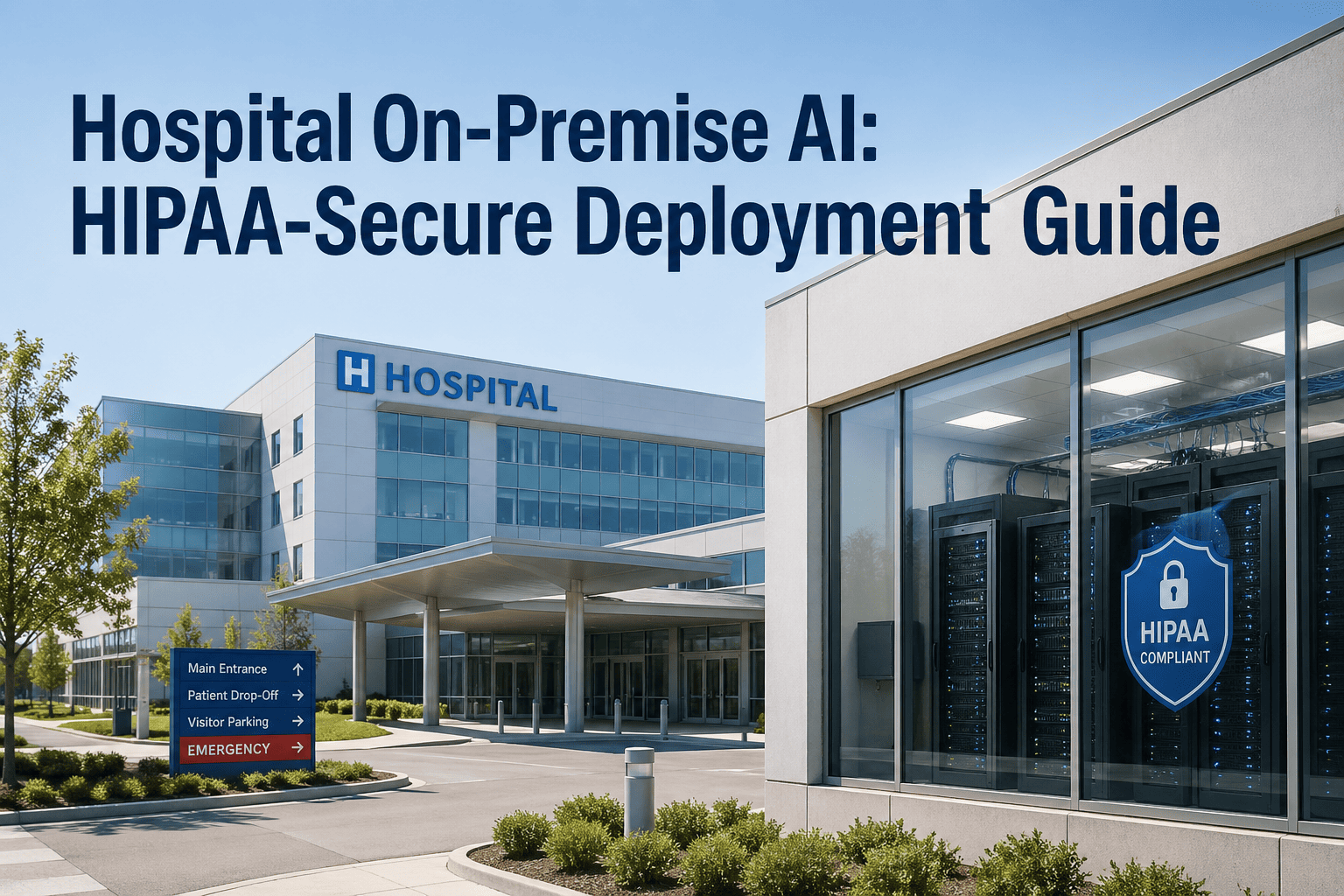
Every hour your hospital runs on fragmented, cloud-dependent systems, you are hemorrhaging revenue, exposing patient data, and accelerating staff burnout — the cost of inaction is not a future risk, it is today's operational reality compounding silently on your balance sheet.
Is Your Hospital's AI Infrastructure Costing You More Than It Saves?
Deploy sovereign, air-gapped AI analytics that protect patient data, eliminate compliance liability, and deliver measurable ROI from day one — no cloud dependency required.
The Financial Case for On-Premise AI in Modern Healthcare
Healthcare VPs face a paradox: pressure to digitize is relentless, yet every cloud-based AI deployment introduces HIPAA exposure, recurring SaaS costs, and data sovereignty risk that legal teams cannot underwrite indefinitely. iFactory's on-premise AI platform resolves this paradox by delivering hospital-grade analytics and clinical intelligence entirely within your own infrastructure — eliminating third-party data access and regulatory ambiguity. Book a demo to see how leading health systems convert compliance liability into competitive advantage.
Data Sovereignty
All PHI and operational data remain on your infrastructure. Zero third-party access. Full HIPAA audit trail with AES-256 encryption at rest and in transit — defensible in any regulatory review.
Revenue Cycle AI
Predictive coding assistance and denial pattern recognition reduce claim rejection rates and accelerate cash flow without exposing billing data to external servers.
Clinical Workflow Automation
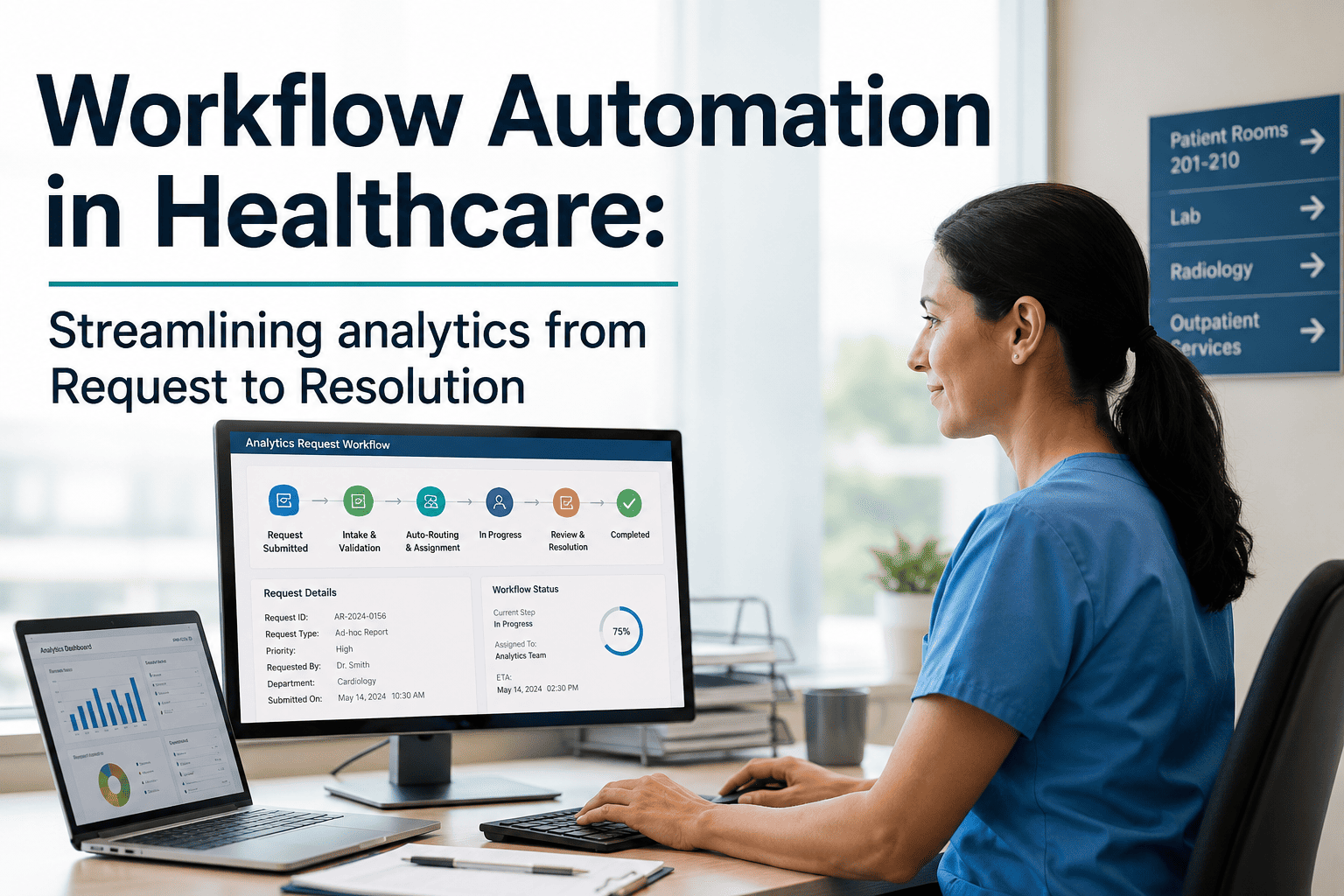
Intelligent task routing eliminates manual handoffs between nursing, lab, and imaging — reducing patient throughput time and reclaiming billable hours lost to administrative overhead.
Scalable Architecture
Deploy on existing server infrastructure or dedicated on-premise nodes. Modular design scales from single-facility pilots to multi-campus health systems without rearchitecting your core stack.
Legacy Friction vs. iFactory Optimized Excellence
The gap between where your hospital operates today and AI-optimized excellence is not a technology gap — it is an architecture decision. Book a demo to walk through your specific environment with our healthcare solution architects.
| Operational Dimension | Legacy Friction State | iFactory Optimized Excellence | Financial Impact | Risk Tier |
|---|---|---|---|---|
| HIPAA Data Exposure | PHI routed through vendor cloud servers | Air-gapped on-premise, zero external routing | Eliminates $1.9M avg. breach penalty | Critical |
| Revenue Cycle Accuracy | Manual coding with 12–18% denial rate | AI-assisted coding reducing denials by 40% | $800K–$2.4M annual recovery | High |
| Clinical Handoff Latency | Avg. 47-minute task routing delay per shift | Automated routing under 4 minutes end-to-end | Reclaim 6+ FTE hours daily per unit | High |
| Staff Burnout Rate | Admin burden consuming 35% of clinical time | Workflow AI reduces admin load by up to 50% | Reduces turnover cost $50K–$100K per RN | Medium |
| Analytics Latency | Batch reporting with 24–72 hour data lag | Real-time on-premise dashboards with live KPIs | Faster intervention on outlier cases | Medium |
| SaaS Cost Escalation | Recurring per-seat cloud fees growing 22% YoY | One-time on-premise deployment, predictable TCO | Break-even within 18–24 months | Managed |
How On-Premise AI Solves Your Three Biggest Operational Crises
Healthcare executives are managing three simultaneous crises: a staff retention emergency driven by burnout, declining patient throughput that erodes margin, and a compliance environment where a single HIPAA violation can cost more than a year of AI investment. Book a Demo to see the clinical impact framework mapped to your facility's current metrics.
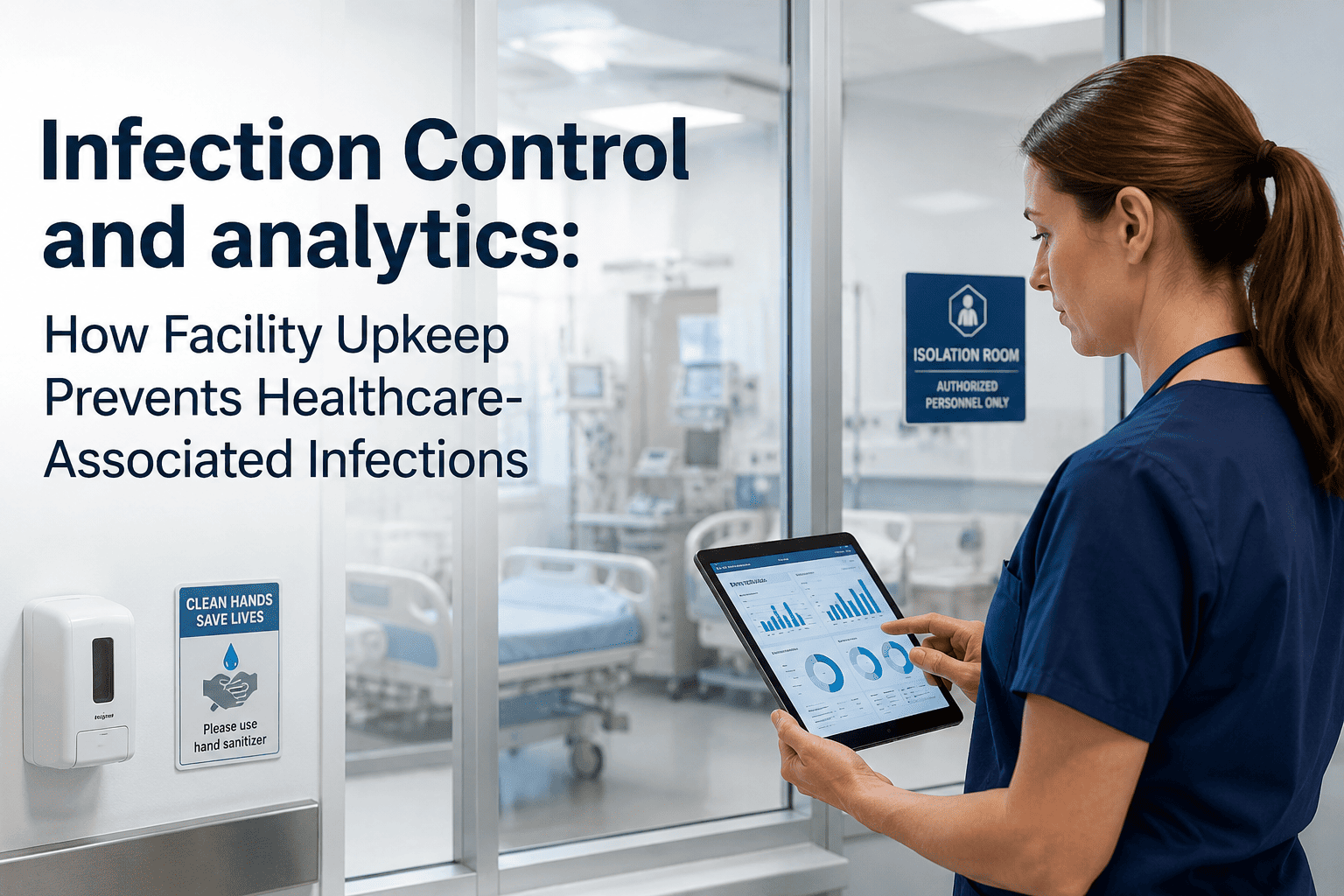
Clinical staff spend up to 35% of their shift on documentation and manual routing. iFactory's workflow automation layer removes this burden entirely, returning meaningful clinical time and measurably improving staff satisfaction scores within the first quarter of deployment.
Discharge delays and siloed department communication artificially suppress your facility's capacity. AI-driven patient flow modeling predicts bottlenecks up to four hours in advance, enabling proactive intervention that increases effective bed utilization without adding headcount.
Every SaaS tool processing PHI is a breach vector and audit liability. On-premise deployment eliminates BAA complexity, removes third-party data custody risk, and provides your compliance team an immutable, locally-stored audit trail that satisfies OCR investigation standards completely.
From Signed Agreement to Live Analytics in 90 Days
iFactory's phased on-premise deployment methodology isolates risk, validates ROI at every milestone, and ensures clinical and compliance stakeholders are aligned before advancing. This is precision integration designed for operational continuity — not a rip-and-replace engagement.
Operational Gap Audit (Days 1–7)
Healthcare architects assess your current workflow friction, revenue cycle gaps, and HIPAA exposure surface. Output is a prioritized remediation roadmap with projected financial impact per initiative — a concrete business case before any infrastructure commitment.
Infrastructure Readiness & Design (Days 8–21)
Technical architects map your existing server topology, EHR integration points, and network segmentation requirements. We design an on-premise node architecture fitting your current data center footprint, minimizing capital expenditure while maximizing AI inference capacity.
Secure Deployment & EHR Integration (Days 22–60)
iFactory engineers deploy the on-premise AI platform, configure air-gapped network zones, and establish bidirectional integrations with your EHR, billing, and lab systems via certified HL7 FHIR interfaces — zero disruption to clinical operations during transition.
Validation, Training & Go-Live (Days 61–90)
Clinical workflow AI models are validated against your historical patient data. Department leads receive role-specific dashboard training. Compliance documentation is finalized for your HIPAA officer. Live monitoring begins with a dedicated iFactory success manager for 30 days post-launch.
Schedule Your Hospital's Strategic Workflow Audit Today
Our healthcare architects will quantify your operational leakage, map your HIPAA exposure surface, and deliver a board-ready ROI projection — at no cost and no commitment.
Questions Healthcare VPs Ask Before Deployment
How does on-premise AI integrate with our existing Epic or Cerner EHR?
iFactory connects to Epic, Cerner, Meditech, and other major EHR platforms via certified HL7 FHIR R4 APIs. The integration layer surfaces AI-generated insights directly inside your clinicians' existing interfaces — no separate login, no workflow disruption. Integration scoping is completed during the Operational Gap Audit at no additional cost.
What is the realistic ROI timeline for a 300-bed community hospital?
A 300-bed facility typically achieves positive ROI within 14–18 months, driven by revenue cycle improvement and avoided breach liability. Year-one savings from denial reduction and administrative automation average $1.1M to $1.8M. Our ROI model is built from your facility's own operational data during the Gap Audit, giving your CFO a defensible number. Book a Demo to see the ROI calculator populated with benchmark data from similar facilities.
Is the platform compliant with HIPAA and federal data security standards?
Absolutely. Deployment occurs on sovereign on-premise infrastructure with AES-256 encryption at rest and in transit. Every action creates an immutable log ensuring full accountability and OCR compliance. Role-based access controls and automatic PHI de-identification for analytics workloads are included at baseline. Book a Demo to review our security protocols and receive a gap analysis against your current BAA portfolio.
Can we pilot on-premise AI in one department before committing to a full rollout?
Yes. Our modular deployment architecture is designed for departmental pilots. Most health systems begin with Revenue Cycle or ED Patient Flow, validate measurable outcomes within 90 days, and use that proof of concept to accelerate board approval for facility-wide expansion. Pilot infrastructure investments are fully credited toward full deployment licensing. Book a Demo to design your pilot scope with our healthcare architects.
Claim Your Hospital's Complimentary Operational Gap Audit
Our healthcare architects will quantify your current revenue leakage, map HIPAA exposure risk, and deliver a board-ready ROI projection within five business days — with no obligation to proceed.

.png)