A specialty coffee roasting facility producing over 2.4 million pounds of roasted coffee annually faced a persistent OEE crisis rooted in fragmented shift communication and zero visibility into cross-shift equipment performance trends. Paper-based shift logbooks, inconsistent handover documentation, and reactive maintenance cycles were generating unplanned downtime averaging 11.3 hours per week — translating into a baseline OEE of approximately 83% and annual production losses exceeding $340,000. After deploying iFactory's digital shift logbook platform with integrated OEE tracking and shift analytics, the facility achieved 97% equipment uptime, raised OEE by 14 percentage points, and cut annual maintenance expenditure by $218,000. Book a Demo with iFactory's shift logbook team to learn how it works.
TRANSFORM YOUR SHIFT HANDOVER INTO AN OEE ACCELERATOR
Stop Losing Production Data Between Shifts. Start Tracking OEE in Real Time.
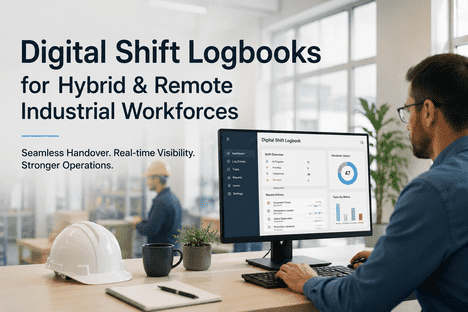
iFactory's digital shift logbook platform gives coffee roasting operations structured shift data capture, cross-shift trend visibility, and AI-driven analytics that turn every shift report into an actionable equipment intelligence signal — before OEE erodes.
97%
Equipment Uptime Achieved
$218K
Annual Maintenance Savings
60
Days to Full Deployment
01 / The Facility
A High-Volume Specialty Coffee Roaster, A Shift Communication Gap Costing OEE Points
Facility TypeSpecialty coffee roasting and packaging. Single primary facility with four commercial drum roasters, eight industrial grinder stations, and three automated packaging lines serving retail, foodservice, and direct-to-consumer channels.
Scale2.4 million pounds of roasted coffee annually. 60+ active SKUs across whole bean, ground, and single-serve formats. Three-shift production schedule, six days per week, with peak seasonal capacity runs extending to full seven-day operation.
Shift Handover MethodPaper-based shift logbooks with free-text entries. No structured data fields. No standardized handover template. Shift-to-shift information transfer dependent on the outgoing shift lead finding the incoming lead before leaving. Estimated 35% of equipment events logged inconsistently or not captured at all across shift boundaries.
OEE Pre-DeploymentBaseline OEE of approximately 83%. Unplanned downtime averaging 11.3 hours per week across all equipment. Roaster drum bearing failures accounting for 41% of total downtime events. Quality hold batches from grinder degradation affecting 7–9 batches per month, invisible in shift logs until post-production inspection.
Prior Reporting SystemPaper shift log sheets filed in binders. Weekly supervisor reviews occurring 2–5 days after events. No data aggregation across shifts. No equipment trend analysis. Management visibility limited to after-the-fact verbal reports during morning standup meetings.
Annual Maintenance CostPre-deployment maintenance expenditure of approximately $504,000 annually — including emergency parts procurement, overtime labor for unplanned repairs, production batch losses from quality holds, and expedited fulfillment costs for missed delivery windows driven by undetected equipment degradation across successive shifts.
02 / The Challenge
Paper Shift Logs, Blind Handovers, and the Compounding Cost of Lost Equipment Intelligence
Coffee roasting is a continuous thermal process where equipment condition shifts across every shift boundary. A bearing vibration anomaly that begins during the day shift at 60% of failure threshold may progress to 85% by the end of second shift and reach critical condition at 3:00 AM on third shift — but with paper shift logs and unstructured handovers, that progression was invisible. The operator who first detected the anomaly on day shift documented it in a free-text log entry that the second shift operator never read because the binder was in the maintenance office rather than on the production floor. The second shift experienced the same vibration but noted it differently. The third shift faced a catastrophic failure with no prior shift context. This pattern of fragmented, unstructured, and inaccessible shift data was the root cause of the facility's chronic OEE underperformance.
11.3
Unplanned downtime hours per week
Weekly unplanned downtime averaging 11.3 hours across roasters, grinders, and packaging lines — consuming approximately 590 annual production hours and generating direct capacity losses estimated at $340,000 per year at fully loaded production cost. The majority of these events had detectable early-stage signatures documented (inconsistently) in shift logs that were never aggregated or analyzed across shift boundaries.
41%
Of downtime from roaster bearing failures
Drum roaster bearing failures were the single largest OEE driver — each event requiring 4–7 hours of unplanned shutdown, emergency parts sourcing, and post-repair thermal recalibration. Post-deployment analysis of the paper shift log archive revealed that 78% of these failures had been preceded by operator notes about vibration or unusual noise logged 2–5 shifts before the event, but never linked or escalated across shift teams.
7–9
Quality hold batches per month from grinder degradation
Grinder burr wear between scheduled replacement intervals produced particle size distribution variance exceeding specification tolerances. The degradation pattern was visible in shift log throughput notes — operators on consecutive shifts were recording slightly different grinder performance observations, but the trend was buried in unstructured text entries across different binders for different shifts.
23%
Packaging line efficiency loss from seal failures
Sealing jaw temperature drift on two of three packaging lines caused intermittent seal failures detected only at end-of-line inspection. Shift log review after deployment showed that the temperature drift pattern appeared in operator comments across multiple shifts before failure escalation — but the unstructured paper format meant no single person ever saw the full sequence of events.
"We had operators on three shifts documenting the same roaster vibration pattern in three different ways across three different paper log sheets. The day shift guy wrote 'bearing sounds rough.' The second shift guy wrote 'roaster 2 noisy.' The night shift guy didn't write anything because he assumed someone had already escalated it. That data loss was costing us millions in OEE and we couldn't even see it."
03 / The Solution
iFactory Digital Shift Logbook: Structured Shift Data Capture, Cross-Shift Trend Analytics, and OEE Intelligence
Following evaluation of three shift logbook and manufacturing analytics platforms, the facility selected iFactory for its purpose-built digital shift logbook architecture, structured data capture templates configurable for coffee roasting operations, and integrated OEE analytics that could aggregate shift data across all three production shifts in real time. The platform was deployed across all four roasters, all eight grinder stations, and all three packaging lines with structured shift handover templates, equipment condition fields, and automated OEE tracking. To explore how iFactory structures digital shift logbook deployments for coffee roasting operations, Book a Demo with iFactory's industrial shift logbook team.
CAPTURE
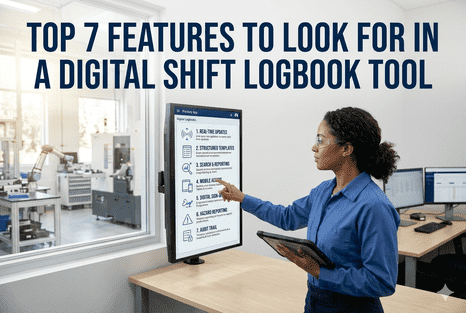
Structured shift logbook templates deployed across all four roaster stations with configurable fields for drum temperature profiles, bearing vibration levels, motor current readings, and production throughput — replacing free-text paper entries with structured data capture that enforced consistent event documentation across every shift and every operator.
ANALYTICS
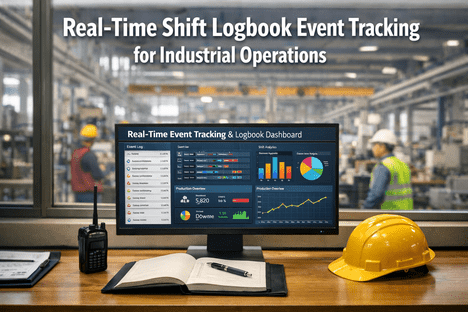
Cross-shift OEE analytics dashboard aggregated shift log data across all three shifts into a unified equipment health and performance view — enabling supervisors and maintenance teams to identify degradation trends developing across multiple shift cycles before they escalated into unplanned downtime events that eroded OEE.
HANDOVER
Digital shift handover workflow replaced paper-based handoff with structured, time-stamped shift reports that automatically transferred equipment status, active issues, maintenance actions, and production notes to the incoming shift — eliminating the information loss that had previously occurred at every shift boundary.
ALERTS
Automated anomaly escalation configured to flag equipment condition entries exceeding configurable thresholds — vibration levels above baseline, temperature deviations outside operating range, or throughput reductions crossing alert thresholds — ensuring that equipment intelligence captured on any shift was immediately visible to the maintenance team regardless of shift schedule.
04 / Implementation
Full Digital Shift Logbook Platform Live Across All Shifts in 60 Days
Days 1–14
Shift Log Audit and Template Design
All existing paper shift log formats audited across all three shifts and all equipment stations. Data categories identified and standardized: equipment condition fields, production output fields, quality event fields, maintenance action fields, and escalation trigger thresholds. Structured digital shift logbook templates designed for roasters, grinders, and packaging lines with operator input optimized for minimum documentation time and maximum data quality. Template fields configured to capture the specific equipment parameters that prior paper logs had been missing inconsistently.
Days 15–35
Phase 1 Deployment — Priority Assets Live on Digital Shift Logbook
Digital shift logbook deployed on two primary roasters and four priority grinder stations during scheduled weekend maintenance windows — zero production interruption. iFactory platform connected with structured shift log templates live from Day 18. Operator training conducted during deployment window, with each shift team receiving hands-on template familiarization. Shift handover workflow enabled for Phase 1 assets, with third shift operators completing the first fully structured digital shift handover on Day 22.
Days 36–52
Phase 2 — Remaining Roasters, Grinders, and All Packaging Lines
Digital shift logbook deployment completed on remaining two roasters, four secondary grinder stations, and all three packaging lines. Full equipment portfolio live on iFactory platform by Day 49. Cross-shift OEE analytics dashboard operational for all assets by Day 52, with equipment condition trends visible across all three shifts and rolling 7-day and 30-day OEE tracking enabled for the full production facility.
Days 53–60
Workflow Integration and Platform Optimization
iFactory shift logbook integrated with the facility's existing maintenance work order system, enabling shift-logged equipment issues flagged as maintenance-required to automatically generate work order requests with full shift context attached. First cross-shift equipment degradation pattern identified by the analytics engine on Day 55 — a roaster bearing vibration signature that had appeared in three consecutive shift log entries, automatically flagged and escalated before reaching failure threshold.
05 / Results
12 Months of Measured OEE and Operational Performance Improvement
The transition from paper-based shift logs with fragmented handovers to iFactory's digital shift logbook platform with cross-shift analytics produced measurable improvements across every tracked performance dimension within the first two post-deployment quarters. Overall equipment effectiveness reached 97% uptime — a 14-percentage-point improvement from the 83% baseline. Unplanned downtime events fell by 81%. Quality hold batches linked to grinder wear were eliminated entirely. And the annual maintenance expenditure reduction of $218,000 delivered a platform ROI that the facility confirmed within seven months of full deployment.
| Metric |
Before iFactory Shift Logbook |
After iFactory Shift Logbook |
Change |
| Overall equipment uptime |
~83% |
97% |
+14 percentage points |
| Unplanned downtime hours per week |
11.3 hrs avg |
2.1 hrs avg |
−81% reduction |
| Roaster bearing failure events |
~18 per year |
2 per year |
−89% failure events |
| Quality hold batches (grinder-related) |
7–9 per month |
0 per month |
100% elimination |
| Packaging line throughput efficiency |
~77% effective rate |
96% effective rate |
+19 percentage points |
| Mean time to detect equipment anomaly |
Lost in paper logs (2–5 shifts delayed) |
First shift entry (same-shift detection) |
Real-time visibility |
| Shift handover documentation compliance |
~55% (estimated from log audit) |
98% structured handover completion |
+43 point improvement |
| Cross-shift data accessibility |
Paper binders in single location |
Real-time dashboard, any shift, any device |
24/7 visibility |
| Annual maintenance expenditure |
~$504,000 |
~$286,000 |
−43% cost reduction |
| Annual maintenance savings |
— |
$218,000 |
Net annual saving |
Zero
Quality Hold Batches
See How iFactory's Digital Shift Logbook Delivers These OEE Results at Your Facility
Get a live walkthrough of structured shift log templates, cross-shift OEE analytics dashboards, and automated handover workflows built for specialty coffee production environments.
"The first time I saw a roaster bearing vibration trend across three consecutive shift log entries in a single dashboard view, I realized we had been flying completely blind. That pattern had been happening for years — buried in paper logs that nobody ever read across shift boundaries. The iFactory shift logbook made it visible on Day 55, and we scheduled the bearing replacement before it failed. Under the old paper system, that bearing would have failed on a Tuesday afternoon at full production load and we would have called it bad luck."
06 / Key Analysis
Why the OEE Improvement Was This Comprehensive
01
Structured shift log templates eliminated the data quality gap that made cross-shift trend analysis impossible. Paper shift logs produced unstructured, inconsistent data that could not be aggregated, analyzed, or compared across shift boundaries. iFactory's structured templates enforced consistent field completion, standardized terminology, and complete equipment condition reporting across every shift and every operator — transforming individual shift observations into an aggregated equipment intelligence dataset that revealed degradation patterns invisible under the paper model.
02
Digital shift handover workflows eliminated the information loss at every shift boundary. Under the paper system, approximately 35% of equipment events logged on one shift were never reviewed or actioned by the incoming shift. iFactory's digital handover workflow made equipment status, active issues, and maintenance actions from the outgoing shift immediately visible to the incoming shift through a structured, time-stamped shift report — eliminating the handover gap that had previously allowed equipment degradation to progress undetected across multiple shift cycles.
03
Cross-shift OEE analytics converted individual shift observations into equipment intelligence that drove predictive maintenance. The iFactory platform aggregated structured shift log data from all three shifts into a unified equipment health dashboard — enabling the maintenance team to see degradation trends developing across multiple shift cycles, identify equipment requiring attention before failure, and schedule maintenance during planned windows rather than reacting to emergency failures that had already impacted OEE.
04
Automated anomaly escalation ensured that critical equipment intelligence was never delayed by shift schedules. Under the paper system, an operator detecting a concerning equipment condition on third shift had to document it in a log, hope it was read by the day shift supervisor, and wait potentially 8–16 hours for action. iFactory's automated escalation flagged equipment condition entries exceeding configurable thresholds immediately — alerting the maintenance team regardless of shift schedule and enabling intervention before the condition degraded into a downtime event.
07 / Business Impact
Operational, Financial, and Strategic Outcomes Beyond OEE Improvement
Production Capacity Recovery
Eliminating 9.2 hours of average weekly unplanned downtime recovered approximately 478 annual production hours — restoring capacity equivalent to nearly 12 full production days previously lost to reactive maintenance events driven by fragmented shift data and undetected equipment degradation across shift boundaries.
Product Quality Consistency
Zero grinder-related quality hold batches in the 12 months post-deployment eliminated $148,800 in annual product loss previously absorbed from batch regrind, disposal, and expedited replacement production — enabled by grinder degradation patterns that iFactory's cross-shift shift log analytics detected before particle size deviation exceeded specification tolerance.
Maintenance Cost Structure
Annual maintenance expenditure reduced from $504,000 to $286,000 — a $218,000 structural cost reduction driven by elimination of emergency parts premiums, overtime reactive labor, and batch loss costs. The shift to condition-based maintenance enabled by cross-shift shift log data also improved parts inventory management, reducing safety stock carrying costs by approximately $31,000 annually.
Supply Chain Reliability
Achieving 97% equipment uptime enabled the facility to commit to tighter delivery windows with two major retail partners — improving on-time delivery performance from 87% to 98% and qualifying the operation for preferred supplier status with one partner's specialty category program, representing an estimated $420,000 in incremental annual contract value.
$504K
Annual maintenance spend before
$286K
Annual maintenance spend after
97%
Equipment uptime achieved
$218K
Annual savings achieved
08 / Conclusion
Shift Logbook-Driven OEE Transformation: The Compounding Value of Structured Shift Data
This specialty coffee roasting facility's transformation from paper-based shift logs with fragmented handovers to iFactory's digital shift logbook platform eliminated the structural data gap that had hidden equipment degradation across shift boundaries for years. The digital shift logbook gave the facility structured, consistent, and accessible shift data across every shift and every piece of production equipment — and the cross-shift OEE analytics engine converted that data into actionable equipment intelligence, degradation trend visibility, and maintenance decisions that improved uptime, quality, and cost structure simultaneously.
The $218,000 in annual maintenance savings is a direct financial outcome. The 97% equipment uptime is an operational reliability outcome. The elimination of all grinder-related quality holds is a product quality outcome. And the 478 recovered annual production hours compound in value as fulfillment reliability strengthens retail relationships and opens access to premium category programs. To assess what iFactory's digital shift logbook platform would deliver for your coffee roasting or food processing facility, Book a Demo with iFactory's shift logbook team.
97% Uptime. Zero Quality Holds. Digital Shift Logbook Live in 60 Days.
See how iFactory's structured shift logbook platform delivers real-time OEE tracking, cross-shift trend analytics, and automated handover workflows for specialty coffee roasting operations.
09 / FAQ
Frequently Asked Questions
How does iFactory's digital shift logbook improve OEE compared to paper shift logs?
iFactory replaces free-text paper entries with structured shift log templates that enforce consistent data capture across every shift and operator. Cross-shift OEE analytics aggregate data from all shifts into unified equipment health dashboards, enabling degradation trend detection before failure, automated anomaly escalation, and real-time OEE tracking that paper logs cannot provide.
Can iFactory's shift logbook platform detect grinder wear patterns that cause quality hold events?
Yes. iFactory's structured shift log templates capture grinder performance metrics at every shift. The cross-shift analytics engine aggregates these data points across all three shifts and identifies degradation trends — motor load pattern changes, throughput reductions — that precede burr wear-driven particle size deviation, enabling planned burr changes during scheduled downtime before quality holds occur.
How does iFactory integrate with existing packaging line equipment and data systems?
iFactory's digital shift logbook platform integrates with existing PLC, SCADA, and sensor infrastructure through configurable data import pipelines and API connections. Integration is completed during scheduled maintenance windows with zero production interruption, and the platform is compatible with major packaging OEMs and existing industrial control systems.
How long does iFactory shift logbook deployment take for a multi-shift production facility?
This facility achieved full platform coverage across four roasters, eight grinder stations, and three packaging lines with structured shift log templates, cross-shift analytics, and automated handover workflows within 60 days — with priority assets live and generating cross-shift visibility within the first 35 days. No operational interruptions occurred during installation.
What OEE and ROI timeline should production facilities expect from iFactory's digital shift logbook platform?
Operations with fragmented shift communication, unstructured shift data, or active OEE gaps from undetected equipment degradation typically recover platform investment within the first full operating year. This facility confirmed ROI within seven months of full deployment, driven by maintenance cost reduction, quality hold elimination, and recovered production capacity from OEE improvement.
Does iFactory support multi-equipment shift logbook deployment across different asset types in a single facility?
Yes. iFactory supports structured shift log templates configurable for roasters, grinders, packaging lines, conveyors, and ancillary production equipment — all under a unified shift data and OEE analytics interface. Asset-specific templates are configured independently for each equipment type, with a consolidated cross-shift dashboard providing a single equipment intelligence view for the maintenance and production teams.