Best Practices for Implementing a Digital Shift Logbook in Industry
By Christopher Hayes on May 27, 2026
A chemical plant in Louisiana spent eight months evaluating digital shift logbook platforms, selected the most feature-rich option, and deployed it across all four production units in a single weekend. Within 90 days, operator adoption had fallen below 30%. Shift supervisors discovered that operators were filling out paper logs during the shift and copying entries into the digital system in the last 15 minutes before handover — doubling their documentation time. The platform had the right features, but the implementation skipped every recognised best practice: no template co-design with operators, no pilot phase, no champion network, and no paper retirement deadline. A post-mortem analysis showed that 82% of the features the plant paid for were never used by operators. The cost of the failed implementation — platform license, integration consulting, and lost productivity — exceeded $470,000. Facilities that follow a structured implementation methodology and Book a Demo with iFactory receive a facility-specific deployment readiness assessment before any implementation begins.
DIGITAL SHIFT LOGBOOKIMPLEMENTATION BEST PRACTICESOPERATOR ADOPTION
Implement a Digital Shift Logbook With a Proven, Operator-Centric Methodology
iFactory's digital shift logbook platform delivers 90%+ operator adoption within 60 days through structured template co-design, champion operator programs, cross-shift integration toolkits, and real-time adoption analytics — purpose-built for manufacturing teams demanding measurable operational improvement.
Why Digital Shift Logbook Implementation Methodology Determines Success or Failure
Technology Alone Cannot Drive Adoption — Process and People Determine Outcomes
Manufacturing organisations consistently overestimate the role of platform features and underestimate the impact of implementation approach on operator adoption. Facilities that deploy digital shift logbooks using structured change management and phased rollout achieve 90%+ sustained adoption, while those that lead with technology-first implementations see adoption plateau at 30-50% within six months. The platform is the enabler; the implementation methodology is the determinant of success.
Operator Resistance Is Almost Always a Design Problem, Not a Cultural Problem
When operators resist digital shift logbooks, the root cause is rarely resistance to technology itself. Operators consistently report that digital tools that fail in production share common characteristics: templates designed without operator input, workflows that add steps instead of removing them, and interfaces optimised for management reporting rather than floor-level usability. Facilities that involve operators in template design and workflow configuration from day one see 2.3x higher adoption rates compared to top-down deployments.
47%of digital shift logbook initiatives fail to sustain adoption past year one
90%+Operator adoption rate achievable with structured implementation methodology
2.3×Higher adoption when operators co-design templates vs. top-down deployment
60 daysTime to full operator adoption with phased rollout and champion programs
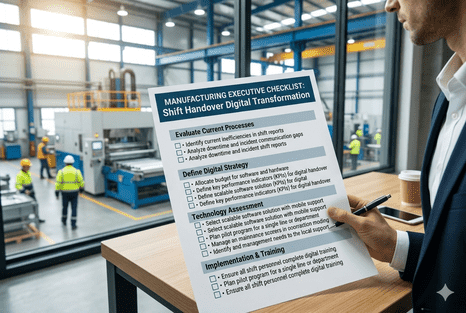
Digital Shift Logbook Implementation Checklist — 6 Critical Phases
1. Assessment & Template Design
2. Pilot Deployment & Operator Onboarding
3. Cross-Shift Rollout & System Integration
4. Adoption Measurement & Operator Analytics
5. Paper Retirement & Process Reinforcement
6. Continuous Improvement & Advanced Capabilities
Structured vs. Ad-Hoc Implementation: Key Differences
Implementation Dimension
Ad-Hoc Deployment
Structured Implementation
Template Design
Configured by IT based on management assumptions
Co-designed with operators through structured workshops
Rollout Approach
Plant-wide deployment in a single event
Phased rollout starting with one shift pilot
Operator Training
Single 30-minute session at shift change
Hands-on practice, supervised first entries, champion support
Paper Transition
Dual-mode operation with no retirement timeline
Firm retirement date with planned transition support
Adoption Measurement
Informal supervisor observation
Real-time dashboards with shift-level analytics
Feedback Loop
Annual satisfaction survey
Daily stand-ups during first 60 days, quarterly reviews
Integration Timeline
Post-deployment — delayed months or never completed
Mapped during assessment, built during pilot phase
Operator Adoption at 6 Months
30-50%
85-95%
OPERATOR ADOPTIONDEPLOYMENT METHODOLOGY
Ready to Implement a Digital Shift Logbook With a 90%+ Adoption Guarantee?
iFactory's implementation engineering team maps every checklist phase to your plant's shift structure, operator workflows, and existing systems — delivering a risk-prioritised deployment roadmap before any platform commitment.
Expert Perspective: What Separates Successful Digital Shift Logbook Deployments from Failed Ones
The plants that achieve sustained digital shift logbook adoption share one common characteristic: they treated the implementation like an operational improvement project, not an IT deployment. Every template was co-designed with operators, every rollout was phased with clear gates, and every shift had champion peers who made the new process feel like their idea, not management's mandate. The digital tools available today are more than capable. The gap between 30% adoption and 90% adoption is not the platform — it is whether anyone invested in the implementation discipline that separates successful change management from technology installation. The checklist discipline is the differentiator.
Digital Transformation Lead — Multi-Plant Chemical Manufacturing Operations, U.S. Gulf Coast
90%+Operator adoption with structured implementation
60 daysTime to full operator adoption with phased methodology
2.3×Higher adoption with operator co-designed templates
100%Phased rollout with measurable gates and milestones
Conclusion: Execute Your Digital Shift Logbook Implementation With Operational Confidence
A structured digital shift logbook implementation checklist is the engineering discipline that converts platform investment into genuine operational improvement. The six phases outlined here — from assessment and template design through pilot deployment, cross-shift rollout, adoption measurement, paper retirement, and continuous improvement — reflect the sequence that consistently delivers 90%+ operator adoption with the least disruption to live operations. Manufacturing facilities that complete this checklist systematically eliminate paper handover friction, reduce miscommunication-related incidents, and build the data foundation for advanced shift analytics and cross-shift pattern recognition. Operations and reliability teams ready to validate their implementation readiness are encouraged to Book a Demo with iFactory and receive a facility-specific deployment readiness assessment before any commitment is made.
Digital Shift Logbook Implementation Best Practices — Frequently Asked Questions
1. What is a structured digital shift logbook implementation methodology?
It is a phased, operator-centric deployment approach that includes template co-design workshops, single-shift pilot deployment, champion operator programs, daily feedback loops, firm paper retirement timelines, and continuous adoption measurement — replacing the ad-hoc, technology-first deployments that fail to sustain operator engagement.
2. Which implementation phase delivers the highest return on investment?
The single-shift pilot phase consistently delivers the highest ROI in any digital shift logbook deployment. A 4-6 week controlled pilot surfaces 80% of implementation issues in a contained environment where problems can be fixed without affecting the entire plant. Organisations that skip the pilot phase to accelerate timelines see 2.4x higher failure rates and typically spend 4-6 additional months remediating issues that a pilot would have identified in weeks.
3. How do you measure digital shift logbook adoption effectively?
Measure three categories of metrics from day one. Adoption metrics: entries per shift, completion rates, on-time submission percentage, and active operator percentage. Efficiency metrics: average handover time, data completeness rate, and time spent searching for shift records. Impact metrics: incident recurrence rate, cross-shift response time, and operator satisfaction scores. Display adoption metrics on plant floor screens to create visibility and healthy competition between shifts.
4. How do you handle operator resistance to digital shift logbook adoption?
Operator resistance is almost always a design problem, not a cultural problem. Address it by involving operators in template design workshops so the system reflects their workflow rather than management's assumptions. Recruit champion operators who train and support their peers. Show operators how digital shift logs make their jobs easier — faster handovers, fewer repeat questions from the next shift, and better visibility into equipment conditions before they start their shift. Daily feedback loops during the first 60 days catch and resolve friction points before they compound into widespread resistance.
5. How long does a full digital shift logbook deployment typically take?
A structured implementation following best practices typically takes 10-14 weeks from kickoff to full adoption across all shifts: 2-3 weeks for assessment and template design, 4-6 weeks for the single-shift pilot, 2-3 weeks for cross-shift rollout, and ongoing measurement and refinement. Faster timelines are possible but carry significantly higher risk of stalled adoption — organisations that compress the pilot phase below 4 weeks see 2.4x higher failure rates in sustained operator adoption.
GET STARTEDASSESS YOUR DEPLOYMENT READINESS
Start Your Digital Shift Logbook Implementation With a Facility-Specific Deployment Readiness Assessment
iFactory's implementation engineering team maps every checklist phase to your plant's shift structure, operator workflows, CMMS integration requirements, and adoption benchmarks — delivering a risk-prioritised deployment roadmap before any platform commitment.