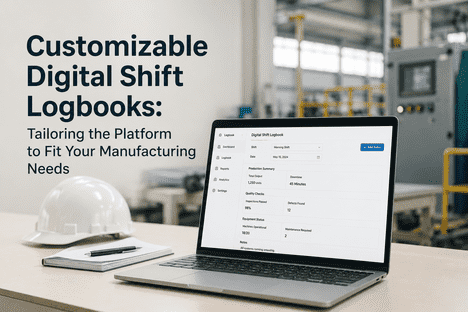
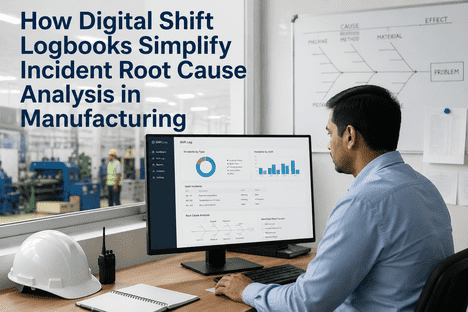
North Carolina's textile industry — the largest textile mill cluster in the United States with over 2,045 establishments, 42,000+ skilled professionals, and $14.6 billion in annual market value— operates under continuous 24/7 production pressure where every shift handover is a critical communication point. Yet the majority of NC mills still rely on paper shift logbooks, whiteboards, and verbal handovers that lose 40% of critical operational information between crews, contribute to fabric defects, missed maintenance signals, and unplanned downtime that erodes margins on already tight apparel and nonwoven contracts. Digital shift logbooks are now the operational excellence lever closing that gap — converting fragmented handover notes into structured, searchable, and auditable production intelligence. Book a Demo to see how iFactory AI deploys across North Carolina textile operations within 1–2 weeks.
$14.6B
Annual market value of the North Carolina textile mill industry
40%
Of plant incidents occur during shift handover periods despite under 5% of operational time
89%
Reduction in lost shift observations achieved with iFactory digital shift logbook
1–2 wks
Deployment timeline from configuration to go-live on the mill floor
Why North Carolina Textile Mills Are Replacing Paper Logbooks Now
North Carolina is home to nearly 25% of all U.S. textile manufacturing employment, with concentrated clusters across Guilford, Gaston, and Catawba counties producing yarn, woven and nonwoven fabrics, technical textiles, and apparel components for global brands. Mills typically operate three-shift continuous production on spinning frames, weaving looms, knitting machines, dyeing and finishing lines, and nonwoven web formers — equipment that demands precise handover communication between outgoing and incoming crews. A missed observation about a slubbing irregularity, a tensioner drift on a warp beam, or an early-stage bearing noise on a card machine becomes a multi-thousand-dollar defect run or a catastrophic breakdown when it fails to transfer cleanly across shifts.
The structural problem with paper logbooks is not the medium — it is the information loss model. Handwritten notes are illegible to incoming supervisors who did not write them, unsearchable when production planners need to trace a defect back to its first observation, and unauditable when a customer quality complaint demands evidence of process control. iFactory's digital shift logbook replaces this with structured entries that auto-link to machine asset tags, capture photo and voice evidence of every observation, generate AI-summarized handover briefs the incoming shift can read in 90 seconds, and create a complete searchable record across every shift, every line, every mill in the operator's network.
Structured Shift Entry Templates
Pre-built templates for spinning, weaving, knitting, dyeing, finishing, and nonwoven operations capture every required observation — ends down, machine speed, fabric defect counts, dye batch tracking, and downtime causes — in a consistent format every shift can read.
AI-Generated Handover Summaries
Incoming supervisors receive a 90-second intelligent summary of the prior shift's open issues, equipment status, watch-list items, and active quality flags — eliminating the 30–45 minute verbal handover meetings that delay shift starts.
Photo and Voice Defect Capture
Operators capture fabric defects, machine anomalies, and process deviations directly from the mill floor with mobile devices — photos and voice notes attach automatically to the relevant log entry, asset tag, and shift record.
Mandatory Handover Acknowledgment
Incoming shift supervisors must electronically acknowledge each open item, safety flag, and watch-list note — creating a clear chain of accountability and eliminating the "I never saw that note" gap that drives repeat incidents.
Production and OEE Integration
Logbook entries feed directly into OEE dashboards, linking downtime events to operator-recorded causes. Mill management gains real-time visibility into availability, performance, and quality losses across every shift and every line.
Offline-Capable Mobile App
Full offline operation on iOS, Android, and rugged industrial tablets means mill floor connectivity gaps never block log entry. Data syncs automatically when devices return to network coverage — critical for older NC mill buildings with limited Wi-Fi.
Paper Logbooks vs Digital Shift Logbooks: What NC Textile Operations Lose Every Day
The cost of paper-based shift management is rarely calculated, but it is substantial. Lost observations turn into repeat defects. Verbal handovers stretch shift starts by 20–40 minutes. Tribal knowledge walks out the door when experienced operators retire. The comparison below shows what NC textile operations leave unmanaged with paper logs versus what a structured digital shift logbook delivers.
| Operational Parameter |
Paper Logbook / Whiteboard Handover |
iFactory Digital Shift Logbook |
| Handover Information Capture |
Up to 80% of critical handover information is missed, illegible, or never transferred. Observations live in operator memory or scribbled margin notes. |
Structured templates ensure every required observation is captured. AI summaries highlight what the incoming shift must act on first. |
| Shift Handover Duration |
30–45 minute verbal handovers between outgoing and incoming supervisors. Production starts late on every shift change. |
90-second AI-generated handover brief plus electronic acknowledgment. Shift starts on time with full operational context. |
| Defect Traceability |
A customer complaint about a fabric defect triggers days of searching through paper logs that may already be archived or destroyed. |
Searchable digital records trace any defect back to the originating shift, operator, machine, and process condition within seconds. |
| Equipment Observation Continuity |
Early-warning signals (unusual noise, vibration, temperature) are observed by one shift and forgotten by the next. Failures occur with no documented warning history. |
Equipment observations auto-link to asset tags and condition monitoring timelines, creating a continuous record across shifts that supports predictive maintenance. |
| Tribal Knowledge Retention |
Experienced operators retire and their workarounds, machine quirks, and process knowledge leave with them. New hires take 6–12 months to reach full effectiveness. |
Every operator observation builds a searchable knowledge base. New hires onboard faster by reviewing historical entries for any line, machine, or product type. |
| Audit and Compliance Documentation |
Manual log compilation for OSHA, ISO 9001, and customer audits takes days. Inconsistent entries weaken compliance posture. |
Timestamped, immutable entries with electronic signatures provide audit-ready documentation aligned with ISO 9001, OSHA, and customer quality requirements. |
Every Lost Shift Observation Is a Future Defect, Downtime Event, or Audit Finding.
iFactory gives North Carolina textile mills a structured digital shift logbook with AI handover summaries, mobile capture, mandatory acknowledgments, and full audit trails — deployed in 1–2 weeks with no plant floor connectivity requirements.
Book a Demo to see the platform configured for your mill operation.
How iFactory Deploys Digital Shift Logbooks in North Carolina Textile Mills
iFactory's deployment is structured to deliver live shift logging in the first two weeks — not the multi-month rollouts typical of legacy MES installations. Each phase has defined deliverables so mill management sees operational change measured in days, not quarters.
Days 1–3
Template Configuration and Process Mapping
iFactory configures shift templates for spinning, weaving, knitting, dyeing, finishing, or nonwoven lines based on existing paper logbook content and supervisor workflows. Mill-specific defect codes, downtime reason categories, and asset tags loaded into the platform.
Days 4–8
System Integration and Mobile Rollout
Integration with existing CMMS, ERP, and machine monitoring systems where available. Mobile devices deployed to shift supervisors with offline-capable logbook app. Initial test entries verified against current paper logbook entries.
Days 9–12
Operator Training and Pilot Shift Testing
Hands-on training for shift supervisors and key operators on entry templates, photo and voice capture, and handover acknowledgment workflow. Pilot shifts run parallel with paper logs to validate complete capture before full cutover.
Days 13–14
Full Cutover and Management Dashboard Activation
Paper logbook retired. All shift handovers conducted via digital platform. Mill management dashboards activated for cross-shift analytics, downtime trend analysis, defect traceability, and continuous improvement reporting.
MEASURABLE OUTCOMES FROM WEEK 1: SHIFT HANDOVER EFFICIENCY GAINS BEGIN IMMEDIATELY
NC textile mills completing iFactory's 1–2 week deployment report shift handover duration reduced by 58% within the first week, lost shift observations down 89%, and full audit-ready log traceability — translating into measurable reductions in defect rates, downtime, and rework cost across spinning, weaving, knitting, and finishing operations.
58%
Faster shift handover with AI-summarized brief vs verbal handover
89%
Reduction in lost shift observations across mill operations
100%
Audit-ready log traceability for ISO 9001, OSHA, and customer audits
Operational Excellence Use Cases from North Carolina Textile Mill Deployments
The following outcomes reflect digital shift logbook deployments at operating textile facilities across yarn spinning, woven fabric, and technical nonwoven production lines. Each use case represents post-deployment performance data over a 6–12 month observation window.
A Gaston County yarn spinning mill running 24/7 across three shifts on ring spinning frames was facing repeated customer rejections for yarn count variation and slub defects. Root cause investigations consistently failed because paper shift logs could not be traced back to specific machines or operator observations from the shift when the defect originated. iFactory deployed structured digital shift templates linked to each frame's asset tag, with mandatory entries on draft change, roving lot, and process speed adjustments. Within 60 days, the mill identified that 70% of count variation defects traced back to two frames where a tensioner adjustment made on second shift was not communicated to third shift. Standardized handover protocols and automated alerts eliminated the recurrence, reducing customer rejection rates by 64% and recovering an estimated $480K annually in rework, scrap, and credit costs.
Book a Demo to see how this applies to your spinning operation.
64%
Reduction in customer rejection rate after shift handover standardization
$480K
Annual rework, scrap, and credit cost recovered through defect traceability
60 days
Time from deployment to root cause identification of recurring defects
A Guilford County woven fabric operation running 180 air-jet looms across three shifts was averaging 22% unplanned downtime per loom per month, with a large portion traced to component failures that had been observed as early-stage anomalies on prior shifts but never escalated. iFactory's digital shift logbook integrated with the mill's existing loom monitoring system, creating a continuous record of every operator observation — unusual noises, fabric tension shifts, weft insertion irregularities — linked to each loom's asset tag. When third-shift operators observed bearing noise on Loom 47, the system automatically flagged the observation against the loom's condition history, triggering a planned maintenance intervention before the bearing failed. Across the deployment's first six months, unplanned downtime dropped 31%, and the mill avoided an estimated 14 catastrophic component failures based on documented early-warning escalations.
31%
Reduction in unplanned loom downtime in first 6 months
14
Catastrophic component failures avoided through early-warning escalation
$720K
Annual savings from avoided downtime and emergency repair costs
A Catawba County nonwoven manufacturer producing medical-grade and filtration substrates was averaging 40 minutes per shift handover, with supervisors spending the first hour of every shift reconstructing the previous shift's events from paper logs and verbal updates. Compliance audits for medical-grade customers required 3–5 days of manual log compilation each time, pulling supervisors away from production. iFactory deployed digital shift templates tailored to nonwoven web formation, calendering, and slitting operations, with mandatory entries for basis weight checks, web defect codes, and dye lot tracking. Shift handover dropped to 12 minutes, audit documentation became instantly available, and the mill passed two consecutive customer audits with zero documentation findings — a first in the operation's history.
70%
Reduction in shift handover duration (40 min to 12 min)
Zero
Documentation findings in consecutive customer compliance audits
3–5 days
Audit prep time eliminated through instant log search and export
Expert Perspective: What Operational Excellence Looks Like in 2026 NC Textile Operations
Industry Perspective — Textile Operations Leadership
"The mills that will compete successfully through the next decade are the ones treating shift handover as a continuous data process, not an end-of-shift paperwork task. When every observation is captured, searchable, and tied to a specific machine and operator, you stop firefighting the same defects month after month. The biggest gains we see in North Carolina mills are not from new equipment — they come from finally being able to see what their existing equipment and operators have been telling them all along, but that was getting lost between shifts."
Operations Excellence Lead — Multi-Site Textile Operation (provided via iFactory deployment reference)
This pattern is consistent across iFactory's textile deployments: the operational improvements come not from buying new looms, spinning frames, or finishing equipment, but from converting the shift handover boundary from a point of information loss into a point of structured intelligence transfer. The shift logbook becomes the connective tissue between production, maintenance, quality, and compliance — turning what used to be a paperwork burden into the daily operating system of the mill. Book a Demo to speak with iFactory's textile industry specialists about your operation.
Structured Shift Handovers. AI-Generated Briefs. Live in 1–2 Weeks.
iFactory gives North Carolina textile mills a complete digital shift logbook platform — structured entry templates, AI handover summaries, mobile capture, mandatory acknowledgments, and full audit trails — integrated with existing CMMS, ERP, and machine monitoring systems. Measurable operational gains begin from week one.
Conclusion: Digital Shift Logbooks Are the Operational Excellence Standard for NC Textile Mills
North Carolina's leadership position in U.S. textile manufacturing — anchored by the largest mill cluster in the country, the NC State Wilson College of Textiles talent pipeline, and a workforce of 42,000+ skilled professionals — depends on the ability of every mill to extract maximum value from existing equipment, operators, and process knowledge. Paper shift logbooks are no longer adequate to that task. They lose 80% of critical handover information, take 30–45 minutes per shift transition, and leave mills exposed to repeat defects, preventable downtime, and audit findings that paper records cannot defend against.
iFactory's digital shift logbook platform delivers the specific operational excellence capabilities NC textile mills require: structured entry templates configured for spinning, weaving, knitting, dyeing, finishing, and nonwoven operations; AI-generated handover summaries that reduce shift transition time by 58%; mobile photo and voice capture for defect and equipment observation; mandatory acknowledgment workflows that create clear accountability; complete audit-ready documentation for ISO 9001, OSHA, and customer compliance; and integration with existing CMMS, ERP, and machine monitoring systems. The 1–2 week deployment timeline means measurable operational improvement begins within days — not the multi-month implementations that have historically delayed digital transformation in textile operations. Book a Demo to receive a configuration assessment specific to your mill and product mix.
Frequently Asked Questions About Digital Shift Logbooks for NC Textile Mills
How long does it take to deploy iFactory's digital shift logbook in a textile mill?
Most mills go live within 1–2 weeks. Template configuration takes 2–3 days, integration with existing CMMS, ERP, or machine monitoring systems takes 3–5 days, and operator training plus pilot shift testing takes 1–2 days. Multi-site rollouts across several NC mills typically complete in 4–8 weeks.
Can operators use the digital logbook without reliable Wi-Fi on the mill floor?
Yes. iFactory's shift logbook app supports full offline operation on iOS, Android, and rugged industrial tablets. Operators create entries, capture photos, complete handover checklists, and acknowledge incoming handovers without internet connectivity — critical for older NC mill buildings with limited Wi-Fi coverage. Data syncs automatically when devices return to network range.
Does the platform integrate with our existing CMMS, ERP, or machine monitoring systems?
Yes. iFactory integrates with major CMMS platforms, ERP systems (including SAP and Oracle), and textile machine monitoring solutions. Logbook entries automatically generate work orders in the CMMS when maintenance action is required, and equipment status updates flow between systems without duplicate data entry.
How does the digital logbook support ISO 9001 and customer quality audits?
Every entry is timestamped, electronically signed, and immutable — meeting the requirements of ISO 9001, OSHA recordkeeping, and customer quality audit programs. Audit reports can be filtered by date range, line, shift, product, or asset tag and exported instantly, replacing days of manual log compilation with seconds of search.
Will operators actually adopt the digital logbook, or will it sit unused like other software rollouts?
Adoption is driven by usability. iFactory's mobile-first design, voice and photo capture, and structured templates reduce data entry time below what paper logbooks require — operators spend less time documenting and more time on the floor. Pilot testing during deployment ensures any workflow friction is resolved before full cutover, and supervisors actively prefer the digital handover brief over reconstructing prior shift events verbally.
Stop Losing Shift Knowledge in Paper Logbooks. Deploy iFactory's Digital Shift Logbook in 1–2 Weeks.
iFactory gives North Carolina textile mills structured digital shift logging, AI-generated handover summaries, mobile defect capture, mandatory acknowledgments, and full audit-ready documentation — integrated with your existing CMMS, ERP, and machine monitoring systems within 14 days.
89% reduction in lost shift observations across mill operations
58% faster shift handover with AI-generated 90-second briefs
100% audit-ready traceability for ISO 9001 and customer audits
1–2 week deployment with full offline mobile capability