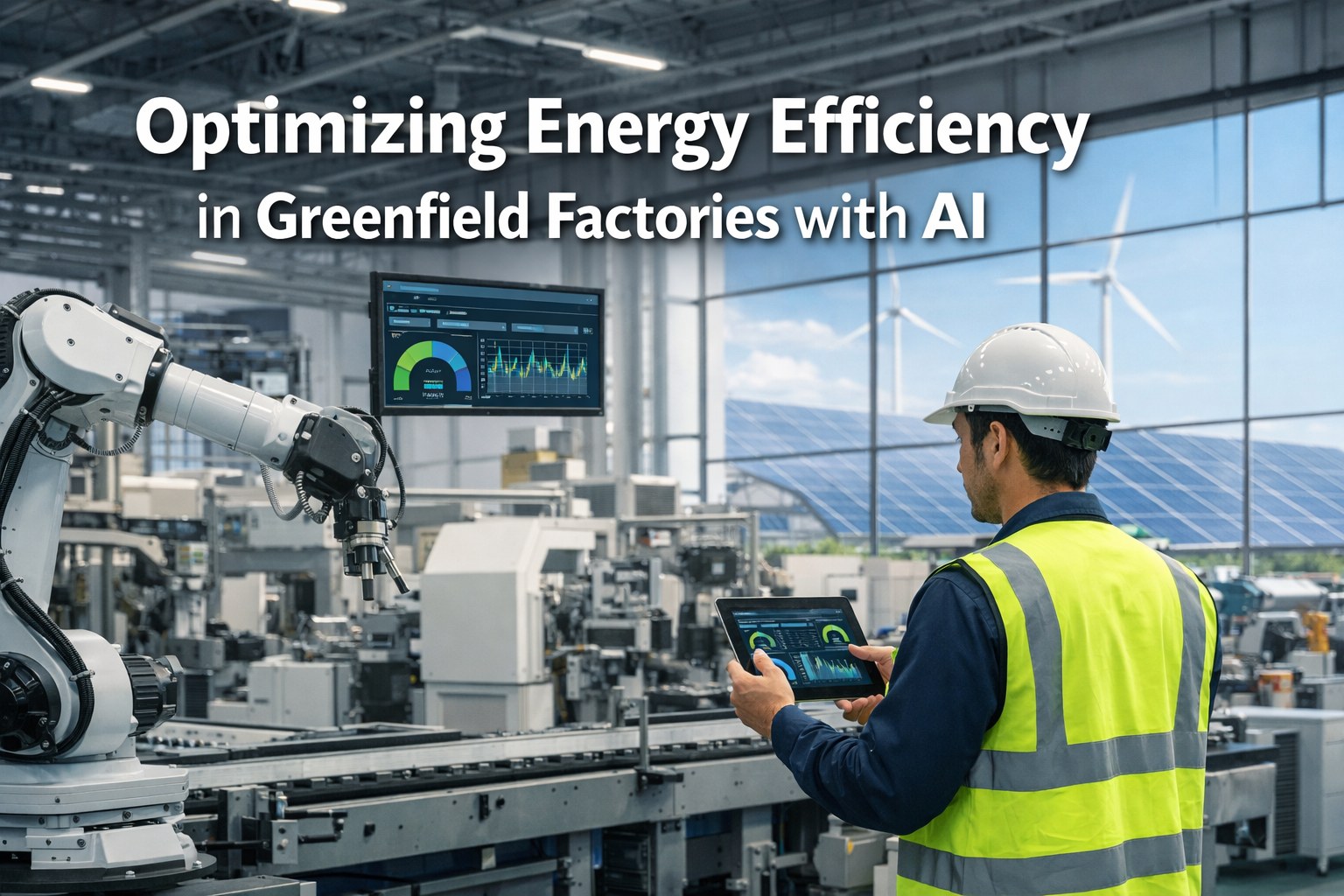
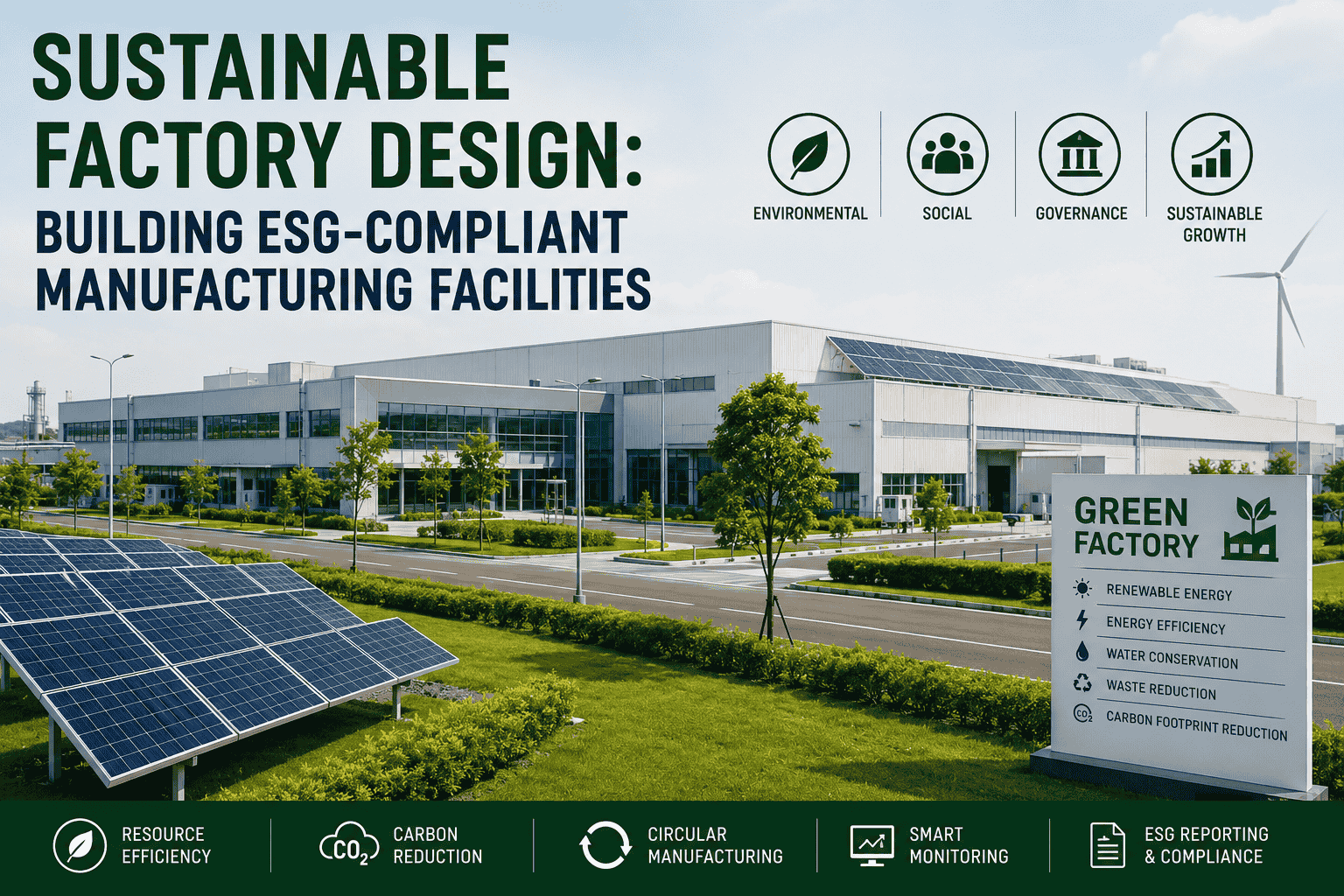
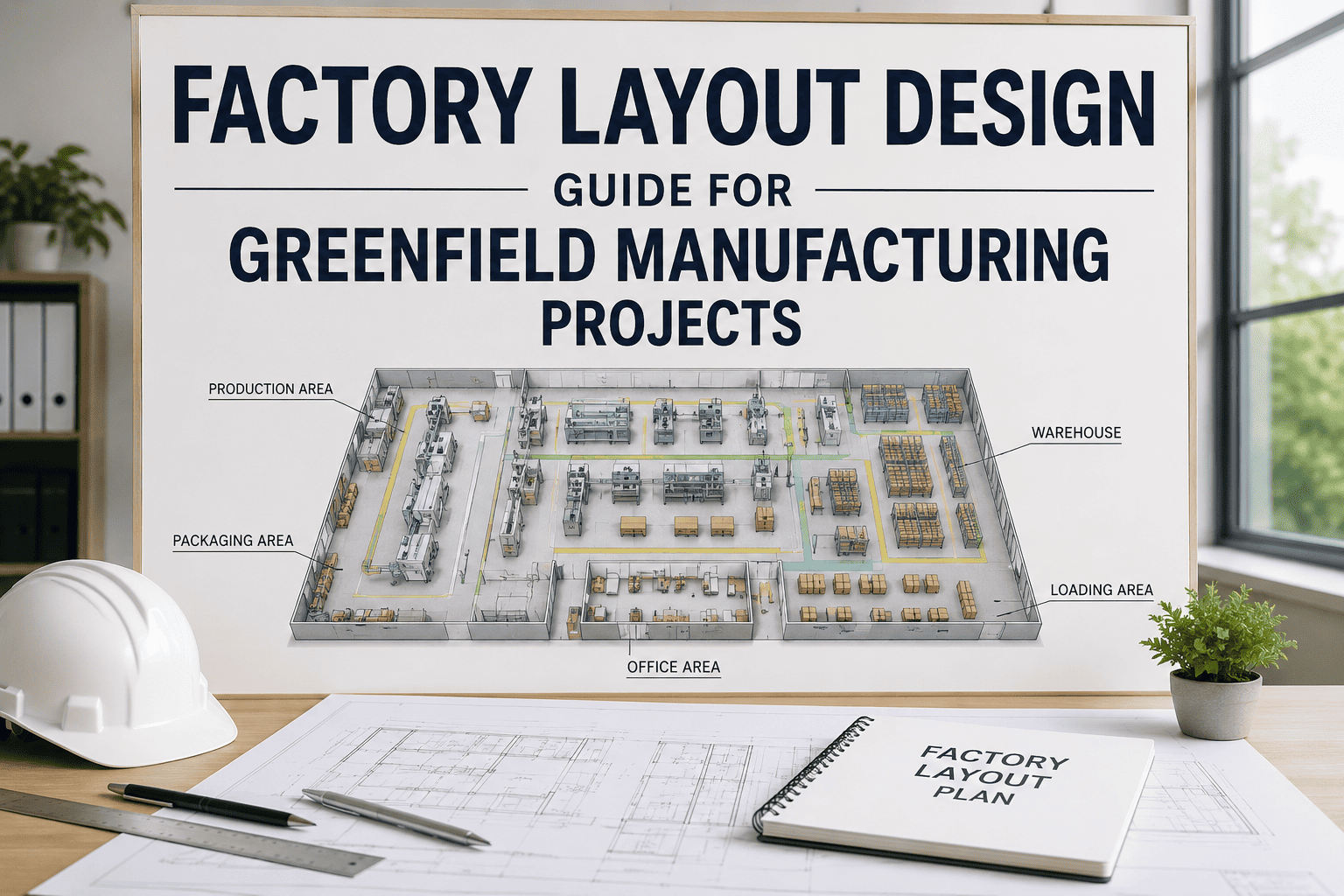
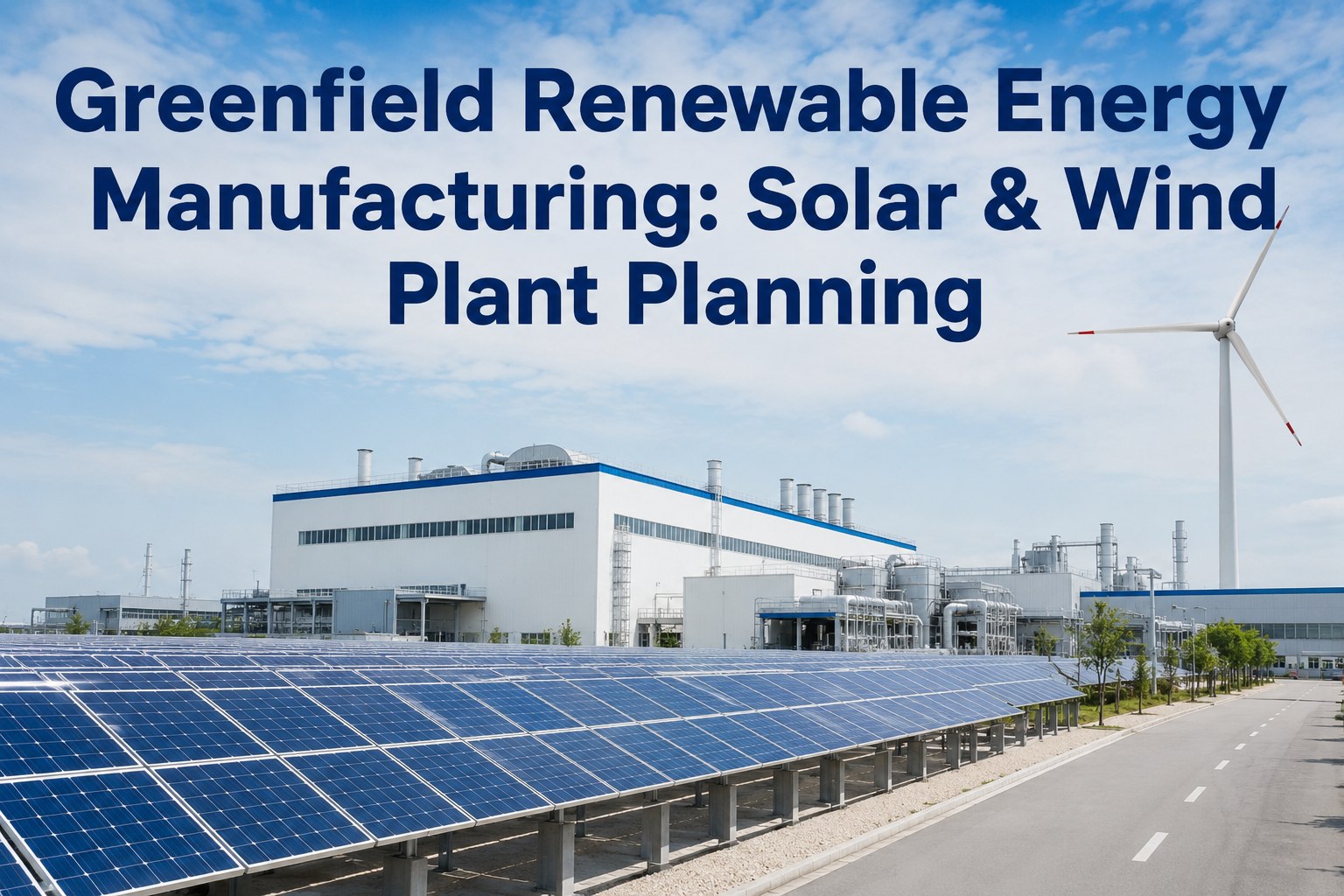
Energy costs consume 15-30% of manufacturing operating budgets—and in energy-intensive industries like steel, chemicals, and plastics, that number can exceed 40%. For greenfield factories, every design decision from day one impacts decades of energy consumption. AI-powered energy management systems are transforming how manufacturers approach this challenge, delivering 10-30% energy savings by detecting inefficiencies that human analysis misses. From HVAC systems that adapt to real-time occupancy to production scheduling that aligns with renewable energy availability, AI is turning energy optimization from a reactive expense into a strategic advantage.
The AI Energy Advantage
Transform Energy From Cost Center to Competitive Edge
$54.8B
AI in energy market by 2030
10-30%
Energy savings with AI optimization
16 mo
Average ROI payback period
Sources: Grand View Research, IEA Industrial Energy Management, Research Nester Case Studies
Where Factory Energy Actually Goes
Understanding your facility's energy consumption profile is the foundation of AI-driven optimization. Most manufacturers are surprised to learn that production equipment often isn't the largest energy consumer—support systems like HVAC, compressed air, and lighting frequently account for 50-60% of total energy costs.
Typical Manufacturing Energy Distribution
HVAC Systems
30-40%
AI Potential: Up to 37% savings
Production Equipment
25-35%
AI Potential: 12-42% savings by machine type
Compressed Air
15-25%
AI Potential: 10% through smart scheduling
Lighting
10-15%
AI Potential: 30%+ with occupancy control
Other Systems
5-10%
AI Potential: Variable by application
Want to understand your facility's energy profile? Schedule an energy assessment consultation.
How AI Transforms Energy Management
Traditional energy management relies on fixed schedules, manual monitoring, and reactive responses. AI-powered systems fundamentally change this approach by continuously learning from operational data, predicting consumption patterns, and optimizing in real-time—often identifying savings opportunities that would take human analysts months to discover.
AI analyzes historical consumption, production schedules, weather forecasts, and equipment status to predict energy demand hours or days in advance
18%
improvement in forecast accuracy
Machine learning identifies consumption deviations that traditional systems overlook—from air leaks to equipment degradation to inefficient operating patterns
94%
precision in predicting high-consumption events
Real-time adjustment of HVAC setpoints, production sequencing, and equipment operation based on changing conditions and energy prices
59%
cooling energy reduction possible
Automatically shift flexible loads to off-peak periods or when renewable energy is abundant, reducing both costs and carbon footprint
$14M
annual savings at one steel mill
Real-World Results: AI Energy Optimization in Action
Across industries, manufacturers implementing AI-powered energy management are achieving measurable results—often with payback periods under two years.
Steel Manufacturing
C3 AI Implementation at Hot Roll Mill
$14M
Annual energy savings
40 MW
Monthly demand reduction
Dynamic demand response + optimized production scheduling aligned with energy pricing
Industrial Automation
Global Manufacturer (12 Plants)
18%
Energy cost reduction per plant
IoT sensors + AI forecasting models with 94% prediction accuracy
Plastics Manufacturing
Korean Energy Management Case Study
$31M
Annual savings achieved
4.9%
Of total energy costs
Systematic AI-driven energy management implementation
Ready to see what AI energy optimization could save your operation? Talk to our energy management specialists.
Start Saving Energy From Day One
iFactory's AI-powered platform integrates energy monitoring with maintenance and production management—giving you the insights to optimize energy consumption across your entire operation.
The AI Energy Optimization Stack for Greenfield Factories
Building energy efficiency into a new facility from the design phase requires integrating AI capabilities across multiple systems. Here's how the key components work together:
AI Analytics Layer
Predictive Models
Anomaly Detection
Optimization Algorithms
Digital Twins
Integration Platform
Building Management System (BMS)
SCADA
CMMS
ERP
Sensor & Control Layer
Smart Meters
IoT Sensors
Variable Frequency Drives
Smart Actuators
Expert Perspective: The AI Energy Imperative
"AI-driven predictive maintenance can lower energy use by up to 12%, while AI-powered digital twins in manufacturing plants can improve forecast accuracy by 15%. The integration of AI into energy management enables adaptive systems that respond to real-time conditions, optimizing both energy use and operational performance."
— Technavio AI Energy Efficiency Tools Market Analysis
30.2%
AI in energy market CAGR to 2030
60%+
Cost savings achieved in specific use cases
50%+
Productivity increases reported
Planning a new facility? Let's discuss building energy intelligence from day one.
Implementation Roadmap: From Design to Optimization
For greenfield factories, integrating AI energy management during the design phase maximizes savings potential. Here's a phased approach that balances quick wins with long-term optimization:
- Specify smart metering at equipment and zone level
- Design IoT sensor networks for HVAC, compressed air, lighting
- Plan data architecture for energy analytics integration
- Select AI-ready building management systems
- Establish consumption baselines during ramp-up
- Train AI models on production-energy correlations
- Identify initial anomalies and quick-win optimizations
- Deploy predictive load forecasting
- Enable automated HVAC and lighting optimization
- Implement demand response strategies
- Align production scheduling with energy availability
- Continuous model refinement based on results
Build Smarter. Run Leaner. Save More.
iFactory's AI-driven platform helps manufacturers optimize energy consumption while improving maintenance and production efficiency—delivering measurable ROI within months, not years.
Frequently Asked Questions
How much energy can AI optimization save in manufacturing?
AI-powered energy management typically delivers 10-30% savings across manufacturing facilities. Specific savings vary by application: HVAC systems can achieve up to 37% reduction with intelligent controls, production equipment savings range from 12-42% depending on machine type, and compressed air systems can save 10% through smart scheduling. Case studies show annual savings ranging from $4.2 million for integrated steel manufacturers to $31 million for plastics facilities, with most implementations achieving ROI within 12-24 months.
What AI technologies are used for factory energy optimization?
Factory energy optimization leverages multiple AI technologies working together: machine learning algorithms for consumption forecasting and anomaly detection, LSTM neural networks for time-series prediction, reinforcement learning for real-time optimization of HVAC and production systems, and digital twins for simulation and scenario planning. These technologies integrate with IoT sensor networks, smart meters, and building management systems to enable continuous optimization based on real-time conditions.
What's the ROI timeline for AI energy management systems?
Most manufacturers achieve positive ROI within 12-24 months, with initial benefits visible within 3-6 months of implementation. Case studies show payback periods as short as 14-16 months for comprehensive implementations. Factors affecting ROI include current energy costs, facility size, existing infrastructure, and the scope of AI deployment. The AI in energy market is growing at 30.2% annually, reflecting the strong returns manufacturers are achieving from these investments.
How do AI systems identify energy waste that humans miss?
AI systems analyze thousands of data points simultaneously, identifying patterns and correlations invisible to human analysis. For example, AI can detect that a specific HVAC unit consumes 15% more energy than an identical unit under the same conditions—a deviation that might take months to notice manually. AI achieves up to 94% precision in predicting high-consumption events, identifies consumption anomalies from subtle sensor patterns, and detects issues like air leaks, equipment degradation, and inefficient operating schedules that traditional monitoring overlooks.
What infrastructure is needed for AI energy optimization in a new factory?
For greenfield facilities, plan for three infrastructure layers: (1) Sensor and control layer with smart meters at equipment and zone level, IoT sensors for environmental monitoring, and variable frequency drives for dynamic control; (2) Integration platform connecting building management systems, SCADA, CMMS, and production systems; (3) AI analytics layer with cloud or edge computing capacity for predictive models, anomaly detection, and optimization algorithms. Designing this infrastructure from the start costs significantly less than retrofitting and enables maximum optimization potential.