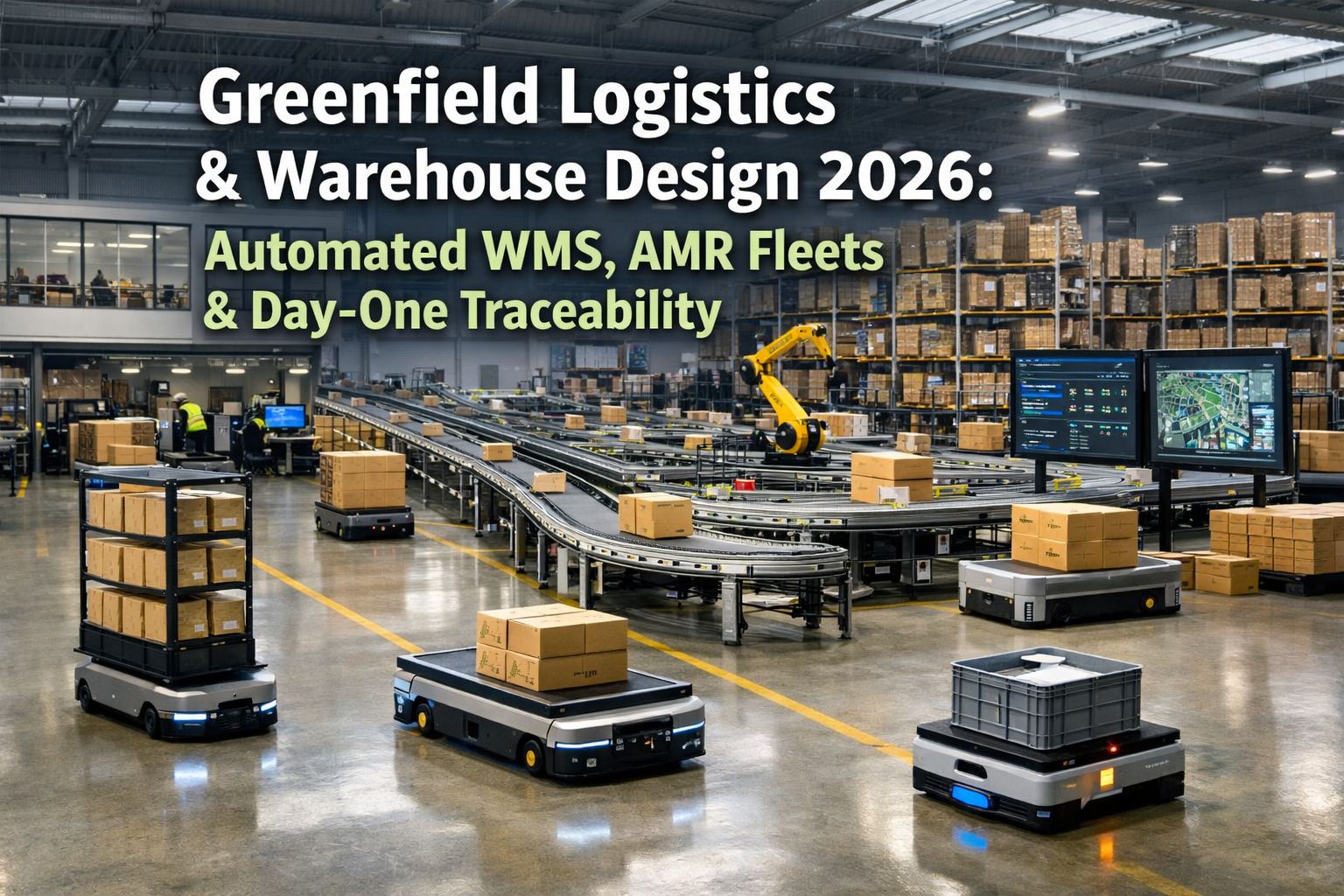
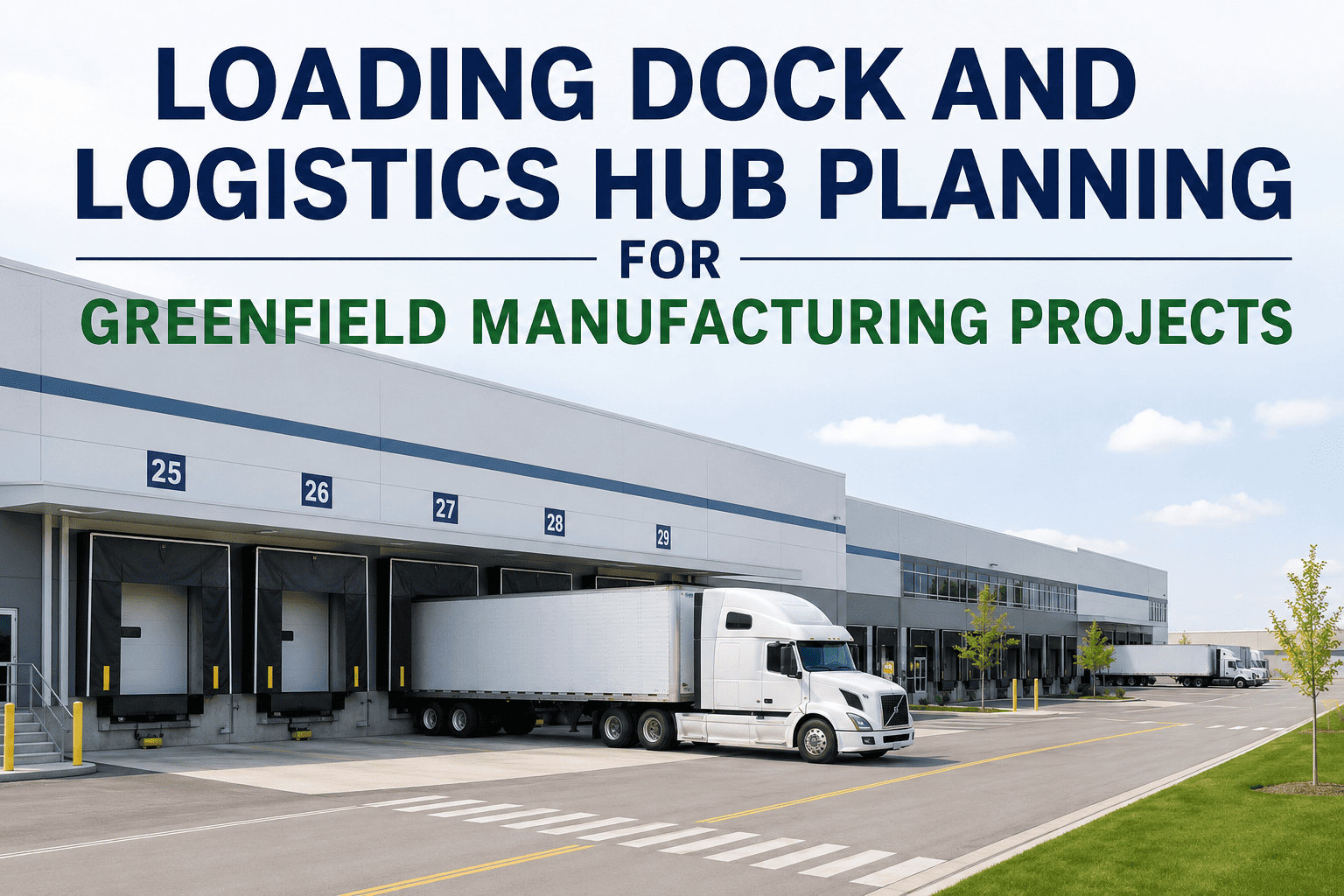
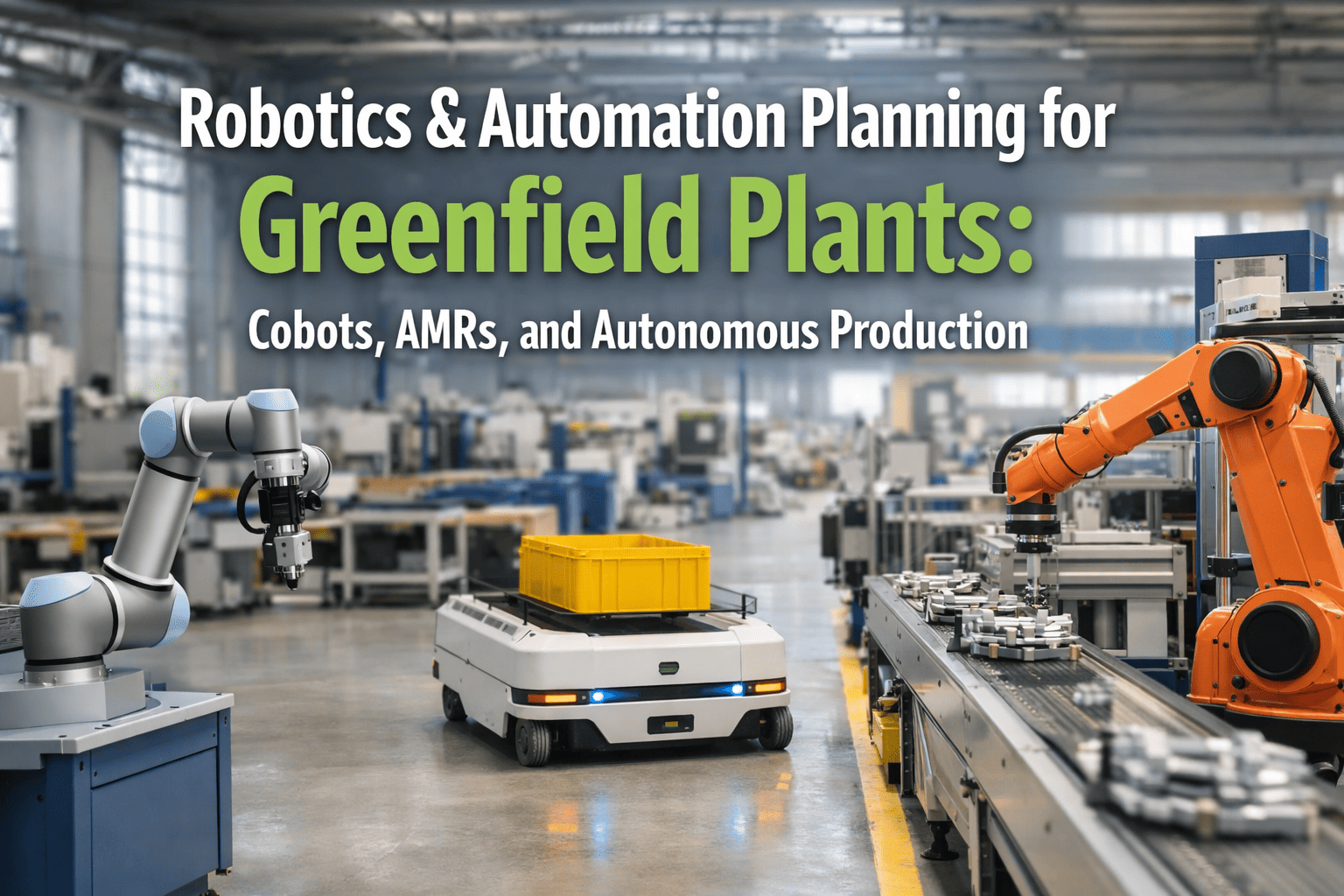
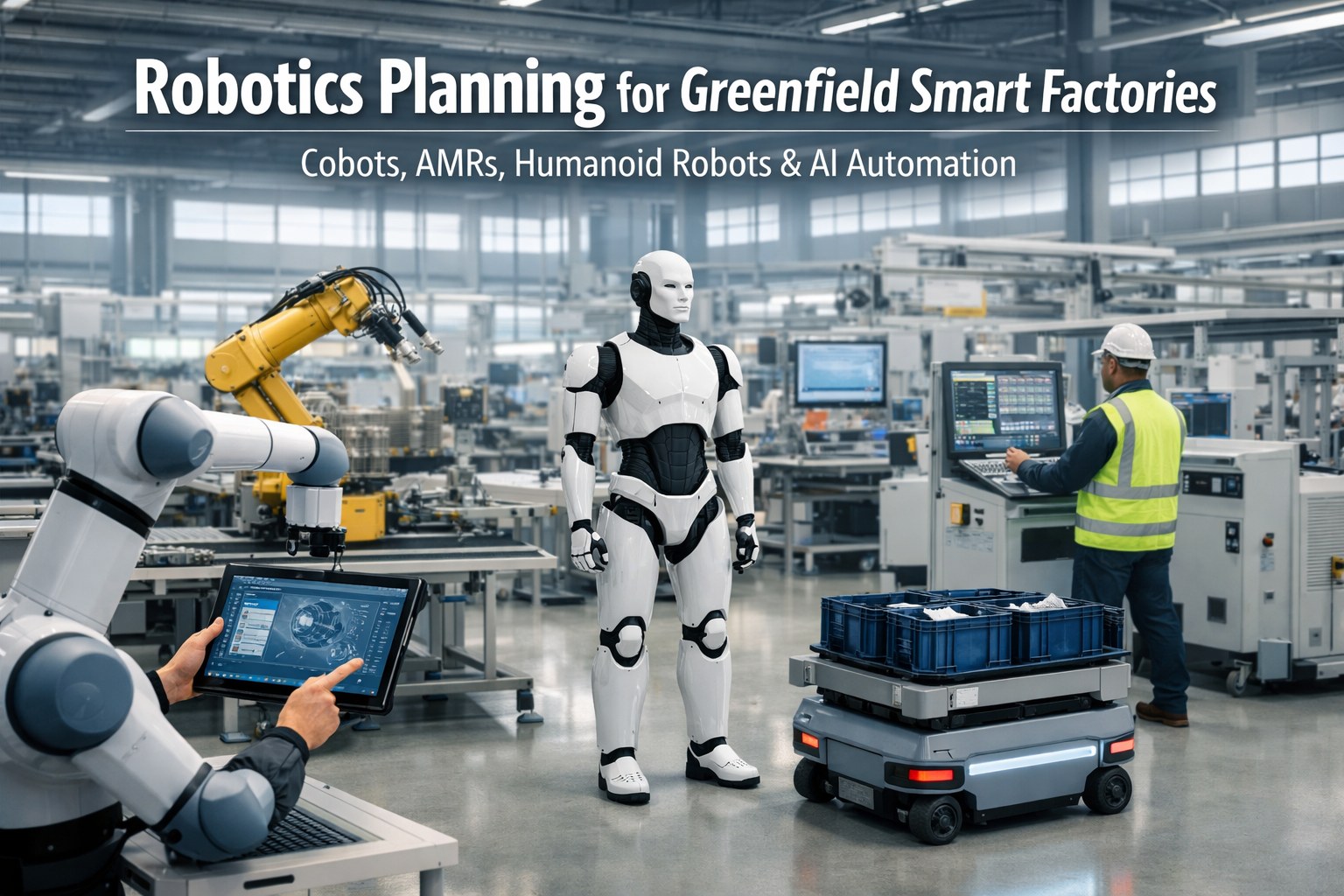
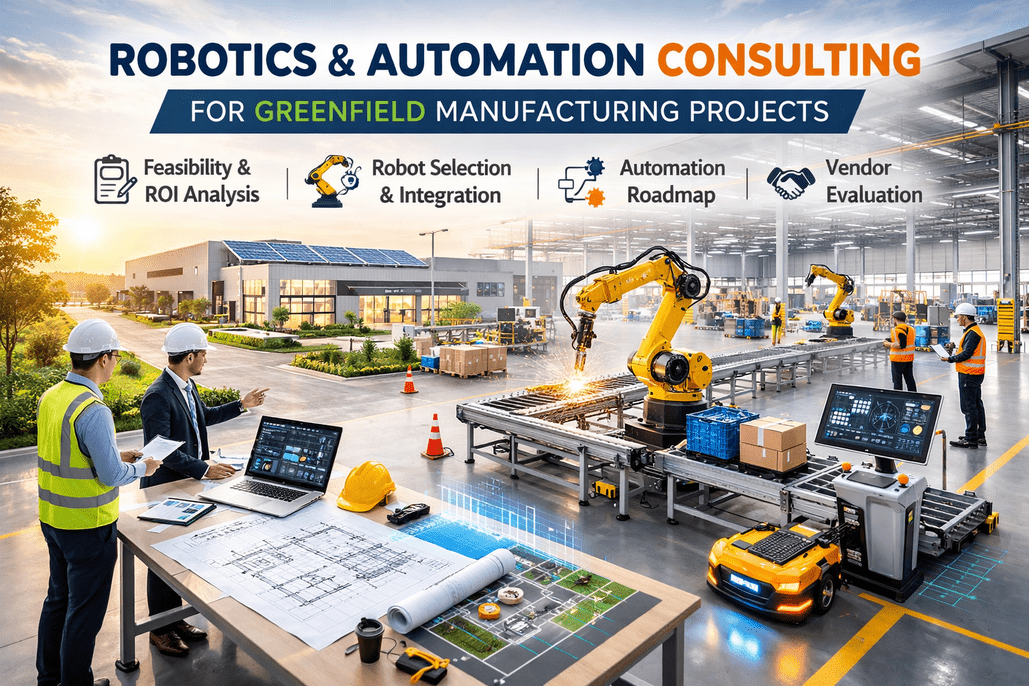
The smartest greenfield warehouses in 2026 aren't built around racking and forklifts—they're designed around data flows, robot fleets, and real-time traceability. With 65% of warehouses planning to integrate AMRs and WMS investment ROI averaging 12-24 months, the design decisions you make before breaking ground determine whether you achieve day-one operational excellence or spend years retrofitting. This guide shows you how to design your warehouse automation architecture the right way—from the start.
Greenfield Warehouse Design 2026
WMS + AMR + Traceability
The Three Pillars of Modern Warehouse Design
01
WMS
Warehouse Management System from Day One
02
AMR Fleet
Autonomous Mobile Robot Orchestration
03
Traceability
Full Order Visibility from Dock to Door
The 2026 Warehouse Automation Landscape
Orchestration-first design is the defining trend of 2026. Point solutions hit ceilings—merge starvation, congestion, manual resets—unless a higher layer manages shared capacity and priorities. The most successful facilities build mixed-robot fleets coordinated through centralized orchestration layers.
$30B
Global Warehouse Automation Market 2026
65%
Warehouses Planning AMR Integration
30-50%
Productivity Gains with Fleet Management
19.5%
AMR Market CAGR Through 2032
The Greenfield Design Framework
Designing a warehouse from scratch gives you advantages that brownfield retrofits can never achieve. Here's the framework that separates world-class facilities from average operations.
Warehouse Management System
Inventory visibility
Order management
Slotting optimization
Labor planning
+
Warehouse Execution System
Real-time orchestration
Task sequencing
Traffic management
Exception handling
Fleet Orchestration Platform
Multi-robot coordination
Dynamic path planning
Charging optimization
Predictive maintenance
Mixed-fleet support
Real-time rerouting
Conveyors
Predictive maintenance sensors
AS/RS
Automated storage/retrieval
Pick Stations
Goods-to-person design
Charging Zones
Strategic AMR charging
Planning a Greenfield Warehouse?
Our team helps you design automation-ready facilities with integrated WMS, AMR fleet management, and predictive conveyor maintenance from day one.
AMR Fleet Management: The Brain of Modern Warehouses
Fleet management software has become the "central nervous system" of automated warehouses, coordinating all hardware resources and operational processes in real time. Unlike basic robot controllers, modern orchestration platforms manage multi-brand robot fleets across hundreds of units.
37%
Pick Rate Improvement
Route optimization algorithms improve picking efficiency across the entire fleet
44%
Congestion Reduction
Traffic control prevents bottlenecks at merge points and picking stations
82%
WMS Integration Rate
Logistics deployments connect AMR fleets directly to warehouse management systems
Ready to optimize your robot fleet? Schedule a fleet management demo to see orchestration in action.
Day-One Traceability: From Dock to Door
Traceability isn't just for compliance—it's a competitive advantage. Real-time visibility into every product movement enables faster order fulfillment, accurate inventory counts, and instant response to customer inquiries.
1
Receiving
Barcode/RFID scan at dock door, WMS creates inventory record
2
Putaway
AMR transports to optimized location, system updates position
3
Picking
Order triggers AMR retrieval, each pick verified by scan
4
Shipping
Final scan links order to carrier, customer gets tracking
Conveyor Maintenance: Predictive, Not Reactive
Conveyors are the arteries of your warehouse. When they stop, everything stops. Predictive maintenance sensors catch issues before failures, reducing unplanned downtime and extending equipment life.
Detects bearing wear, motor issues, and belt misalignment before breakdown
Tracks utilization patterns to optimize maintenance schedules and spare parts inventory
iFactory CMMS generates maintenance tasks automatically from sensor alerts
Want predictive maintenance for your conveyors? Connect with our CMMS team for integration options.
Design Checklist: Greenfield Warehouse
Before breaking ground, validate these requirements. Missing any creates commissioning risk that compounds as the project progresses.
Network infrastructure for real-time data
ERP/TMS integration architecture
Mobile device deployment plan
Barcode/RFID coverage mapping
Floor flatness specifications (±3mm)
Charging station locations & power
Traffic flow and aisle width design
Fleet management software selection
Scan point locations at every handoff
Label printing station placement
Data retention and compliance rules
Exception handling workflows
Frequently Asked Questions
QWhat's the difference between WMS and WES?
WMS (Warehouse Management System) handles inventory tracking, order management, and labor planning at a higher level. WES (Warehouse Execution System) operates at finer granularity—allocating tasks by the second, coordinating AMRs, conveyors, and AS/RS in real time. Modern greenfield warehouses need both, integrated into a unified orchestration platform.
QHow many AMRs do I need for a new warehouse?
Fleet size depends on throughput requirements, warehouse layout, and shift configuration. A typical 100,000 sq ft facility might start with 15-30 AMRs. The key is selecting fleet management software that scales—iFactory's platform supports fleets from 10 to 300+ robots with the same orchestration layer.
QWhat ROI can I expect from WMS implementation?
Most WMS implementations achieve ROI within 12-24 months through improved inventory accuracy (reducing stockouts and overstock), labor efficiency gains (15-30%), and faster order fulfillment. Greenfield deployments often see faster ROI because there's no legacy system migration overhead.
QCan I use AMRs from different vendors in one warehouse?
Yes—this is called a "mixed-fleet" environment. The key is fleet orchestration software that can coordinate multi-brand robots through a centralized layer. Without proper orchestration, mixed fleets create congestion, duplicated tasks, and traffic conflicts. iFactory's platform supports vendor-agnostic fleet management.
QHow does iFactory support greenfield warehouse design?
iFactory provides integrated software for robot fleet management, predictive conveyor maintenance, and asset tracking—all connected to your WMS. We help you design automation-ready facilities during the planning phase, then maintain your equipment for maximum uptime once you're operational.
Design Your Greenfield Warehouse for Day-One Excellence
Get WMS integration, AMR fleet management, and predictive conveyor maintenance designed into your facility from the start—not retrofitted later.