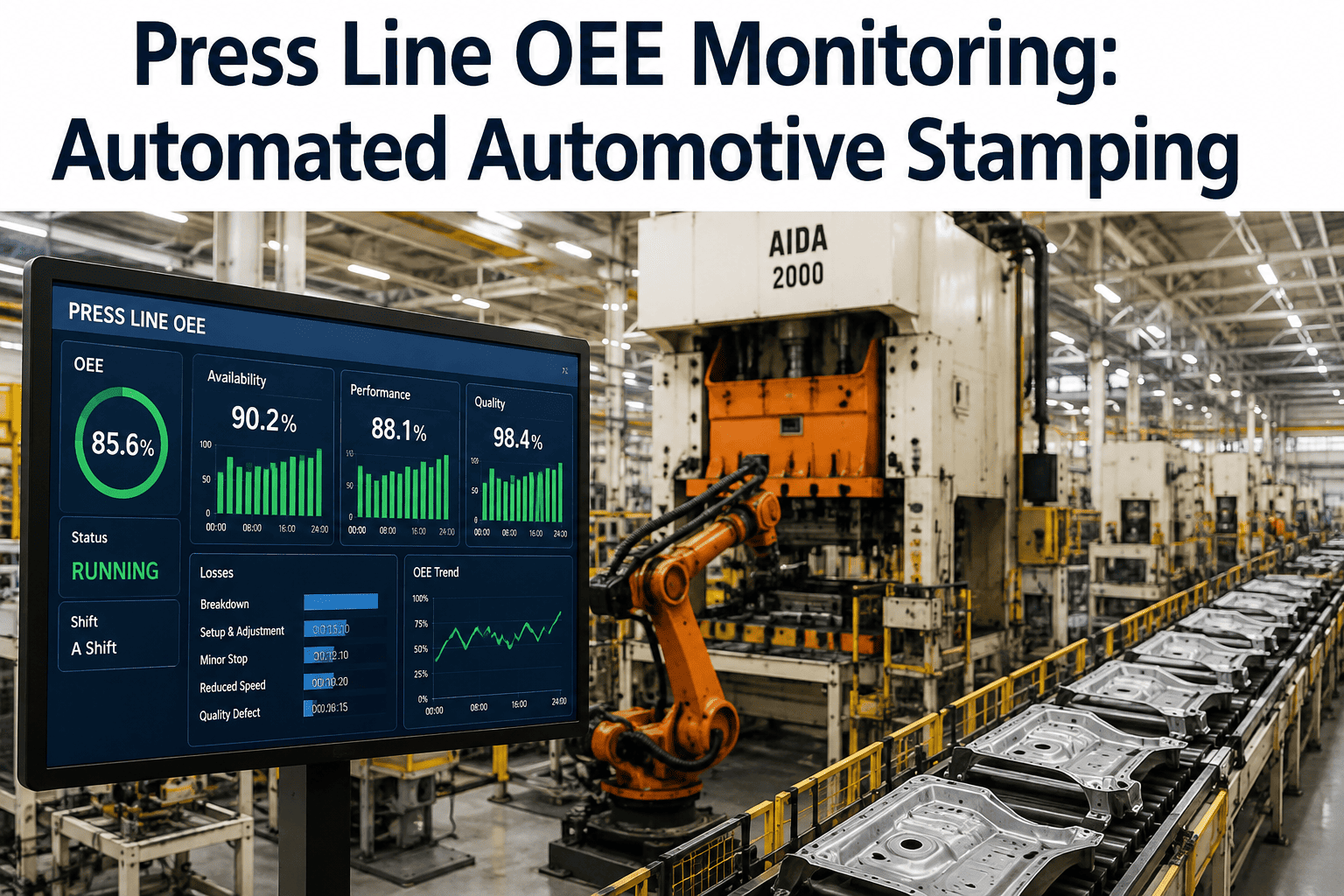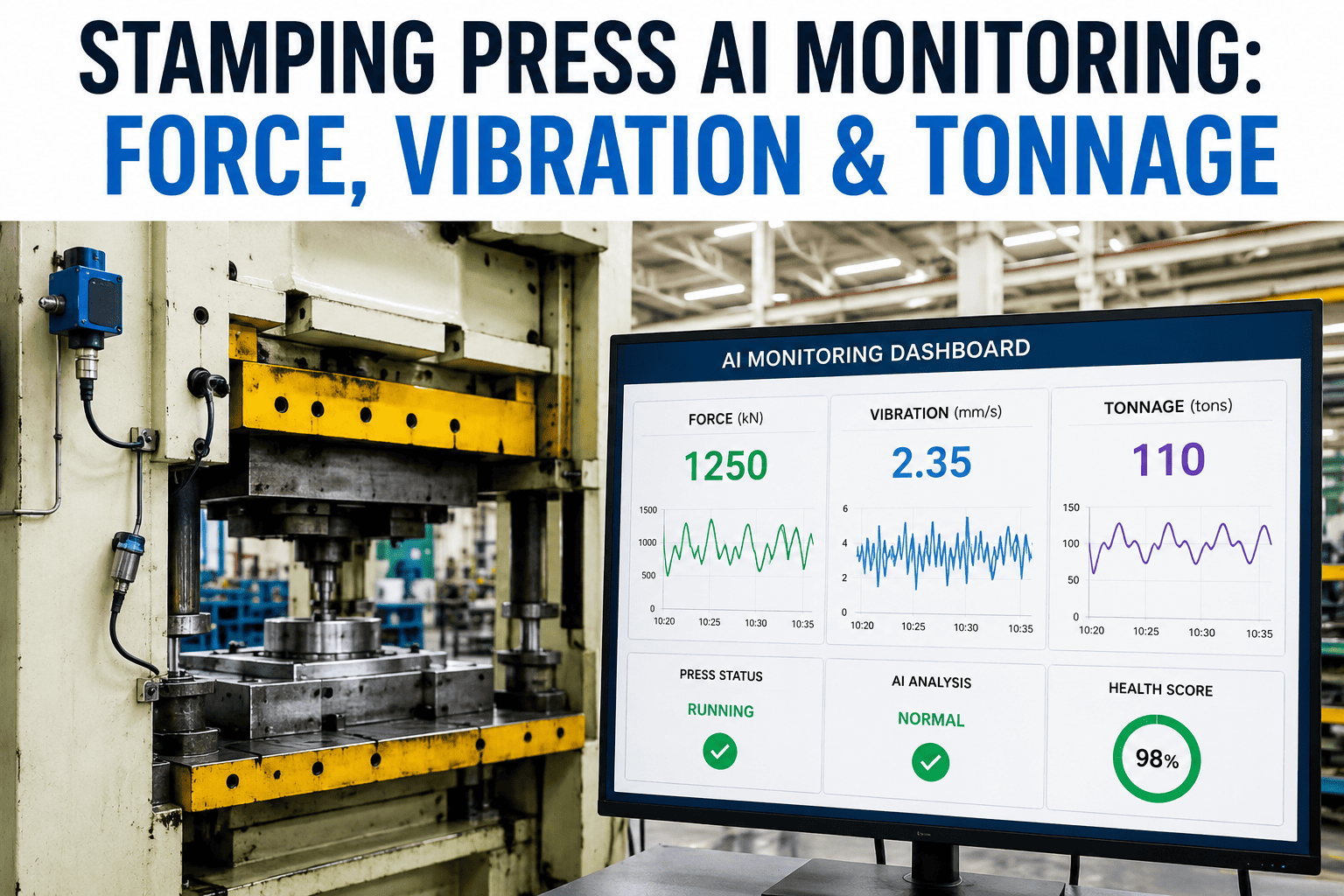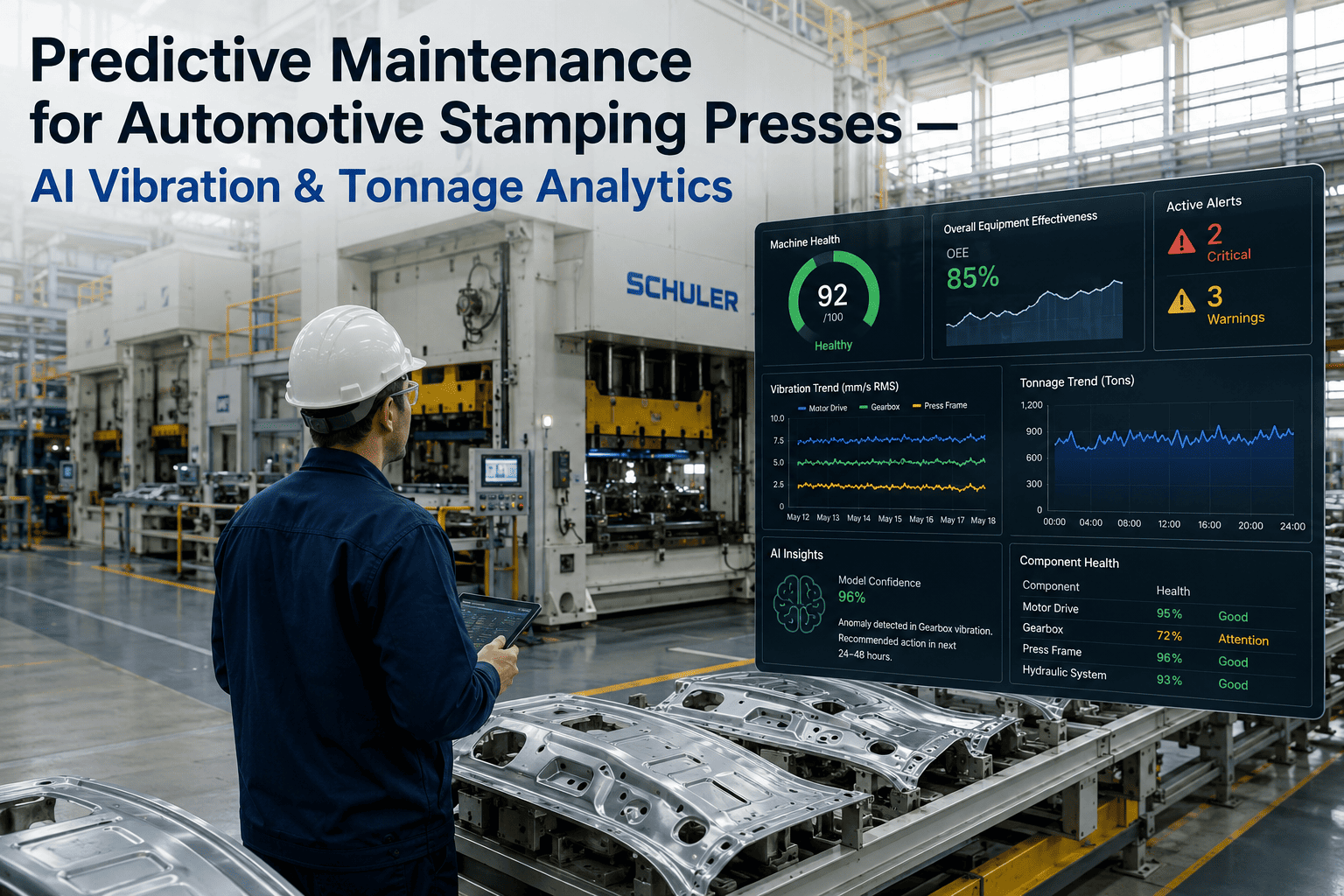
In the high-stakes world of automotive manufacturing, a single unplanned stamping press failure can halt an entire production line, costing tens of thousands of dollars per minute. Traditional reactive maintenance leaves you scrambling for replacement parts and skilled technicians, while preventive maintenance often replaces components too early or too late. The solution lies in predictive maintenance powered by artificial intelligence. By continuously analyzing vibration signatures, tonnage curves, and die wear patterns, AI systems can forecast press failures weeks before they occur. This allows maintenance managers to schedule interventions during planned downtime, dramatically improving overall equipment effectiveness (OEE). In this comprehensive guide, we explore how AI-driven predictive maintenance transforms stamping press operations, reduces costs, and boosts productivity. Discover the technologies, implementation strategies, and real-world benefits that make this approach indispensable for modern automotive plants. Learn how our AI solutions can optimize your stamping press maintenance.
90%
Reduction in unplanned downtime with AI predictive maintenance
4 Weeks
Average advance warning of press failures
40%
Lower maintenance costs through optimized scheduling
Transform Your Stamping Press Maintenance Today
Stop reacting to breakdowns. Start predicting failures with AI-driven insights. Our expert team will help you implement a tailored predictive maintenance strategy that maximizes uptime and reduces costs.
Understanding Vibration Signatures
Every stamping press emits a unique vibration signature during operation. Healthy presses produce consistent, low-amplitude vibrations across specific frequency bands. When components such as bearings, gears, or hydraulic systems begin to degrade, these signatures change. AI algorithms trained on thousands of hours of press data can detect subtle anomalies that human operators miss. For example, an increase in high-frequency vibration often indicates bearing wear, while low-frequency shifts may signal misalignment or imbalance. By continuously monitoring these patterns, the system provides early warnings, allowing you to investigate and address issues before they escalate into catastrophic failures. This proactive approach not only extends component life but also prevents secondary damage to dies and other expensive tooling.
Vibration frequency spectrum analysis
Tonnage Curve Analysis
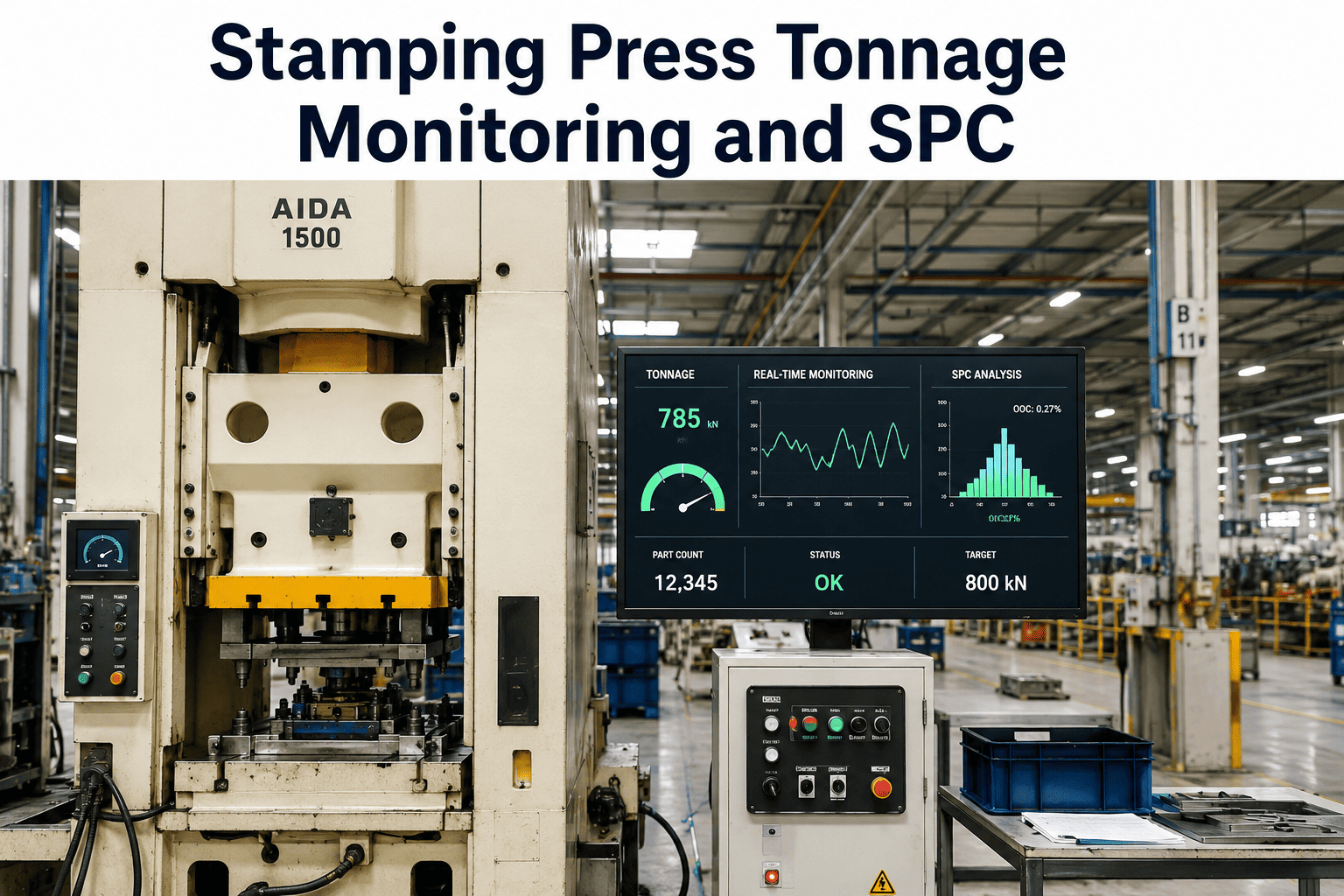
Tonnage curves represent the force applied by the press during each stroke. In a healthy press, these curves follow a predictable pattern that corresponds to the material forming process. Changes in the curve shape, peak tonnage, or duration can indicate issues such as die wear, material variation, or press overload. AI models analyze these curves in real-time, comparing them against historical baselines and ideal profiles. For instance, a gradual increase in peak tonnage may suggest die dulling, while a sudden spike could indicate a double-hit or material jam. By detecting these deviations early, maintenance teams can schedule die sharpening or replacement during planned downtime, avoiding costly emergency repairs and quality defects. Tonnage analysis also helps optimize process parameters, ensuring consistent part quality and reducing scrap rates.
Tonnage curve deviation detection
Die Wear Prediction
Dies are the heart of any stamping operation, and their wear directly impacts part quality and press uptime. Traditional die maintenance relies on fixed schedules or visual inspections, which often miss gradual wear patterns. AI predictive maintenance uses data from vibration sensors, tonnage monitors, and even acoustic emissions to model die degradation over time. Machine learning algorithms correlate subtle changes in these signals with known wear mechanisms, such as chipping, cracking, or abrasive wear. The system can predict when a die will reach its end of life, allowing you to plan refurbishment or replacement during scheduled shutdowns. This eliminates unexpected die failures that cause extended downtime and expensive last-minute tooling changes. Furthermore, the AI can recommend optimal operating parameters to minimize wear, extending die life and reducing overall tooling costs.
Die wear progression timeline
Key Benefits of AI-Powered Predictive Maintenance
Reduced Unplanned Downtime
By predicting failures weeks in advance, you can schedule maintenance during planned downtime, eliminating surprise breakdowns that halt production. Studies show a 70-90% reduction in unplanned downtime after implementing AI predictive maintenance.
Extended Equipment Life
Early detection of wear and misalignment allows for timely interventions that prevent cascading damage. Components such as bearings, gears, and dies last significantly longer when maintained proactively rather than reactively.
Lower Maintenance Costs
Optimized scheduling reduces overtime labor, emergency shipping costs for parts, and the need for expensive rush repairs. Overall maintenance spend can decrease by 25-40% while improving equipment reliability.
Improved Part Quality
Consistent press operation and die condition directly translate to higher quality stamped parts. AI monitoring catches process deviations early, reducing scrap rates and rework, which saves material and labor costs.
Data-Driven Decision Making
Maintenance managers gain actionable insights from real-time data and historical trends. Instead of relying on intuition, you can make informed decisions about when to repair, replace, or optimize equipment and processes.
Enhanced Safety
Predicting mechanical failures reduces the risk of catastrophic events like press crashes or flying debris. A safer work environment protects operators and minimizes liability, while also ensuring regulatory compliance.
Implementation Roadmap for Stamping Press Predictive Maintenance
Sensor Installation & Data Collection
Deploy vibration sensors on key press components (bearings, gears, hydraulic systems) and integrate tonnage monitoring systems. Collect baseline data for at least one full production cycle to establish normal operating parameters.
AI Model Training
Use historical maintenance records and sensor data to train machine learning models that recognize failure patterns. The AI learns to differentiate between normal wear, process variations, and impending failures with high accuracy.
Dashboard & Alert Configuration
Set up real-time dashboards that display press health metrics, vibration trends, and tonnage curves. Configure alerts for early warning thresholds, ensuring maintenance teams receive notifications via email, SMS, or mobile app.
Pilot & Validation
Run the system on a single press or small group of presses to validate predictions. Compare AI-flagged issues with actual maintenance findings to refine model accuracy. Typically, 3-6 months of pilot data is sufficient for validation.
Full Deployment & Optimization
Roll out the system across all stamping presses, integrating with existing CMMS or ERP systems. Continuously retrain models with new data to improve prediction accuracy and adapt to changing production conditions.
Frequently Asked Questions
How does AI predict stamping press failures weeks in advance?
AI models analyze continuous streams of sensor data, including vibration, tonnage, temperature, and acoustic emissions. By learning the normal operating patterns of each press component, the AI can detect minute deviations that precede failures. For example, a gradual increase in vibration amplitude at a specific frequency may indicate bearing degradation, which typically worsens over weeks. The model correlates these patterns with historical failure data to estimate remaining useful life. This allows maintenance teams to receive alerts with sufficient lead time to plan interventions during scheduled downtime. Contact our support team to learn how we tailor these models to your specific press types and operating conditions.
What types of sensors are needed for predictive maintenance on stamping presses?
Typical sensor setups include accelerometers for vibration measurement on bearings, gearboxes, and motor mounts; load cells or strain gauges for tonnage monitoring on the press frame; and thermocouples for temperature monitoring of hydraulic fluid and bearings. Some advanced systems also use acoustic emission sensors to detect high-frequency stress waves from cracks or wear. The exact sensor configuration depends on press design, criticality, and budget. Our experts can help you select the right sensors and ensure proper installation for maximum data quality. Book a consultation to discuss your specific needs and get a customized sensor plan.
How does tonnage monitoring help detect die wear?
Tonnage curves show the force applied during each press stroke. As a die wears, the force required to form the part changes. For example, a dull die requires higher tonnage to achieve the same deformation, resulting in a higher peak on the curve. Conversely, a cracked die may cause a sudden drop in tonnage during the stroke. AI algorithms compare real-time tonnage curves to a baseline profile and flag deviations that exceed normal variation. This early warning allows maintenance to inspect and service dies before they produce defective parts or cause press overload. Learn more about our tonnage analysis features and how they integrate with your existing monitoring systems.
Can predictive maintenance be integrated with my existing CMMS or ERP system?
Yes, modern AI predictive maintenance platforms offer APIs and standard connectors to integrate with popular CMMS (Computerized Maintenance Management Systems) and ERP (Enterprise Resource Planning) software. This allows automatic work order generation when a prediction threshold is crossed, and seamless data flow for reporting and analysis. Integration ensures that maintenance teams can act on AI insights without switching between multiple systems. Our team has experience integrating with SAP, Oracle, Maintenance Connection, and many others. Schedule a demo to see how integration works in your environment.
What is the typical ROI for implementing AI predictive maintenance on stamping presses?
ROI varies based on press utilization, current maintenance practices, and production value. However, typical results include a 70-90% reduction in unplanned downtime, 25-40% reduction in maintenance costs, and a 10-20% increase in overall equipment effectiveness (OEE). For a mid-sized automotive plant with 10 stamping presses, this can translate to annual savings of $500,000 to $2 million. Most implementations achieve payback within 6-12 months. Contact us for a free ROI calculator tailored to your operation.
Ready to Eliminate Unplanned Stamping Press Downtime?
Join leading automotive manufacturers who have transformed their maintenance operations with AI-powered predictive analytics. Our proven solution delivers measurable results quickly, with minimal disruption to your production.