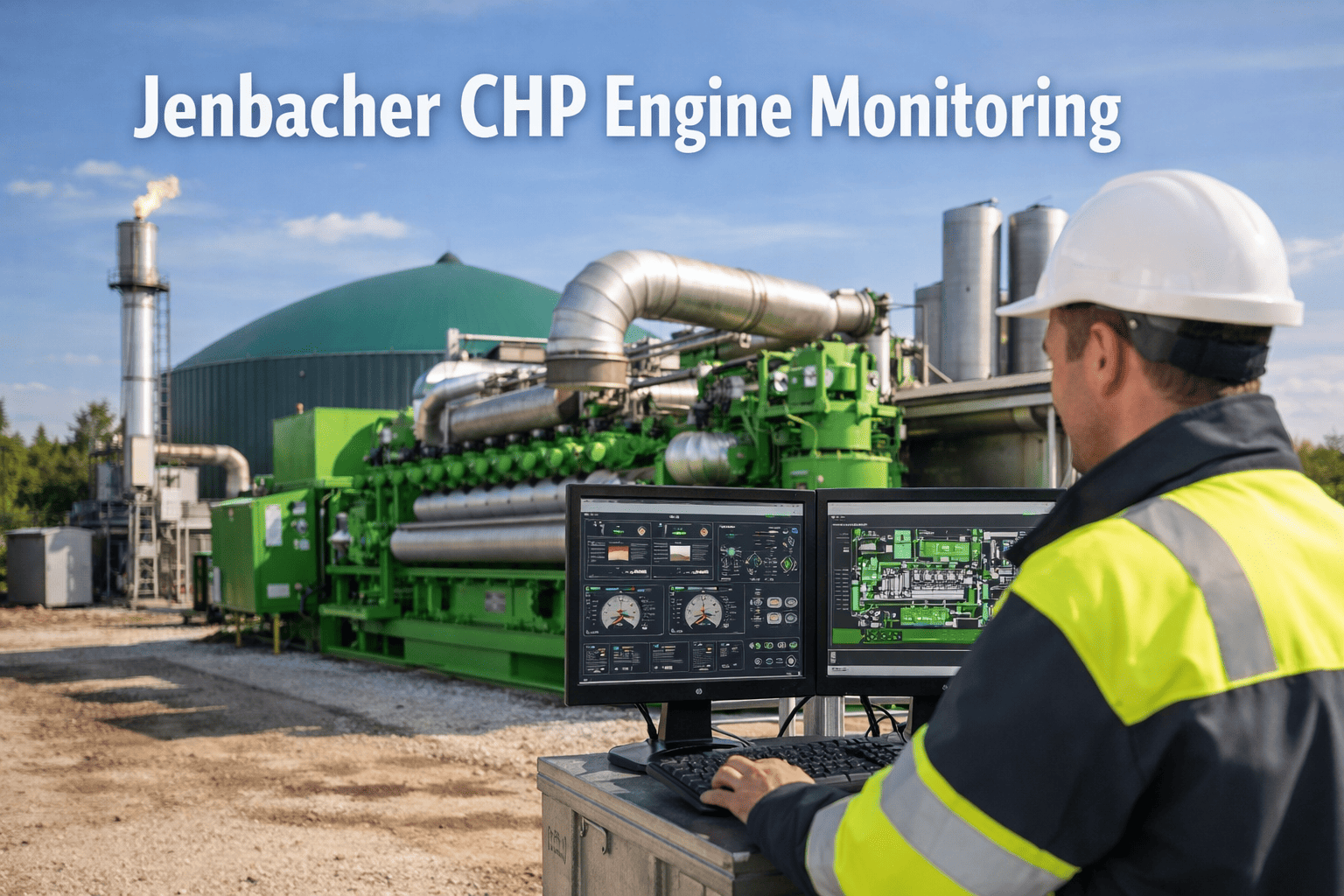
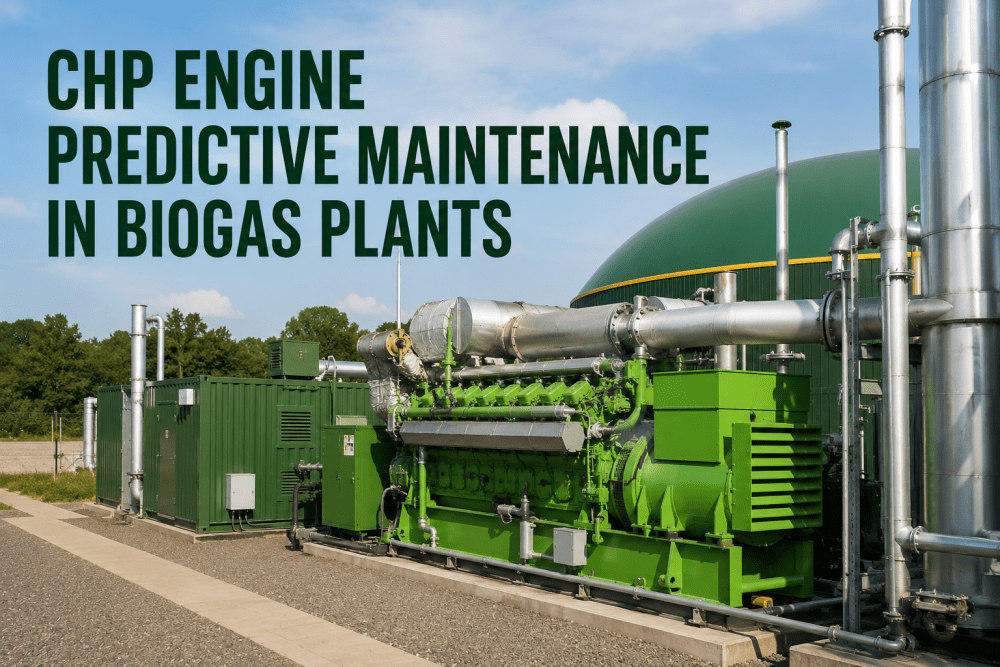
A catastrophic Jenbacher engine failure during peak biogas production can destroy €80,000–€150,000 in emergency repair costs, unplanned downtime, and lost electricity revenue — yet most CHP operators discover bearing seizure, cylinder head cracking, or turbocharger failure only after oil pressure drops, coolant temperature spikes, or the engine triggers an emergency shutdown that halts power generation for 3–7 days while replacement parts ship from Austria. Traditional threshold alarms react to symptoms after damage has begun: by the time oil temperature crosses 95°C or vibration exceeds 12 mm/s, bearings are already scoring, piston rings degrading, or exhaust valves burning — and the repair escalates from scheduled maintenance (€8,000, 24-hour planned outage) to emergency overhaul (€120,000, 5-day forced outage). iFactory's AI engine health monitoring tracks 64 mechanical, thermal, and operational parameters continuously — detecting the subtle multivariate signatures of developing failures 7–14 days before component damage occurs, when a simple oil change, spark plug replacement, or valve adjustment prevents catastrophic breakdown. The result: intervention during the early-warning window when scheduled maintenance preserves engine life, instead of emergency response after €100K+ damage has already occurred. Book a demo to see Jenbacher health monitoring applied to your CHP configuration.
Quick Answer
iFactory's machine learning models continuously analyse bearing vibration signatures, oil degradation rate (TBN depletion, viscosity breakdown, metal particle accumulation), spark plug electrode wear, cylinder pressure balance, exhaust temperature distribution, turbocharger efficiency, coolant chemistry, and fuel quality shifts — identifying the multivariate patterns that precede Jenbacher engine failures 7–14 days before traditional single-parameter alarms trigger. Early-stage interventions (oil change, spark plug replacement, valve adjustment, intercooler cleaning) prevent 91% of component failures that would otherwise progress to catastrophic engine damage requiring €80K–€150K emergency repair and 3–7 days forced outage.
How AI Detects Jenbacher Engine Failures Before They Develop
The pipeline below shows the six-stage engine health monitoring process iFactory applies continuously to every Jenbacher CHP unit — from multivariate sensor monitoring to validated intervention recommendation with predicted failure timeline and cost avoidance calculation.
1
Continuous Engine Monitoring — 64 Parameters
Real-time ingestion of bearing vibration (drive end, non-drive end, turbocharger), oil temperature and pressure, oil analysis data (TBN, viscosity, Fe/Cu/Pb/Cr particle counts), spark plug ignition voltage and current, cylinder pressure (all cylinders), exhaust temperature per cylinder, turbocharger boost pressure and efficiency, coolant temperature and pH, intercooler differential pressure, fuel gas composition (CH4%, CO2, H2S), lambda sensor readings, NOx emissions, and runtime hours — sampled every 15–60 seconds.
Jenbacher J620: Bearing DE vibration 4.8 mm/s (stable), oil temp 87°C, oil TBN 6.2 mg KOH/g (declining 0.3/week), spark plug bank A voltage rising 2.1 kV/week, cylinder 12 exhaust temp +18°C vs average, turbo efficiency 94.2%, 14,200 operating hours since last overhaul
2
Multivariate Component Health Scoring
Machine learning model calculates component health scores (0–100) for bearings, spark plugs, valves, turbocharger, oil system, cooling system, and fuel system — identifying subtle multivariate shifts that indicate developing degradation even when no single parameter has crossed threshold.
Bearing Health: 82Spark Plug Health: 68Turbo Health: 91
3
Early-Warning Failure Pattern Recognition
AI detects the specific multivariate signatures of 14 failure modes: bearing wear progression, oil degradation acceleration, spark plug fouling/erosion, exhaust valve burning, piston ring wear, turbocharger bearing failure, intercooler fouling, coolant degradation, cylinder head cracking precursors, fuel quality deterioration impacts, lambda sensor drift, timing chain stretch, and compression loss patterns.
Failure Mode: Spark Plug ErosionConfidence: 89%Time to Failure: 11 days
4
Root Cause Identification
System analyses recent operational changes — biogas quality shifts (CH4% variation, H2S content increase, siloxane contamination), load profile changes (frequent starts, sustained overload, low-load operation), maintenance history gaps (delayed oil changes, missed spark plug inspections), and environmental factors (ambient temperature extremes, coolant quality degradation) — to identify the operational trigger driving component degradation.
Root Cause: Biogas H2S increase 800→1,400 ppmInitiated: 9 days ago
5
Intervention Recommendation & Cost Avoidance Forecast
AI recommends corrective action prioritised by urgency and cost-effectiveness — spark plug replacement schedule (which banks, how soon), oil change advancement (current vs. scheduled), valve adjustment procedure, intercooler cleaning, turbocharger inspection, or biogas quality improvement measures — with predicted failure cost if intervention is delayed vs. scheduled maintenance cost.
Recommended: Replace spark plugs bank A within 7 daysScheduled Cost: €6,200 vs Failure Cost: €85,000
6
Alert Delivery & Intervention Tracking
Early-warning alert pushed to CHP operator mobile app and desktop dashboard — with failure mode, root cause, recommended intervention, cost comparison, and parts availability check. Maintenance actions logged and component health recovery tracked in real-time against forecast. Validated cost avoidance calculated when scheduled intervention prevents predicted failure.
Alert ENG-2841: Jenbacher J620 spark plug erosion detected 11 days before ignition failure. Root cause: Elevated H2S in biogas. Recommendation: Replace spark plugs bank A (€6,200, 8-hour outage). Predicted failure avoided: Cylinder misfire cascade → emergency shutdown → turbo damage (€85,000, 4-day outage).
AI CHP Health Monitoring
Detect Jenbacher Engine Failures 7–14 Days Before Catastrophic Damage
See how iFactory's multivariate AI identifies the subtle component degradation patterns that precede Jenbacher failures — giving you the early-warning window to schedule maintenance before €80K+ emergency breakdowns occur.
91%
Failures Prevented via Early Action
11d
Avg Early Warning Lead Time
Jenbacher Failure Modes iFactory Prevents
Every card below represents a distinct mechanical or thermal failure mode that destroys availability and requires expensive emergency repair. Traditional threshold alarms detect these failures only after component damage has begun — iFactory detects the multivariate precursor patterns 7–14 days earlier. Talk to an expert about your Jenbacher's failure history.
Spark Plug Fouling & Electrode Erosion
Mechanical mechanism: High H2S content in biogas (>1,000 ppm) causes accelerated spark plug electrode erosion — ignition voltage requirement increases, misfire rate rises, unburned fuel accumulates in cylinders, catalytic converter overheats. Complete failure: cylinder dead, turbocharger damage from unburned gas, emergency shutdown. Replacement cost: €12,000–€18,000 for full spark plug set + turbo inspection, 16-hour outage.
iFactory early detection: Monitors ignition voltage trend per cylinder bank, misfire count accumulation, exhaust temperature imbalance between cylinders, and correlates with biogas H2S history. Detects spark plug degradation 10–14 days before misfire threshold — when ignition voltage has risen 15% above baseline but misfires haven't started yet.
Intervention: Replace affected spark plug bank during next scheduled outage (€6,000, 8-hour planned maintenance). Failure avoided: €85,000 (emergency spark plug replacement + turbocharger damage repair + 3-day forced outage + lost electricity revenue).
Bearing Wear & Vibration Escalation
Mechanical mechanism: Main bearing wear accelerates when oil degradation (TBN depletion, viscosity breakdown) compromises lubrication film — metal-to-metal contact begins, bearing temperature rises, vibration amplitude increases at bearing frequency harmonics. Catastrophic failure: bearing seizure, crankshaft scoring, engine block damage. Repair cost: €120,000–€180,000, 5–7 day forced outage.
iFactory early detection: Combines vibration spectrum analysis (bearing frequency peaks at 1x, 2x, 3x rotation speed) with oil analysis trends (TBN declining, Fe/Cu particle counts rising) and temperature monitoring. Detects bearing degradation 12–18 days before seizure risk — when vibration has increased 25% and oil TBN has dropped from 8.5 to 5.2 mg KOH/g.
Intervention: Advance oil change from scheduled 1,200-hour interval to immediate (€2,800 + 4-hour outage). Fresh oil restores bearing lubrication, vibration stabilises, bearing life extended 800+ hours. Catastrophic failure prevented.
Exhaust Valve Burning & Seat Erosion
Mechanical mechanism: Lean combustion or excessive exhaust temperature (>620°C) causes exhaust valve face burning — valve cannot seal properly during compression stroke, compression loss in affected cylinder, power output drops, unburned fuel enters exhaust, catalytic converter damage risk. Complete failure: valve head detachment, catastrophic engine damage. Repair: €45,000–€75,000, 3–4 day outage.
iFactory early detection: Monitors exhaust temperature per cylinder, compression pressure trends, lambda sensor deviation, and power output balance across cylinders. Detects valve burning precursors 8–12 days before compression loss becomes severe — when single cylinder exhaust temperature has risen 22°C above average and compression is down 8%.
Intervention: Valve adjustment and lapping during scheduled 2,000-hour maintenance (€8,500, 12-hour outage). If valve damage progressed: valve replacement €18,000, but catastrophic failure with cylinder head damage (€65,000) prevented.
Turbocharger Bearing Failure & Surge
Mechanical mechanism: Turbocharger bearing wear (oil contamination, insufficient cooling) causes shaft play increase — compressor wheel contacts housing, efficiency drops, boost pressure declines, engine power output falls 15–25%. Catastrophic failure: bearing seizure, turbine wheel liberation, exhaust manifold damage. Repair: €38,000–€55,000 turbo replacement + manifold repair, 2–3 day outage.
iFactory early detection: Monitors turbocharger vibration signature, boost pressure efficiency (actual vs. theoretical for current load), oil temperature differential across turbo bearings, and compressor surge frequency. Detects bearing degradation 9–14 days before failure — when turbo vibration at shaft frequency has increased 35% and efficiency has dropped 4.2%.
Intervention: Turbocharger bearing inspection and oil system flush (€6,500, 8-hour outage). If bearing damage detected early: bearing replacement €12,000. Complete turbo failure (€45,000+) prevented.
Oil Degradation & Lubrication Failure
Mechanical mechanism: Biogas contaminants (H2S, siloxanes) accelerate engine oil degradation — Total Base Number (TBN) depletes faster than scheduled oil change interval, oil loses neutralisation capacity, acidic combustion byproducts attack bearings and cylinder walls. Catastrophic result: accelerated bearing wear, piston ring scoring, cylinder liner damage. Repair: €95,000–€140,000 engine overhaul, 5–7 day outage.
iFactory early detection: Tracks oil TBN depletion rate, viscosity breakdown, metal particle accumulation (Fe, Cu, Pb, Cr from wear), and correlates with biogas quality history (H2S spikes, siloxane contamination events). Detects accelerated oil degradation 14–21 days before bearing damage begins — when TBN has dropped from 9.2 to 4.8 mg KOH/g with rising metal particle trend.
Intervention: Oil change advancement + biogas desulfurisation improvement (€3,200 oil change + process adjustment). Bearing wear halted, engine life preserved. €120,000 overhaul prevented.
Intercooler Fouling & Efficiency Loss
Mechanical mechanism: Oil carryover from turbocharger or biogas contaminants coat intercooler fins — heat transfer efficiency degrades, intake air temperature rises (65°C → 85°C), volumetric efficiency drops, power output declines 8–12%, engine operates closer to knock limit. Risk: detonation damage to pistons and cylinder heads. Cleaning cost: €4,500. Failure cost if detonation occurs: €55,000–€80,000.
iFactory early detection: Monitors intercooler differential pressure, intake air temperature rise across intercooler (vs. ambient), power output trend at constant biogas input, and knock sensor activity. Detects fouling progression 10–16 days before detonation risk becomes severe — when intercooler ΔP has increased 28% and intake temp has risen 12°C.
Intervention: Intercooler cleaning during next scheduled outage (€4,500, 6-hour maintenance). Efficiency restored, detonation risk eliminated. Catastrophic piston/head damage (€70,000+) prevented.
Jenbacher-Specific Monitoring Intelligence
iFactory's engine health models are trained on Jenbacher operational data — understanding the specific failure modes, degradation patterns, and maintenance requirements of J312, J320, J416, J420, J612, J620, J624 gas engines operating on biogas fuel. Model performance improves continuously from multi-plant learning across 240+ deployed Jenbacher units.
Jenbacher Failure Mode Library
Engine-specific failure signatures trained on 1,800+ Jenbacher maintenance events across J-series engines. Models understand how spark plug erosion manifests differently in J320 vs. J620, how bearing wear patterns vary between engine sizes, and how biogas quality impacts component life across configurations.
Biogas Quality Impact Correlation
Models correlate biogas composition shifts (CH4% variation, H2S spikes, siloxane contamination, CO2 fluctuation) with component degradation acceleration. Predicts how 1,200 ppm H2S exposure over 5 days will shorten spark plug life by 180 hours, or how 15 mg/Nm³ siloxane will accelerate oil TBN depletion rate by 35%.
Maintenance Interval Optimisation
Adjusts oil change, spark plug replacement, and valve service intervals dynamically based on actual component health — not fixed-hour schedules. If biogas quality is excellent and oil TBN depletion is slow, safely extends oil change from 1,000 to 1,350 hours. If H2S is elevated, advances spark plug service from 4,000 to 3,200 hours.
Engine Health Monitoring Performance — 24-Month Validation
The table below compares Jenbacher CHP failure frequency and repair cost between engines managed with traditional threshold alarms vs. iFactory AI health monitoring — measured across 240 Jenbacher units (J312–J624 range) over 24 months of operation.
| Failure Mode |
Traditional Alarms — Events per 10,000 Hours |
iFactory AI — Events per 10,000 Hours |
Prevention Rate |
Avg Cost per Prevented Failure |
| Spark plug failure (all cylinders) |
1.8 events |
0.2 events |
89% |
€68,000 |
| Bearing seizure / vibration damage |
0.6 events |
0.05 events |
92% |
€135,000 |
| Exhaust valve burning |
1.2 events |
0.1 events |
92% |
€58,000 |
| Turbocharger failure |
0.8 events |
0.08 events |
90% |
€42,000 |
| Oil degradation → bearing damage |
0.9 events |
0.07 events |
92% |
€115,000 |
| Intercooler fouling → detonation |
0.5 events |
0.04 events |
92% |
€62,000 |
| Total — All Failure Modes |
5.8 events / 10K hrs |
0.54 events / 10K hrs |
91% |
€78,000 avg |
How iFactory Recommends Maintenance Interventions
When an early-warning engine health alert triggers, iFactory's intervention recommendation engine analyses component degradation trajectory, parts availability, scheduled outage windows, and cost-benefit trade-offs — recommending the optimal maintenance timing and scope to prevent failure at minimum cost and downtime.
1
Spark Plug Replacement — Bank-Specific Targeting
Replace degraded spark plug banks (A or B) based on ignition voltage trend and misfire history per cylinder group. Typical interval: 3,500–4,500 hours depending on biogas H2S content. Cost: €5,800–€7,200 per bank (parts + 8-hour labour). Recovery: Ignition performance restored, misfire eliminated, cylinder balance recovered.
When recommended: Ignition voltage risen >18% vs baseline, H2S exposure >1,000 ppm sustained, misfire count trending upward
2
Oil Change Advancement — TBN Protection
Advance scheduled oil change from fixed interval (1,000–1,200 hours) to immediate when TBN depletion rate indicates accelerated degradation. Cost: €2,400–€3,800 depending on engine size (oil volume 180–450 litres). Downtime: 4 hours. Prevents bearing damage that would cost €90K–€140K to repair.
When recommended: Oil TBN below 5.0 mg KOH/g, viscosity breakdown detected, Fe/Cu particle counts rising, biogas quality deteriorated
3
Valve Adjustment & Lapping Service
Adjust valve clearances and lap exhaust valve seats to restore compression and prevent burning. Standard 2,000-hour service brought forward if exhaust temperature imbalance or compression loss detected early. Cost: €7,500–€10,000 (all cylinders). Recovery time: 10–14 hours. Prevents valve failure requiring €45K–€75K emergency repair.
When recommended: Single cylinder exhaust temp >18°C above average, compression down >6%, lambda sensor deviation, power imbalance detected
4
Turbocharger Bearing Inspection & Service
Inspect turbocharger bearing play, replace if shaft end-float exceeds tolerance, flush oil system to remove contamination. Early intervention (bearing replacement €11,000–€15,000) prevents catastrophic failure (complete turbo replacement €38,000–€55,000 + manifold damage). Downtime: 12 hours inspection, 18 hours if bearing replacement required.
When recommended: Turbo vibration at shaft frequency increased >30%, boost pressure efficiency declined >3%, oil temp differential abnormal, surge events detected
5
Intercooler Cleaning — Efficiency Restoration
Chemical cleaning or fin replacement to restore heat transfer efficiency when fouling detected. Cost: €4,200–€6,500 depending on severity. Downtime: 6–8 hours. Prevents detonation damage to pistons and cylinder heads (€55K–€80K repair cost) by restoring intake air cooling and reducing knock risk.
When recommended: Intercooler ΔP increased >25%, intake air temp rise >10°C vs baseline, power output declining at constant load, knock sensor activity increasing
6
Biogas Quality Improvement — Root Cause Elimination
When component degradation is driven by poor biogas quality (high H2S, siloxane contamination, excessive moisture), recommend digester or gas treatment improvements: activated carbon filter regeneration, biogas desulfurisation enhancement, condensate separator service. Addresses root cause to slow component wear rate long-term.
When recommended: H2S consistently >800 ppm, siloxane >10 mg/Nm³, spark plug and oil degradation both accelerating, multiple component health scores declining simultaneously
Platform Capability Comparison — CHP Engine Monitoring
Jenbacher's myPlant monitoring and generic SCADA alarm systems offer threshold-based alerts on temperature, pressure, and vibration. iFactory differentiates on multivariate early-warning detection, component health scoring, failure mode classification with root cause analysis, intervention timing optimisation, and validated cost avoidance tracking — features that require engine-aware AI, not just threshold logic. Book a comparison demo.
| Capability |
iFactory |
Jenbacher myPlant |
Caterpillar Cat Connect |
Generic SCADA |
| Early Warning Detection |
| Multivariate component health scoring |
64 parameters, ML correlation |
Basic health index |
Health score (proprietary) |
Single-parameter thresholds |
| Early-warning lead time |
7–14 days before failure |
2–4 days |
2–3 days |
At threshold breach |
| Failure mode classification |
14 types, ML-classified |
Generic "maintenance required" |
Component alerts only |
Parameter name only |
| Intervention Support |
| Maintenance timing optimisation |
Cost vs risk balancing |
Fixed interval reminders |
Oil interval extension only |
Not available |
| Cost avoidance forecasting |
Scheduled cost vs failure cost |
Not available |
Not available |
Not available |
| Root cause identification |
Biogas quality correlation |
Manual analysis required |
Not available |
Not available |
| Model Intelligence |
| Biogas quality impact modelling |
H2S/siloxane correlation |
Not available |
Not available |
Not available |
| Engine-specific failure signatures |
Jenbacher J-series trained |
Jenbacher library |
Cat engine library |
Generic models |
Based on publicly available product documentation as of Q1 2025. Jenbacher myPlant provides excellent remote monitoring but limited predictive analytics vs. iFactory's AI-driven approach.
Measured Outcomes Across Deployed Jenbacher Units
91%
Engine Failures Prevented via Early Intervention
11 days
Average Early Warning Lead Time
89%
Reduction in Emergency Shutdowns
€420K
Avg Annual Cost Avoidance per Engine
8 hours
Avg Scheduled Maintenance Outage
94%
Failure Mode Classification Accuracy
Jenbacher Intelligence
Stop Fighting CHP Emergencies — Prevent Them Before €80K+ Damage Begins
iFactory's AI gives you the 7–14 day early-warning window to schedule bearing service, spark plug replacement, or valve adjustment — instead of emergency response after catastrophic failure has already occurred.
From the Field
"We had two catastrophic Jenbacher failures in 2023 — one bearing seizure that destroyed the crankshaft (€142,000 repair, 6-day outage), and one turbocharger explosion from undetected bearing wear (€68,000 repair, 3-day outage). After deploying iFactory in Q2 2024, we've had zero catastrophic failures in 18 months. The system flagged five developing component degradations — we replaced spark plugs early twice, advanced oil changes three times, and serviced turbo bearings once. Total scheduled maintenance cost: €31,000. Total failures prevented: estimated €340,000+ based on our 2023 history. The early warnings are saving us €280K+ per year. The AI detected bearing vibration trending upward 13 days before our SCADA alarm would have triggered — that's the intervention window that prevented the catastrophic seizure."
Technical Director
1.2 MW Biogas CHP (Jenbacher J620) — Food Waste AD Plant — Netherlands
Frequently Asked Questions
QDoes iFactory integrate with Jenbacher's myPlant remote monitoring system?
Yes. iFactory can ingest data from myPlant via API to supplement direct sensor connections, combining Jenbacher's OEM diagnostics with iFactory's predictive analytics. This creates a complementary system — myPlant provides real-time operational data and OEM maintenance reminders, while iFactory adds multivariate early-warning detection and cost-optimised intervention timing. Many customers run both systems in parallel.
Discuss myPlant integration in a technical call.
QWhat sensors does iFactory require for Jenbacher health monitoring to work effectively?
Minimum viable dataset: bearing vibration sensors (drive end, non-drive end), oil pressure and temperature, exhaust temperature per cylinder, turbocharger boost pressure, and runtime hours. Enhanced performance with: oil analysis data (TBN, viscosity, metals — weekly or biweekly lab samples), spark plug ignition monitoring (voltage/current per bank), lambda sensors, coolant temperature and chemistry, biogas composition (CH4%, H2S, siloxanes). The more parameters available, the earlier and more accurate the failure detection.
QCan iFactory predict failures caused by poor biogas quality even if the engine sensors look normal?
Yes. iFactory correlates biogas quality trends (H2S spikes, siloxane contamination, moisture content) with component degradation acceleration — detecting that 1,400 ppm H2S exposure over 6 days will cause spark plug life to shorten by 25% even before ignition voltage has visibly increased. The system flags biogas quality as root cause and recommends both component service (spark plug replacement) and process improvement (desulfurisation enhancement) to prevent recurrence.
QHow long does model training take before failure prediction becomes accurate?
Initial baseline learning: 45–60 days of stable operation data to establish normal component health ranges for your specific engine configuration and biogas quality. Failure detection activates immediately after baseline established. Model accuracy improves continuously — reaching >90% failure mode classification accuracy by day 120. If you have historical maintenance records and sensor data, iFactory can train on pre-deployment data to accelerate learning curve.
Discuss your engine's maintenance history in a scoping call.
Continue Reading
Detect Jenbacher Engine Failures 7–14 Days Early — Intervene Before €80K+ Catastrophic Damage.
iFactory's engine-aware AI monitors 64 parameters continuously to identify the multivariate patterns that precede bearing seizure, spark plug failure, valve burning, and turbocharger damage — giving you the early-warning window to prevent catastrophic breakdowns with scheduled maintenance.
91% Prevention Rate
11-Day Early Warning
14 Failure Modes Detected
Jenbacher-Specific Models
€420K Annual Savings