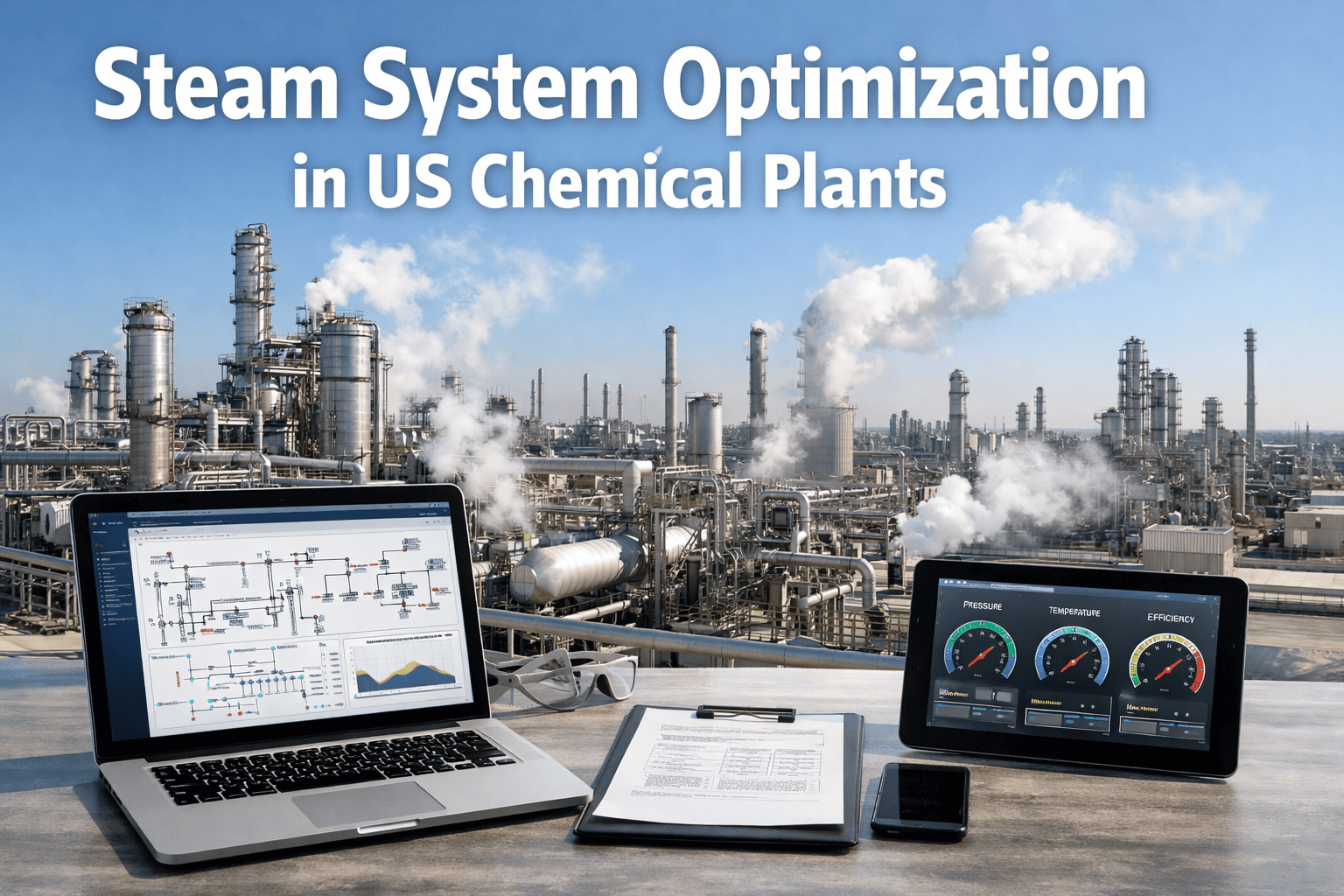
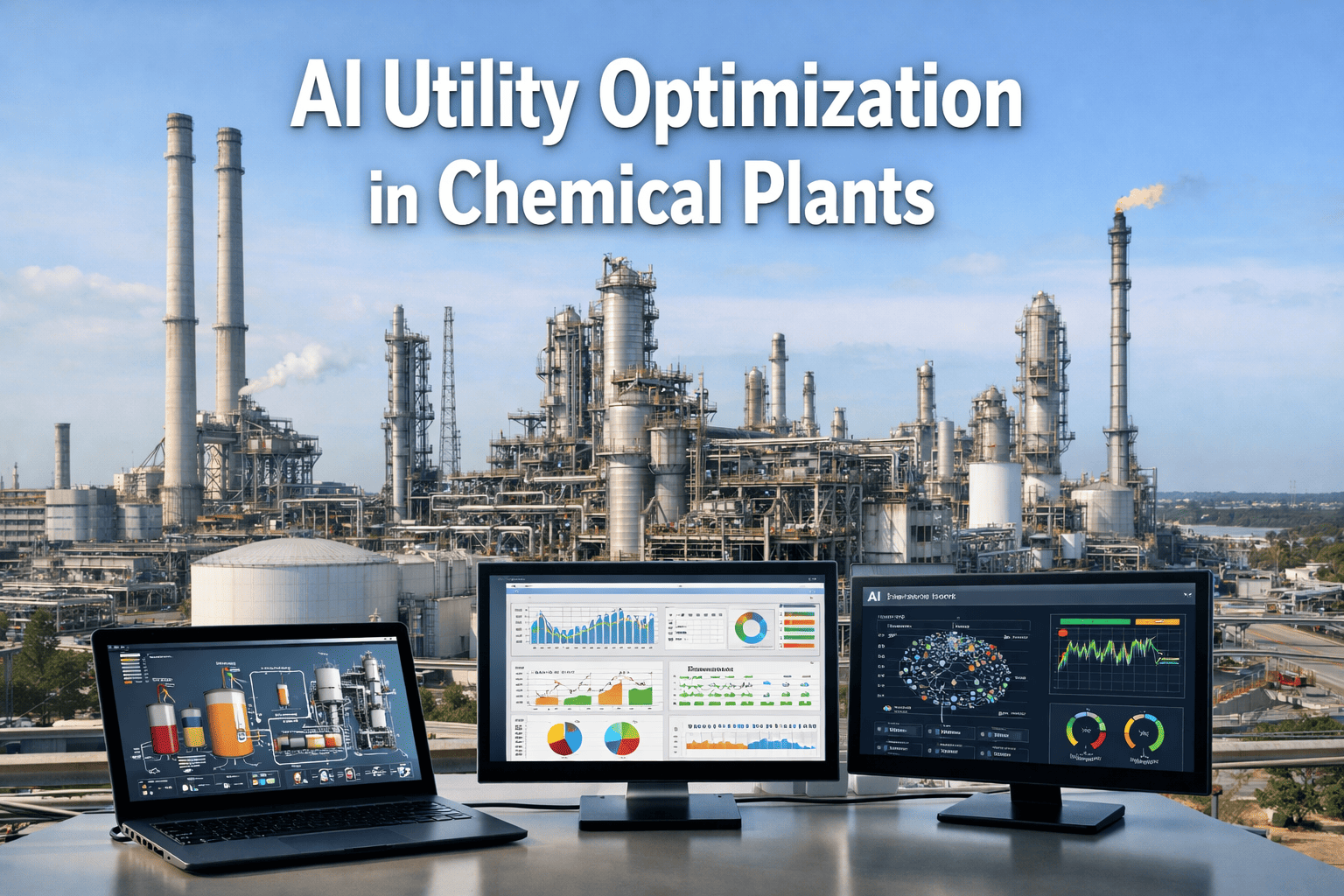
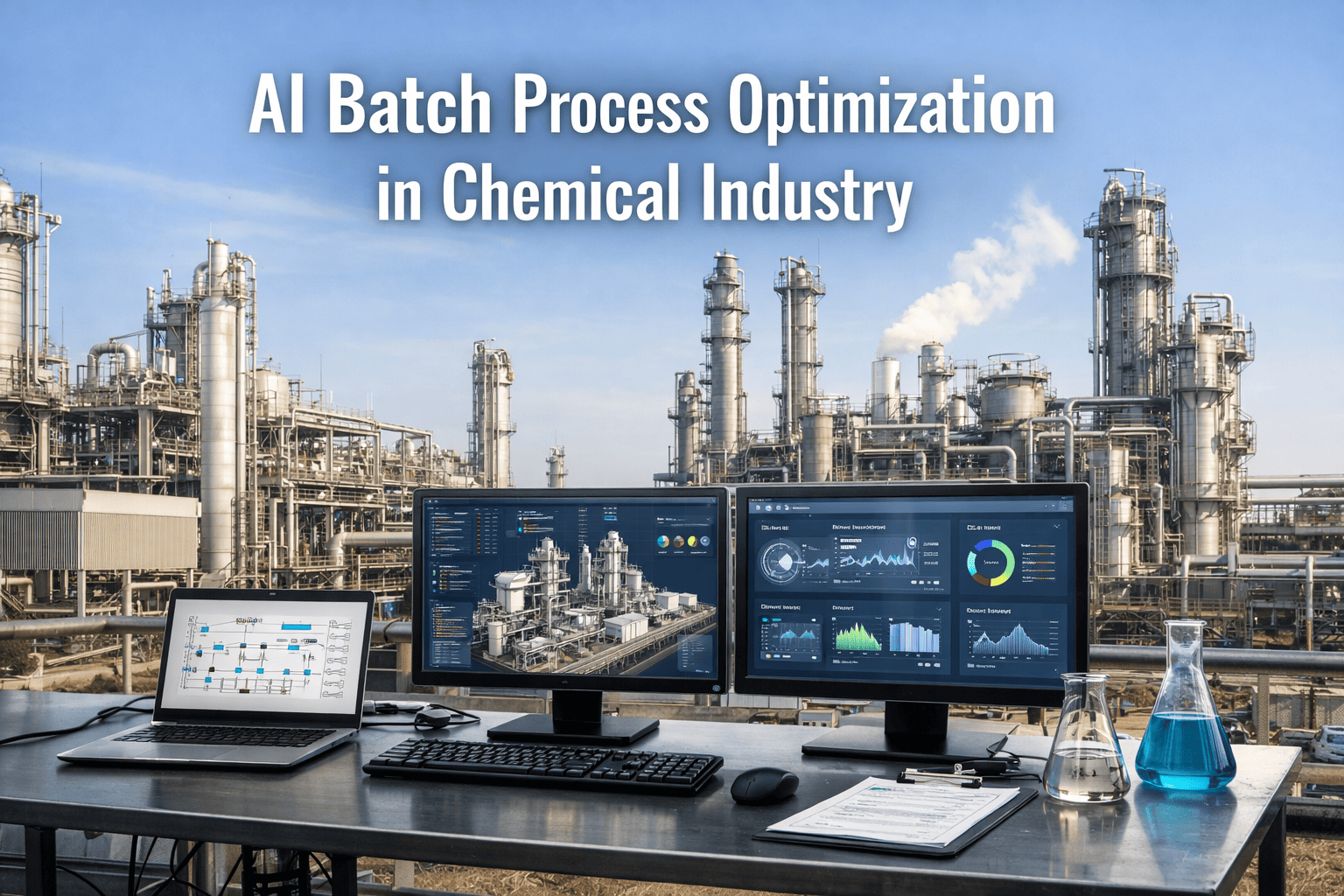
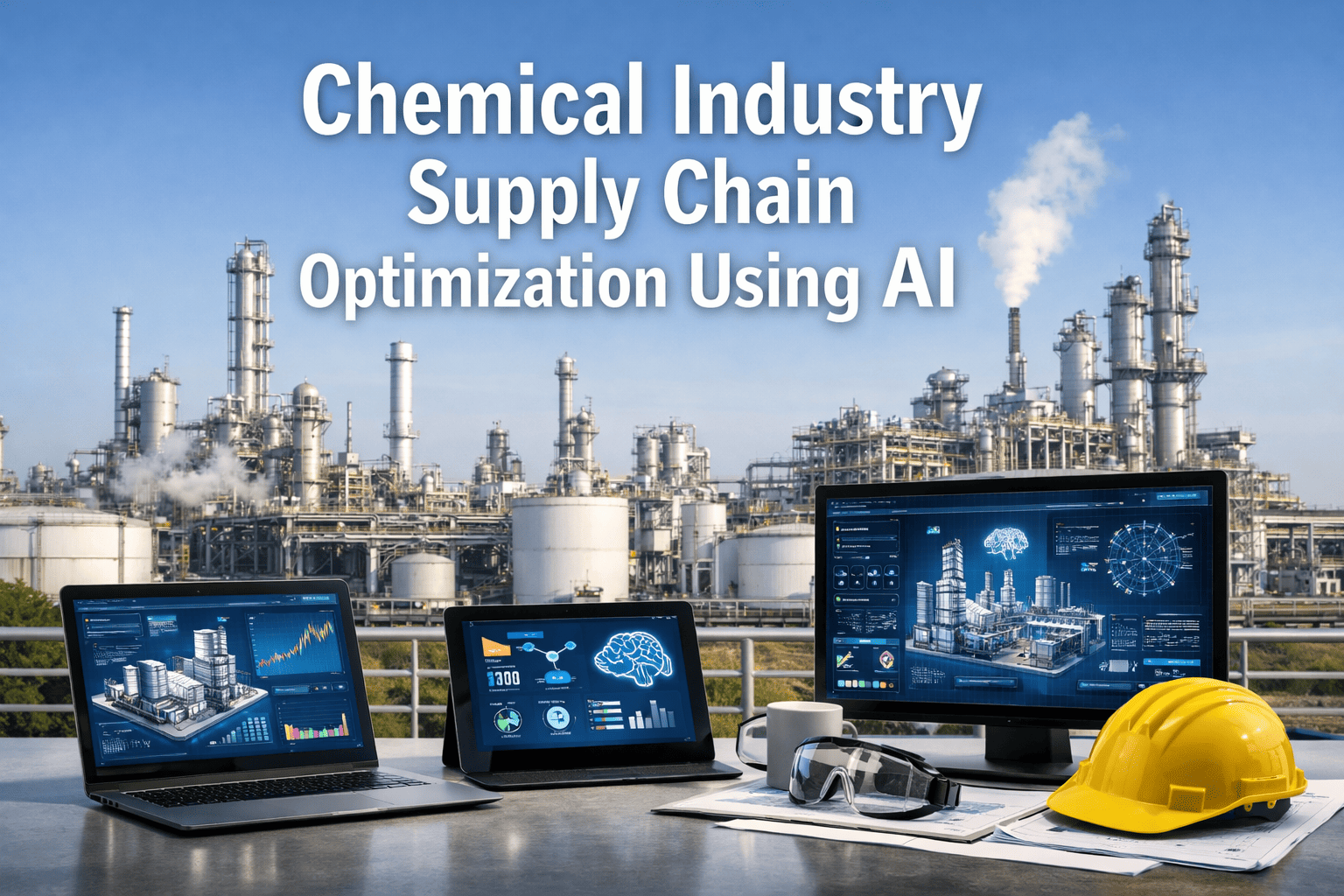
Chemical plants consume up to 28% of total industrial energy worldwide. Yet most facilities still manage energy the way they did a decade ago — with monthly reports, manual adjustments, and spreadsheets that cannot keep pace with the real-time complexity of modern chemical production. AI-driven energy optimization is changing that equation. Plants deploying intelligent energy management systems are cutting energy costs by 10–20%, reducing emissions, and gaining a competitive edge that compounds every quarter. iFactory helps chemical manufacturers deploy AI-powered energy optimization — from real-time monitoring to predictive analytics to autonomous process control. Book a 30-minute consultation to start optimizing your plant's energy performance.
Energy Optimization in Chemical Plants Using AI
Cut Costs, Reduce Emissions, Maximize Throughput — With Intelligent Energy Analytics
28%
Of Total Industrial Energy Is Consumed by Chemical Manufacturing
10–20%
Typical Energy Cost Reduction with AI Optimization
$2.9B
AI in Chemicals Market Size in 2026, Growing at 32% CAGR
Why Energy Optimization Is the Highest-ROI Move for Chemical Plants
The chemical industry is the second largest consumer of energy in the manufacturing sector. Energy costs — including steam generation, electricity for pumps and compressors, cooling systems, and separation processes — typically account for 30–40% of total operating expenses in a chemical plant. Separation operations alone, such as distillation and drying, consume 45–55% of all industrial energy used in chemical facilities. Every percentage point of energy waste directly erodes your margin. AI changes the math by making energy optimization continuous, predictive, and autonomous — not periodic, reactive, and manual.
Where Chemical Plants Lose Energy — The Hidden Cost Map
45–55%
Separation Processes
Distillation columns, evaporators, and dryers are the single largest energy consumers. Most run at low thermodynamic efficiency, with massive heat losses hidden in routine operation.
15–25%
Steam & Heat Systems
Boilers, heat exchangers, and steam distribution networks degrade silently. Fouling in a single heat exchanger can increase fuel consumption by 5% or more before anyone notices.
10–20%
Compressors & Pumps
Centrifugal pumps, reciprocating compressors, and blowers account for a significant portion of electrical energy. Valve bottlenecks and suboptimal load management waste energy continuously.
5–15%
Cooling & Utilities
Cooling towers, refrigeration systems, and compressed air networks often operate on fixed schedules rather than real-time demand — wasting energy during low-load periods.
How AI Transforms Chemical Plant Energy Management
Traditional energy management relies on periodic audits, DCS alarm thresholds, and operator experience. AI adds a fundamentally different layer: continuous pattern recognition across thousands of variables simultaneously, predicting energy waste before it happens and recommending optimal setpoints in real time. Companies using AI for chemical process optimization already report a 14% reduction in energy use and a 24% decrease in unplanned downtime.
01
Real-Time Energy Monitoring & Anomaly Detection
AI ingests data from thousands of sensors — temperature, pressure, flow, vibration, power draw — and builds a live energy map of the entire plant. Anomalies like a fouling heat exchanger, a drifting compressor, or a failing steam trap are flagged within minutes, not months.
Catches 80%+ of energy waste events that manual monitoring misses
02
Predictive Energy Demand Forecasting
Machine learning models forecast energy demand by unit, shift, and product campaign — hours or days ahead. This lets plant operators pre-position steam, electricity, and cooling capacity to match actual production needs, eliminating the costly overprovisioning that most plants default to.
Reduces peak demand charges by 12–18% on average
03
Process Optimization & Setpoint Tuning
AI models analyze the complex trade-offs between yield, throughput, energy consumption, and product quality — then recommend optimal operating setpoints for reactors, distillation columns, and utility systems. Instead of one answer, the best systems present a short menu: maximize yield, minimize energy, or protect quality.
Improves energy efficiency by 8–15% without sacrificing product quality
04
Digital Twin Simulation & What-If Analysis
A physics-accurate digital twin of the plant enables engineers to simulate the energy impact of any operational change — new feedstock, different product mix, equipment shutdown — without touching the live process. BASF and other leaders already use AI-enhanced digital twins to optimize utilities and reduce emissions across entire sites.
Tests hundreds of scenarios virtually before committing real resources
05
Predictive Maintenance as an Energy Tool
Equipment degradation is a hidden energy thief. A compressor with early-stage valve malfunction consumes significantly more power. AI-driven predictive maintenance detects these efficiency losses before they become failures — turning maintenance from a cost center into an energy savings driver.
Reduces energy losses from degraded equipment by 10–25%
See How AI Can Cut Your Plant's Energy Costs
iFactory provides end-to-end AI energy optimization for chemical plants — from sensor integration and anomaly detection to predictive analytics and autonomous control. Start saving from the first month.
Traditional vs. AI-Driven Energy Management — Side by Side
The difference is not incremental — it is structural. AI-driven energy management operates on a fundamentally different timescale and information density than legacy approaches.
✗ Monthly or quarterly energy audits
✗ Reactive — problems found after waste has occurred
✗ Fixed setpoints based on design specifications
✗ Energy tracked in separate spreadsheets
✗ Manual trade-off decisions by operators under time pressure
✗ Equipment degradation detected only at failure
✓ Continuous real-time monitoring across all systems
✓ Predictive — anomalies flagged before they become waste
✓ Dynamic setpoints optimized for current conditions
✓ Energy, cost, and carbon unified in one dashboard
✓ AI presents optimized options — humans make the call
✓ Equipment efficiency loss detected in early stages
The ROI of AI Energy Optimization — What the Numbers Say
Energy optimization is not a long-horizon investment. The payback periods are short, the savings are measurable from month one, and the gains compound as the AI models learn your plant's unique operating patterns.
Steam System Optimization
Payback: 6–10 months
Distillation Column Tuning
Payback: 8–14 months
Compressor Load Optimization
Payback: 10–16 months
Cooling Tower AI Control
Payback: 8–12 months
Peak Demand Management
Payback: 4–8 months
76% of chemical companies are already using AI to optimize production processes. Companies that have deployed AI energy management report a 14% reduction in energy use and significant improvements in throughput stability and product quality. The AI in chemicals market is projected to grow from $2.9 billion in 2026 to $28 billion by 2034 — a 32% annual growth rate that signals massive industry adoption ahead.
4 High-Impact Use Cases — Where AI Delivers the Fastest Energy Savings
Savings Potential
10–18%
Implementation
4–8 weeks
AI models continuously balance steam headers across the entire plant — matching generation to real-time demand, identifying and scheduling trap repairs, and optimizing letdown station performance. Catches fouling in heat exchangers early and recommends cleaning schedules that maximize energy recovery.
Savings Potential
8–15%
Implementation
6–10 weeks
AI optimizes reflux ratios, feed tray locations, and reboiler duty in real time — adapting to feed composition changes that manual control cannot track. Models simultaneously protect product purity while minimizing the energy penalty of over-refluxing, which is endemic in most chemical plants.
Savings Potential
6–12%
Implementation
3–6 weeks
AI monitors vibration, discharge pressure, and power consumption patterns on every compressor, pump, and blower — detecting efficiency degradation weeks before failure. Valve malfunctions, bearing wear, and impeller damage are caught early, restoring optimal energy performance through timely maintenance.
Savings Potential
12–18%
Implementation
4–8 weeks
AI forecasts energy demand by unit and shift, scheduling high-energy operations during off-peak tariff windows and pre-positioning utility capacity to avoid demand spikes. Particularly effective for plants with time-of-use electricity pricing or cogeneration flexibility.
Implementation Roadmap — From Pilot to Plant-Wide Deployment
AI energy optimization does not require ripping out your existing control systems. It sits on top of your DCS, SCADA, and historian — adding an intelligence layer that learns from your plant's data and improves continuously.
Phase 1: Data Foundation
Weeks 1–4
Connect to existing sensors, historians, and DCS/SCADA systems. Validate data quality and identify gaps. Establish the energy baseline that all future savings will be measured against. No new hardware required in most plants.
Phase 2: Pilot on Highest-Impact System
Weeks 4–10
Deploy AI monitoring and optimization on a single high-impact system — typically the steam network or the largest distillation train. Prove measurable energy savings within 6–8 weeks. Build operator confidence with advisory recommendations before any closed-loop control.
Phase 3: Expand Across Plant Systems
Months 3–6
Roll AI optimization to compressors, cooling towers, reactor energy management, and utility scheduling. Connect energy data with MES and ERP for cost-integrated decision-making. Each new system added accelerates the AI model's ability to optimize across the entire energy network.
Phase 4: Autonomous Optimization & Continuous Learning
Month 6+
Transition from advisory to closed-loop AI control on validated systems. The platform continuously learns from new data — adapting to seasonal changes, feedstock variations, and equipment aging. Carbon emissions, energy costs, and production KPIs are unified into a single real-time dashboard.
Sustainability & Compliance — Energy Optimization Drives ESG Results
Energy optimization is not just about cost. In chemical manufacturing, energy consumption is where most industrial emissions hide. AI makes carbon a real-time operating variable — not a monthly report filed after the fact. This is increasingly critical as ESG reporting requirements tighten and carbon pricing mechanisms expand globally.
Every unit of energy saved directly reduces Scope 1 and Scope 2 emissions. AI connects energy optimization decisions to real-time carbon signals, making decarbonization a shift-by-shift operational practice rather than an annual target.
AI continuously monitors process data to detect compliance violations and generate auditable records automatically. Real-time alerts and trend forecasting enable proactive mitigation — reducing the risk of fines and simplifying audit processes.
Unified energy-carbon-cost dashboards provide the granular, verifiable data that ESG reporting frameworks demand. AI-generated analytics translate operational improvements into the metrics investors, regulators, and customers increasingly require.
Frequently Asked Questions
How much can AI reduce energy costs in a chemical plant?
Industry benchmarks show 10–20% energy cost reduction through AI-driven optimization. Specific savings depend on the plant's current efficiency baseline, the energy systems targeted, and the depth of integration. Steam system optimization and distillation tuning typically deliver the fastest returns, with payback periods under 12 months.
Does AI energy optimization require replacing existing control systems?
No. AI platforms sit on top of your existing DCS, SCADA, and historian systems. They ingest data from your current sensors and infrastructure, adding an intelligence layer without disrupting operations. Most deployments connect to existing plant data within 2–4 weeks.
How quickly can we see measurable energy savings?
Most plants see measurable savings within 6–8 weeks of deploying AI on their first target system. Initial deployments typically start with advisory recommendations — flagging anomalies and suggesting setpoint changes — before progressing to autonomous optimization as operator confidence builds.
Is AI energy optimization relevant for small and mid-sized chemical plants?
Absolutely. While large petrochemical complexes were early adopters, the economics now work for mid-sized specialty chemical plants, pharmaceutical manufacturing, and batch process facilities. Cloud-based AI platforms and subscription pricing models have lowered the entry barrier significantly.
Start Optimizing Your Chemical Plant's Energy Today
iFactory delivers AI-powered energy optimization for chemical manufacturers — from real-time monitoring and anomaly detection to predictive analytics and autonomous process control. Cut energy costs, reduce emissions, and gain a permanent competitive edge.