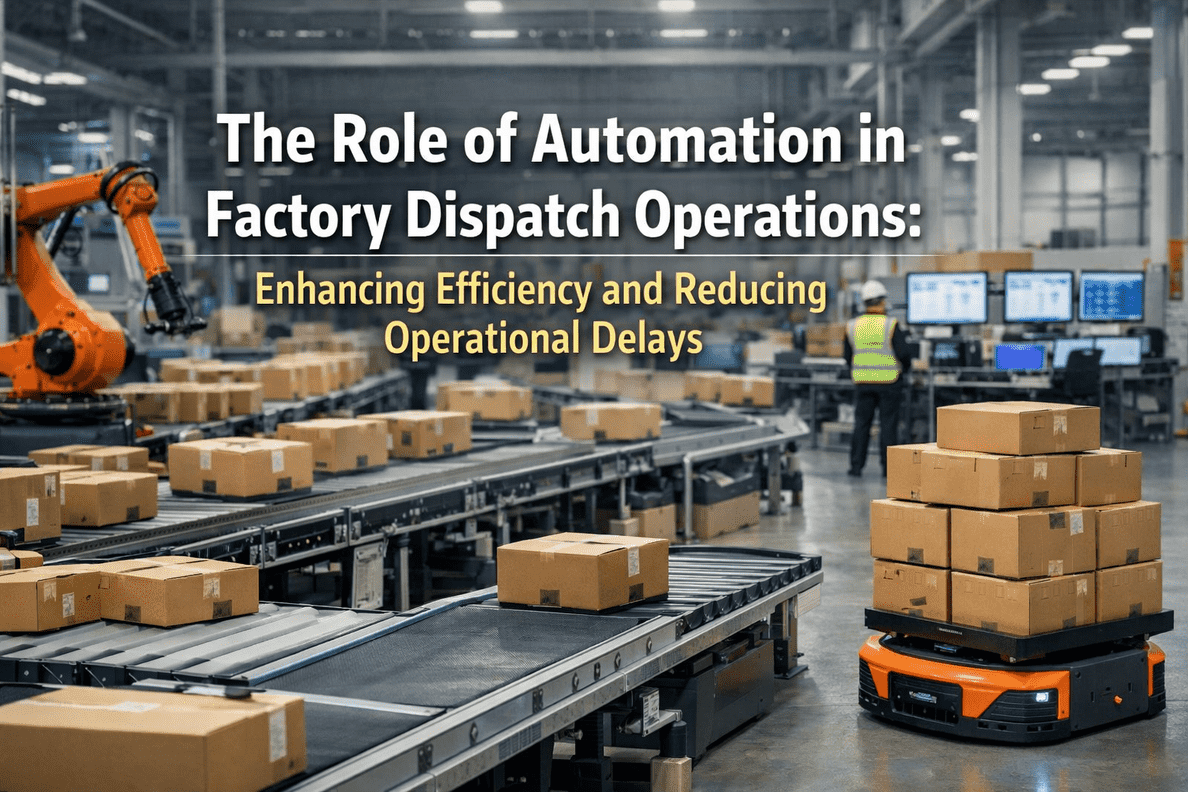
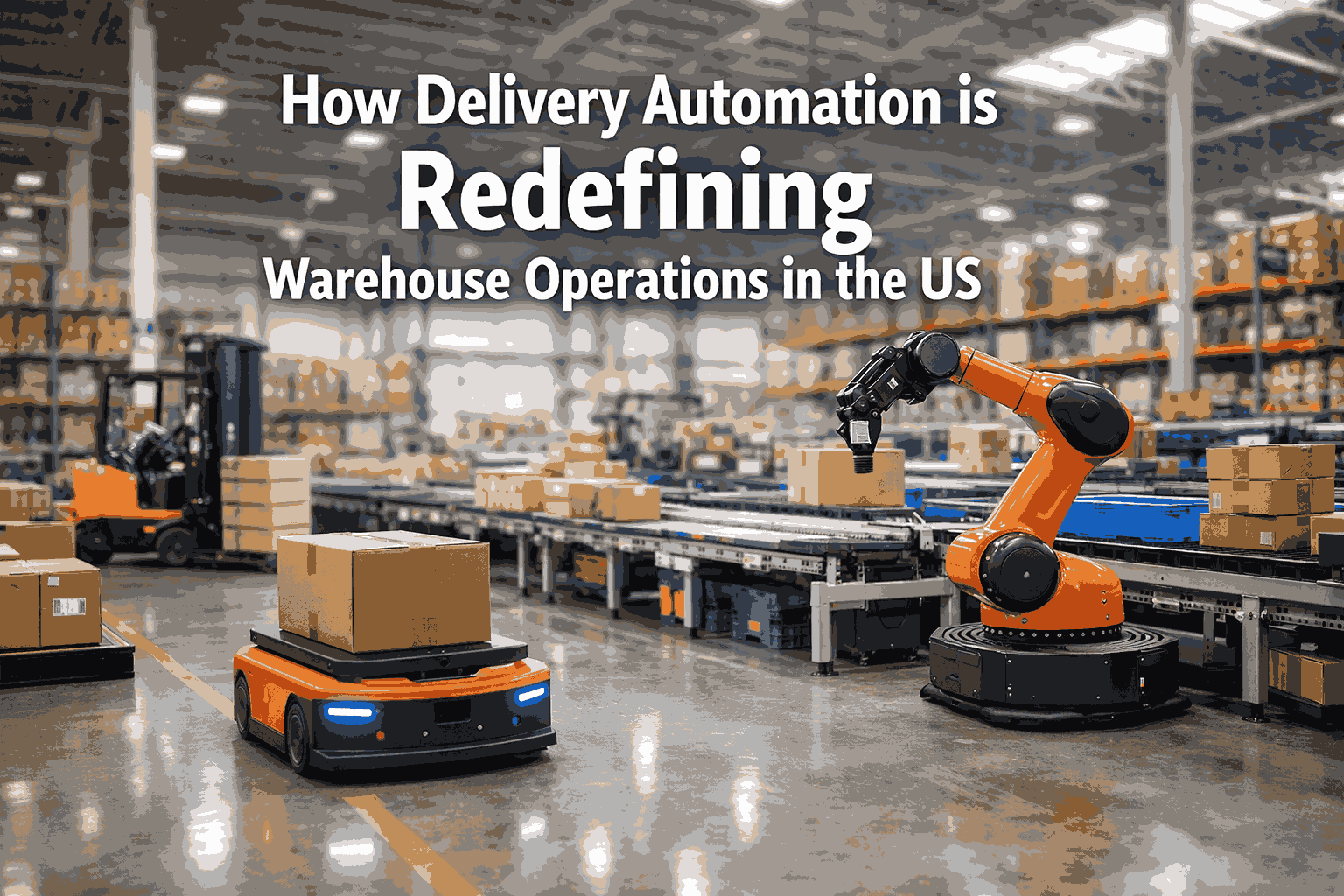
The factory dispatch and gate pass department is the last major operational function in most manufacturing plants still running entirely on paper — and the gap is getting more expensive every year. Manual gate entry averaging 15–20 minutes per vehicle, inbound receiving cycles consuming 45–60 minutes per shipment, dispatch sequencing done on whiteboards with a 2–3% error rate, and vehicle inspections ticked off without physical checks. According to the 2025 State of Smart Manufacturing report, 72% of manufacturers have partially implemented smart factory strategy — yet the delivery department lags behind production, quality, maintenance, and every other plant function. The cost is measurable: a factory receiving just 20 vehicles per day loses 280+ minutes of dock time daily on manual gate processing alone, before accounting for inbound delays, SLA misses, and material locating failures that directly cause production stoppages. Automation is closing this gap at speed. Digital gate pass systems, AI-powered dispatch sequencing, mobile inbound receiving verification, enforced vehicle inspection checklists, and real-time internal material tracking are transforming factory delivery departments from the most reactive cost centre in the plant into a measurable competitive advantage. This guide explains exactly what automation delivers inside a factory dispatch and gate pass department — what changes operationally, what it costs, and how iFactory deploys every module in 7–14 days. For questions before booking, talk to our support team directly.
iFactory · Factory Delivery Department Module
Your production floor has dashboards. Your delivery department deserves the same visibility.
iFactory digitizes every gate pass, inbound receipt, material transfer, vehicle inspection, dispatch event, and incident report — giving your operations team real-time visibility into the department that controls everything that enters and exits your plant. Deploy in 7–14 days. No IT project. No hardware procurement. Results visible from day one.
87%Gate pass time reduction
78%Faster inbound receiving
100%Audit trail coverage
14 DaysFull deployment
iFactory · Factory Delivery Department · 2026
The Impact of Automation on Factory Dispatch and Gate Pass Department Operations
Paper gate passes, manual dispatch boards, and handwritten receiving logs are costing factories hundreds of thousands annually in lost dock time, SLA penalties, and audit liability. iFactory replaces every manual workflow with a digital system that runs faster, generates its own compliance record, and deploys in under 14 days — no IT project, no hardware procurement required.
87%
Reduction in gate pass processing time — from 15–20 minutes to under 2 minutes per vehicle
78%
Faster inbound receiving — from 45–60 minutes to under 10 minutes per shipment
90%
Dispatch error reduction — from 2–3% manual rate to under 0.3% with SLA-priority automation
14 Days
iFactory go-live timeline — from decision to fully automated factory delivery department
The Automation Gap
Where Factory Automation Has Reached — and Where the Delivery Department Still Runs on Paper
86% of manufacturers now track OEE on the production floor. Almost none measure gate pass processing time, inbound receiving cycle, or dispatch SLA compliance in the delivery department. This is the most consequential automation gap remaining in modern manufacturing — and the one with the fastest measurable payback when closed.
Already Automated Across Most Factories
Production OEE tracking — measured in real time by 86% of manufacturers
CNC and robotic assembly automation — deployed in most tier-1 plants
Preventive maintenance scheduling for production equipment and assets
Digital quality inspection with defect logging and full traceability records
Finished goods inventory with barcode or RFID location tracking
ERP-integrated procurement and purchase order management
Outbound shipment documentation and digital proof of delivery
Employee safety records and EHS incident management systems
Still Running on Paper in the Delivery Department
Gate pass registration — paper forms, manual ID checks, phone verification
Inbound receiving — handwritten POD, manual PO matching, no discrepancy photo
Dispatch sequencing — whiteboard priority, dispatcher memory, no SLA countdown
Internal material location — unknown after dock entry, 30–40% search time lost
Vehicle inspection — paper checklists ticked in 90 seconds without physical check
Incident reporting — discovered days after occurrence, no auto-escalation
Gate dwell time data — zero measurement, no compliance or operational visibility
Dispatch SLA compliance — misses undetected until customer complaint arrives
8 Automation Impact KPIs
What Automation Delivers Across Each Function of the Factory Dispatch and Gate Pass Department
87%
Gate Pass Processing Time Reduction
Supplier pre-registration, mobile security verification, and AI cross-check against open PO schedule. Gate clearance in under 2 minutes versus 15–20 minutes manual — every vehicle, every shift.
Manual: 15–20 min/vehicleDigital: under 2 min
78%
Faster Inbound Receiving
Mobile barcode scanning, photo POD capture, and ML PO verification at the dock. Discrepancies flagged in real time before the vehicle departs — receiving cycle drops from 45–60 minutes to under 10 minutes per shipment.
Manual: 45–60 min/shipmentDigital: under 10 min
90%
Dispatch Error Reduction
SLA-priority automated dispatch sequencing replaces whiteboard and dispatcher memory. Error rate drops from 2–3% to under 0.3%. Pre-miss alerts fire before SLA windows close — not after the customer complaint arrives.
Manual: 2–3% error rateDigital: under 0.3%
100%
Audit Trail Coverage
Every gate event, receiving transaction, material transfer, vehicle inspection result, and dispatch decision timestamped and person-attributed automatically. Zero manual documentation steps. Retrievable in under 60 seconds.
Manual: incomplete recordsDigital: 100% coverage
280+
Dock Minutes Recovered Daily
A 20-vehicle/day factory loses 280+ minutes of dock time daily on manual gate processing alone. Automation recovers this time directly — improving JIT schedule adherence across automotive, pharmaceutical, and food manufacturing.
Manual: 280+ min lost/dayDigital: 40% delay reduction
30–40%
Material Search Time Eliminated
Most production stoppages attributed to "material unavailability" are locating failures — not stock-outs. Digital transfer records at every internal movement eliminate the search and the production delay it causes.
Manual: no internal locationDigital: real-time location
3–6 mo
Full Platform Payback
Recovered dock time, eliminated dispatch errors, reduced compliance overhead, and avoided audit liability combine to deliver full iFactory payback within 3–6 months. Legacy manual operations typically show 18–24 month payback.
Legacy: 18–24 monthsiFactory: 3–6 months
72%
Smart Factory Gap — Delivery Lags Every Function
72% of manufacturers have partially implemented smart factory strategy — but the delivery department lags behind every other function. The $25.5B delivery management software market by 2035 is driven by closing this specific gap.
2025: $11.6B market2035: $25.5B projected
iFactory · Factory Delivery Department Module
Your production floor has dashboards. Your delivery department deserves the same visibility.
iFactory digitizes every gate pass, inbound receipt, material transfer, vehicle inspection, dispatch event, and incident report — giving your operations team real-time visibility into the department that controls everything that enters and exits your plant. Deploy in 7–14 days. No IT project. No hardware procurement. Results visible from day one.
Talk to our support team about your specific facility before booking.
87%Gate pass time reduction
78%Faster inbound receiving
100%Audit trail coverage
14 DaysFull deployment
Book A Demo
How It Works
How Automation Flows Through Each Stage of the Factory Delivery Department
Factory delivery department automation does not require a rip-and-replace IT project. iFactory's digital data layer connects five core workflows running every day in every factory — and each one generates its own operational intelligence and compliance record as a direct byproduct of normal operations.
01
Automated Gate Pass Management — Pre-Arrival Registration to Exit Timestamp
Suppliers and drivers pre-register vehicle details, cargo manifest, and driver credentials via mobile before arrival. iFactory cross-references the pre-registration against the factory's open purchase order schedule — flagging mismatches before the vehicle reaches the gate. Security staff verify on mobile in under 2 minutes. The system records exact arrival and exit timestamps, dwell time per vehicle, cargo summary, and vehicle compliance status — generating the full gate audit record, dwell time analytics, and operational KPI data simultaneously as a byproduct of the verification workflow. Vehicles not pre-registered or failing compliance checks are flagged for manual security review before entry is granted.
87% gate time reduction
Dwell time analytics
Compliance audit record
Zero paper documentation
02
Mobile Inbound Receiving — ML PO Verification and Real-Time Discrepancy Detection
Receiving staff scan inbound barcodes on mobile. iFactory's ML engine verifies quantities against the purchase order in real time, flagging shortages, overages, and substitutions at the dock before the vehicle departs. Discrepancies are photo-documented on mobile and escalated to procurement automatically — not discovered three days later in production when the wrong material has already been consumed. Every shipment generates a digital receiving record linking supplier, carrier, material, quantity received versus ordered, condition assessment, and timestamp. This record satisfies supply chain traceability documentation requirements for FSSAI in India, FSMA in the USA, and supply chain due diligence standards in Germany and the UK — with no additional documentation step required.
78% faster receiving
Dock-level discrepancy detection
Photo POD record
Supply chain traceability
03
SLA-Priority Dispatch Automation — Live Queue, Pre-Miss Alerts, Zero Whiteboard
iFactory's dispatch sequencing engine ingests every open order, its SLA deadline countdown, vehicle availability, load constraints, and route requirements — generating a live priority queue that recalculates automatically as conditions change throughout the shift. When any order approaches a breach threshold (configurable at 30–60 minutes before the SLA deadline), an escalation alert fires to both the dispatcher and their supervisor — while there is still time to reassign and prevent the miss. Manual dispatch operates on a static list that disconnects from reality within hours of shift start. Automated dispatch operates on a live model reflecting current conditions at all times. Dispatch error rate drops from 2–3% to under 0.3%. Every dispatch event captures vehicle ID, load details, departure timestamp, driver attribution, and route — building the per-trip operational record that audit and performance management require.
90% error reduction
Pre-miss SLA alerts
Live priority queue
Per-trip audit record
04
Digital Vehicle Inspection — Enforced Checklists, Auto-Block on Failure, Instant Audit Trail
iFactory's vehicle inspection module makes bypassing impossible: each checklist item requires active confirmation on the driver's or operator's mobile device. The system captures timestamp, operator ID, and location per response. Failed items require photo documentation before the workflow can continue. Vehicles with outstanding failed items are automatically blocked from dispatch until the verified repair work order is completed and closed. The record is timestamped, person-attributed, and linked to the vehicle's full operational history. This satisfies OSHA compliance in the USA, Schedule M GMP documentation in India, ISO 9001 audit standards, and Vision 2030 smart manufacturing requirements in the UAE — from a single inspection workflow with zero additional reporting steps required.
100% inspection coverage
Auto-block on failed items
OSHA-ready audit record
Photo evidence per defect
05
Real-Time Internal Material Tracking — Chain of Custody from Dock to Production Line
Every internal material movement is logged at transfer: dock to stores, stores to production, production to quality, quality to dispatch. Each transfer generates a timestamped, person-attributed record with scan confirmation. Production teams query material location in real time — eliminating the 30–40% of production material search time documented as eliminable with digital transfer records. Most production stoppages attributed to "material unavailability" are locating failures, not stock-outs — and digital tracking eliminates this failure mode entirely. The same records extend the inbound supply chain traceability chain from factory gate to production floor, satisfying pharmaceutical (Schedule M), food (FSSAI, FSMA), and automotive (IATF 16949) internal chain of custody requirements.
30–40% search time eliminated
Production stoppage prevention
Full internal chain of custody
Compliance record auto-generated
Measurable Results
What iFactory Customers Measure Within 90 Days of Delivery Department Automation Go-Live
87%
Gate Pass Time Reduction
From 15–20 minutes manual to under 2 minutes per vehicle. A 20-vehicle/day factory recovers 280+ minutes of dock access time daily — more than four additional dock hours without adding staff or cost.
78%
Faster Inbound Receiving
Receiving cycle drops from 45–60 minutes to under 10 minutes per shipment with ML PO verification. Discrepancies caught at the dock — not discovered in production three days later when the wrong material has already been consumed.
90%
Fewer Dispatch Errors
SLA-priority automated sequencing reduces dispatch error rate from 2–3% to under 0.3%. SLA misses caught before breach — not after the customer complaint. Every dispatch event auto-generates a per-trip operational record.
100%
Audit Trail Coverage
Every gate event, receiving transaction, inspection result, material transfer, and dispatch decision timestamped and person-attributed. Audit records retrievable in under 60 seconds — not hours of paper search across multiple binders.
3–6 mo
Full ROI Payback
Recovered dock time, eliminated dispatch errors, reduced compliance overhead, and avoided audit penalty exposure combine to deliver full iFactory payback within 3–6 months. No heavy implementation fees or infrastructure investment.
14 Days
Go-Live Timeline
From decision to fully automated factory delivery department in 7–14 days. Cloud-based, mobile-first. No server installation, no IT department project, no hardware procurement required for the core platform modules.
Before vs. After
Manual Factory Delivery Department Operations vs. iFactory Automated Platform
Department Function
Manual Operations
iFactory Automation
Gate Pass
15–20 min/vehicle — paper logs, phone verification, idle queue, zero dwell time data
Under 2 min — pre-registered, AI-verified, automatic dwell time and compliance record
Inbound Receiving
45–60 min/shipment — paper POD, manual PO match, discrepancies missed at dock
Under 10 min — mobile scan, ML PO verification, photo POD, discrepancy flagged instantly
Dispatch Sequencing
Manual priority board — 2–3% errors, SLA misses undetected until customer complaint
AI live queue — under 0.3% errors, pre-miss alerts fire before the breach window closes
Vehicle Inspection
Paper checklist — completed without physical inspection, no photo, no timestamp record
Digital enforced — per-item confirmation, photo on fail, auto-block, full audit trail
Material Tracking
No location after dock entry — 30–40% search time lost, production stoppages from locating failures
Real-time location at every transfer — search eliminated, chain of custody auto-generated
Incident Management
Incidents discovered days later — no auto-escalation, evidence chain broken, audit gaps
Real-time detection — auto-escalation, photo-documented, linked to vehicle and operator record
Compliance Records
Hours to assemble — paper records incomplete, fragmented across binders and spreadsheets
Retrievable in 60 seconds — all records auto-generated from daily operations, zero extra steps
Deployment
Legacy systems: 6–18 months, heavy IT involvement, high upfront infrastructure cost
iFactory: 7–14 days — cloud, mobile-first, no infrastructure project required
iFactory · Factory Delivery Department Module
Your production floor has dashboards. Your delivery department deserves the same visibility.
iFactory digitizes every gate pass, inbound receipt, material transfer, vehicle inspection, dispatch event, and incident report — giving your operations team real-time visibility into the department that controls everything that enters and exits your plant. Deploy in 7–14 days. No IT project. No hardware procurement. Results visible from day one.
87%Gate pass time reduction
78%Faster inbound receiving
100%Audit trail coverage
14 DaysFull deployment
Frequently Asked Questions
Factory Dispatch and Gate Pass Automation — What Operations Leaders Ask First
What specific factory delivery department functions does iFactory automate — and what does each one replace?
iFactory automates six core functions of the factory delivery department, each replacing a specific manual workflow with a digital process that runs faster and generates its own record without any separate documentation steps. Gate pass management: pre-arrival supplier registration replaces paper logbooks and phone verification — gate processing drops from 15–20 minutes to under 2 minutes per vehicle. Inbound receiving: mobile barcode scanning and ML PO verification replaces manual paper count sheets — receiving cycle drops from 45–60 minutes to under 10 minutes per shipment, with discrepancies flagged at the dock before the vehicle departs. Dispatch sequencing: AI live priority queue replaces whiteboard scheduling — dispatch error rate drops from 2–3% to under 0.3%, with pre-miss SLA alerts before windows close. Vehicle inspection: digital enforced checklists replace paper tick-boxes — each item requires active mobile confirmation, failed vehicles are auto-blocked, and every result is timestamped and photo-documented. Internal material tracking: scan-at-transfer records replace the complete absence of any location record after dock entry — 30–40% of production material search time is eliminated. Incident management: real-time detection and auto-escalation replaces days-later discovery — every incident generates an immediate timestamped record linked to the responsible vehicle and operator. For a function-by-function walkthrough specific to your facility type,
talk to our support team before booking a demo.
Why do most production stoppages blamed on material unavailability have nothing to do with actual stock levels — and how does iFactory fix this?
The "material unavailability" production stoppage is one of the most consistently misdiagnosed operational failures in manufacturing — and the misdiagnosis leads to the wrong corrective action every time. When production raises a material unavailability flag, the instinctive response is to investigate stock levels and procurement lead times. In the majority of cases, iFactory's operational data analysis shows that the materials were received, are physically present in the facility, and appear correctly in the inventory count — but nobody knows where they are physically located at that moment. The stoppage is a locating failure, not a stock-out. The root cause is the complete absence of any internal transfer record after dock entry. Materials are received at the dock, moved to stores, transferred to production staging, returned to stores, moved again for quality review — and at each step the movement is informal with no digital record. When production needs the material, a manual search begins across the dock, stores area, production floor, and quality hold zone. iFactory's internal material tracking creates a digital scan record at every transfer point with operator ID, timestamp, and location confirmation. Production queries material location in real time. The search ends before it begins. The same transfer records simultaneously satisfy supply chain traceability requirements for pharmaceutical (Schedule M), food (FSSAI, FSMA), and automotive (IATF 16949) manufacturing.
Talk to our support team about configuring internal material tracking for your specific factory layout and production flow.
How does iFactory's automated dispatch sequencing prevent SLA misses — and what does the pre-miss alert system specifically do?
Manual dispatch sequencing has a fundamental structural problem: it operates on a static priority list that becomes disconnected from actual conditions within hours of shift start. As new orders arrive, vehicles are delayed, loads change, and drivers become unavailable, the whiteboard or spreadsheet list no longer reflects reality — but the dispatcher has no automated signal that any specific order is approaching a breach. The miss only becomes visible when the SLA window has already closed and the customer complaint arrives. iFactory's dispatch automation addresses this at the system level. The sequencing engine maintains a live priority queue that recalculates automatically every time a condition changes. The SLA countdown for every open order is visible on the dispatch dashboard in real time. When any order's remaining time drops below a configurable threshold — typically 30–60 minutes before the breach deadline — the system fires an escalation alert simultaneously to the dispatcher and their supervisor while there is still time to reassign, expedite, or contact the customer proactively. The dispatch error rate under this model drops from 2–3% manual to under 0.3% — and every dispatch event generates a per-trip record capturing vehicle ID, load details, departure timestamp, driver attribution, and route.
Book A Demo to see the live dispatch queue and pre-miss alert system running in a real factory delivery environment.
How does iFactory's vehicle inspection module satisfy OSHA (USA) and Schedule M (India) compliance requirements from a single workflow?
OSHA 29 CFR 1910.178(q) in the USA and Schedule M of the Drugs and Cosmetics Act in India both require pre-use inspection documentation for vehicles and equipment operating within a manufacturing facility — but from different operational angles. OSHA focuses on operator accountability and defect-to-corrective-action traceability: the record must demonstrate that the operator identified specific defects, reported them, and that the vehicle was removed from service until the defect was corrected and verified. Schedule M focuses on process integrity and audit trail completeness as part of the GMP framework: every vehicle movement in the manufacturing area must be documented with operator attribution and timestamp as part of the batch manufacturing record. iFactory's vehicle inspection module satisfies both requirements from the same workflow because it captures exactly the data both regulations require: individual checklist item confirmation rather than a single overall signature, operator ID and timestamp per response, mandatory photo documentation for every failed item, automatic vehicle dispatch block when failed items are outstanding, and verified repair completion with work order closure before the vehicle returns to service. The complete inspection record is stored in the vehicle's operational history and retrievable from the iFactory dashboard in under 60 seconds for any audit or regulatory inquiry. For UAE facilities under Vision 2030 requirements and German facilities under LkSG supply chain traceability obligations, the same digital record structure satisfies those standards without any additional reporting workflow.
Talk to our support team for a compliance-specific review of your vehicle inspection requirements.
What does iFactory's 7–14 day deployment process involve — and why does it take only 14 days when comparable platforms take months?
iFactory deploys in 7–14 days because it is cloud-based, mobile-first, and designed specifically for factory delivery department operations — not adapted from a general ERP or warehouse management system that requires months of configuration to handle factory-specific workflows. The deployment process has three sequential phases. Days 1–3 — Data onboarding: uploading the vehicle registry, driver and security staff roster, supplier list with pre-registration templates, and open PO schedule for gate cross-checking. iFactory's onboarding team handles this directly with your operations administrator. No IT department involvement required at any stage. Days 4–7 — Configuration and training: setting up gate pass workflows for your specific security requirements, vehicle inspection checklists for your yard equipment types, dispatch SLA rules aligned to your customer contracts, and internal material transfer scan points mapped to your facility layout. Security staff, receiving teams, and drivers complete mobile app training in 2–4 hours. Days 8–14 — Go-live and verification: live operations with iFactory support actively monitoring data quality and resolving workflow exceptions. The 7–14 day timeline is consistently achieved across facilities of all sizes because there is no server infrastructure to install, no hardware to procure for the core platform, and no integration with existing legacy systems required for initial deployment.
Book A Demo to discuss your facility size and get a specific deployment timeline for your operation.
Can iFactory manage multiple factory sites under one platform — and does each site get its own configuration?
iFactory is built as a multi-depot, multi-site platform from the architecture level — not a single-site system with a multi-site bolt-on added later. A single iFactory deployment covers all facilities in your manufacturing portfolio under one corporate operations dashboard, with each site running its own independently configured delivery department module. Site-level independence means each facility can operate its own gate pass workflows reflecting its specific security protocols, vehicle inspection checklists configured for the equipment types at that plant, dispatch SLA rules calibrated to the customer contracts at that location, and receiving workflows adapted to the supplier relationships at that site. Corporate-level visibility means the portfolio dashboard provides real-time cross-site monitoring — gate activity, receiving completion rates, dispatch SLA compliance, material location status, and inspection pass rates across every facility in a single management view. For multi-national manufacturing groups, iFactory configures site-level compliance documentation for regional requirements: OSHA and DOT for US facilities, Schedule M and FSSAI for Indian plants, supply chain due diligence for UK and German sites, and Vision 2030 digital manufacturing standards for UAE facilities — all operating from the same underlying data model, generating compliance records as a byproduct of daily delivery department operations.
Talk to our support team about your portfolio structure and regional compliance requirements before scheduling a demo.
iFactory · Factory Delivery Department Module
86% of manufacturers track OEE. Almost none track gate pass time, receiving cycle, or dispatch SLA compliance. iFactory closes the gap in 14 days.
The factory delivery department is the last undigitized function in most plants — and the one with the fastest measurable payback when automated. iFactory deploys every module in 7–14 days with no IT project and no hardware procurement. Join operations teams across manufacturing, pharmaceutical, food, and automotive plants already running on iFactory.
87%Gate pass time reduction
78%Faster inbound receiving
100%Audit trail coverage
14 DaysFull deployment