Comprehensive Guide to Sweden Delivery Operations: Autonomous Vehicles And Drones & Approval Proces
By Arel Dixon on June 16, 2026
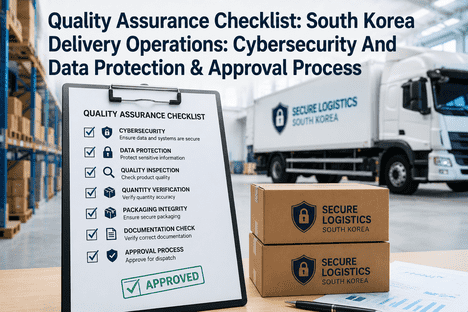
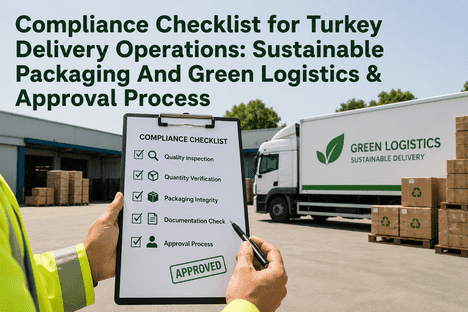
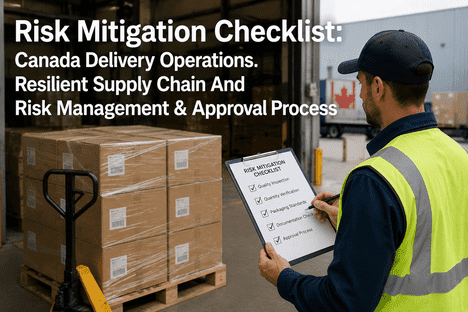
Implementing autonomous vehicles and drones in delivery operations is a multi-layered process that extends far beyond deploying the hardware. For Swedish manufacturers, the approval process that governs whether a shipment can leave the facility is the critical control point — the gate through which every shipment must pass, and the system that determines whether the operation achieves error-free dispatch or continues to struggle with quality escapes, quantity discrepancies, packaging damage, and documentation errors. This comprehensive guide provides a practical checklist for implementing AI-driven delivery operations in Sweden, covering every step from production completion through quality inspection, quantity verification, packaging integrity checks, documentation validation, and the digital clearance pass approval that authorises each shipment for carrier handoff. Use this guide as your implementation roadmap, and apply each checklist item against your current dispatch operation to identify gaps and prioritise improvements.
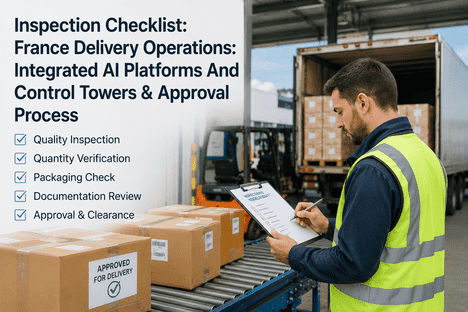
The Five-Step Approval Process Checklist for Autonomous Delivery Operations Ensures Every Shipment Is Inspected, Verified, and Cleared Before It Leaves the Facility.
iFactory's delivery operations platform automates the complete approval process — connecting autonomous vehicles, drone-based inspection, quantity verification, packaging checks, and documentation validation into a single clearance pass workflow that eliminates manual errors and accelerates dispatch.
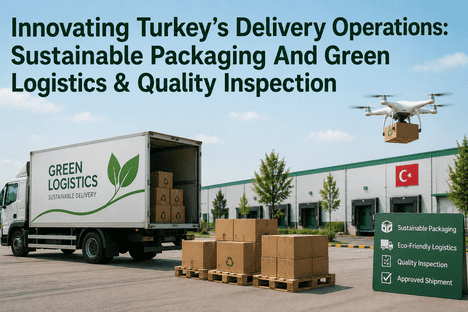
The first gate in the approval process is product quality inspection. Every unit or pallet must pass a visual and dimensional inspection before it is released from production to the staging area. In an autonomous delivery operation, this inspection is performed by AI-powered computer vision systems — fixed cameras on production lines and autonomous drones in staging zones — that check every shipment against product-specific quality criteria. Use this checklist to evaluate your current quality inspection readiness.
✓
Product-specific visual inspection criteria — Are computer vision models configured with the correct defect types, dimensional tolerances, and surface quality standards for each product family shipped from your facility?
✓
Drone-based pallet inspection capability — Can autonomous drones capture multi-angle visual data of palletised loads at the staging area, including top-surface and side-wall conditions that fixed cameras cannot reach?
✓
Automated pass/fail decision with photographic evidence — Does your inspection system generate a clear pass or fail result for each inspection point, and does it attach photographic evidence to the shipment record for audit and customer transparency?
✓
Rejection routing with corrective action assignment — When a shipment fails inspection, is the rejection notice automatically routed to the responsible team with the specific defect cause and recommended corrective action?
✓
Inspection criteria update process — Is there a defined process for updating inspection criteria when product packaging changes, new product families are introduced, or customer specifications are updated?
Step 2: Quantity Verification Checklist — Ensure Every Unit Is Counted and Reconciled
Quantity discrepancies are among the most common dispatch errors and the most damaging to customer relationships. An over-shipment creates inventory reconciliation issues; an under-shipment triggers a customer complaint and a costly short-ship follow-up. Automated quantity verification eliminates these errors by cross-referencing the shipment manifest against three independent data sources before the clearance pass is issued.
✓
Multi-source quantity reconciliation — Does your system cross-reference production output records, RFID tag counts, and weigh station measurements against the shipment manifest before authorising dispatch?
✓
Automated hold on discrepancy — Is the shipment automatically placed on hold when any discrepancy is detected between the declared quantity and the verified count, with an alert routed to the picking team?
✓
Historical discrepancy pattern analysis — Does your platform analyse quantity discrepancy patterns over time to identify systematic picking issues that need process-level correction rather than shipment-level intervention?
✓
Integration with production and warehouse systems — Is the quantity verification system integrated with your production execution system and warehouse management system to access real-time output and inventory data?
Step 3: Packaging Integrity Checklist — Prevent In-Transit Damage at the Source
Packaging defects are a leading cause of in-transit damage and customer rejection. The packaging inspection step checks every shipment against configurable packaging standards before it is released to the loading bay, ensuring that pallets, crates, cartons, and wraps meet both the manufacturer's quality standards and the carrier's acceptance criteria.
✓
Per-customer packaging profile configuration — Are packaging inspection criteria configured per customer, per product family, and per carrier requirement — including pallet type, wrap specifications, corner protection, and label placement?
✓
Automated AI visual packaging inspection — Are drones or fixed cameras inspecting packaging condition — pallet cracks, wrap tension, corner protection, seal integrity — before the shipment is released to the loading bay?
✓
Carrier-specific acceptance criteria — Does the packaging check include the carrier's specific packaging requirements, preventing rejection at the carrier hub due to non-compliant packaging?
✓
Label accuracy verification — Does your system verify that every label — product code, batch number, expiration date, customer PO, carrier barcode — is present, correctly positioned, and legible before the clearance pass is issued?
✓
Packaging standards audit trail — Is every packaging inspection result — including photographs of any issues detected — stored in the shipment record for audit and customer dispute resolution?
A Five-Step Approval Process That Runs Automatically — So Only Verified, Compliant, Fully Documented Shipments Reach the Loading Bay.
iFactory's approval process automation eliminates the manual checks that slow dispatch and miss errors — replacing them with AI-powered inspection, multi-source verification, and digital clearance passes that the carrier scans at handoff.
Documentation errors are the single largest source of dispatch delays in Swedish manufacturing export operations. A missing certificate of origin, an incorrectly formatted commercial invoice, or an expired compliance certification can hold a shipment at customs for three to five days. The documentation validation step checks every document against the shipment profile before the clearance pass is issued, ensuring that the complete documentation package is present, correctly formatted, and fully compliant with regulatory requirements.
✓
Complete document package validation — Does your system verify that every required document is present — commercial invoice, packing list, certificate of origin, customs declaration, compliance certificates — before authorising dispatch?
✓
Field-level data accuracy checking — Does the platform validate that each document contains the correct data — PO numbers, Harmonised System codes, country of origin, declared value — and flag incorrect or missing fields?
✓
Regulatory compliance checking by destination — Are documentation requirements validated per destination country, trade agreement, and product classification — including EU-specific requirements for intra-community shipments?
✓
Expiry and validity date verification — Does the platform verify that certificates, licences, and compliance documents are current and valid at the time of dispatch — preventing shipments from being held at customs for expired documentation?
✓
Customs integration readiness — Can the platform generate and submit electronic customs declarations to Swedish Customs (Tullverket) and the EU NCTS transit system automatically from the validated documentation package?
Step 5: Digital Clearance Pass — The Approval Gate That Authorises Dispatch
The digital clearance pass is the final approval gate in the autonomous delivery operations workflow. It is issued automatically — not by a person — only when all four preceding verification layers have returned a passing result. The clearance pass contains a unique shipment identifier, a timestamped record of every inspection and verification performed, photographic evidence from drone and fixed-camera inspections, and a digital signature that the carrier scans at the loading bay to confirm receipt. For Swedish manufacturers, the clearance pass serves as the legally defensible proof that the shipment met all quality, quantity, packaging, and documentation requirements at the time of dispatch.
✓
Automatic clearance pass issuance — Is the clearance pass issued automatically by the platform when all four verification layers pass, without requiring manual authorisation or paper-based approval?
✓
Digital carrier handoff verification — Does the carrier scan the clearance pass at the loading bay to confirm receipt, and does the scan trigger an automatic shipment status update to in transit?
✓
Complete inspection record attached to each pass — Does the clearance pass include the full inspection history — quality results, quantity verification data, packaging check photographs, and documentation validation outcomes — for audit and customer transparency?
✓
Split-shipment and partial-load handling — Can the clearance pass system handle partial shipments and split deliveries where a single production batch is divided across multiple carriers or destinations?
✓
Audit-ready record storage — Is every clearance pass — including its full inspection and verification history — stored in a searchable, exportable format that is ready for ISO 9001, IATF 16949, or customer audits on demand?
67%
Average reduction in dispatch errors achieved by manufacturers implementing automated five-step approval process with AI inspection
81%
Reduction in documentation-related dispatch delays when AI validation replaces manual document checking at the point of dispatch
42%
Reduction in in-transit damage claims achieved through automated packaging inspection and integrity verification before dispatch
52%
Faster loading bay turnaround achieved through digital clearance pass system that eliminates manual paperwork and handoff delays
When we mapped our dispatch process against the five-step approval checklist, we discovered that our manual system had gaps in every layer. Quality inspection relied on visual checks by a single operator who inspected approximately one in four pallets. Quantity verification was a paper-based count reconciliation done at shift end, hours after the shipment had left. Packaging standards were documented in a PDF that no one referenced. Documentation validation was entirely dependent on the experience level of the shipping clerk. The clearance pass was a handwritten signature on a paper form that the carrier kept. Implementing the automated approval process with iFactory closed every gap simultaneously. The first month of operation caught 23 quantity discrepancies that would have resulted in customer complaints. The drone inspection identified 18 packaging defects that would have caused in-transit damage. The documentation validation flagged 31 incomplete or incorrect documents that would have delayed shipments at customs. The clearance pass system eliminated the paper handoff entirely. The ROI calculation was straightforward: the cost of the platform was less than the cost of the errors it prevented in the first quarter.
— Supply Chain Director, Swedish Manufacturing Operation, ISO 9001:2024 Certified
Implementation Roadmap: From Current State to Autonomous Approval Process
Transitioning from a manual dispatch approval process to an autonomous, AI-driven system follows a structured implementation pathway. Swedish manufacturers typically deploy the five-step approval process over a 10- to 14-week period, with each layer going live in sequence to minimise disruption to ongoing dispatch operations.
WEEKS 1-4
Phase 1: Inspection Foundation
Deploy AI vision cameras on production lines and commission autonomous drones in staging zones. Configure product-family inspection profiles. Establish pass/fail criteria. Begin parallel-run inspection with manual process for validation. Deliverable: AI inspection integrated with existing dispatch workflow.
WEEKS 5-8
Phase 2: Verification Integration
Connect quantity verification — production output, RFID, weigh stations — and packaging inspection criteria to the platform. Deploy documentation validation module. Integrate with Swedish Customs electronic declaration system. Deliverable: Full four-layer verification active, issuing conditional clearance pass recommendations.
WEEKS 9-14
Phase 3: Clearance Pass Go-Live
Activate automatic clearance pass issuance. Remove manual approval gates. Deploy carrier handoff scanning. Activate COPQ tracking and audit documentation. Deliverable: Fully autonomous approval process. Complete digital audit trail for every shipment from inspection to carrier handoff.
Conclusion
The five-step approval process — quality inspection, quantity verification, packaging integrity checks, documentation validation, and digital clearance pass authorisation — is the operational backbone of autonomous delivery operations in Swedish manufacturing. Each step addresses a specific failure mode that causes dispatch errors, customer complaints, customs delays, and in-transit damage. When all five steps are automated and integrated into a single platform, the approval process runs continuously, consistently, and without the manual errors that have historically plagued dispatch operations.
The checklist in this guide provides a practical framework for evaluating your current dispatch approval process against industry best practices. For each of the 24 checklist items, assess whether your current system meets the standard, partially meets it, or has a gap. The gaps are your implementation priorities — and each one represents a measurable improvement opportunity in error reduction, compliance assurance, and operational efficiency.
iFactory's delivery operations management platform delivers the complete five-step approval process for Swedish manufacturers deploying autonomous vehicles and drones. Book a Demo to see the platform configured for your dispatch environment, or talk to an expert about a free approval process gap assessment for your facility.
Frequently Asked Questions
The checklist is designed to be applied to any facility regardless of current automation level. Each of the 24 checklist items represents a capability that can be evaluated independently. Facilities with existing automated inspection systems may find that several items are already addressed, while facilities relying on manual processes will have more gaps to close. The iFactory platform is designed to integrate with existing systems rather than replace them, so even facilities with partial automation can deploy the approval process incrementally. The platform connects to existing cameras, weigh stations, RFID systems, and document repositories, adding the coordination and clearance pass layer that ties them together. The most common deployment pattern is a phased approach where the highest-impact gaps are addressed first. Book a Demo to review your current state against the checklist.
The typical implementation timeline for the complete five-step approval process in an existing facility is 10 to 14 weeks, assuming standard integration requirements and no extended custom development. Phase 1 (inspection foundation) takes 4 weeks and covers AI vision camera installation, drone commissioning, and product-family profile configuration. Phase 2 (verification integration) takes 4 weeks and covers quantity verification connections, packaging criteria setup, documentation validation module deployment, and customs system integration. Phase 3 (clearance pass go-live) takes 2 to 6 weeks and covers automatic pass issuance activation, carrier handoff scanning deployment, and parallel-run validation. Facilities with existing automation infrastructure may complete implementation faster. Facilities requiring significant new hardware installation may need additional time. Talk to an expert about a timeline estimate for your specific facility.
The approval process applies customer-specific criteria at every layer. Quality inspection criteria are configured per product family and customer specification, so the same product shipped to different customers may be inspected against different standards. Packaging standards are configured per customer, with separate profiles for pallet type, wrapping requirements, label placement, and documentation format. Documentation validation checks customer-specific requirements including PO number format, certificate of origin type, and any special compliance certifications. The clearance pass is issued only when all customer-specific criteria are met. The platform manages up to hundreds of customer profiles simultaneously at a single facility, applying the correct criteria automatically based on the order information in the shipment record. Book a Demo to see multi-customer approval process configuration.
When a shipment fails a verification step, the system places the shipment on hold and generates a rejection notice with the specific failure cause, evidence, and a recommended corrective action assigned to the responsible team. The shipment is not rejected permanently — it is held in staging until the issue is resolved. The corrective action process is specific to the failed layer: a packaging issue routes to the packaging team for rework, a quantity discrepancy routes to the picking team for recount, a documentation error routes to the shipping documentation team for correction. When the corrective action is completed, the affected layer is re-inspected automatically. The clearance pass is issued only when all four verification layers pass. Partial failures do not require restarting the entire approval process — only the failed layer is re-inspected. The complete failure-and-correction record is preserved in the shipment audit trail. Talk to an expert about configuring corrective action workflows for your facility.
iFactory integrates with ERP and WMS systems through standard API connectors and flat-file interfaces. The platform reads order information, shipment manifests, and product specifications from the ERP to configure the approval process for each shipment. Inspection results, quantity verification data, and clearance pass records are written back to the ERP and WMS to update shipment status, inventory records, and compliance documentation. The integration is bidirectional and operates in real time, so the ERP and WMS always reflect the current dispatch status. Common integration points include SAP, Microsoft Dynamics, Oracle, IFS, and Infor. The platform's integration framework supports both REST API and EDI formats. Talk to an expert to verify compatibility with your specific ERP and WMS versions.
The Five-Step Approval Process Converts Autonomous Vehicles and Drones from Hardware Investments into Compliant, Error-Free Dispatch Operations. Get a Free Approval Process Gap Assessment.
iFactory's delivery operations management platform delivers the complete approval process for Swedish manufacturers — AI quality inspection, multi-source quantity verification, automated packaging checks, documentation validation, and digital clearance pass authorisation in a single integrated system.