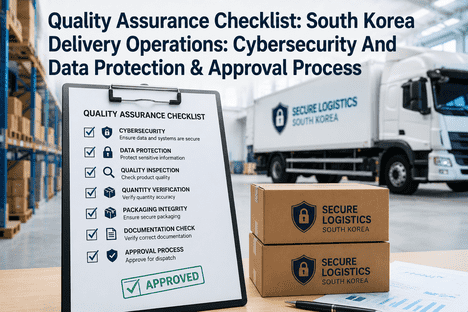
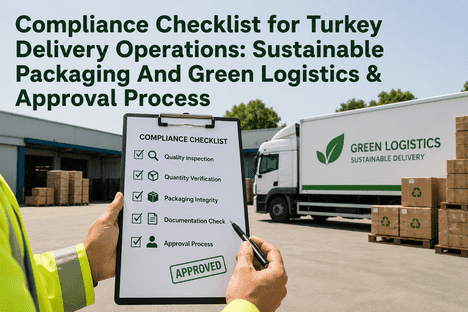
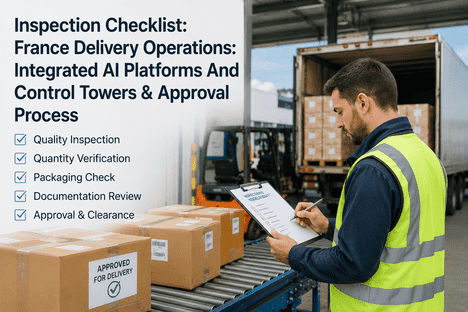
Checklist for Spain Delivery Operations: Blockchain For Documentation And Transparency & Approval Process
By Arel Dixon on June 15, 2026
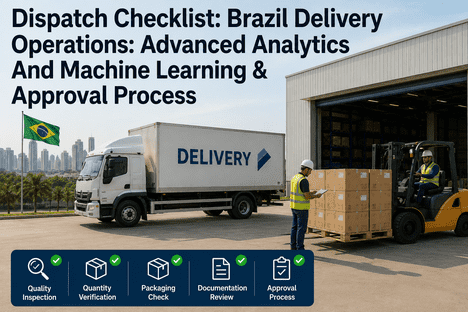
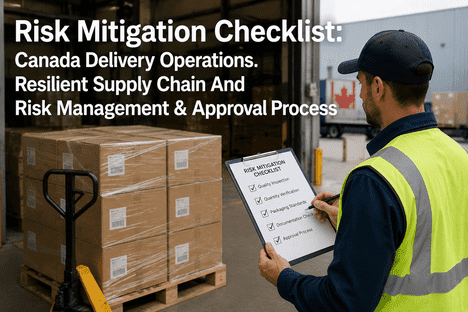
Every shipment leaving a Spanish factory carries a compliance burden that extends well beyond the physical condition of the goods. Customs authorities in destination countries require authentic documentation. Customers demand proof that quality inspections were completed before dispatch. Regulators expect a complete audit trail tracing the shipment from production through clearance. When any link in this compliance chain fails — a missing certificate, an altered invoice, an unverifiable inspection record — the shipment is delayed, rejected, or returned, and the manufacturer absorbs the cost. Blockchain for documentation and transparency closes these gaps by creating an immutable record that every authorised party can verify independently. When combined with AI-powered quality, quantity, packaging, and documentation inspection, the result is a delivery operations checklist where every checkpoint is both physically verified and digitally unforgeable. This page provides a practical checklist for Spain delivery operations implementing blockchain-secured documentation with AI-driven inspection workflows to ensure that every outbound shipment meets quality, quantity, packaging, and documentation requirements before receiving a clearance pass.
Spain Manufacturers: Every Outbound Shipment Requires a Verifiable Compliance Record. Blockchain Documentation Makes It Unforgeable. AI Inspection Makes It Complete.
iFactory AI Delivery Management integrates blockchain documentation with AI-powered inspection across five checkpoints — quality, quantity, packaging, documentation, and clearance — creating an immutable compliance record that customs, customers, and regulators can verify in real time.
Reduction in customs documentation holds for Spain manufacturers using blockchain-verified documents with AI-powered inspection checkpoints
45
Inspection criteria across five sequential checkpoints — every criterion must be verified before the clearance pass is issued by the blockchain smart contract
100%
Document authenticity guaranteed when hashes are recorded on the blockchain — all invoices, certificates, and declarations are immutable and independently verifiable
85%
Fewer documentation disputes when all parties — manufacturer, carrier, customs, and customer — access the same immutable blockchain record for every shipment
Checkpoint 1: Quality Inspection — AI Vision Verification with Blockchain Recording
Every unit in an outbound shipment from a Spanish facility must meet the quality specifications defined in the customer contract and the manufacturing standard. AI vision cameras scan each unit for surface defects, dimensional accuracy, labelling correctness, and visual conformity. Inspection results — including timestamped images — are recorded on the blockchain alongside the shipment's unique identifier, creating an immutable proof that quality verification was completed before the shipment advanced to quantity verification.
1
Surface Defect Detection
AI vision cameras inspect each unit for scratches, dents, cracks, discolouration, and surface contamination. Defects outside the acceptable tolerance range trigger a rejection that is recorded on the blockchain with a timestamped inspection image. The quality team cannot override the rejection without creating a blockchain record of the override decision, ensuring full audit transparency.
2
Dimensional Accuracy Check
Inline measurement sensors verify that every unit falls within the specified dimensional tolerances for length, width, height, and weight. Non-conforming units are flagged and quarantined automatically. The dimensional check results — including pass-fail status and measured values — are hashed and recorded on the blockchain for customer verification.
3
Labelling and Barcode Verification
AI vision reads every label and barcode to confirm that the product identifier, batch number, expiry date, and handling instructions match the shipment manifest. Any mismatch is recorded on the blockchain and blocks the shipment from advancing to packaging. The barcode hash is stored for downstream verification by logistics providers and customers.
4
Quality Record Hashing
Every quality inspection result — including images, measurements, and pass-fail status — is converted to a cryptographic hash and recorded on the blockchain. The hash links the physical inspection evidence to the shipment record, providing an immutable proof that quality verification was completed before the shipment advanced to the next checkpoint.
Checkpoint 2: Quantity Verification — Automated Counting with Blockchain Reconciliation
Quantity discrepancies between the packing list and the physical shipment are one of the most common sources of customer disputes and customs delays. iFactory AI Delivery Management automates quantity verification through inline weighing stations and barcode scanners that count every unit, pallet, and case as it moves through the dispatch workflow. The physical count is compared against the blockchain-recorded packing list hash in real time, and any discrepancy is flagged — and recorded on the blockchain — before the shipment advances to packaging integrity inspection.
1
Inline Weighing Station Validation
Every pallet and case passes through an inline weighing station that records the actual weight. The system compares the measured weight against the expected weight derived from the packing list. A variance beyond the configured tolerance — typically 2 percent for standard shipments — triggers an automated alert and a blockchain-recorded discrepancy flag. The discrepancy must be resolved before the shipment progresses.
2
Barcode and RFID Unit Count
Automated barcode and RFID scanners count every unit, case, and pallet as it exits the staging area. The physical count is hashed and recorded on the blockchain alongside the packing list hash. If the physical count differs from the manifest, the smart contract prevents the shipment from advancing to packaging and alerts the dispatch team to investigate.
3
Packing List Hash Verification
The packing list document is hashed at the moment of finalisation in the ERP system and recorded on the blockchain. The automated count system reads the hash and compares the expected quantities against the physical count. Any discrepancy between the documented and actual quantities is flagged and recorded on the blockchain before the shipment advances.
4
Quantity Discrepancy Audit Trail
Every discrepancy — whether resolved by adjusting the count, updating the packing list, or removing incorrect items — is recorded on the blockchain with a timestamp and resolution action. The audit trail provides customs and customers with a complete record of any quantity changes made during the dispatch process.
Checkpoint 3: Packaging Integrity — AI Visual Assessment with Blockchain Evidence
Packaging damage during transit is a leading cause of customer rejections and insurance claims. When the packaging leaves the factory in good condition, the carrier is responsible for damage that occurs in transit. When packaging damage is present at the time of dispatch, the manufacturer absorbs the cost. AI vision assessment at the packaging checkpoint records the condition of every pallet, case, and seal on the blockchain — providing timestamped visual evidence that resolves disputes about when and where damage occurred.
1
Seal Integrity Verification
AI vision cameras inspect the condition of container seals, pallet strapping, and case tape for evidence of tampering, breakage, or improper application. Each seal is photographed from multiple angles, and the images are hashed and recorded on the blockchain. If the seal is broken or missing, the packaging checkpoint fails and the shipment cannot proceed to documentation review.
2
Pallet Stability Assessment
Inline sensors and vision systems assess pallet load distribution, strapping tension, and wrap integrity. Unstable pallets — those with uneven load distribution, loose strapping, or insufficient stretch wrap — are flagged for repacking. The stability assessment result is hashed and linked to the shipment record on the blockchain.
3
Label and Handling Instruction Visibility
AI vision confirms that all required labels — including handling instructions, hazard warnings, and destination labels — are visible, legible, and correctly positioned. Missing or illegible labels are recorded on the blockchain, and the shipment is blocked from advancing until the labels are corrected.
4
Blockchain-Referenced Packaging Evidence
All packaging inspection images, sensor readings, and pass-fail results are hashed and recorded on the blockchain with the shipment ID. The buyer and carrier can access the blockchain record at any point in the delivery chain to verify the packaging condition at the time of dispatch — eliminating disputes about when damage occurred.
Packaging Integrity Is a Compliance Requirement. Blockchain-Recorded Visual Evidence Eliminates Disputes About When Damage Occurred.
iFactory AI Delivery Management captures timestamped packaging images, seals them with a cryptographic hash, and records them on the blockchain alongside the shipment record — giving carriers, customers, and insurers an immutable record of packaging condition at dispatch.
Documentation is the most common cause of cross-border shipment delays for Spanish manufacturers. When a certificate of origin is missing, a customs declaration is incomplete, or an invoice hash does not match the blockchain record, the shipment is held at the border until the documentation gap is resolved. iFactory AI Delivery Management's smart contract layer automates documentation validation by checking each required document against the blockchain ledger before the shipment leaves the loading bay. Missing, expired, or invalid documents are flagged automatically, and the clearance pass cannot be issued until every document meets the requirements specified in the smart contract rules.
1
Commercial Invoice Hash Validation
The commercial invoice for each shipment is hashed at the moment of finalisation in the ERP system. The smart contract reads the hash from the blockchain and validates that the invoice matches the shipment record. Any inconsistency — wrong customer, incorrect value, mismatched purchase order — blocks the clearance pass and alerts the dispatch team.
2
Certificate of Origin Authenticity
The certificate of origin is hashed and recorded on the blockchain by the issuing authority or the manufacturer's authorised signatory. The smart contract verifies that the certificate is present, current, and issued by an authorised party before allowing the shipment to proceed. Expired or missing certificates are flagged automatically, and the blockchain record provides an immutable audit trail of certificate validity at the time of dispatch.
3
Customs Declaration Completeness
The customs declaration is validated by the smart contract against the blockchain record to confirm that all required fields are populated and that the declaration references the correct shipment ID. The contract also checks that the declaration was created within the required time window before the scheduled departure.
4
Regulatory Compliance Certificate Check
For regulated products — electronics, chemicals, food products, medical devices — the smart contract validates that the required compliance certificates are hashed and recorded on the blockchain. Missing or expired certificates prevent the clearance pass from being issued, ensuring that no regulated product leaves the facility without the required regulatory approvals.
The clearance checkpoint is the final gate in the dispatch workflow. When all four preceding checkpoints — quality, quantity, packaging, and documentation — have recorded a pass result on the blockchain, a smart contract automatically generates the clearance pass. The pass is a blockchain token that carriers, customs authorities, and customers can verify independently. No manual approval is required, and no shipment can reach the loading bay without completing every required inspection and document check.
1
Sequential Gate Verification
The clearance smart contract checks that each preceding checkpoint — quality, quantity, packaging, documentation — has a blockchain-recorded pass status. If any checkpoint is still open, has a fail status, or lacks a blockchain record, the clearance pass is not issued. The sequential gate model ensures that no shipment can skip a required inspection step.
2
Blockchain Clearance Token Generation
When all checkpoints pass, the smart contract generates a unique clearance token on the blockchain. The token contains the shipment ID, the hashes of all inspection results and documents, and a timestamp. The carrier must present this token before loading begins. Customs and customers can verify the token independently without contacting the manufacturer.
3
Cross-Border Verification Portal
iFactory provides a standardised web portal and API that customs authorities in destination countries can use to verify clearance tokens in real time. The customs officer enters the shipment ID or scans the clearance token QR code, and the portal displays the blockchain record of every checkpoint, inspection result, and document hash — all independently verifiable without contacting the manufacturer.
4
Complete Audit Trail Export
The full blockchain record for each shipment — including all inspection results, document hashes, checkpoint pass-fail statuses, and the clearance token — is available for export as a structured compliance report. The report satisfies ISO 9001 audit requirements and provides regulators, customers, and internal auditors with a complete, immutable compliance record for every outbound shipment.
Before we deployed the blockchain documentation system with AI inspection, our dispatch team spent an average of 45 minutes per shipment manually verifying that the paperwork matched the goods. Certificates of origin were stored in a filing cabinet. Inspection records were paper forms filed by shift. When a French customs officer asked us to verify the authenticity of a certificate for a shipment that had already crossed the border, our logistics manager needed to locate the paper file, scan it, and email it — a process that took two hours and left the customs officer waiting. Now every document is hashed and recorded on the blockchain at the moment of creation. Every inspection result is recorded alongside the document hashes. When customs asks for verification, we give them the shipment ID. They verify the record themselves on the blockchain in under a minute. The time saving is substantial, but the real value is the trust this builds. Our customers know that every shipment they receive has been inspected, counted, packaged, and documented to a standard that cannot be faked, altered, or lost.
— Logistics Director, Precision Components Manufacturer, Valencia, Spain — 4,000 Cross-Border Shipments per Year
Implementing the Blockchain Documentation Checklist in Your Spain Facility
The checklist is delivered through iFactory AI Delivery Management, which deploys as a software layer over existing ERP, SCADA, and document management systems — without requiring infrastructure replacement. The platform connects to existing inline inspection equipment, barcode scanners, weighing stations, and AI vision cameras through standard industrial protocols. The blockchain ledger operates on a permissioned network that includes the manufacturer, logistics providers, customs authorities, and customers. Smart contracts enforce the sequential gate logic, and the clearance token is generated automatically when all checkpoints are satisfied. The typical deployment timeline is four to six weeks from first system connection to live clearance pass generation.
Frequently Asked Questions
The standard checklist includes approximately 45 inspection criteria distributed across the five sequential checkpoints: quality inspection (surface defects, dimensional accuracy, labelling, quality record hashing), quantity verification (weight validation, barcode count, packing list reconciliation, discrepancy audit trail), packaging integrity (seal verification, pallet stability, label visibility, blockchain evidence capture), documentation review (commercial invoice hash, certificate of origin, customs declaration, compliance certificates), and clearance approval (sequential gate check, blockchain token generation, cross-border verification, audit trail export). Each criterion is configurable based on the manufacturer's specific product types, destination markets, and regulatory requirements. The checklist is enforced by the smart contract layer, which prevents the clearance pass from being generated until every criterion in every checkpoint has been satisfied. Book a Demo to review the standard checklist configuration for your Spain facility.
Yes. The checklist is configurable at multiple levels. Each checkpoint's criteria can be adjusted based on product type — electronic components require different quality criteria than food products or industrial machinery. Destination market rules can be added to the documentation review checkpoint, such as requiring specific certificates for shipments to France, Germany, Italy, or markets outside the European Union. Individual customer requirements can be encoded as additional smart contract rules that must be satisfied before the clearance pass is issued. The configuration is managed through the iFactory platform interface and does not require blockchain development skills to maintain. Changes to the checklist take effect immediately and are recorded on the blockchain for audit purposes, ensuring that any modification to the inspection criteria is traceable and verifiable. Talk to an expert about configuring the checklist for your specific product portfolio and destination markets.
iFactory AI Delivery Management integrates with existing ERP systems — including SAP, Microsoft Dynamics, and Oracle — through standard API connectors. The blockchain layer operates on top of the existing workflow rather than replacing it. Documents generated in the ERP are automatically hashed and recorded on the blockchain at the moment of finalisation. Quality inspection data from existing inline equipment is captured through industrial protocol connectors and linked to the blockchain record. The existing quality management system remains the primary repository for detailed inspection data; the blockchain stores the cryptographic hashes that prove the data existed at a specific time and has not been altered. Integration scope is typically completed within the first two to three weeks of deployment. Book a Demo to see how the platform integrates with your specific ERP and quality systems.
When a checkpoint criterion fails, the shipment is blocked at that checkpoint and cannot advance to the next stage. The failed criterion is recorded on the blockchain with a timestamp and the specific reason for failure. The dispatch team can address the failure — for example, repackaging an unstable pallet, correcting a label, or updating a missing document — and request a re-inspection of the failed criterion only. The system does not require restarting the entire checklist from the beginning. However, the re-inspection and its result are recorded on the blockchain alongside the original failure, creating a complete audit trail of the failure-and-resolution cycle. This is particularly important for regulatory compliance, as it demonstrates that the manufacturer operates a controlled dispatch process where failures are identified, addressed, and documented before the shipment is cleared. If a failure in one checkpoint indicates a systematic problem — for example, repeated packaging failures — the platform can be configured to trigger a quality investigation workflow before allowing subsequent shipments to proceed. Talk to an expert about configuring failure resolution workflows for your specific operational requirements.
Your Spain Delivery Operations Deserve a Compliance Record That Cannot Be Faked, Altered, or Lost. Start with the Blockchain Documentation Checklist.
iFactory AI Delivery Management for Spain manufacturers — AI vision quality inspection, automated quantity verification, packaging integrity assessment, smart contract documentation validation, and blockchain clearance token generation. One platform. Five checkpoints. One immutable compliance record for every outbound shipment.