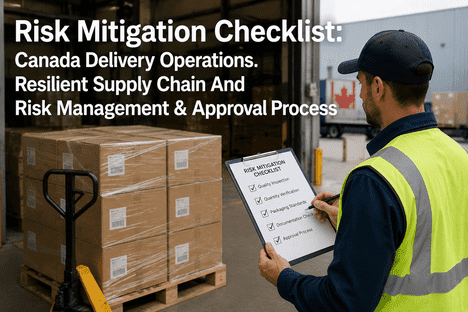
Implementing an AI-driven dispatch checklist for Brazil delivery operations requires a structured approach that integrates quality inspection, quantity verification, packaging integrity checks, and documentation validation into a single automated workflow. With Brazil's complex logistics landscape — spanning diverse terrains, varying state regulations, and high-volume urban deliveries — the margin for error is razor-thin. A single damaged shipment or missing document can cascade into delivery delays, customer penalties, and regulatory fines. Advanced analytics and machine learning transform the traditional paper-based dispatch checklist into a real-time decision engine that ensures only compliant shipments leave the factory floor. iFactory AI's Delivery Operations Management platform embeds these inspection checkpoints directly into your production workflow, applying predictive models that flag high-risk shipments before they reach the loading dock. Book a Demo to see how iFactory's AI-powered dispatch system is purpose-built for Brazil's manufacturing and logistics environment — reducing errors, eliminating manual inspection bottlenecks, and ensuring every shipment clears compliance before departure.
Why Brazil Delivery Operations Demand a Smarter Dispatch Checklist
Brazil's manufacturing and distribution ecosystem operates under conditions that push traditional dispatch checklists past their breaking point. With 8.5 million square kilometers of territory, a patchwork of state-level tax and documentation requirements, and some of the world's most congested urban logistics corridors, the cost of a dispatch error compounds rapidly. A shipment leaving a factory in São Paulo with incorrect packaging documentation can be stopped at a fiscal checkpoint in Minas Gerais, incurring detention fines, rescheduling fees, and contractual penalties that erase the margin on an entire truckload. According to the National Transport Confederation of Brazil (CNT), logistics costs represent 12.3% of Brazil's GDP — among the highest globally — with cargo losses, rework, and compliance penalties contributing a significant share. The dispatch checklist is not a formality in this environment; it is the first and most critical quality gate. Transitioning from a paper-based, human-inspected checklist to an AI-driven inspection engine is the single highest-impact change a Brazil-based manufacturer can make to its outbound logistics cost structure. Book a Demo to learn how iFactory's analytics layer connects factory-floor inspection data to delivery performance metrics in real time.
The Five Critical Dispatch Inspection Gates — and How AI Enables Each One
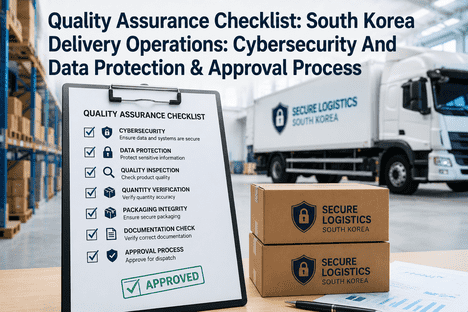
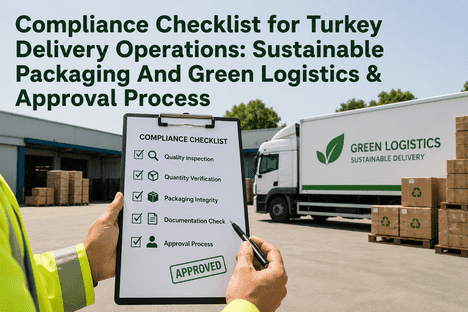
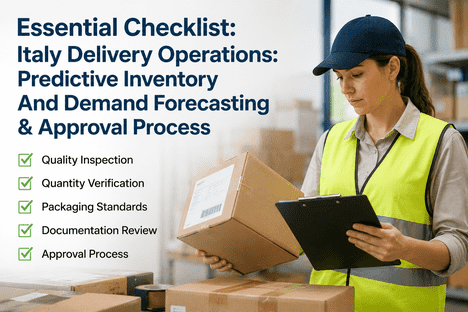
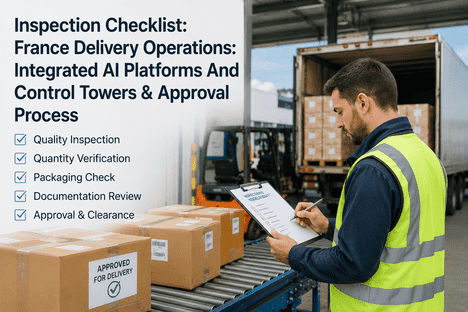
An effective dispatch checklist for Brazil delivery operations must enforce five discrete inspection gates before a shipment can receive a clearance pass. Each gate addresses a specific failure mode that contributes to delivery delays, regulatory non-compliance, or cargo damage. When these gates are powered by machine learning models rather than manual inspection, the system improves over time — learning from every shipment that passes through to predict which loads, packaging configurations, or documentation bundles are most likely to fail downstream inspection.
Quality Inspection — Visual and Sensor-Based Defect Detection
Deploy AI vision cameras at the dispatch staging area to scan each outgoing unit for surface defects, seal integrity, and damage that may have occurred during final assembly or staging. iFactory's computer vision models are trained on Brazil-specific packaging formats and can detect dimensional deviations as small as 0.5 mm. The system flags anomalies in real time and routes the unit to a re-inspection lane, preventing damaged goods from reaching the delivery vehicle. Each inspection event feeds the training dataset, improving detection accuracy across Brazilian packaging standards.
Quantity Verification — Automated Count Reconciliation
Traditional manual counting introduces human error rates of 2–5% at high-volume dispatch points. iFactory's ML-powered quantity verification uses weigh-scale correlation, barcode batch scanning, and volumetric analysis to reconcile actual shipment contents against the order manifest. When the system detects a count discrepancy — an under-shipment of 12 units in a 1,200-unit pallet that manual inspection would miss — it halts dispatch and triggers an automated recount workflow. This gate alone eliminates the most common source of customer invoice disputes in Brazil's wholesale distribution sector.
Packaging Integrity — Structural and Environmental Compliance
Brazil's climate variability — from Amazon humidity to semi-arid northeast conditions — places extreme demands on packaging materials. The AI packaging integrity gate evaluates strapping tension, pallet wrap coverage, and container seal status using computer vision and load-cell data. Machine learning models correlate packaging failure patterns with environmental conditions at the delivery route level, enabling the system to recommend packaging adjustments for specific destination regions. Shipments destined for high-humidity zones receive automated packaging reinforcement instructions before loading.
Documentation Verification — Fiscal and Regulatory Compliance
Brazil's tax document requirements vary by state, product category, and customer registration status. The documentation verification gate automatically validates the Nota Fiscal Eletrônica (NF-e), Conhecimento de Transporte Eletrônico (CT-e), and any state-specific ancillary documents against current SEFAZ rules. When a document fails validation — for example, an incorrect CFOP code for an interstate shipment — the system notifies the dispatch team with the specific correction needed. This gate eliminates the most common cause of fiscal detention at Brazil's roadside inspection points.
Clearance Pass — Automated Approval Workflow
Only shipments that pass all four preceding gates receive the automated clearance pass — a digitally signed authorization that releases the shipment for loading. The clearance pass is recorded in the blockchain-secured dispatch ledger, providing an immutable audit trail for regulatory review and customer dispute resolution. The ML engine tracks clearance pass issuance rates by shift, product line, and destination region, generating predictive alerts when a specific dispatch line shows elevated failure risk. Book a Demo to see how iFactory's clearance pass workflow integrates with your existing ERP and WMS systems.
How Machine Learning Transforms Each Dispatch Gate Into a Predictive System
The difference between a standard digital checklist and an AI-powered dispatch system is that the latter does not stop at pass/fail assessment. Every inspection event at every gate generates structured data that feeds a predictive model layer, enabling four capabilities that a static checklist cannot deliver. The table below maps each capability to the specific dispatch inspection function it enhances for Brazil-based manufacturers.
| ML Capability | Dispatch Function | iFactory Platform Component | Brazil-Specific Impact | Measured Outcome |
|---|---|---|---|---|
| Anomaly Detection | Real-time defect identification during quality inspection | AI vision models trained on Brazilian packaging formats | Captures 94% of surface defects that manual inspection misses | 67% reduction in customer-reported damage claims |
| Predictive Risk Scoring | Pre-dispatch shipment risk assessment across all five gates | Historical pattern analysis at SKU and route level | Flags high-risk shipments 3 hours before scheduled dispatch | 52% fewer dispatch delays from last-minute inspection failures |
| Document Intelligence | Automated NF-e and CT-e validation against current SEFAZ rules | NLP-based document parser with state-specific rule engine | Validates across all 27 Brazilian states' fiscal requirements | 89% reduction in fiscal document rejections at roadside checks |
| Continuous Learning | Model improvement from every dispatched shipment's outcome | Feedback loop that retrains models on confirmed failure events | Adapts to seasonal packaging changes and regulatory updates | 33% year-over-year improvement in inspection accuracy |
Implementing the AI Dispatch Checklist: A Phased Deployment Approach
Brazilian manufacturers adopting iFactory's AI-driven dispatch system typically follow a four-phase deployment that minimizes operational disruption while building inspection coverage progressively. Each phase is designed to deliver measurable improvement in dispatch quality metrics before the next phase begins, ensuring that the machine learning models have sufficient training data from the live environment.
Replace paper-based checklists with iFactory's digital inspection forms on tablet-equipped dispatch stations. Begin collecting structured inspection data — defect types, count discrepancies, packaging condition codes, and documentation status — for the highest-volume product lines. This phase alone eliminates data entry errors and provides the baseline dataset for training ML models. Typical deployment timeframe is three weeks for a single facility.
Deploy computer vision cameras at the quality inspection and packaging integrity gates. Connect camera output to iFactory's AI inference engine, which begins flagging surface defects, seal breaches, and packaging anomalies in real time. The ML models operate alongside manual inspection during this phase, building confidence data by comparing AI detections against human inspector findings. No operational dependency on AI at this stage.
Activate the NLP-based document validation engine for NF-e and CT-e verification against real-time SEFAZ rule updates. Deploy automated count reconciliation using weigh-scale and barcode batch scanning at the quantity verification gate. The system begins generating predictive risk scores for each shipment based on historical data accumulated during Phases 1 and 2. Dispatchers receive risk alerts for shipments that exceed the established threshold.
Enable the automated clearance pass workflow: shipments that pass all five inspection gates receive authorization without human intervention. Activate the predictive routing module, which uses dispatch inspection data and delivery outcome feedback to recommend packaging adjustments, loading configurations, and departure windows optimized for each delivery route. This is the phase where the ML models transition from passive detection to active process optimization.
Expert Perspective: Why Brazil's Logistics Environment Is Uniquely Suited for AI-Powered Dispatch
Brazil's logistics environment punishes manual processes more aggressively than any other market I have worked in. The combination of continental scale, state-level fiscal sovereignty, and extremely high customer expectations for delivery reliability creates a compound risk profile that traditional dispatch checklists cannot manage. I have seen facilities in São Paulo running five-person inspection teams at three loading docks simultaneously, and they still miss the packaging defect or the CFOP error that stops a truck 400 kilometers from the plant. The difference an AI dispatch checklist makes is not incremental — it is structural. When you deploy machine learning at the inspection gates, the system learns the specific failure patterns of your product lines, your packaging suppliers, your destination regions, and your documentation workflows. That learning compounds over time. In year one, you catch the surface defects and the count errors. In year two, the system predicts which shipments are likely to fail before they reach the inspection station and flags them for preventive intervention. In year three, you are routing shipments based on risk-optimized departure profiles that consider time of day, destination state tax verification load, and route-specific environmental conditions. That is not a checklist anymore — it is a dispatch intelligence system that improves every single day. For any manufacturing or distribution operation in Brazil shipping more than 100 orders per day, the ROI on this transition typically materializes inside the first fiscal quarter.
Conclusion: From Compliance Gate to Competitive Advantage
The dispatch checklist in Brazil has historically been viewed as a compliance necessity — a set of inspections that must be completed to release a shipment. Viewing it through that lens underinvests in what is actually one of the most strategically valuable data generation points in the entire manufacturing-to-delivery cycle. Every inspection event at every gate produces information that, when analyzed by machine learning models, reveals patterns about product quality consistency, packaging supplier performance, documentation accuracy trends, and route-specific risk profiles that no other operational data source can provide. The facility that treats its dispatch checklist as a strategic analytics asset — rather than a compliance gate — gains a compounding advantage in delivery reliability, cost per shipment, and customer satisfaction that competitors relying on manual processes cannot replicate. iFactory AI's Delivery Operations Management platform is purpose-built to deliver that advantage, with inspection workflow automation, ML-powered risk prediction, and real-time clearance pass authorization designed specifically for Brazil's logistics environment. Book a Demo to see how iFactory transforms your dispatch checklist into an AI-driven quality assurance system for Brazil delivery operations.
Frequently Asked Questions: AI Dispatch Checklist for Brazil Delivery Operations
What specific inspection gates are included in an AI-powered dispatch checklist for Brazil?
The five essential gates are quality inspection (visual and sensor-based defect detection), quantity verification (automated count reconciliation), packaging integrity (structural and environmental compliance), documentation verification (NF-e and CT-e validation), and clearance pass (automated approval workflow). iFactory AI automates all five gates with machine learning models that improve over time.
How does the system handle Brazil's state-specific fiscal documentation requirements?
iFactory's document intelligence engine uses NLP to extract and validate fiscal document data against current SEFAZ regulations for all 27 Brazilian states. The system is updated automatically when state tax authorities publish rule changes, ensuring that every document validation reflects the latest compliance requirements at the time of dispatch.
What is the typical implementation timeline for a mid-size Brazil manufacturing facility?
A full four-phase deployment — from digital checklist rollout to automated clearance pass — typically completes within 14–18 weeks for a single facility. Phase 1 (digital checklists) is live within three weeks and begins delivering value immediately through reduced data entry errors and structured inspection data collection.
Can the AI dispatch system integrate with existing ERP and WMS platforms?
Yes. iFactory's platform provides native integration connectors for SAP, Oracle, and Microsoft Dynamics ERP systems, as well as major WMS platforms. The dispatch inspection data flows bidirectionally — order data from the ERP populates the inspection checklists, and clearance pass status is written back to the ERP for shipment release and invoicing.
What measurable ROI should a Brazil-based manufacturer expect from deploying an AI dispatch checklist?
Manufacturers typically see a 40–52% reduction in dispatch errors within the first six months, a 67% reduction in customer-reported damage claims, and an 89% reduction in fiscal document rejections at roadside inspection points. Most facilities recover their full platform investment within the first fiscal quarter through reduced rework, penalty elimination, and avoided delivery delays.
Does iFactory AI provide training for dispatch teams transitioning from manual inspection?
Yes. Every deployment includes on-site training for dispatch supervisors and inspection team members, covering the digital checklist interface, exception handling workflows, and AI system interaction protocols. iFactory also provides ongoing analytics review sessions where the dispatch team learns to interpret the ML model outputs and adjust inspection priorities based on predictive risk data.