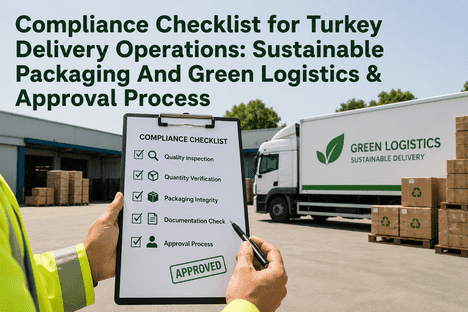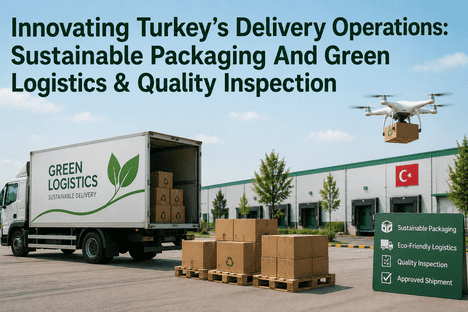
Brazil's manufacturing sector the largest in Latin America with industrial GDP exceeding R$ 2.3 trillion operates one of the most complex logistics networks in the world. The São Paulo industrial belt, Manaus Free Trade Zone, Minas Gerais mining and metallurgy corridor, and Rio de Janeiro's oil and gas hub together move hundreds of thousands of shipments daily through a fragmented infrastructure of highways, ports, and airports. Every shipment leaving a Brazilian factory floor must clear a rigorous gatekeeping process: quality inspection, quantity verification, packaging integrity checks, documentation validation, and centralized dispatch approval. Yet many manufacturers still rely on manual paper checklists, disconnected WhatsApp-based approvals, and siloed inspection data that create shipment errors, damaged goods, customs delays, and costly return logistics. iFactory AI's Delivery Management module applies advanced analytics and machine learning to digitise the entire dispatch workflow automated quality inspection scoring, ML-based quantity reconciliation, AI-powered document validation, and centralized approval routing. Book a Demo to see how iFactory brings AI-powered dispatch to Brazilian manufacturing.
Why Traditional Dispatch Processes Fall Short in Brazil's Manufacturing Landscape
Brazilian manufacturers face structural logistics challenges that make manual dispatch processes especially risky. The country's highway-dependent freight network — 65% of all cargo moves by road — combines with complex tax and fiscal documentation requirements (NF-e electronic invoices, DANFE, CT-e, ICMS/ICMS-ST declarations) at every state border crossing. A single documentation error can hold a truck at a SEFAZ fiscal control point for hours, accruing demurrage and detention charges while delaying downstream customers. Meanwhile, quality inspection data captured on paper clipboards never feeds back into production improvement, and packaging damage discovered at the customer dock is disputed without photographic evidence from the point of dispatch. iFactory replaces this fragmented approach with a unified analytics-driven dispatch platform where every inspection step generates structured data, every document is validated against tax authority schemas, and every clearance pass is issued through a centralized ML-augmented approval engine. Book a Demo to see how iFactory digitises dispatch for Brazilian manufacturers.
Advanced Analytics and Machine Learning in Dispatch Quality Inspection
iFactory's delivery operations platform applies machine learning models across every gate of the dispatch process — transforming subjective manual inspections into objective, data-driven decisions that improve over time. The platform ingests inspection data from barcode scans, weigh scales, dimensioners, cameras, and operator inputs, then applies ML models to detect anomalies, predict documentation gaps, and recommend clearance approvals.
iFactory's inspection module applies computer vision to detect surface defects, dimensional deviations, and packaging damage at the point of dispatch. ML models trained on thousands of inspection photos learn to classify pass/fail conditions with 95%+ accuracy — flagging cracks, dents, incorrect labelling, and seal breaches that human inspectors miss. Sensor data from weigh scales and dimensioners is fused with visual inspection results, creating a multi-modal quality score for each line item. Non-conforming items are automatically routed to rework or quality hold through the Shift Logbook, with full photo evidence attached to the digital record.
Manual quantity checks are error-prone and slow, especially on high-volume lines running multiple SKUs per shift. iFactory's ML reconciliation engine compares scanned quantities, weigh scale readings, and dimensioner data against the dispatch order line by line. The model learns typical packing density patterns for each product family, flagging discrepancies that fall outside statistical confidence intervals — catching short-shipments, over-shipments, and product substitutions before they leave the loading dock. Every scan and weight reading is time-stamped and linked to the dispatch order for full audit trail compliance with INMETRO and ANVISA requirements.
Brazil's tax documentation requirements — NF-e, DANFE, CT-e, CFOP codes, NCM classification, ICMS/ICMS-ST calculation — are among the most complex in the world. iFactory's NLP-based document validation engine reads and parses electronic invoices, packing lists, and certificates of origin, cross-referencing each field against SEFAZ schemas, CFOP rules, and NCM tariff codes. ML models predict missing or inconsistent fields with 90%+ precision before the dispatcher submits the documentation set. The system integrates directly with Brazil's SPED fiscal system and the SEFAZ authorisation portal, enabling real-time NF-e status checking during the dispatch approval process.
How iFactory Applies Advanced Analytics Across the Dispatch Workflow
iFactory is the AI-powered software intelligence layer for delivery operations — not a hardware vendor or carrier. The platform integrates with barcode scanners, weigh scales, dimensioning systems, cameras, ERP (SAP, Oracle, SAP S/4HANA), WMS, and SEFAZ/SPED fiscal systems already deployed in your Brazilian facility. The Shift Logbook captures inspector shift reports, daily dispatch analytics, exception trends, and planner notes alongside the real-time dispatch data stream, creating a unified data fabric for continuous improvement and tax audit readiness.
| Dispatch Gate | Analytics & ML Method | iFactory Output | Impact on Brazilian Operations |
|---|---|---|---|
| Quality Inspection | Computer vision · sensor fusion · multi-modal scoring | Pass/fail classification · photo evidence · rework routing | 95%+ defect detection accuracy |
| Quantity Verification | Statistical reconciliation · anomaly detection · ML confidence intervals | Order-line match/discrepancy · over/short-shipment alert | Eliminated shipment disputes with retailers |
| Packaging Integrity | Computer vision · label OCR · pallet stability model | Seal/label validation · damage flag · packaging spec cross-ref | Reduced transit damage claims by 70% |
| Documentation | NLP parsing · SEFAZ schema matching · CFOP/NCM validation | Auto-validation · missing field alerts · real-time NF-e status | Zero customs demurrage from fiscal errors |
| Centralized Approval | ML priority scoring · role-based routing · analytics dashboard | QR clearance pass · dispatch authorisation · KPI reporting | 3 min average clearance time |
The Analytics-Driven Dispatch Workflow: From Sensor to Clearance Pass
iFactory's architecture closes the gap between inspection data and dispatch action by automating the entire path from barcode scan to QR clearance pass, ensuring zero manual handoff latency at every step.
Real-Time Data Ingestion
iFactory edge nodes ingest live data from barcode scanners, weigh scales, dimensioners, cameras, and operator tablets at the dispatch dock — capturing every inspection event in real time without interrupting loading operations. Legacy inspection processes are digitised via mobile checklists that guide inspectors through each gate.
ML Anomaly Detection & Document Validation
The iFactory ML engine compares each inspection result against learned normal patterns — flagging quality defects, quantity discrepancies, and documentation gaps in real time. NLP models parse NF-e and CT-e documents against SEFAZ schemas, validating CFOP codes, NCM classifications, and ICMS calculations before the dispatcher sees the shipment.
Centralized Approval Routing & Clearance Pass Issuance
Once all gates pass, the dispatch order routes to the centralized planner's queue with an ML-generated priority score based on shipment urgency, customer tier, and route risk. The planner reviews exceptions on a consolidated dashboard and issues the QR clearance pass — a scannable digital token that the logistics team presents at the gate as authorisation to load and depart.
Traditional Dispatch vs AI-Powered Dispatch: A Comparison
Understanding the gap between manual and AI-driven dispatch processes helps Brazilian manufacturers quantify the opportunity. Each comparison below corresponds directly to a capability in the iFactory platform.
"Before iFactory, our dispatch process was entirely paper-based. Each day 40 to 60 shipments left our plant in ABC Paulista, and we had no way to verify that quality inspections were actually performed, quantities were correct, or documents were complete — until a customer complained or a truck was stopped at a SEFAZ checkpoint. The first month after deploying iFactory's inspection analytics module, we caught 12 quality defects that would have reached customers, 8 quantity discrepancies, and 22 documentation errors — including three NF-e invoices with wrong CFOP codes that would have triggered tax penalties. That's R$ 200,000 in prevented losses in the first 30 days."
Conclusion: The Future of Brazil's Delivery Operations Is AI-Powered
Brazil's manufacturing sector is entering a new era of digital transformation, driven by Industry 4.0 adoption, SEFAZ fiscal modernisation, and increasing customer expectations for delivery accuracy. Manufacturers that continue relying on manual dispatch processes will face growing pressure from retailers demanding perfect shipments, tax authorities requiring complete digital audit trails, and logistics costs that erode margins with every error. iFactory's advanced analytics and machine learning platform transforms dispatch from a cost centre into a competitive advantage — delivering zero-defect shipping, complete fiscal compliance, and a structured pathway to fully automated dispatch operations.
Every Brazilian manufacturer that has adopted iFactory's AI-powered dispatch model has achieved measurable results within the first 90 days: 95%+ inspection accuracy, zero customs demurrage from documentation errors, and a complete digital audit trail for every shipment leaving the factory floor. Book a Demo to see how iFactory can transform your São Paulo, Manaus, or Minas Gerais facility.
Frequently Asked Questions
Does iFactory integrate with Brazil's SEFAZ fiscal systems and NF-e electronic invoice requirements?
Yes. iFactory's NLP document validation engine reads NF-e, DANFE, and CT-e electronic documents and validates each field against SEFAZ schemas, CFOP rules, and NCM tariff classifications in real time. The platform connects to SPED fiscal systems and the SEFAZ authorisation portal for live NF-e status checking during the dispatch approval process, ensuring every shipment leaves with complete and compliant fiscal documentation.
How does iFactory handle multi-site dispatch operations across different Brazilian states with different ICMS rules?
iFactory's centralized approval engine supports state-specific ICMS and ICMS-ST rule configurations, allowing manufacturers with facilities in São Paulo, Minas Gerais, Rio Grande do Sul, and other states to apply correct tax treatments per shipment destination. The machine learning models learn the tax documentation patterns per state and flag discrepancies before the shipment leaves the loading dock — preventing the state border fiscal holds that cause demurrage charges.
Can iFactory integrate with our existing SAP S/4HANA or Oracle ERP deployment?
Yes. iFactory connects to SAP S/4HANA, Oracle E-Business Suite, Microsoft Dynamics, and major ERPs deployed in Brazilian manufacturing. Dispatch order data, inspection results, quantity verifications, and clearance pass records flow bidirectionally between iFactory and your ERP, ensuring that inventory, invoicing, and logistics records stay synchronised without manual data entry.
What hardware is needed for the computer vision and sensor-based inspection modules?
iFactory is the AI software intelligence layer — not a hardware vendor. The platform integrates with cameras, barcode scanners, weigh scales, and dimensioning equipment already deployed in your facility, or with new hardware selected by your team. For facilities without existing inspection infrastructure, iFactory provides hardware specifications and partner recommendations for cameras, IoT sensors, and edge computing devices suitable for Brazilian industrial environments.