Mexico's manufacturing sector has become one of the most dynamic in the Western Hemisphere, with nearshoring-driven growth pushing factory output and cross-border freight volumes to record levels. As production ramps up across automotive, electronics, medical devices, and aerospace verticals in industrial corridors from Monterrey to Guadalajara to Querétaro, the strain on outbound logistics infrastructure intensifies proportionally. Manufacturers shipping from Mexico face a layered challenge: managing quality and quantity verification at the factory gate while navigating cross-border documentation requirements, multiple carrier handoffs, and delivery windows that leave no room for error. Cloud-based logistics platforms and digital ecosystems are replacing the fragmented combination of paper checklists, phone calls, and spreadsheets that still governs dispatch operations across most Mexican manufacturing facilities. When quality inspection, quantity verification, packaging integrity checks, and documentation validation are integrated into a single digital workflow — with each gate enforced by machine learning models trained on facility-specific shipment data — the dispatch process transforms from a manual bottleneck into a competitive advantage in delivery reliability. iFactory AI's Delivery Operations Management platform is built for this transition, connecting factory-floor inspection data to cloud-based logistics orchestration in a unified digital ecosystem purpose-designed for Mexico's industrial manufacturing environment. Book a Demo to see how iFactory enables Mexico-based manufacturers to digitize their dispatch inspection workflow and achieve zero-defect shipping at scale.
Why Mexico's Nearshoring Boom Makes Cloud-Based Dispatch a Strategic Imperative
The structural shift in global supply chains has made Mexico the premier nearshoring destination for North American manufacturing. The country attracted over $36 billion in foreign direct investment in manufacturing capacity in 2025, with industrial real estate occupancy rates exceeding 97% in border markets like Ciudad Juárez, Tijuana, and Reynosa. This growth creates a logistics imperative: as factories expand output to serve U.S. and Canadian customers with compressed delivery timelines, the dispatch process must scale without proportional increases in inspection headcount or administrative overhead. A cloud-based logistics platform solves this scalability challenge by decoupling inspection capacity from manual labor. Digital inspection workflows at each dispatch gate — quality, quantity, packaging, documentation — operate in parallel rather than sequentially, with machine learning models surfacing only the shipments that require human review. The result is a dispatch operation that processes higher volumes with fewer inspection bottlenecks while simultaneously improving inspection accuracy. For Mexican manufacturers competing on delivery reliability as much as production cost, this capability is no longer optional. Book a Demo to learn how iFactory's cloud architecture supports Mexico's unique multi-state and cross-border logistics requirements.
The Four Pillars of a Cloud-Based Dispatch Inspection Ecosystem
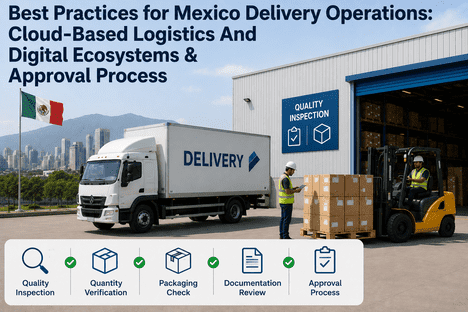
A digital dispatch ecosystem for Mexican manufacturing operations rests on four interconnected inspection pillars that replace the traditional sequential manual checklist with a parallel, AI-augmented workflow. Each pillar operates as a discrete microservice within the cloud logistics platform, generating structured data that feeds the facility's quality analytics and predictive risk models. When a shipment passes all four pillars, the system issues an automated clearance pass — a digitally signed authorization that triggers loading, carrier handoff, and cross-border documentation submission without human intervention.
Quality Inspection — AI Vision and Sensor-Based Defect Detection
Deploy computer vision cameras at the dispatch staging area that scan each outgoing unit for surface defects, dimensional accuracy, seal integrity, and packaging condition. iFactory's AI vision models are trained on manufacturing output from Mexico's key industrial verticals — automotive components, electronics assemblies, medical devices, and aerospace parts — enabling them to detect defects specific to each product category. The system flags anomalies in real time, routes affected units to re-inspection, and automatically updates the shipment manifest with inspection results. Every inspection event enriches the training dataset, improving detection accuracy for each facility's specific product mix and packaging formats.
Quantity Verification — Automated Count Reconciliation in the Cloud
Cloud-connected weigh scales, barcode batch scanners, and volumetric sensors perform automated count reconciliation at each pallet or container as it moves through the dispatch staging area. The system compares physical count data against the order manifest and purchase order in real time, flagging discrepancies before the shipment leaves the facility. When the ML model detects a count variance pattern — for example, consistent under-counts on a specific product line during afternoon shifts — it generates a predictive alert that enables the production team to investigate root causes before the next batch reaches dispatch. This pillar alone eliminates invoice disputes and chargeback penalties, which represent a significant cost burden for Mexico-based manufacturers serving U.S. and Canadian retail customers.
Packaging Integrity — Structural Compliance for Cross-Border Transit
Packaging integrity is especially critical for cross-border shipments from Mexico, where transit conditions include temperature variation, vibration, multiple handling points, and customs inspection events. iFactory's packaging integrity gate evaluates pallet strapping tension, stretch wrap coverage, corrugated condition, and container seal status using computer vision and load-cell data. Machine learning models correlate packaging failure patterns with specific destination routes and transit durations, enabling the system to recommend packaging adjustments for U.S. Midwest ground shipments versus expedited air freight to Dallas or Chicago. Shipments destined for higher-risk routes receive automated packaging reinforcement instructions before loading, reducing damage claims that erode already tight margins on Mexico-U.S. freight.
Documentation Validation — Cross-Border and Regulatory Compliance
Cross-border documentation requirements for Mexico-U.S. shipments are among the most complex in global trade, involving the Carta Porte, factura electrónica, pedimento de importación/exportación, NAFTA/USMCA certificates of origin, and customer-specific compliance documents. iFactory's document intelligence engine uses NLP to extract and validate each document against current SAT, CBP, and customer-specific requirements, flagging errors before the shipment reaches the border. The system maintains a live rule engine that updates automatically when Mexican tax authorities (SAT) or U.S. Customs and Border Protection publish regulatory changes. This gate alone eliminates the most common cause of border delays and customs penalties, which can cost Mexican manufacturers thousands of dollars per incident in detention fees, storage charges, and missed delivery penalties. Book a Demo to see how iFactory's document validation engine processes cross-border shipment documentation in real time.
How Cloud-Based Digital Ecosystems Transform Mexico Dispatch Operations
The transition from a traditional dispatch operation to a cloud-based digital ecosystem is not simply about replacing paper forms with tablets. It fundamentally changes the relationship between inspection data, operational decisions, and continuous improvement. In a paper-based environment, inspection data exists for compliance purposes only — once the shipment clears, the checklist serves no operational function. In a cloud-based digital ecosystem, every inspection event generates structured data that flows into the facility's analytics layer, enabling four transformational capabilities that a paper-based system cannot support. The table below maps each capability to the specific operational function it enhances within a Mexico-based manufacturing facility.
| Digital Ecosystem Capability | Dispatch Function | iFactory Platform Component | Mexico Operations Impact | Measured Outcome |
|---|---|---|---|---|
| Real-Time Visibility | End-to-end shipment tracking from factory floor to customer dock | Cloud-based dispatch dashboard with live inspection gate status | Cross-border shipment visibility across Mexico-U.S. transit corridors | 67% reduction in customer delivery status inquiries |
| Predictive Risk Scoring | Pre-dispatch quality risk assessment at SKU and route level | ML models trained on facility-specific shipment and inspection history | Flags at-risk shipments before loading, enabling preventive intervention | 58% fewer cross-border inspection failures and border holds |
| Automated Compliance | Regulatory document validation for SAT, CBP, and USMCA requirements | NLP-based document parser with live regulatory rule engine | Validates Carta Porte, factura, pedimento, and certificate of origin | 91% reduction in border documentation errors and customs penalties |
| Continuous Learning | Model improvement from every shipment's inspection outcome | Feedback loop retraining models on confirmed failures and root causes | Adapts to seasonal production changes, new product lines, and packaging updates | 38% year-over-year improvement in dispatch inspection accuracy |
A Phased Deployment Approach for Mexico-Based Manufacturers
Mexican manufacturers adopting iFactory's cloud-based dispatch ecosystem typically follow a four-phase deployment that minimizes operational disruption while building inspection coverage progressively. The phased approach is designed for facilities operating under production pressure — each phase delivers measurable dispatch quality improvement before the next phase begins, ensuring that the system earns operational buy-in and provides sufficient training data for the machine learning models.
Replace paper-based dispatch checklists with iFactory's cloud-based digital inspection forms on tablet-equipped dispatch stations. Deploy at the two or three highest-volume dispatch lines first, collecting structured inspection data — defect codes, count results, packaging condition ratings, and documentation status — for the facility's most critical product categories. This phase eliminates manual data entry errors and establishes the baseline dataset required for ML model training. Typical deployment time is three weeks for a single facility with 50–100 daily outbound shipments.
Deploy computer vision cameras and IoT-connected sensors at the quality inspection and packaging integrity gates. Connect sensor output to iFactory's AI inference engine, which operates alongside manual inspection during this phase. The system builds confidence data by comparing AI detections with human inspector findings, establishing the accuracy baseline that enables future automation. No operational dependency on AI at this stage — the system supports human decisions without replacing them.
Activate the NLP-based document validation engine for Carta Porte, factura electrónica, pedimento, and USMCA certificate of origin verification against current SAT and CBP requirements. Deploy automated count reconciliation using cloud-connected weigh scales and batch barcode scanners. The system begins generating predictive risk scores for each shipment, enabling the dispatch team to prioritize inspection resources on the highest-risk outbound loads before they reach the loading dock.
Enable the automated clearance pass workflow: shipments that pass all four inspection pillars receive authorization for loading and carrier handoff without human intervention. Activate the predictive routing module, which uses dispatch inspection data and delivery outcome feedback to recommend packaging configurations, departure windows, and carrier selection optimized for each shipment's destination route and delivery window requirements. This is the phase where the digital ecosystem transitions from a passive inspection tool to an active logistics optimization engine.
Industry Perspective: What Cloud-Based Dispatch Means for Mexico's Manufacturing Competitiveness
The nearshoring wave has transformed Mexico into a manufacturing powerhouse, but the logistics infrastructure has struggled to keep pace with production capacity growth. I have walked dispatch floors in Saltillo, Silao, and San Luis Potosí where the inspection process is still paper-based despite the facility operating at 95% capacity utilization. The gap between production capability and dispatch capability is the hidden bottleneck in Mexico's manufacturing competitiveness story. Cloud-based logistics platforms solve this by decoupling inspection capacity from headcount growth in a way that is immediately practical. The first time a facility runs a full shift without a single documentation hold at the border because the system validated every Carta Porte and factura before the truck left the yard — that is the moment the operations team understands that digital dispatch is not an IT project, it is a competitive advantage. For Mexico to fully capture the nearshoring opportunity, manufacturers need to invest in logistics technology with the same urgency they invest in production technology. The factories being built today on the outskirts of Monterrey and in the Bajío corridor are world-class production facilities. Their dispatch operations need to be world-class too.
Conclusion: The Dispatch Operation Is Your Factory's Last Opportunity for Quality Assurance
The dispatch staging area is the final point in the manufacturing process where quality issues can be caught and corrected before they reach the customer. It is also the only point where quality inspection data, quantity verification, packaging assessment, and documentation compliance converge in a single physical location. Treating the dispatch process as a compliance formality rather than a strategic quality gate means leaving your last line of defense — and your most valuable source of logistics quality data — underequipped. Cloud-based digital ecosystems change this by connecting every inspection event to an analytics layer that learns from every shipment, improves over time, and delivers the continuous improvement loop that paper-based systems cannot support. For Mexico-based manufacturers competing in North American supply chains where delivery reliability is increasingly the differentiator, the dispatch operation is not a cost center — it is a strategic capability that directly determines customer retention, contract renewal, and revenue growth. iFactory AI's Delivery Operations Management platform is purpose-built to deliver that capability, with cloud-based inspection workflows, AI-powered quality gates, and cross-border documentation automation designed specifically for Mexico's manufacturing and logistics environment. Book a Demo to see how iFactory transforms your dispatch operation into a digital ecosystem that drives delivery excellence across your entire Mexico-based manufacturing network.
Frequently Asked Questions: Cloud-Based Dispatch for Mexico Manufacturing
What makes cloud-based dispatch different from digital checklist software for Mexico facilities?
A cloud-based dispatch ecosystem integrates inspection data across quality, quantity, packaging, and documentation gates in real time, applies machine learning models to predict shipment risk before loading, and connects factory-floor data to cross-border logistics systems. Digital checklist software captures inspection data but lacks the predictive analytics, automated compliance validation, and continuous learning capabilities that define a digital ecosystem.
How does the system handle Mexico's Carta Porte and SAT documentation requirements?
iFactory's document intelligence engine validates Carta Porte, factura electrónica, pedimento de exportación, and USMCA certificates of origin against current SAT and CBP regulatory rules. The system is updated automatically when Mexican tax authorities or U.S. Customs publish regulatory changes, ensuring every document validation reflects current compliance requirements at the time of dispatch.
What is the typical implementation timeline for a Mexico manufacturing facility?
A full four-phase deployment completes within 14–17 weeks for a single facility. Phase 1 (digital inspection rollout) is live within three weeks. Each phase builds on the previous one, with measurable dispatch quality improvements delivered at each stage before the next phase begins.
Does the platform integrate with existing ERP, WMS, and transportation management systems?
Yes. iFactory provides native integration connectors for SAP, Oracle JD Edwards, Microsoft Dynamics, and major WMS and TMS platforms used by Mexico-based manufacturers. Inspection data flows bidirectionally — order data from the ERP populates the inspection checklists, and the clearance pass status writes back to trigger shipment release and carrier notification in the TMS.
What measurable ROI can a Mexico manufacturer expect from the cloud dispatch ecosystem?
Manufacturers typically see a 67% reduction in customer damage claims, a 58% reduction in cross-border inspection failures, a 91% reduction in border documentation errors, and a 3.7× increase in dispatch throughput without proportional headcount increases. Most facilities recover the full platform investment within six months through eliminated penalties, reduced rework, and improved delivery performance.
Can the system handle both domestic Mexico shipments and cross-border USMCA traffic?
Yes. iFactory's platform supports dispatch inspection and documentation validation for domestic Mexico shipments, cross-border Mexico-U.S. shipments under USMCA, and Mexico-Canada logistics. The documentation validation engine automatically applies the correct regulatory rules and document requirements based on the shipment's origin, destination, and product classification.