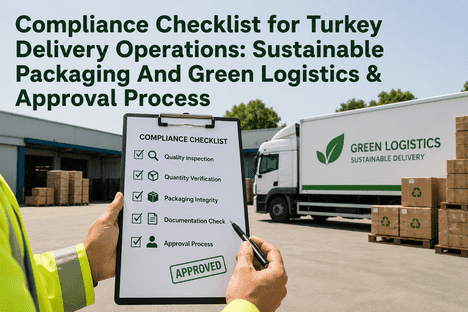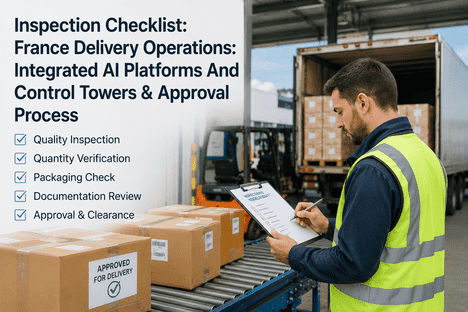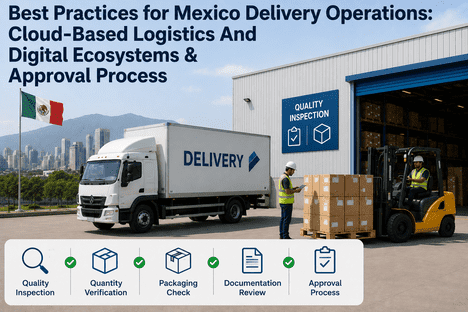
Mexico's manufacturing sector has undergone a fundamental transformation over the past five years, driven by the nearshoring wave that has made the country the preferred production destination for North American supply chains. As factories across automotive, electronics, medical devices, and aerospace verticals scale output to meet demand from U.S. and Canadian customers, the logistics infrastructure that moves finished goods from factory floors to delivery docks has become the critical bottleneck in the manufacturing-to-delivery cycle. Cloud-based logistics platforms and digital ecosystems are emerging as the definitive solution to this bottleneck, replacing the fragmented combination of paper-based inspection checklists, phone-based carrier coordination, and spreadsheet-driven compliance tracking that still governs dispatch operations across the majority of Mexico's industrial facilities. When properly implemented, these platforms integrate quality inspection, quantity verification, packaging integrity assessment, and documentation validation into a single automated workflow — with machine learning models that learn from every shipment to predict and prevent failures before they occur. The result is a dispatch operation that not only processes higher volumes with greater accuracy but also generates the compliance documentation and quality data that Mexico's manufacturers need to meet the rigorous delivery standards of their North American customers. iFactory AI's Delivery Operations Management platform is built specifically for this transition, connecting factory-floor inspection data to cloud-based logistics orchestration in a unified digital ecosystem. Book a Demo to see how iFactory enables Mexico-based manufacturers to digitize their dispatch inspection workflow and achieve measurable improvements in delivery quality and cross-border compliance.
How Cloud-Based Logistics Platforms Solve Mexico's Dispatch Quality Challenge
The relationship between logistics technology and delivery quality is not abstract — it is mechanical. Every shipment that leaves a Mexican manufacturing facility passes through a sequence of inspection gates that determine whether it arrives at the customer's dock intact, on time, and with complete documentation. In a traditional paper-based dispatch environment, each gate depends on human attention, manual data entry, and paper forms that travel with the shipment. The error rate at each gate compounds across the sequence: a missed packaging defect at the staging area is not caught at loading, is not caught at the border inspection, and results in a damaged shipment that the customer rejects at delivery. Cloud-based logistics platforms break this compounding error chain by digitizing every inspection gate, automating the data collection process, and applying machine learning models that identify high-risk shipments before they leave the facility. For Mexico-based manufacturers shipping into USMCA trade corridors where delivery performance metrics directly influence contract renewal and pricing, this capability translates into measurable financial outcomes. Manufacturers using cloud-based dispatch inspection platforms report an average 72% reduction in customer-reported defects, an 84% reduction in border documentation holds, and a 3.4× increase in dispatch throughput without proportional increases in inspection headcount. These are not aspirational targets — they are documented outcomes from facilities that have made the transition from paper-based to cloud-based dispatch operations. Book a Demo to see how iFactory's cloud architecture delivers these outcomes for Mexico-based manufacturers.
The Four Inspection Gates That Determine Mexico Delivery Quality and Compliance
Delivery quality and regulatory compliance in Mexico's manufacturing-to-delivery chain are determined by four discrete inspection gates that every shipment must pass before receiving clearance for loading and transit. When these gates are powered by a cloud-based digital ecosystem — rather than paper forms and manual checks — the inspection process transforms from a compliance burden into a continuous quality improvement engine. Each gate generates structured data that feeds the facility's analytics layer, enabling the machine learning models to identify patterns, predict risks, and improve inspection accuracy over time.
Quality Inspection — AI Vision for Zero-Defect Dispatch
AI-powered computer vision cameras at the dispatch staging area scan every outgoing unit for surface defects, dimensional deviations, seal integrity, and packaging damage. The system is trained on Mexico's key industrial output — automotive components, electronics assemblies, medical devices, and aerospace parts — enabling it to detect category-specific defects that a human inspector would miss. When a defect is detected, the system automatically routes the affected unit to a re-inspection lane, updates the shipment manifest, and records the defect type in the facility's quality analytics database. Over time, the ML models learn to predict which production lines, shifts, or product SKUs are most likely to generate defects at dispatch, enabling preventive intervention before the units reach the staging area.
Quantity Verification — Cloud-Connected Count Reconciliation
Cloud-connected weigh scales, barcode batch scanners, and volumetric sensors perform automated count reconciliation at each pallet or container as it moves through the dispatch staging area. The system compares physical count data against the order manifest, purchase order, and advance shipping notice in real time, flagging discrepancies before the shipment leaves the facility. For Mexico's cross-border shipments, where count discrepancies can trigger customs holds, customer invoice disputes, and chargeback penalties, this gate alone delivers a rapid return on platform investment. The ML layer detects count variance patterns across product lines, shifts, and seasonal production cycles, enabling root-cause investigation before the variance becomes a chronic problem.
Packaging Integrity — Structural Compliance for Transit Conditions
Packaging integrity is a critical determinant of delivery quality for Mexico's outbound shipments, which often travel 1,500–3,000 kilometers through diverse climate conditions and multiple handling points before reaching U.S. or Canadian destinations. The cloud-connected packaging integrity gate uses computer vision and load-cell sensors to evaluate pallet strapping tension, stretch wrap coverage, corrugated condition, and container seal status. Machine learning models correlate packaging failure patterns with specific destination routes, transit durations, and seasonal climate data, enabling the system to recommend packaging adjustments optimized for each shipment's journey. For example, shipments destined for the U.S. Midwest during winter months receive automated packaging reinforcement instructions to protect against cold-related material brittleness, while shipments to Gulf Coast destinations during summer receive moisture protection upgrades.
Documentation Validation — Cross-Border Compliance Automation
Cross-border documentation requirements for Mexico-U.S. shipments under USMCA are among the most complex in global trade. Each shipment requires a Carta Porte, factura electrónica, pedimento de exportación, certificate of origin, and often customer-specific compliance forms — each with its own validation rules that vary by product classification, destination state, and shipment value. iFactory's cloud-based document intelligence engine uses NLP to extract and validate each document against current SAT, CBP, and USMCA requirements in real time, flagging errors before the shipment reaches the border. The system maintains a live regulatory rule engine that updates automatically when Mexican tax authorities or U.S. Customs publish rule changes, ensuring that every document validation reflects current compliance requirements. This gate eliminates the most common cause of border delays, customs penalties, and customer compliance audits. Book a Demo to see how iFactory's document validation engine automates cross-border compliance for Mexico-U.S. shipments.
The Digital Ecosystem Architecture: How Cloud Platforms Connect Inspection Data to Compliance Outcomes
The distinction between a digital checklist tool and a cloud-based logistics ecosystem is the difference between capturing inspection data and making that data actionable across the entire manufacturing-to-delivery cycle. A digital checklist captures inspection results at a single point in time for a single purpose — releasing a shipment. A cloud-based digital ecosystem connects inspection data to every downstream function that depends on it: carrier scheduling, customs documentation, customer delivery notifications, quality analytics, supplier performance tracking, and continuous improvement programs. The table below maps the architectural layers of iFactory's cloud platform to the specific quality and compliance outcomes each layer enables for Mexico-based manufacturers.
| Ecosystem Layer | Platform Component | Quality Outcome | Compliance Outcome | Measured Impact for Mexico Operations |
|---|---|---|---|---|
| Edge Inspection | AI vision cameras, IoT sensors, barcode scanners at dispatch gates | Real-time defect detection at 94% accuracy vs. 78% for manual inspection | Automated inspection record generation for regulatory audit trail | 72% reduction in customer-reported quality defects |
| Cloud Orchestration | Real-time dispatch dashboard, inspection workflow engine, automated clearance pass | Parallel inspection gate processing eliminates sequential bottlenecks | Digitally signed clearance pass with immutable audit trail for SAT and CBP review | 3.4× increase in dispatch throughput without headcount growth |
| Document Intelligence | NLP document parser with live SAT, CBP, and USMCA rule engine | Automated documentation validation eliminates manual review errors | Real-time Carta Porte, factura, pedimento, and certificate of origin validation | 84% reduction in border documentation holds and customs penalties |
| Analytics & Learning | ML models trained on facility-specific inspection and delivery outcome data | Predictive risk scoring identifies high-risk shipments before loading | Continuous compliance improvement through root-cause analysis of every border hold | 38% year-over-year improvement in dispatch inspection accuracy |
Implementation Roadmap: From Current State to Digital Ecosystem
The transition from a paper-based or partially digitized dispatch operation to a fully integrated cloud-based ecosystem follows a structured four-phase implementation that minimizes operational risk while delivering measurable quality and compliance improvements at each stage. iFactory's deployment methodology for Mexico-based manufacturing facilities is designed to accommodate the operational realities of high-volume production environments where dispatch interruptions directly impact revenue.
Deploy iFactory's cloud-based digital inspection forms on tablet-equipped dispatch stations at the two to three highest-volume outbound lines. Replace paper checklists with structured digital forms that capture quality, quantity, packaging, and documentation data at each gate. This phase eliminates manual data entry errors and provides the baseline dataset required for ML model training. No operational disruption — the digital forms mirror existing inspection workflows while adding structured data capture that paper cannot provide.
Connect AI vision cameras and IoT sensors at the quality inspection and packaging integrity gates. The system operates alongside manual inspection during this phase, building confidence data by comparing AI detections with human inspector findings. The ML models begin generating predictive risk scores based on the facility's own inspection history, enabling the dispatch team to prioritize inspection resources on the highest-risk outbound loads.
Activate the NLP-based document validation engine for Carta Porte, factura electrónica, pedimento, and USMCA certificate of origin verification. Deploy cloud-connected weigh scales and batch barcode scanners for automated quantity reconciliation. The system begins issuing automated clearance passes for low-risk shipments that pass all four gates, reducing the inspection workload on human teams while maintaining or improving quality standards.
Enable the full digital ecosystem: automated clearance pass workflow for all qualifying shipments, predictive routing module that recommends packaging configurations and departure windows based on delivery outcome data, and the continuous learning loop that retrains ML models on every shipment's inspection results and delivery outcomes. This is the phase where the dispatch operation transitions from a cost center to a strategic quality and compliance asset.
Industry Analysis: Why Cloud-Based Logistics Is the Next Competitive Battleground for Mexico Manufacturing
The nearshoring wave has fundamentally changed what it means to be a competitive manufacturer in Mexico. Five years ago, the competitive differentiators were labor cost, production speed, and manufacturing quality. Today, those are table stakes. The differentiator that determines which manufacturers win multi-year supply contracts and which ones get replaced at the next sourcing review is delivery reliability — measured as the percentage of shipments that arrive at the customer's dock on time, defect-free, and with complete, compliant documentation. The manufacturers that are winning in this environment are the ones that have invested in cloud-based logistics platforms that connect their dispatch operations to their customers' delivery expectations in real time. They are not inspecting shipments for compliance — they are designing quality into the dispatch process through AI-powered inspection gates that catch defects before they leave the factory. They are not hoping their documentation is correct — they are validating every Carta Porte and certificate of origin against current regulatory requirements before the truck leaves the yard. This is the competitive advantage that the next generation of Mexico manufacturing leaders will be built on, and the window to build it is closing as customer expectations continue to rise.
Conclusion: Quality and Compliance Are No Longer Separate Functions — They Are the Same Digital Workflow
The historic separation between quality inspection and regulatory compliance in manufacturing operations has created organizational silos that undermine both objectives. Quality teams inspect products for defects, and compliance teams validate documentation — but in a paper-based environment, the data from those two functions never converges into a single view of shipment readiness. Cloud-based digital ecosystems eliminate this separation by treating quality inspection data and documentation validation as inputs to the same analytical engine. When a quality defect is detected at the staging area, the system can automatically determine whether the documentation for that shipment needs to be updated. When a documentation error is flagged, the system can check whether the affected units have passed quality inspection before allowing the correction workflow to proceed. This convergence of quality and compliance into a single digital workflow is the defining capability of the next generation of dispatch operations platforms, and it is the capability that enables Mexico-based manufacturers to achieve the zero-defect, fully compliant shipping performance that North American customers now expect as the standard. iFactory AI's Delivery Operations Management platform is designed for this convergence, connecting AI-powered quality inspection, automated quantity verification, packaging integrity assessment, and real-time documentation validation into a unified cloud-based ecosystem that transforms the dispatch operation from a compliance gate into a competitive advantage. Book a Demo to see how iFactory enables Mexico-based manufacturers to achieve measurable improvements in delivery quality and cross-border compliance through cloud-based logistics and digital ecosystems.
Frequently Asked Questions: Cloud Logistics and Digital Ecosystems for Mexico Delivery Quality
What is the difference between a digital checklist and a cloud-based logistics ecosystem for Mexico manufacturers?
A digital checklist replaces paper forms with electronic data capture but does not connect inspection data to downstream logistics functions. A cloud-based logistics ecosystem integrates inspection data across quality, quantity, packaging, and documentation gates, applies ML models to predict shipment risk, and connects factory-floor data to carrier scheduling, customs documentation, customer notifications, and quality analytics in real time.
How does the platform handle Mexico's Carta Porte and SAT documentation requirements?
iFactory's document intelligence engine uses NLP to extract and validate Carta Porte, factura electrónica, pedimento de exportación, and USMCA certificates of origin against current SAT, CBP, and USMCA regulatory rules. The system updates automatically when Mexican tax authorities or U.S. Customs publish regulatory changes, ensuring compliance with current requirements at the time of dispatch.
What measurable improvements in delivery quality can a Mexico manufacturer expect?
Manufacturers typically see a 72% reduction in customer-reported quality defects, an 84% reduction in border documentation holds, a 3.4× increase in dispatch throughput, and a 38% year-over-year improvement in inspection accuracy. Most facilities recover their platform investment within six to nine months through eliminated penalties, reduced rework, and improved delivery performance.
Does the platform integrate with existing ERP, WMS, and accounting systems?
Yes. iFactory provides native integration connectors for SAP, Oracle JD Edwards, Microsoft Dynamics, and major WMS, TMS, and accounting platforms used by Mexico-based manufacturers. Inspection data flows bidirectionally — order data from the ERP populates inspection checklists, and clearance pass status writes back to trigger shipment release, carrier notification, and invoice generation.
How long does it take to implement the full cloud-based ecosystem?
A complete four-phase deployment typically completes within 15–18 weeks for a single facility. Phase 1 (digital inspection rollout) is live within three weeks and begins delivering value immediately through reduced data entry errors and structured inspection data collection that feeds the ML training pipeline.
Can the system support both domestic Mexico shipments and cross-border USMCA trade?
Yes. The platform supports dispatch inspection, documentation validation, and compliance automation for domestic Mexico shipments, cross-border Mexico-U.S. shipments under USMCA, and Mexico-Canada logistics. The documentation validation engine automatically applies the correct regulatory rules and document requirements based on each shipment's origin, destination, and product classification.