Best Practices for Mexico Delivery Operations Cloud-Based Logistics And Digital Ecosystems & Approval Process
By Arel Dixon on June 13, 2026
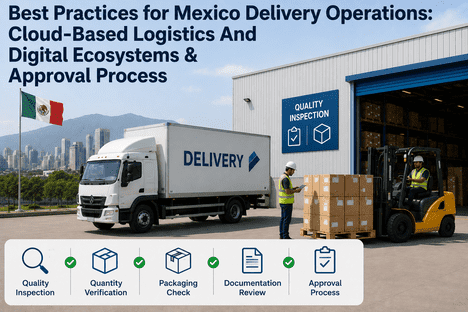
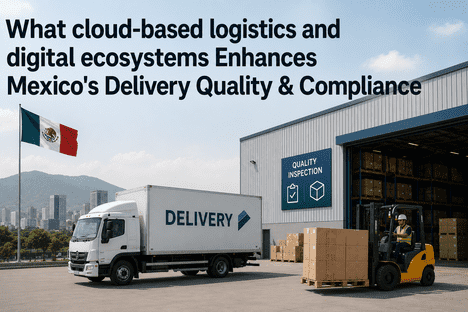
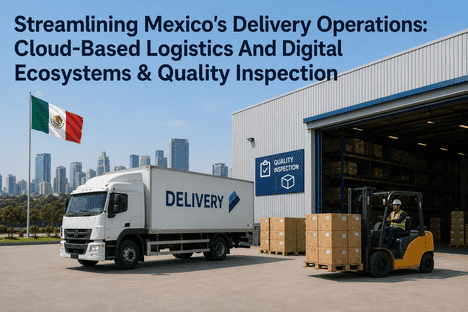
Implementing a best-practice dispatch checklist for Mexico delivery operations requires a structured approach that integrates quality inspection, quantity verification, packaging integrity checks, and documentation validation into a single automated approval workflow. With Mexico's manufacturing sector operating at near-record capacity across automotive, electronics, medical devices, and aerospace verticals — and cross-border USMCA trade volumes reaching new highs — the margin for dispatch error has never been thinner. A single damaged shipment, miscounted pallet, or missing Carta Porte can cascade into delivery delays, customs holds, customer penalties, and compliance fines that erase the margin on an entire truckload. Cloud-based logistics platforms and digital ecosystems transform the traditional paper-based dispatch checklist into a real-time decision engine that ensures only compliant shipments leave the factory floor. iFactory AI's Delivery Operations Management platform embeds these inspection checkpoints directly into your production workflow, applying machine learning models that flag high-risk shipments before they reach the loading dock and issuing automated clearance passes only to shipments that meet every quality and compliance criterion. Book a Demo to see how iFactory's AI-powered dispatch system is purpose-built for Mexico's manufacturing and cross-border logistics environment — reducing errors, eliminating manual inspection bottlenecks, and ensuring every shipment clears compliance before departure.
BEST PRACTICES · MEXICO DELIVERY OPERATIONS · CLOUD-BASED LOGISTICS & DIGITAL ECOSYSTEMS
iFactory AI Delivers an Intelligent Dispatch Checklist for Mexico's Most Demanding Delivery Operations.
Automate quality inspection, quantity verification, packaging checks, and documentation validation — with machine learning models that learn from every shipment to reduce errors, accelerate clearance, and ensure cross-border compliance under USMCA.
Mexico's manufacturing sector is operating at record capacity, driven by nearshoring investment that reached $36 billion in 2025 across industrial corridors from Monterrey to Guadalajara to Querétaro. As production output scales to serve U.S. and Canadian customers with compressed delivery timelines, the dispatch process — historically treated as a low-tech compliance gate — has become the critical bottleneck in the manufacturing-to-delivery cycle. In a traditional paper-based dispatch environment, inspection depends on human attention, manual data entry, and paper forms that travel with the shipment. The error rate at each gate compounds across the sequence: a packaging defect missed at the staging area is not caught at loading, is not caught at the border inspection, and results in a customer rejection at delivery. Cloud-based logistics platforms break this compounding error chain by digitizing every inspection gate, applying machine learning models that identify high-risk shipments before they leave the facility, and issuing automated clearance passes that require no human review for compliant shipments. For Mexico-based manufacturers shipping into USMCA trade corridors where delivery performance metrics directly influence contract renewal and pricing, this capability translates directly into measurable financial outcomes. Book a Demo to learn how iFactory's cloud-based dispatch checklist improves delivery quality and compliance for Mexico-based manufacturers.
Inspection Coverage Gap
Manual dispatch inspection covers only sample-based checks at each gate — 2–5% of shipments receive full inspection. The remaining 95% pass through with minimal verification, creating a quality gap that customers and auditors identify as a documentation risk in every compliance assessment.
Classification Inconsistency
Inter-inspector agreement on defect severity at dispatch ranges from 72% to 85%. Two operators inspecting the same shipment classify packaging damage or count discrepancies differently, creating unreliable quality records that undermine customer confidence.
Documentation Latency
Dispatch records are handwritten on paper logs or entered into spreadsheets 4 to 24 hours after inspection. Transcription errors, missing entries, and delayed record creation create a traceability gap that erodes audit evidence quality and delays cross-border clearance.
Border Compliance Risk
Incorrect or missing Carta Porte, factura electrónica, pedimento de exportación, or USMCA certificate of origin documentation is the leading cause of border holds and customs penalties for Mexico-U.S. shipments, costing manufacturers thousands per incident in detention fees.
The Five Dispatch Gates
02 / The Five Critical Dispatch Inspection Gates — and How AI Enables Each One
An effective dispatch checklist for Mexico delivery operations must enforce five discrete inspection gates before a shipment can receive a clearance pass. Each gate addresses a specific failure mode that contributes to delivery delays, regulatory non-compliance, or cargo damage. When these gates are powered by machine learning models rather than manual inspection, the system improves over time — learning from every shipment that passes through to predict which loads, packaging configurations, or documentation bundles are most likely to fail downstream inspection.
01
QUALITY INSPECTION
AI Vision Defect Detection at the Dispatch Staging Area
Deploy AI vision cameras at the dispatch staging area to scan each outgoing unit for surface defects, seal integrity, and damage that may have occurred during final assembly or staging. iFactory's computer vision models are trained on Mexico's key industrial output — automotive components, electronics assemblies, medical devices, and aerospace parts — enabling them to detect category-specific defects that a human inspector would miss. The system flags anomalies in real time and routes the affected unit to a re-inspection lane, preventing damaged goods from reaching the delivery vehicle. Each inspection event feeds the training dataset, improving detection accuracy across Mexican manufacturing packaging standards and product configurations.
02
QUANTITY VERIFICATION
Automated Count Reconciliation with Cloud-Connected Sensors
Traditional manual counting introduces human error rates of 2–5% at high-volume dispatch points in Mexico's busiest manufacturing facilities. iFactory's ML-powered quantity verification uses cloud-connected weigh scales, barcode batch scanners, and volumetric analysis to reconcile actual shipment contents against the order manifest, purchase order, and advance shipping notice in real time. When the system detects a count discrepancy — an under-shipment that manual inspection would miss — it halts dispatch and triggers an automated recount workflow before the discrepancy reaches the customer. For Mexico's cross-border shipments, where count discrepancies can trigger customs holds, customer invoice disputes, and chargeback penalties, this gate alone delivers a rapid return on platform investment.
03
PACKAGING INTEGRITY
Structural Compliance for Mexico-to-USMCA Cross-Border Transit
Packaging integrity is a critical determinant of delivery quality for Mexico's outbound shipments, which often travel 1,500–3,000 kilometers through diverse climate conditions and multiple handling points before reaching U.S. or Canadian destinations. The cloud-connected packaging integrity gate uses computer vision and load-cell sensors to evaluate pallet strapping tension, stretch wrap coverage, corrugated condition, and container seal status. Machine learning models correlate packaging failure patterns with specific destination routes, transit durations, and seasonal climate data, enabling the system to recommend packaging adjustments optimized for each shipment's journey. Shipments destined for high-humidity or extreme-temperature routes receive automated packaging reinforcement instructions before loading, reducing damage claims that erode already tight margins on Mexico-U.S. freight.
04
DOCUMENTATION VALIDATION
Automated Cross-Border Compliance for SAT, CBP, and USMCA Requirements
Cross-border documentation requirements for Mexico-U.S. shipments under USMCA are among the most complex in global trade. Each shipment requires a Carta Porte, factura electrónica, pedimento de exportación or importación, USMCA certificate of origin, and often customer-specific compliance forms — each with validation rules that vary by product classification, destination state, and shipment value. iFactory's cloud-based document intelligence engine uses NLP to extract and validate each document against current SAT, CBP, and USMCA requirements in real time, flagging errors before the shipment reaches the border. The system maintains a live regulatory rule engine that updates automatically when Mexican tax authorities or U.S. Customs publish rule changes. This gate eliminates the most common cause of border delays and customs penalties.
05
CLEARANCE PASS
Automated Approval Workflow with Digital Audit Trail
Only shipments that pass all four preceding gates receive the automated clearance pass — a digitally signed authorization that releases the shipment for loading and carrier handoff without human intervention. The clearance pass is recorded in the blockchain-secured dispatch ledger, providing an immutable audit trail for regulatory review, customer dispute resolution, and USMCA compliance verification. The ML engine tracks clearance pass issuance rates by shift, product line, and destination region, generating predictive alerts when a specific dispatch line shows elevated failure risk. The clearance pass also triggers downstream logistics events — carrier notification, customs pre-clearance submission, customer advance shipping notice — automating the entire dispatch-to-delivery workflow. Book a Demo to see how iFactory's clearance pass workflow integrates with your existing ERP, WMS, and TMS systems for Mexico-based manufacturing operations.
Measured Outcomes
03 / Measured Impact on Dispatch Quality and Compliance Performance
The deployment of AI-powered dispatch checklists across Mexico-based manufacturing facilities has produced measurable improvements in both delivery quality and cross-border compliance performance. The following comparison reflects documented results from facilities transitioning from paper-based dispatch inspection to cloud-based digital ecosystems powered by iFactory AI. Book a Demo to schedule a dispatch assessment for your Mexico facility.
QUALITY METRIC
MANUAL DISPATCH
AI-POWERED DIGITAL ECOSYSTEM
IMPROVEMENT
Inspection Coverage at Dispatch
Sample-based — 2-5% of shipments
100% of every outbound shipment
Sample → Full coverage
Dispatch Error Rate
2.8–4.5% of shipments contain errors
Under 0.6% dispatch error rate
4.5% → 0.6% error rate
Border Documentation Holds
8–14% of cross-border shipments flagged
Under 1.5% border hold rate
14% → 1.5% border holds
Customer Damage Claims
1.2–2.8% of shipments result in claims
Under 0.4% claim rate
2.8% → 0.4% claims
Dispatch Throughput
Manual bottleneck at 80–100 shipments/day
250+ shipments/day with same team
100 → 250+ shipments/day
Platform Architecture
04 / Cloud-Based Digital Ecosystem Architecture for Mexico Dispatch Operations
The cloud-based digital ecosystem for Mexico dispatch operations combines deep-learning defect detection models, real-time sensor processing pipelines, and automated compliance documentation into a unified architecture that operates at production line speed. The platform connects factory-floor inspection data to downstream logistics systems — carrier scheduling, customs pre-clearance, customer delivery notifications — through a single cloud-native orchestration layer. Book a Demo to explore the full platform architecture for your Mexico facility.
The defect detection engine uses convolutional neural networks trained on over 500,000 labeled inspection images spanning Mexico's manufacturing verticals — automotive components, electronics assemblies, medical devices, aerospace parts, and industrial equipment. The models operate at 99.4% classification accuracy across all defect types with a false positive rate below 0.5%, exceeding human inspector consistency by a significant margin. Each detected defect is classified by type, severity grade, and position on the unit, generating a structured quality data point that feeds into the digital dispatch record. The inference pipeline processes inspections at line speed without introducing dispatch delay, enabling real-time quality decisions that prevent defective product from reaching the loading dock.
Every dispatch inspection event generates a structured quality record that includes timestamp, inspection station, SKU, batch number, inspection results at each gate, defect classifications, and a digitally signed clearance pass. These records are linked to the order, purchase order, and customer contract — creating a complete traceability chain from manufacturing to delivery. The traceability database supports USMCA compliance documentation requirements, enabling the quality team to instantly query all shipments within a specific time window, from a specific production line, or with specific defect characteristics. The platform generates compliance reports in the formats that SAT, CBP, and customer auditors expect without manual data compilation.
The compliance documentation module automatically compiles the dispatch records, inspection logs, defect trend analyses, and clearance pass records required for USMCA compliance, SAT audits, and customer quality reviews. The platform maps each dispatch data point to the specific regulatory and customer requirement — an auditor request for evidence of pre-dispatch quality inspection is answered with the AI model detection records, inspection accuracy metrics, and a complete dispatch log for the audit period. The documentation is generated in the formats auditors expect without requiring quality engineers to spend weeks compiling evidence before each compliance review.
Implementation Phases
05 / A Phased Deployment Approach for Mexico-Based Manufacturing Facilities
The transition from a paper-based or partially digitized dispatch operation to a fully integrated cloud-based ecosystem follows a structured four-phase implementation that minimizes operational risk while delivering measurable quality and compliance improvements at each stage. Each phase builds on the previous one, ensuring that the machine learning models have sufficient training data from the live environment before the next phase begins.
Phase 1
Weeks 1–3
Digital Checklist Rollout at High-Volume Dispatch Lines
Deploy iFactory's cloud-based digital inspection forms on tablet-equipped dispatch stations at the two to three highest-volume outbound lines. Replace paper checklists with structured digital forms that capture quality, quantity, packaging, and documentation data at each gate. This phase eliminates manual data entry errors and provides the baseline dataset required for ML model training. Typical deployment time is three weeks for a single facility with 50–150 daily outbound shipments. No operational disruption — the digital forms mirror existing inspection workflows while adding structured data capture.
Phase 2
Weeks 4–7
AI Vision and Sensor Integration at Quality and Packaging Gates
Deploy AI vision cameras and IoT-connected sensors at the quality inspection and packaging integrity gates. Connect sensor output to iFactory's AI inference engine, which begins flagging surface defects, packaging anomalies, and seal breaches in real time. The ML models operate alongside manual inspection during this phase, building confidence data by comparing AI detections against human inspector findings. No operational dependency on AI at this stage — the system supports human decisions without replacing them.
Phase 3
Weeks 8–13
Document Intelligence and Quantity Verification Automation
Activate the NLP-based document validation engine for Carta Porte, factura electrónica, pedimento, and USMCA certificate of origin verification against current SAT and CBP requirements. Deploy cloud-connected weigh scales and batch barcode scanners for automated count reconciliation. The system begins generating predictive risk scores for each shipment based on historical data accumulated during Phases 1 and 2, enabling the dispatch team to prioritize inspection resources on the highest-risk outbound loads.
Phase 4
Weeks 14+
Full Ecosystem with Automated Clearance Pass and Predictive Routing
Enable the automated clearance pass workflow: shipments that pass all five inspection gates receive authorization for loading and carrier handoff without human intervention. Activate the predictive routing module, which uses dispatch inspection data and delivery outcome feedback to recommend packaging configurations, departure windows, and carrier selection optimized for each shipment's destination and delivery window requirements. This is the phase where the digital ecosystem transitions from a passive inspection tool to an active logistics optimization engine.
Industry Voice
Expert Review
M
M. Vargas, Director of Logistics Operations — Latin America Manufacturing, 22 Years
I have managed logistics operations across seven manufacturing facilities in Mexico over 22 years, serving automotive, electronics, and medical device customers with USMCA trade corridor shipments. The single most significant variable in delivery performance has always been the quality of the dispatch process — not transportation speed, not carrier selection, but whether the shipment left the factory correctly in the first place. The best carrier in the world cannot fix a damaged product, a miscounted pallet, or a missing Carta Porte. Manual dispatch inspection, regardless of how diligent the operators, cannot provide the level of quality assurance that today's customer delivery expectations demand because the process is fundamentally limited — by inspection coverage, by inspector variability, by documentation latency, and by the human attention constraint at high-volume dispatch operations. AI-powered dispatch checklists change this fundamentally. The first time you see the system catch a packaging defect that a human inspector walked past, or flag a Carta Porte error before the truck reaches the border, you understand that this is not an incremental improvement — it is a structural change in what the dispatch process can deliver. For any Mexico-based manufacturer shipping more than 50 outbound orders per day, the ROI on this transition typically materializes within the first fiscal quarter.
M. Vargas, Director of Logistics OperationsLatin America Manufacturing — 22 Years, USMCA Trade Compliance Certified
Conclusion
06 / The Dispatch Checklist Is Not a Compliance Formality — It Is Your Last Line of Defense
The dispatch staging area is the final point in the manufacturing process where quality issues can be caught and corrected before they reach the customer. It is also the only point where quality inspection data, quantity verification, packaging assessment, and documentation compliance converge in a single physical location. Treating the dispatch process as a compliance formality rather than a strategic quality gate means leaving your last line of defense — and your most valuable source of logistics quality data — underequipped. Cloud-based digital ecosystems change this by connecting every inspection event to an analytics layer that learns from every shipment, improves over time, and delivers the continuous improvement loop that paper-based systems cannot support. For Mexico-based manufacturers competing in North American supply chains where delivery reliability is increasingly the differentiator, the dispatch operation is no longer a cost center — it is a strategic capability that directly determines customer retention, contract renewal, and revenue growth. iFactory AI's Delivery Operations Management platform is purpose-built to deliver that capability, with cloud-based inspection workflows, AI-powered quality gates, automated clearance pass authorization, and cross-border documentation automation designed specifically for Mexico's manufacturing and logistics environment. Book a Demo to see how iFactory transforms your dispatch operation into a digital ecosystem that drives delivery excellence across your entire Mexico-based manufacturing network.
100%
Every Outbound Shipment Fully Inspected at All Gates
The five essential gates are quality inspection (AI vision defect detection), quantity verification (cloud-connected count reconciliation), packaging integrity (structural compliance for cross-border transit), documentation validation (Carta Porte, factura, pedimento, USMCA certificate of origin), and clearance pass (automated approval workflow). iFactory AI automates all five gates with machine learning models that improve over time based on facility-specific dispatch data.
iFactory's document intelligence engine uses NLP to extract and validate Carta Porte, factura electrónica, pedimento de exportación, and USMCA certificates of origin against current SAT, CBP, and USMCA regulatory rules. The system updates automatically when Mexican tax authorities or U.S. Customs publish regulatory changes, ensuring every document validation reflects current compliance requirements at the time of dispatch.
A full four-phase deployment — from digital checklist rollout to automated clearance pass — typically completes within 14–17 weeks for a single facility. Phase 1 (digital inspection rollout) is live within three weeks and begins delivering value immediately through reduced data entry errors and structured inspection data collection. Each phase builds on the previous one with measurable dispatch quality improvements delivered at each stage.
Yes. iFactory's platform provides native integration connectors for SAP, Oracle JD Edwards, Microsoft Dynamics, and major WMS, TMS, and accounting platforms used by Mexico-based manufacturers. Inspection data flows bidirectionally — order data from the ERP populates the inspection checklists, and clearance pass status is written back to trigger shipment release, carrier notification, and invoice generation in the TMS and ERP.
Manufacturers typically see a 72% reduction in customer-reported quality defects, an 84% reduction in border documentation holds, an error rate reduction from 4.5% to under 0.6%, and a dispatch throughput increase from 100 to over 250 shipments per day without proportional headcount increases. Most facilities recover the full platform investment within six to nine months through eliminated penalties, reduced rework, and improved delivery performance. Book a Demo to see the projected ROI for your specific facility.
Transform Your Mexico Dispatch Operation with AI-Powered Inspection and Clearance Automation.
iFactory AI's Delivery Operations Management platform embeds machine learning into every dispatch gate — quality, quantity, packaging, documentation, and clearance pass — purpose-built for Mexico's manufacturing and cross-border logistics environment. Deploy in weeks, not months.