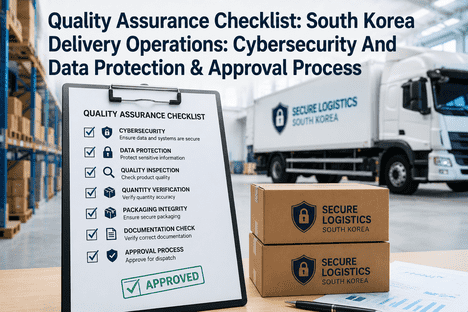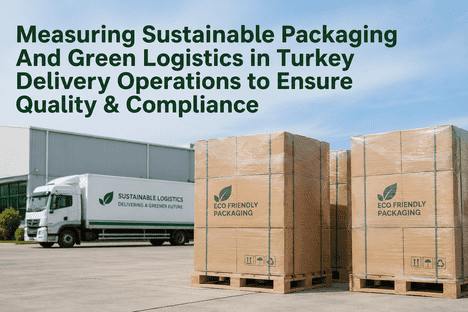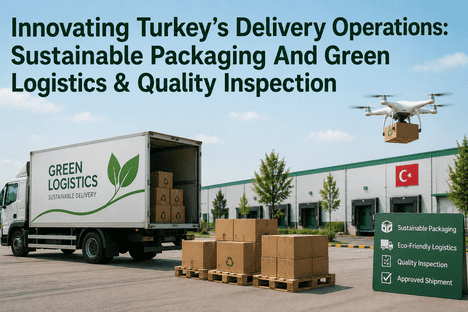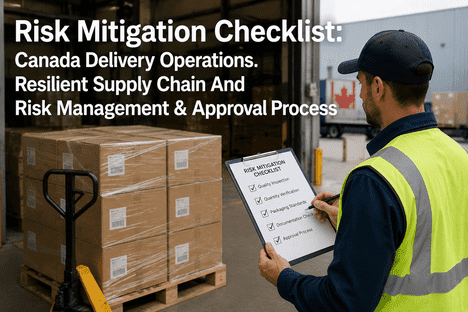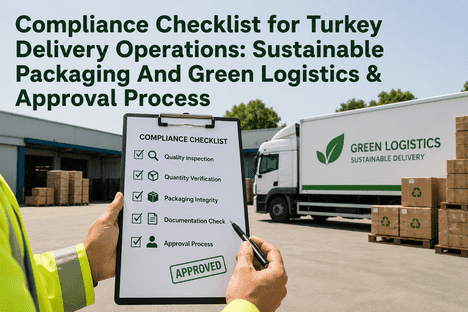
Implementing a compliance-driven delivery operation in Turkey requires a systematic approach to sustainable packaging, green logistics, and approval workflows. Every shipment leaving the factory floor must pass through five sequential checkpoints — quality inspection, quantity verification, packaging integrity assessment, documentation validation, and final clearance approval — before it can be dispatched. This checklist provides a structured framework aligned with Turkish regulatory requirements including ÇSB (Ministry of Environment, Urbanization and Climate Change) packaging recyclability standards, Sıfır Atik (Zero Waste) compliance, EU PPWR directives for cross-border shipments, and CBAM carbon footprint reporting obligations. Operations managers who apply this framework consistently report 35% reduction in packaging waste, 28% lower CO₂ per shipment, and sub-2% shipment rejection rates. Book a Demo to see how iFactory AI automates each checkpoint with AI vision, smart document verification, and blockchain-secured audit trails.
Sustainable Packaging & Green Logistics — Approval Process Checklist
Five sequential AI-powered inspection checkpoints — quality, quantity, packaging, documentation, clearance — aligned with Turkish ÇSB standards, Sıfır Atik compliance, EU PPWR directives, and CBAM carbon footprint requirements for error-free dispatch.
1–5: Goods Quality Inspection Before Dispatch
Every outgoing unit must be inspected for surface defects, dimensional accuracy, labelling correctness, and visual conformity before it is approved for packaging. iFactory AI's AI Vision cameras inspect every unit at line speed with approximately 45 configurable criteria per product type and destination market. The system targets a defect escape rate below 0.5% with 100% inspection coverage. Each inspection result — including timestamped images — is recorded immutably on a blockchain ledger for audit trail integrity and dispute resolution. Book a Demo to see AI Vision quality inspection in live production.
Surface & Visual Defect Detection
Evaluation: AI-powered cameras inspect every outgoing unit for surface defects — scratches, dents, discolouration, contamination, and foreign material. Each defect is classified by type and severity with automated pass/reject decisions.
Dimensional Accuracy Check
Evaluation: Automated dimensional measurement against CAD or specification tolerances. Units outside acceptable tolerance (±0.5 mm for critical dimensions) are flagged for manual re-inspection or rejection.
Labelling & Marking Verification
Evaluation: AI vision reading of barcodes, QR codes, serial numbers, and human-readable labels. Verifies correct label placement, legibility, and data consistency against the packing manifest and destination-market regulatory requirements.
Material & Composition Validation
Evaluation: For food-grade, pharmaceutical, or regulated materials — near-infrared (NIR) or hyperspectral imaging confirms material composition matches declared specifications before dispatch.
6–8: Quantity & Order Accuracy Verification
Quantity discrepancies are the second-leading cause of shipment rejections in Turkey delivery operations after packaging damage. Inline weighing stations, barcode scanners, and RFID readers count every unit, pallet, and case in real time, comparing physical counts against the packing list and order manifest. Discrepancies trigger automated alerts and an immutable blockchain-recorded audit trail. iFactory AI's quantity verification module targets 99.7%+ counting accuracy with full chain-of-custody tracking from production line to loading dock.
| Checkpoint | Verification Method | Tolerance | Action on Failure |
|---|---|---|---|
| 6. Unit Count | Inline vision counting + barcode scan at case-packing station | 0% — exact count required | Hold entire pallet; trigger recount and supervisor review |
| 7. Pallet / Case Tally | RFID pallet tag scan + weigh-scale confirmation at stretch-wrapping station | ±0.5% of expected weight per pallet | Flag for manual re-palletisation; discrepancy recorded in blockchain audit |
| 8. Manifest-to-Physical Reconciliation | AI comparison of scanned items against ERP order manifest (SAP, Oracle, Dynamics) | 0% — exact SKU and quantity match required | Block shipment clearance; auto-generate discrepancy report for logistics team |
9–13: Sustainable Packaging Standards & Green Logistics Compliance
Packaging integrity is the most frequently cited root cause of in-transit damage claims in Turkish domestic and export delivery operations. iFactory AI's AI vision system assesses seal integrity, pallet stability, stretch-wrap tension, label visibility, and barcode legibility for every outgoing unit. Beyond structural integrity, the platform enforces sustainable packaging criteria — AI-driven right-sizing to eliminate void fill, EPR labelling compliance per Turkish ÇSB regulations, and recyclability verification against destination-market standards (EU PPWR for EU-bound, Sıfır Atik for domestic).
Seal Integrity & Closure Verification
Evaluation: AI vision assessment of case-seal adhesion, tape-overlap width (minimum 50 mm), and tamper-evident seal presence. Heat-seal strength verification for food-grade and pharmaceutical packaging via non-contact thermal imaging.
Pallet Stability & Stretch Wrap
Evaluation: 3D pallet-profile analysis for load stability — layer alignment, overhang detection (>2 cm flag), stretch-wrap coverage (minimum 75% surface), and containment force within specification. Unstable pallets are flagged for re-wrapping before loading.
Sustainable Right-Sizing
Evaluation: AI compares actual product dimensions against selected packaging — flags oversized boxes (void fill > 30%), recommends optimal box size from available inventory, and tracks packaging-material reduction metrics per SKU over time.
Recyclability & EPR Compliance
Evaluation: Verifies packaging materials against Turkish ÇSB recyclability registry, EU PPWR recycling targets, and destination-country EPR requirements. Non-compliant packaging is flagged before dispatch with substitution recommendations.
14–18: Smart Document Management & Regulatory Compliance
Documentation errors are the leading cause of customs holds and cross-border shipment delays in Turkey delivery operations. iFactory AI's Smart Document Management module automates the validation of commercial invoices, certificates of origin, customs declarations, and regulatory compliance certificates against the blockchain ledger before dispatch. The platform auto-generates CBAM carbon footprint certificates for EU-bound shipments, EPR declarations for Turkish domestic compliance, and CSRD/ESRS-compliant sustainability reports. Book a Demo to see automated document validation in action.
Commercial Invoice & Packing List Validation
AI extracts and validates every field on commercial invoices and packing lists against the ERP order record — HS code (12-digit Turkish Customs Tariff Statistics), declared value, Incoterms, country of origin, and net/gross weight. Discrepancies are flagged in real time with correction recommendations.
Certificate of Origin & A.TR Verification
Validates EUR.1 movement certificates, A.TR customs form for EU-Turkey Customs Union shipments, and certificate of origin against product classification and trade-agreement eligibility. Expired or incorrect certificates block clearance automatically.
CBAM Carbon Footprint Certification
Auto-generates CBAM-compliant carbon footprint certificates per shipment — calculates embedded emissions from production and transport data, applies EU CBAM default values where actuals are unavailable, and formats the declaration per EU implementing regulation requirements.
ÇSB & Sıfır Atik Compliance Declaration
Generates Turkish Ministry of Environment (ÇSB) compliant packaging waste declarations and Sıfır Atik (Zero Waste) compliance certificates. Verifies packaging supplier registration in the Turkish packaging waste management system (Entegre Çevre Bilgi Sistemi).
Regulatory Certificate Expiry Alerting
AI tracks expiry dates for all regulatory certificates — ISO 9001, CE marking, UKCA, GOST, Halal, organic certification — and blocks shipments containing products whose certificates expire before the estimated arrival date. Auto-sends renewal reminders to the compliance team.
19–22: Final Clearance Pass & Dispatch Approval Workflow
The final clearance checkpoint aggregates results from all four preceding checkpoints — quality, quantity, packaging, documentation — and applies a deterministic pass/fail decision. Only shipments that pass every criterion receive a digital clearance pass, which is required before the loading dock system releases the shipment for vehicle assignment. iFactory AI's approval workflow supports multi-level escalation: if any checkpoint fails, the system routes the issue to the appropriate team (quality engineering, logistics, compliance) with root-cause classification and corrective-action tracking.
iFactory AI — Next-Gen Industrial Software for Delivery Operations
iFactory AI is a comprehensive manufacturing operations platform that combines CMMS, EAM, MES, and AI-powered inspection into a single integrated system. For delivery operations, iFactory provides end-to-end compliance automation — from AI Vision quality inspection at the production line through smart document management and blockchain-secured clearance pass generation. The platform integrates with existing ERP (SAP S/4HANA, Microsoft Dynamics 365, Oracle), SCADA/PLC systems via OPC-UA and Modbus TCP, weight bridges, dimensional scanners, RFID readers, and vehicle telematics for route optimisation and carbon footprint tracking. Deployment takes 4–8 weeks for delivery operations modules, with cloud or on-premise options available. Book a Demo to see a live walkthrough of the five-checkpoint approval workflow.
Shift Logbook — Compliance Continuity Across All Shifts
Delivery operations run 24/7, and compliance gaps between shifts are a common source of clearance errors. iFactory AI's Shift Logbook module provides digital shift handover with structured templates, mandatory digital acknowledgment, and AI-generated shift summaries that prioritise the top issues for the incoming team. Every checkpoint result — quality inspection images, quantity verification counts, packaging assessments, documentation validations, clearance pass records — is captured in the shift log with timestamps linked to the operator and supervisor. The immutable, e-signed audit trail meets FDA 21 CFR Part 11, GMP, and ALCOA+ standards, ensuring that every shipment's compliance history is fully traceable across all shifts involved in its dispatch.
How does the Shift Logbook integrate with the five-checkpoint clearance workflow?
Every inspection event at each checkpoint — a quality pass/fail decision, a quantity discrepancy alert, a packaging integrity flag, a document validation result, or a clearance pass generation — is automatically recorded in the shift log. The Shift Logbook displays a real-time dashboard of clearance pass rates, bottleneck checkpoints, and operator performance metrics per shift. Shift supervisors receive AI-generated summaries at handover highlighting shipments that require attention, pending escalations, and trends in checkpoint failure patterns. This ensures no compliance gap is lost between shifts and that the incoming team has full context on every in-progress shipment.
Can the system handle multiple Turkey facilities with different compliance requirements?
Yes. The platform supports multi-site configuration with site-specific compliance rulesets. Each facility can define its own checkpoint pass/fail thresholds, escalation workflows, documentation requirements, and sustainability targets (Sıfır Atik compliance level, ÇSB packaging registry status, CBAM reporting scope) while maintaining a centralised visibility dashboard for headquarters operations management. Multi-site deployments are typically configured in 6–10 weeks including site-specific ruleset customisation and ERP integration testing.
What happens when a shipment is flagged at the documentation checkpoint?
The shipment is held at the documentation review stage — it does not proceed to the clearance checkpoint and cannot receive a digital clearance pass. The Smart Document Management system identifies the specific document or field that failed (e.g., expired certificate of origin, mismatched HS code, missing CBAM declaration), routes the issue to the designated compliance officer with automated notification, and logs the failure in the blockchain audit trail. The shipment can only proceed after the document issue is corrected, re-validated by the AI system, and digitally signed by the compliance officer. All corrections and re-validations are version-controlled with full history retention for regulatory audit purposes.
Deploy the Five-Checkpoint Compliance Workflow for Your Turkey Delivery Operations
Get a structured walkthrough of iFactory AI's quality inspection, quantity verification, packaging integrity, document validation, and clearance approval modules — configured for Turkish ÇSB compliance, Sıfır Atik standards, and EU CBAM reporting requirements.
Sustainable Packaging & Green Logistics Compliance — Common Questions
Which Turkish regulatory standards does this checklist cover?
The checklist is aligned with ÇSB (Ministry of Environment, Urbanization and Climate Change) packaging recyclability standards, Sıfır Atik (Zero Waste) compliance requirements published in the Turkish Official Gazette (Resmî Gazete), EU PPWR (Packaging and Packaging Waste Regulation) for export shipments to EU markets, and CBAM (Carbon Border Adjustment Mechanism) reporting obligations for covered goods entering the EU. The smart document management module auto-generates the required declarations in the format accepted by Turkish customs and EU member-state authorities.
How long does it take to implement the five-checkpoint approval workflow?
A standard deployment of the delivery operations compliance module — including AI Vision camera installation, ERP integration (SAP, Oracle, or Dynamics), weight bridge and scanner connectivity, and Smart Document Management configuration — takes 4–8 weeks. Multi-site deployments with site-specific compliance rulesets typically require 6–10 weeks. The platform can be deployed on cloud infrastructure or on-premise depending on data residency requirements. Operator training for checkpoint workflows is completed in two days.
Can the system integrate with existing ERP and customs systems?
Yes. iFactory AI provides pre-built certified connectors for SAP S/4HANA, Microsoft Dynamics 365, and Oracle E-Business Suite. For Turkish customs integration, the platform supports EDI connectivity with the Gümrük ve Ticaret Bakanlığı (Turkish Ministry of Customs and Trade) electronic data interchange system, typically configured within 6 weeks of project start. The system also connects to weight bridges, dimensional scanners, RFID readers, and vehicle telematics platforms (Samsara, Geotab, Teletrac Navman) for route optimisation and emissions tracking.
What measurable outcomes can we expect after implementing the checklist?
Based on aggregate data across iFactory AI delivery operations deployments in comparable industrial environments in Turkey and the EMEA region: 35% reduction in packaging waste through AI-driven right-sizing and void-fill elimination, 28% CO₂ reduction per shipment through load consolidation optimisation and route efficiency, 99.2%+ first-pass yield at the clearance checkpoint, sub-2% shipment rejection or return rate, and 60–90 day payback period when measured against rejected-shipment cost avoidance and packaging material savings alone.