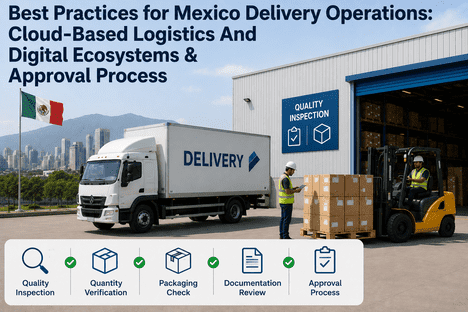
The AI transformation of manufacturing is accelerating at a pace that most operations leaders are underestimating — and it is not arriving where factories expect it. Production scheduling, quality inspection, and predictive maintenance have absorbed the first wave of AI investment. But the PwC 2026 Global Industrial Manufacturing Sector Outlook, surveying 443 senior executives across 24 territories, found that the share of manufacturers expecting to highly automate key processes will more than double from 18% to 50% by 2030 — and the next frontier is the functions that have received almost no digital investment yet. The factory delivery department — gate pass management, inbound receiving, dispatch sequencing, vehicle inspection, internal material tracking, and incident management — is the highest-ROI AI opportunity remaining in most manufacturing plants. The data gaps are widest there. The process losses are largest there. And 86% of manufacturers track OEE on the production floor while almost none track gate pass processing time, dispatch SLA compliance rates, or inbound dwell time — the exact metrics that AI systems need as input to generate actionable delivery intelligence. This guide covers how AI-powered systems will transform each function of the factory dispatch and gate pass department — and how iFactory delivers this intelligence today, deployed in 7–14 days without hardware procurement or an IT project. For questions specific to your facility, talk to our support team directly.
AI & Factory Operations · Dispatch & Gate Pass · 2026
How AI-Powered Systems Will Transform Factory Dispatch and Gate Pass Operations
98% of manufacturers are exploring AI-driven automation — but only 20% feel fully prepared to use it at scale. The delivery department is where the data gaps are widest, process losses are largest, and AI ROI arrives fastest. iFactory closes this gap in 14 days.
98%
Of manufacturers exploring AI automation — but only 20% feel fully prepared to deploy at scale (Redwood Software, 2026)
50%
Of manufacturers will highly automate key processes by 2030 — up from just 18% today (PwC Global Manufacturing Outlook 2026)
$128.8B
Global AI in manufacturing market by 2034 growing at 37.9% CAGR — delivery department applications are the fastest ROI segment
14 days
iFactory go-live timeline — full AI-powered delivery department without hardware procurement or IT project
iFACTORY · FACTORY DELIVERY DEPARTMENT MODULE
Your production floor has dashboards. Your delivery department deserves the same visibility.
iFactory digitizes every gate pass, inbound receipt, material transfer, vehicle inspection, dispatch event, and incident report — giving your operations team real-time visibility into the department that controls everything that enters and exits your plant. Deploy in 7–14 days. No IT project. No hardware procurement. Results visible from day one.
87%Gate pass time reduction
78%Faster inbound receiving
100%Audit trail coverage
14 DaysFull deployment
The AI Readiness Gap
Where AI Has Already Arrived in Manufacturing — and Where the Delivery Department Still Runs Without Data
Functions Already Receiving AI Investment
Production scheduling — 40%+ of manufacturers upgrading to AI-driven scheduling by 2026 (IDC)
Predictive maintenance — ML failure prediction deployed across production equipment in most plants
Quality inspection — AI vision systems detecting defects at micron tolerance, widely deployed
OEE tracking — 86% of manufacturers monitoring overall equipment effectiveness in real time
Energy optimization — AI reducing utility costs and supporting ESG compliance targets
Inventory management — ML demand forecasting integrated with warehouse management systems
Workforce scheduling — AI-assisted shift planning across production and maintenance teams
Outbound logistics — route optimization and carrier selection AI widely adopted
The Delivery Department — Still Running Without AI or Data
Gate pass processing — 15–20 min/vehicle manual paper checks, zero dwell time data generated
Inbound receiving — 45–60 min/shipment manual PO matching, no AI pattern detection on discrepancies
Dispatch sequencing — whiteboard and phone calls, 2–3% error rate, SLA misses undetected
Vehicle inspection — paper checklists, no ML failure pattern identification across the fleet
Internal material tracking — location unknown after dock entry, production stoppages misattributed
Incident management — paper forms, patterns invisible, auto-escalation nonexistent
Gate dwell time — almost no manufacturers measure it, yet it directly drives dock capacity loss
Dispatch SLA compliance — manually tracked if at all, AI prediction of SLA risk absent
8 AI Transformations
How AI Will Transform Each Function of the Factory Dispatch and Gate Pass Department
01
AI Gate Pass Automation — Predictive Pre-Clearance
AI pre-registers inbound vehicles based on purchase order schedules and historical arrival patterns — generating gate passes before vehicles arrive and flagging non-compliant vehicles before they reach the gate. Processing drops from 15–20 minutes to under 2 minutes. Gate queue depth is predicted 30–60 minutes ahead.
Manual: 15–20 min/vehicle, no predictionAI/Digital: under 2 min, pre-clearance
02
ML Inbound Receiving — Anomaly Detection
Machine learning analyzes receiving records to detect PO mismatch patterns, recurring supplier short-shipments, and cargo damage trends before they escalate into disputes. Each receiving event completes in under 10 minutes versus the 45–60 minute manual cycle — and AI flags emerging discrepancy patterns across suppliers automatically.
Manual: 45–60 min, no pattern detectionAI: under 10 min, anomaly alerts
03
AI Dispatch Sequencing — SLA Risk Prediction
ML models predict SLA risk 2–3 hours before dispatch — flagging shipments at risk of missing their delivery window based on vehicle availability, route congestion, and load completion status. Dispatch error rate falls from 2–3% (manual) to under 0.3%. Operations managers see SLA risk before breach, not after complaint.
Manual: 2–3% errors, reactiveAI: under 0.3%, predictive alerts
04
AI Vehicle Inspection — Failure Pattern Correlation
AI correlates failed inspection items to vehicle age, mileage, operator patterns, and maintenance history — identifying systemic vehicle failure risks that individual inspection records cannot surface. Failed vehicles are auto-blocked from dispatch. Inspection completion time drops from 20–30 minutes paper to under 8 minutes digital.
Manual: paper, no pattern analysisAI: auto-block, ML failure patterns
05
AI Material Tracking — Production Availability Prediction
AI tracks internal transfer patterns and predicts production material availability — alerting production schedulers 60–90 minutes before a material shortage affects the line. Eliminates the 30–40% of "material unavailability" production stoppages that are locating failures, not stock-outs. Material location is queryable in real time on any device.
Manual: location unknown post-dockAI: predictive availability alerts
06
ML Incident Management — Pattern Analysis and Auto-Escalation
Machine learning analyzes incident records over time — identifying repeat incident types, recurring vehicle-operator-location combinations, and systemic causes that individual paper forms never surface. By 2026, 40% of manufacturers have adopted AI scheduling tools, but delivery department incident pattern analysis remains among the most underutilized AI applications.
Manual: discovered days later, no patternsAI: real-time escalation, weekly pattern reports
07
AI Audit Documentation — Auto-Generated Compliance Records
AI compiles compliance documentation automatically from daily delivery operations — timestamped gate records, receiving chain of custody, inspection logs, dispatch records, and incident reports. DOT, OSHA, and regulatory audit documentation is assembled in under 60 seconds instead of hours of manual paper assembly per audit request.
Manual: hours per audit, fragmented recordsAI: 60-second retrieval, 100% coverage
08
AI Delivery Department Dashboard — Live Operational Intelligence
A live AI-powered dashboard surfaces gate queue depth, inbound receiving velocity, dispatch SLA status, fleet availability, material location map, and incident alerts simultaneously — updated in real time as operations unfold. The same intelligence that production managers have over OEE, delivery department heads now have over every inbound and outbound movement.
Manual: no live dashboard, fragmented dataAI: unified real-time operations view
Your production floor has AI. Your delivery department deserves the same intelligence. iFactory brings it in 14 days — no hardware, no IT project.
Gate pass AI, dispatch SLA prediction, inspection pattern analysis, material tracking, incident escalation — all running on any mobile device from go-live day one.
Talk to our support team about how iFactory maps to your specific delivery department workflows.
How It Works
How iFactory Delivers AI-Powered Factory Delivery Department Intelligence — Today, in 14 Days
iFactory's AI capabilities are not a roadmap item — they operate from go-live day one. Every gate pass, receiving event, dispatch decision, inspection result, material transfer, and incident record feeds the intelligence layer that makes predictive delivery department management possible for the first time.
01
AI Gate Pass — Pre-Clearance, Queue Prediction, Dwell Time Analytics
Drivers pre-register via mobile before arrival. AI cross-references pre-registration data against PO schedules, vehicle compliance history, and driver credentials — generating gate clearance before the vehicle arrives at the checkpoint. Security verifies on mobile in under 2 minutes. The system captures exact arrival and exit timestamps, dwell time per vehicle, and gate queue depth over time — building the data set that AI uses to predict queue peaks and alert security staff before bottlenecks form. A factory processing 20 vehicles per day recovers 280+ minutes of dock time daily compared to manual gate processing.
87% gate time reduction
Queue depth prediction
Dwell time analytics
02
ML Inbound Receiving — PO Matching, Discrepancy Detection, Supplier Pattern Analysis
Receiving staff complete mobile PO verification and photo POD in under 10 minutes per shipment. Every receiving event feeds the ML layer — which analyzes discrepancy patterns across suppliers, shipment volumes, and receiving staff to surface anomalies that individual records conceal. Recurring short-shipments from specific suppliers, cargo damage patterns at particular time windows, and PO mismatch rates by carrier are surfaced automatically in the operations dashboard. Operations managers stop discovering supplier problems at month-end invoice reconciliation and start intervening at the point of first pattern detection — typically 3–5 shipments into a new problem, not 30.
78% faster receiving
Supplier anomaly detection
Photo chain of custody
03
AI Dispatch — SLA Risk Scoring, Priority Sequencing, Cut-Off Prediction
Dispatch orders are scored by SLA priority tier, cut-off window proximity, vehicle readiness, and load completion status — updated in real time as conditions change. AI predicts which shipments are at SLA risk 2–3 hours before the delivery window closes, giving dispatch coordinators time to intervene before breach becomes irreversible. Manual dispatch sequencing produces 2–3% error rates that go undetected until a customer complaint arrives. iFactory's AI dispatch reduces this to under 0.3% and eliminates the reactive SLA penalty cycle structurally — not by working harder, but by working with better predictions.
90% dispatch error reduction
2–3 hr SLA risk prediction
Live priority queue
04
AI Vehicle Inspection — Guided Checklists, Auto-Block, Fleet Failure Pattern Analysis
Vehicles complete digital inspection checklists on mobile — each item prompted in sequence, results recorded with timestamp and operator attribution, failed items generating immediate work orders and auto-blocking the vehicle from dispatch. AI correlates failed inspection items to vehicle age, mileage, operator, maintenance history, and environmental conditions — surfacing systemic fleet reliability risks that paper inspection logs structurally conceal. Operations managers receive AI-generated fleet health summaries showing which vehicle types are generating the most failures, which inspection items are trending, and which vehicles are approaching critical maintenance thresholds before breakdown.
Auto-block on failures
ML fleet pattern analysis
Proactive maintenance alerts
05
AI Material Tracking and Incident Intelligence — Location, Prediction, Pattern Escalation
Materials are logged at every internal transfer — dock to stores, stores to production, production to quality, quality to dispatch staging. AI tracks transfer patterns and predicts production material availability, alerting production schedulers before shortage impacts the line. This eliminates the 30–40% of "material unavailability" production stoppages that are locating failures, not stock-outs. Incident management captures gate and dock incidents in real time with auto-escalation — and ML analyzes incident records over time to identify repeat patterns that individual events obscure. Operations managers receive weekly AI-generated incident summaries that turn isolated records into actionable operational intelligence — a capability that 40% of manufacturers have adopted in scheduling but almost none have applied to delivery department incidents.
30–40% stoppage prevention
Incident pattern weekly digest
100% audit trail
Measured Results
What iFactory Delivers — Measurable Within 90 Days of AI Delivery Department Go-Live
87%
Gate Pass Time Reduction
AI pre-clearance and mobile verification cuts gate processing from 15–20 minutes to under 2 minutes per vehicle. A 20-vehicle/day facility recovers 280+ minutes of dock capacity daily — equivalent to 1.5–2 full-time labor hours redirected from idle queue management to productive operations.
78%
Faster Inbound Receiving
Mobile PO verification and photo POD reduces receiving from 45–60 minutes to under 10 minutes per shipment. ML anomaly detection surfaces supplier discrepancy patterns within 3–5 shipments — before they become invoice disputes or production disruptions that previously went undetected for 30+ days.
90%
Fewer Dispatch Errors
AI SLA risk prediction 2–3 hours ahead of breach eliminates the reactive dispatch error cycle. Error rates drop from 2–3% to under 0.3%. SLA penalty exposure decreases from a structural line item to an exceptional event — and dispatch coordinators spend their time on high-complexity decisions, not error correction.
100%
Audit Trail Coverage
Every gate event, receiving transaction, inspection result, material transfer, dispatch decision, and incident record is timestamped and person-attributed automatically. Compliance documentation for any vehicle, any event, any date range is retrievable in under 60 seconds — not hours of manual assembly across paper binders.
3–6 mo
Full Platform Payback
Recovered dock time, eliminated dispatch errors, production stoppage prevention, compliance overhead reduction, and supplier dispute early intervention combine to deliver full payback within 3–6 months. The first prevented production stoppage from an AI material location alert often alone covers weeks of platform cost.
14 days
Go-Live Timeline
From decision to fully operational AI delivery department in 7–14 days. Cloud-based, mobile-first, no hardware procurement, no server installation, no IT infrastructure project. Gate, receiving, dispatch, inspection, tracking, and incident modules active simultaneously from day one of go-live.
Before vs. After
Factory Dispatch Department — Manual Operations vs. iFactory AI-Powered Platform
iFACTORY · AI FACTORY DELIVERY DEPARTMENT MODULE
98% of Manufacturers Are Exploring AI. The Ones Moving First on the Delivery Department Will Outperform Those Who Move Last.
PwC's 2026 Global Manufacturing Outlook confirms that automation will more than double from 18% to 50% of key processes by 2030 — and advantage will shift to who can orchestrate AI the fastest, not just who has tools. iFactory brings AI gate pass automation, ML dispatch SLA prediction, intelligent inspection analysis, real-time material tracking, and incident pattern intelligence to the most data-poor function in manufacturing. Live in 7–14 days. No IT project. Book a demo to see iFactory's AI delivery department platform in a live factory environment.
Frequently Asked Questions
AI in Factory Dispatch and Gate Pass Operations — What Operations Leaders Ask First
How is AI being applied specifically to factory gate pass and dispatch operations — and what makes the delivery department different from production AI?
AI applications in production — predictive maintenance, quality vision systems, production scheduling — operate on structured sensor data from connected equipment. Factory delivery department AI operates on event-based operational data: gate arrivals, receiving confirmations, dispatch decisions, inspection results, material transfers, and incident records. The data types are different, and the AI applications are fundamentally different as a result. In gate pass operations, AI performs pre-clearance by cross-referencing driver credentials, vehicle compliance history, and PO schedules before arrival — reducing processing from 15–20 minutes to under 2 minutes while predicting gate queue depth 30–60 minutes ahead. In dispatch operations, ML models score SLA risk 2–3 hours before breach based on vehicle availability, load status, and route conditions — giving coordinators intervention time that manual sequencing never provides. In receiving, ML analyzes patterns across hundreds of shipments to surface anomalies — recurring supplier short-shipments, cargo damage patterns at specific carriers, PO mismatch rates — that individual receiving records never expose. In incident management, ML converts isolated paper incident forms into operational intelligence by identifying recurring patterns by vehicle, operator, location, and time. These AI applications do not require production-floor sensors or MES integration. They are built on the operational event data that a digital delivery department generates as a byproduct of daily operations.
Talk to our support team for a delivery department AI readiness assessment specific to your facility.
Why do 98% of manufacturers say they are exploring AI but only 20% feel fully prepared — and how does the delivery department create a faster path to AI ROI?
The Redwood Software 2026 Manufacturing AI Outlook found that the primary barrier to AI deployment at scale is not technology — it is data fragmentation. Most manufacturers have invested heavily in production OT, engineering systems, and IT automation, but critical workflows remain fragmented and manual. Seven in ten manufacturers have automated 50% or less of their core operations. The gap between AI ambition and AI execution is at the handoffs between systems — and the delivery department is where the worst handoffs in most factories exist. The delivery department AI readiness challenge is different from production AI because the data does not yet exist. You cannot apply ML to gate dwell time data that has never been captured. You cannot do SLA risk prediction on dispatch data that lives on a whiteboard. The path to delivery department AI readiness is not integration — it is first-time data capture. iFactory creates the delivery department data layer from go-live day one: every gate event, receiving transaction, inspection result, dispatch decision, material transfer, and incident record becomes structured, timestamped, and AI-accessible from day one of deployment. This is why delivery department AI ROI arrives faster than production AI ROI for most factories — the data gap is eliminated immediately rather than through years of sensor deployment and system integration. The AI intelligence builds from week one.
Book a demo to see how iFactory's data capture layer enables AI from go-live day one.
How does AI dispatch SLA prediction work in a factory delivery department — and how is it different from a courier logistics tool?
Factory delivery department dispatch is structurally different from courier or last-mile logistics dispatch in three ways that determine how AI should be applied. First, factory dispatch manages inbound and internal movements — raw materials from suppliers, components between stores and production, work-in-progress between production stages, and finished goods to outbound staging — not customer-addressed parcels with GPS-tracked delivery windows. Second, factory dispatch SLA is tied to production schedule adherence, not customer delivery time slots — a missed internal dispatch window stops a production line, not a customer delivery. Third, factory dispatch failure is typically invisible until production stops or a customer complaint arrives, because manual sequencing produces 2–3% error rates that go undetected in real time. iFactory's AI dispatch SLA prediction works by scoring every dispatch order against four variables updated continuously: SLA priority tier (production line criticality), cut-off window proximity (time remaining before production impact), vehicle readiness status (passed inspection and available), and load completion status (materials confirmed received and located). When any variable combination produces a predicted SLA breach probability above threshold, the dispatch coordinator receives a real-time alert 2–3 hours before the breach window — with enough lead time to reassign vehicle, expedite loading, or escalate to operations management before the production impact occurs. This application does not require GPS tracking, route optimization, or logistics network integration — it operates entirely within the factory's own operational data.
Talk to our support team about configuring iFactory's dispatch AI for your specific production schedule and SLA structure.
How quickly does iFactory deploy — and how does AI become active from day one rather than requiring months of data collection?
iFactory goes live in 7–14 days for a standard factory delivery department deployment covering gate pass management, inbound receiving, vehicle inspection, dispatch sequencing, internal material tracking, and incident management simultaneously. The deployment process runs in three phases: days 1–3 for data onboarding (vehicle registry, driver roster, supplier list, PO templates), days 4–7 for configuration and training (inspection checklists, dispatch SLA rules, gate workflows, user access — staff training takes 2–4 hours on mobile), and days 8–14 for go-live verification with iFactory support monitoring data quality. AI capabilities activate progressively from go-live. Immediate from day one: automated gate processing, digital receiving, live dispatch queue, guided inspection, material location tracking, and real-time incident capture with auto-escalation. These functions do not require historical data — they generate structured operational data from the first use. AI pattern detection activates within 2–4 weeks as the ML layer accumulates sufficient event records to identify anomalies, trends, and predictions with meaningful confidence. ML dispatch SLA risk prediction and inspection failure pattern analysis typically reach operational accuracy within 30–45 days of go-live. This is fundamentally different from production AI deployments that require months of sensor data collection and integration before AI insights are actionable. The delivery department data gap is eliminated from go-live day one — AI intelligence follows within weeks, not months.
Book a demo to see a live iFactory deployment timeline for your facility size.
What is the measurable ROI of deploying AI across the factory delivery department — and how does payback compare to production AI investments?
Factory delivery department AI ROI comes from five compounding sources that begin accumulating from go-live week one, unlike production AI investments that typically require 6–18 months of sensor deployment and integration before ROI is measurable. Recovered dock time: at 280+ minutes daily for a 20-vehicle/day facility moving from 15–20 minute manual gate processing to under 2 minutes, this represents 1.5–2 full-time equivalent labor hours per day redirected from idle queue management to productive operations — a direct, immediate, measurable saving from day one. Dispatch error elimination: reducing dispatch errors from 2–3% to under 0.3% eliminates SLA penalty exposure typically running $50,000–$200,000 annually for mid-size factories depending on contract terms and shipment volume. AI SLA prediction prevents the majority of these errors before breach occurs rather than discovering them after customer complaint. Production stoppage prevention: AI material tracking and availability prediction prevents the 30–40% of "material unavailability" stoppages that are actually locating failures — each prevented stoppage is worth the cost of lost production capacity for the duration, which ranges from tens of thousands to hundreds of thousands per hour depending on production value. Supplier dispute early intervention: ML anomaly detection on receiving records surfaces supplier discrepancy patterns within 3–5 shipments versus the 30+ days that manual receiving takes to reveal the same pattern — reducing dispute resolution cost and overpayment recovery timelines. Compliance overhead reduction: AI audit documentation assembly reduces compliance preparation from 4–8 hours per audit event to under 30 minutes. Full platform payback is typically achieved within 3–6 months of iFactory go-live when all five components are included in the calculation.
Talk to our support team for an ROI model specific to your facility's vehicle volume, dispatch frequency, and production schedule value.
How does iFactory's AI delivery department platform scale across multiple factory sites — and does it integrate with existing ERP or MES systems?
iFactory is architected as a multi-depot, multi-site platform from the ground up — meaning a single deployment covers all facilities in your manufacturing portfolio under one AI intelligence layer with site-specific configuration. Each site generates its own operational data stream — gate events, receiving records, dispatch decisions, inspection results, material transfers, and incidents — while the AI layer analyzes patterns across all sites simultaneously. This cross-site AI capability is operationally significant because it surfaces performance differences that single-site analysis cannot detect. When one plant's gate dwell time average is 40% longer than comparable facilities, the AI cross-site comparison identifies it immediately — converting what would be a manual benchmarking exercise into an automated operational alert. For ERP and MES integration, iFactory connects to purchase order data from major ERP platforms (SAP, Oracle, Microsoft Dynamics) to enable AI gate pre-clearance against expected inbound schedules and receiving verification against live PO status. MES integration enables AI dispatch SLA prediction to incorporate production schedule pull signals — so that dispatch priority sequencing reflects actual production line demand rather than static priority tiers. The integration architecture is API-based and does not require modification to existing ERP or MES systems. iFactory operates as the delivery department intelligence layer that feeds data to and from existing systems — not as a replacement. For multi-site deployments and ERP integration requirements,
book a demo to see the architecture running across a multi-facility portfolio in a live environment. For integration-specific questions,
talk to our support team directly.
iFACTORY · AI FACTORY DELIVERY DEPARTMENT MODULE
The AI Revolution in Manufacturing Has Reached the Delivery Department. iFactory Delivers It in 14 Days — No Hardware, No IT Project, No Pilot Program.
PwC 2026: manufacturers who can orchestrate AI fastest will outperform. Redwood 2026: 98% exploring AI, only 20% prepared. IDC: 40%+ upgrading to AI scheduling by 2026. The delivery department is where the data gaps are widest, process losses are largest, and AI ROI arrives fastest. iFactory brings AI gate pass automation, ML dispatch SLA prediction, intelligent vehicle inspection analysis, real-time material tracking, and incident pattern intelligence to the most data-poor function in manufacturing. 87% gate time reduction. 90% fewer dispatch errors. 100% audit trail. Deployed in 7–14 days. Book a demo to see iFactory's AI delivery department platform in a live factory environment.