Warehouse delivery hubs never sleep. When the day shift leaves and the floor goes quiet, conveyors still run, refrigeration compressors still cycle, battery charging stations still draw load, and dock equipment still holds pressure — all without a single technician on site. Equipment failures during unstaffed night shifts go undetected until morning changeover, often costing a full delivery cycle, spoiled cold-chain inventory, or a compliance breach. Autonomous night-shift analytics monitoring closes that gap by ingesting continuous IoT sensor data — vibration, temperature, current draw, pressure — and triggering AI alerts the moment an anomaly appears, not six hours later when the morning crew walks in. iFactory AI's autonomous monitoring platform combines real-time sensor ingestion, AI-driven anomaly detection, criticality-tiered escalation, and automatic CMMS work order generation so that overnight equipment events are detected, logged, and actioned within seconds — with no human in the loop required until a technician is dispatched.
AI-powered anomaly detection, instant escalation, and automatic CMMS records for every overnight equipment event — even when no one is on the floor.
Why Autonomous Night-Shift Monitoring Matters
Electric motors, refrigeration compressors, conveyors, and dock-leveler hydraulics do not stop failing when the maintenance team clocks out. In a typical U.S. warehouse delivery hub running three nightly sort cycles across 180,000+ sq ft, the gap between an equipment failure occurring and being discovered averages 5.8 hours — enough time for a conveyor drive motor running in overload to degrade adjacent gearbox components, a cold-chain temperature drift to spoil pharmaceutical inventory, or a hydraulic leak to contaminate a loading zone. Autonomous monitoring is the only way to close that exposure window.
Each hour of undetected equipment degradation compounds repair cost and extends downtime into the next delivery cycle.
Catching a conveyor motor overload within 5 min converts a full gearbox replacement into a bearing swap — a 60× cost difference.
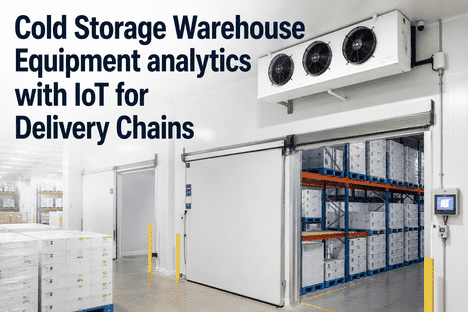
Continuous temperature monitoring with automated alerts prevents spoilage and ensures regulatory compliance for pharmaceutical and food logistics.
Every anomaly event is auto-logged as a timestamped CMMS work order — no manual data entry required from night or day shift staff.
Assets Requiring Autonomous Night-Shift Monitoring
Not all equipment in a warehouse delivery hub carries the same failure risk or operational impact. iFactory AI's autonomous monitoring platform uses a criticality-tiered framework to ensure that the most consequential assets — refrigeration systems, main conveyor drives, and battery charging stations — trigger immediate escalation, while lower-tier anomalies are logged for morning review without flooding on-call technicians with noise.
| Asset | Failure Mode | Detection Sensor | Alert Tier | Manual Detection Time |
|---|---|---|---|---|
| Refrigeration Compressor | Temperature drift / overload | Temp + current draw | Tier 1 — Immediate | 4–6 hrs |
| Main Conveyor Drive Motor | Vibration / bearing wear | Vibration (mm/s RMS) | Tier 1 — Immediate | 5–8 hrs |
| Battery Charging Station | Thermal runaway risk | Thermal imaging / temp | Tier 1 — Immediate | Not detectable manually |
| Dock Leveler Hydraulics | Pressure drop / leak | Pressure transducer | Tier 2 — 30 min | Discovered at shift start |
| Air Compressor | Pressure loss / overrun | Pressure + runtime hrs | Tier 2 — 30 min | 3–5 hrs |
| Overhead Door Motor | Cycle count / stall | Current + cycle counter | Tier 3 — Morning log | Shift changeover |
How iFactory AI Powers Autonomous Night-Shift Analytics
iFactory AI's autonomous monitoring platform transforms raw IoT sensor data into closed-loop maintenance actions — from anomaly detection to technician dispatch — without any human intervention required during unstaffed shifts. The platform integrates with vibration sensors, thermocouples, RTD temperature sensors, pressure transducers, current transformers, and thermal imaging cameras via standard IoT protocols, and also connects to existing BMS and SCADA systems.
Real-Time Sensor Ingestion
IoT sensors on critical assets stream vibration, temperature, current draw, and pressure readings continuously. The system establishes normal baselines during commissioning and monitors for deviation in real time — 24 hours a day, 365 days a year.
AI Anomaly Detection
When any sensor reading crosses a configured threshold, iFactory AI flags the anomaly and initiates the alert protocol within seconds. Predictive models surface emerging faults 4–12 weeks ahead based on trend data from continuous monitoring.
Criticality-Tiered Escalation
Tier 1 assets trigger immediate push notifications to on-call technicians and supervisors. Tier 2 and 3 anomalies are logged and held for morning review unless thresholds worsen — eliminating alert fatigue while ensuring critical systems get immediate human response.
Automatic CMMS Work Orders
Every anomaly event generates a timestamped work order linked to the asset and sensor data — building a complete overnight operational record for shift handover, compliance audits, and reliability trend analysis without any manual data entry.
Shift Logbook Integration
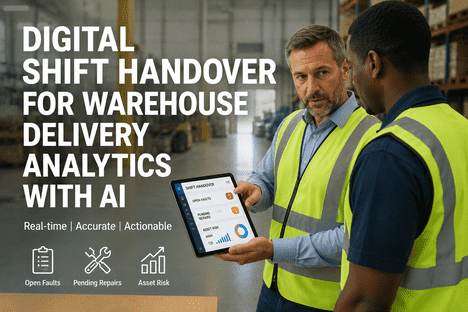
iFactory AI's Shift Logbook captures every overnight anomaly, work order, and resolution outcome with AI summaries and photo evidence — ensuring day-shift teams inherit complete operational history at every handover.
Automated Analytics Reporting
Overnight anomaly frequency, mean time to detect, tier-1 response rate, and asset reliability trends — automatically compiled into management-ready reports without manual data gathering across shifts.
Real-World Impact: Cold-Chain Distribution Hub Case Study
A regional cold-chain distribution hub operating three nightly sort cycles across 180,000 sq ft experienced four separate overnight equipment failures in a single quarter — a refrigeration compressor fault, two conveyor drive motor overloads, and an undetected dock leveler hydraulic leak. Each event was discovered at shift changeover, averaging 5.8 hours of undetected downtime. After deploying iFactory AI's autonomous monitoring platform with IoT sensor integration and automated CMMS alerting, the facility tracked the following outcomes over a 90-day period.
The warehouse maintenance teams I work with consistently underestimate the damage accumulation window during unstaffed shifts. A conveyor motor running in an overload condition for six hours does not just fail — it degrades adjacent components, shortens the service life of the drive, and often requires a full gearbox replacement rather than a bearing swap. Autonomous monitoring that catches the anomaly within five minutes converts a $40,000 repair into a $600 bearing replacement. The ROI calculation is not complex.
Frequently Asked Questions
Conclusion: Real-Time Visibility Is the Only Defense Against Overnight Failures
Equipment does not fail without warning during night shifts — it fails without monitoring. The difference between a 5-minute detection window and a 6-hour discovery at shift changeover is the difference between a $600 bearing replacement and a $40,000 gearbox overhaul. iFactory AI's autonomous night-shift analytics platform delivers continuous IoT sensor ingestion, AI-driven anomaly detection, criticality-tiered escalation, and automatic CMMS work order generation — all running 24/7 whether anyone is on the floor or not. For facilities operating in regulated cold-chain categories, the platform's continuous temperature records with automatic alert documentation shift from competitive advantage to operational prerequisite. Book a Demo to see how warehouse delivery hubs using iFactory AI are eliminating their overnight exposure gap.
Eliminate Overnight Equipment Surprises
iFactory AI gives your team autonomous night-shift monitoring, instant anomaly escalation, and automatic CMMS records — so every morning shift starts with full visibility, not failure mode triage.