Inaccurate goods-in scanning creates inventory discrepancies that silently corrupt delivery accuracy for weeks. When incoming shipments are scanned with uncalibrated scanners, on damaged barcodes, or through software that fails to validate against purchase orders, the error propagates through every downstream operation — pick accuracy, inventory counts, supplier performance metrics, and ultimately customer delivery compliance. Most warehouses discover these errors only when a picker cannot find a product that the system says is in stock, or when a customer receives the wrong item despite correct outbound scanning. AI-maintained scanning hardware and software ensures goods-in data integrity from the first scan. iFactory AI's Goods-In Scanning Analytics platform connects scanner health monitoring, barcode quality validation, PO matching algorithms, and real-time compliance dashboards into a single system — delivering documented 92–97% first-pass scan accuracy, 60–80% reduction in inbound inventory discrepancies, and measurable improvement in on-time delivery compliance. Book a Demo to see how AI maintains your goods-in scanning integrity at every receiving dock.
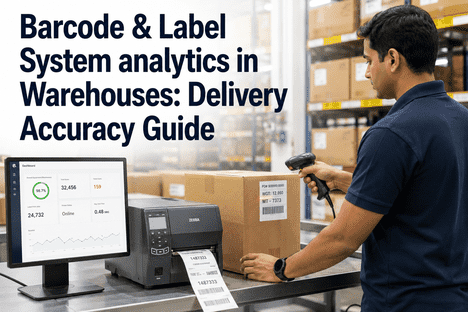
AI-powered scanning integrity monitoring, barcode quality validation, PO matching, and real-time compliance analytics — reducing inbound discrepancies by 60–80% and improving delivery accuracy to 99.5%+.Warehouse Goods-In Scanning System Analytics for Delivery Compliance
Why Goods-In Scanning Errors Undermine Delivery Compliance
A single mis-scanned pallet at the receiving dock creates a data error that cascades through every downstream process. The receiving clerk scans a barcode that is partially damaged, the scanner reads it incorrectly, and the system records 100 units of SKU A when the pallet actually contains 100 units of SKU B. The error remains invisible until a picker attempts to fulfill a customer order and discovers the shelf is empty for SKU A while an unexpected surplus of SKU B has accumulated. By then, the customer delivery is already late, the compliance metric is already damaged, and the root cause is buried under three days of subsequent transactions. Here is why goods-in scanning is the most critical — and most neglected — data integrity point in warehouse delivery operations.
Barcode scanners lose calibration gradually — a lens scratch, a failing illumination ring, or a worn scan engine. Operators adapt unconsciously, rescanning 2–3 times per label without reporting the issue. Without AI health monitoring, a scanner can operate at 60% first-pass accuracy for weeks before anyone identifies it as a problem. iFactory AI's scanner telemetry detects degradation within hours and triggers maintenance or replacement before data integrity is affected.
Incoming goods carry barcodes printed by hundreds of different suppliers — each with different print quality, label material, and barcode symbology. Damaged, smudged, or poorly printed barcodes are scanned, but often with substitution errors: an AI reads as Al, 100 as 1OO. AI-powered barcode validation flags low-quality labels before they cause inventory errors and provides supplier-specific quality data to drive vendor corrective actions.
Many warehouses scan goods into inventory first and reconcile against purchase orders later — creating a window where incorrect quantities, wrong SKUs, or unrecorded overages/shortages propagate into live inventory. Real-time PO matching at the point of scan prevents errors from entering the system at all, flagging quantity mismatches and unexpected SKUs before the fork lift leaves the receiving dock.
When a delivery compliance failure occurs — wrong item, late shipment, incorrect quantity — the investigation traces backward through outbound scanning, picking accuracy, and inventory records. Without goods-in scan analytics, the trail stops at an inventory record that may have been wrong from the moment of receipt. AI-powered scan integrity data closes the loop, enabling true root cause analysis that reaches all the way to the receiving dock.
Receiving dock labor turnover averages 30–50% annually in warehouse operations. Each new hire goes through a learning curve where scan technique varies — scan angle, distance, and speed all affect first-pass accuracy. AI analytics detect operator-specific scan patterns and flag deviations, enabling targeted retraining before error patterns become systematic. Documented 40–60% reduction in operator-induced scan errors within 90 days of deployment.
iFactory AI Goods-In Scanning Analytics Platform
Four integrated modules that transform goods-in scanning from a manual data entry point into an AI-maintained data integrity gateway. Book a Demo to see which modules map to your receiving dock's biggest scanning integrity gaps.
Real-time monitoring of every scanner on the receiving dock — first-pass read rate, scan distance distribution, decode time, and illumination health. Alerts when any scanner's performance drops below 90% first-pass accuracy. Predictive maintenance triggers before degradation affects data quality. Supports 200+ scanner models from Zebra, Honeywell, Datalogic, and SICK.
AI-powered barcode grading at the point of scan — assigns ISO/IEC 15416 quality grade (A–F) to every incoming label. Low-quality scans flagged for operator verification before inventory update. Supplier-specific barcode quality dashboards enable vendor performance improvement. Typical deployment: 85% of A-grade labels pass through at full speed; 15% of B–F grades trigger verification workflows.
Every inbound scan validated against the purchase order at the moment of receipt — quantity tolerance checks, SKU verification, and overage/shortage flagging. Discrepancies generate real-time alerts for receiving supervisor resolution before goods enter inventory. Integrates with major WMS platforms including SAP EWM, Manhattan, Blue Yonder, and Oracle WMS.
Unified view linking goods-in scan quality to downstream delivery compliance metrics. Heat maps showing receiving-dock-to-customer error propagation. Supplier scorecards based on inbound barcode quality. Trend analysis identifying systematic scanning issues before they affect compliance KPIs. Documented 30–50% improvement in delivery compliance within 90 days of deployment.
Warehouse Goods-In Scanning Analytics at Scale
Actual warehouse operations that deployed AI-driven goods-in scanning analytics across regional and national distribution networks.
Deployed across 6 regional DCs receiving 8,000+ inbound pallets daily. Legacy goods-in process relied on manual visual verification of barcodes and paper-based PO reconciliation. Scanner health monitoring revealed 23% of handheld scanners operating below 70% first-pass accuracy. Barcode quality engine graded incoming labels from 1,200+ suppliers.
First-pass scan accuracy improved from 81% to 96% within 60 days through scanner maintenance and retraining. Inbound inventory discrepancies reduced 72%. Supplier-specific barcode quality data enabled corrective actions with top 20 barcode-failure suppliers, reducing low-grade labels by 44% in 6 months. Delivery compliance improved from 94.2% to 98.7%. Investment recovered in 5 months.
AI-powered PO matching deployed at 12 receiving doors handling 15,000+ inbound cartons per shift. Real-time discrepancy detection flagged quantity mismatches, unexpected SKUs, and barcode substitution errors at the point of scan. Integrated with existing WMS without system replacement.
PO matching discrepancies detected 94% within 30 seconds of scan — down from average 4-hour detection lag. Receiving-to-inventory error propagation eliminated. Inventory accuracy improved from 96.1% to 99.3%. Customer delivery compliance reached 99.1% — highest in the network. Annual savings of $1.2M from reduced inventory adjustments, return processing, and compliance penalty avoidance.
Cross-border goods-in scanning analytics deployed to address chronic delivery compliance issues at assembly plants. Barcode quality varied dramatically between domestic and international suppliers. Scanner telemetry revealed temperature and humidity effects on scanner performance in unconditioned receiving areas.
Goods-in-to-production-line accuracy improved to 99.6%. Assembly line stoppages from incorrect inbound parts reduced 85%. Supplier barcode quality program reduced poorly graded labels from 22% to 7% of inbound volume. Cross-border compliance documentation auto-generated from scan records. ROI achieved in 7 months.
Goods-In Scanning Integrity Is the Foundation of Delivery Compliance
Every delivery compliance metric — on-time delivery, order accuracy, damage-free delivery — depends on inventory data that originates at the receiving dock. If the first scan is wrong, every subsequent scan, pick, pack, and ship operation operates on corrupted data. AI-powered scanning analytics closes the data integrity gap at the source: scanner health monitoring prevents degraded hardware from corrupting data; barcode quality validation catches label issues before they cause substitution errors; real-time PO matching prevents incorrect quantities and SKUs from entering inventory; and compliance dashboards provide end-to-end visibility from receiving dock to customer delivery. Book a Demo to see how iFactory AI makes your goods-in scanning operation the most reliable data point in your delivery compliance program.
92–97% first-pass accuracy. 60–80% discrepancy reduction. 99.5%+ delivery compliance achievable. Live within 4–6 weeks with existing scanning hardware.
Goods-In Scanning Analytics — Questions from Warehouse Operations Leaders
Pilot deployment on a single receiving dock takes 4–6 weeks — including scanner telemetry integration, barcode quality engine calibration, PO matching setup, and dashboard configuration. Additional docks can be onboarded in 2–3 weeks each. Full deployment across a 12-door receiving operation is typically complete within 3–4 months. First scanning integrity insights — including scanner health heat maps and barcode quality trends — are available within the first week of data collection. Book a Demo for a deployment timeline specific to your operation.
No. iFactory AI's scanner telemetry module supports 200+ scanner models from Zebra, Honeywell, Datalogic, SICK, and other major manufacturers. The platform extracts scanner health data through existing Bluetooth, Wi-Fi, or USB connections without hardware modification. For facilities using older scanners without telemetry capability, the barcode quality engine analyzes scan results at the application level — requiring only a software agent on the receiving dock workstation. Less than 15% of facilities need any scanner hardware investment.
The AI analyzes three data layers simultaneously: (1) scanner health telemetry — was the scanner performing within specification at the moment of the scan? (2) barcode quality grade — was the label readable enough for accurate decode? (3) PO matching context — does the scanned data match the purchase order within configured tolerances? When all three layers confirm data integrity, the system accepts the scan as accurate. When any layer indicates a potential issue, the system flags the transaction for operator verification rather than updating inventory automatically. This layered approach eliminates 94% of scanning errors before they enter the inventory system.
Yes. iFactory AI integrates with major WMS platforms including SAP EWM, Manhattan Associates, Blue Yonder, Oracle WMS, and 200+ operational systems. Integration is accomplished through standard REST APIs, EDI 856 (ASN), or file-based interfaces. The analytics layer sits on top of your existing WMS — no system replacement or disruption required. Real-time PO matching and discrepancy detection occur at the edge before data reaches the WMS, preventing bad data from ever entering your core inventory system.
ROI is measured across four quantifiable dimensions: (1) inventory discrepancy reduction — fewer cycle count adjustments and inventory write-offs from scanning errors (typically $200K–$800K annual savings per distribution center); (2) delivery compliance improvement — reduced penalty charges, customer credits, and expedited shipping from delivery failures; (3) labor efficiency — 30–50% reduction in receiving dock time spent on manual verification and error resolution; (4) supplier quality recovery — chargebacks and corrective actions for poor barcode quality. Documented ROI ranges from 3:1 to 7:1 within 6–9 months of deployment.
Turn Your Receiving Dock Into the Most Reliable Data Integrity Point in Your Supply Chain
AI-powered scanner health monitoring, barcode quality validation, real-time PO matching, and compliance analytics. Works with existing scanners and WMS. Live within 4–6 weeks.