The quality assurance director at a Johannesburg-based pharmaceutical distribution centre watched the cold-chain dashboard refresh for the third time that morning. Two冷链 shipments of a biologic worth R4.2 million had triggered temperature excursion alerts during the Pretoria-to-Cape Town leg — the reefer unit had cycled off for 47 minutes during a driver break at a rest stop north of Beaufort West. By the time the temperature returned to range, the product had spent 23 minutes above the 8°C threshold. The GDP deviation report would take three days to compile manually, the batch would be placed on quarantine hold pending QA disposition, and the client — a national hospital group — would have to activate its contingency stock. Three similar events had occurred in the past six months, all involving the same route segment, all detected only after the fact, and all generating the same pattern: delayed alerts, manual paperwork, and avoidable product risk. The director thought: we have temperature sensors on every pallet, GPS tracking on every truck, and still we cannot predict an excursion before it happens.
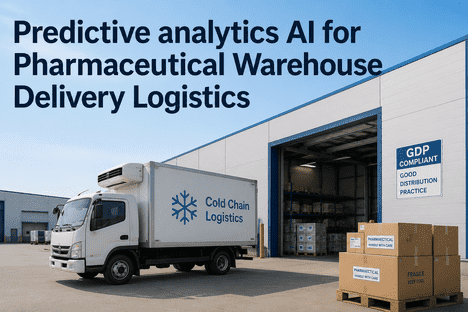
Predictive Analytics AI for Pharmaceutical Warehouse Delivery Logistics
iFactory AI delivers a unified predictive analytics platform purpose-built for pharmaceutical warehouse and delivery operations — monitoring cold chain integrity, GDP compliance, serialization traceability, and fleet reliability in a single pane of glass, with AI-driven intelligence that prevents excursions before they occur.
One Predictive Analytics Platform for Pharmaceutical Warehouse and Delivery Operations
iFactory is the first AI-native industrial intelligence platform designed specifically for pharmaceutical logistics and warehouse operations. The platform ingests live data from your IoT temperature sensors, warehouse management system, fleet telematics, CMMS, and quality management systems to build a unified data model across your entire pharmaceutical distribution network. Cold chain temperature profiles, reefer unit health telemetry, warehouse humidity and differential pressure readings, serialization event logs, and GDP deviation records live in one place with automated AI correlations that tell you which assets, routes, and handling procedures drive compliance risk. The platform runs on-premise with zero cloud dependency, integrates with existing automation infrastructure in weeks, and delivers production-ready predictive analytics without a dedicated data science team.
Unlike generic logistics analytics tools, iFactory understands the specific regulatory and operational demands of pharmaceutical distribution. The platform models cold chain thermal dynamics, reefer compressor degradation curves, warehouse environmental control system interactions, and route-specific excursion risk using domain-specific algorithms trained on real pharmaceutical logistics data. The result is actionable predictive intelligence that quality assurance directors, logistics managers, and compliance officers can use immediately to prevent excursions, reduce product loss, and maintain GDP audit readiness at all times.
Six Core Predictive Analytics Capabilities for Pharmaceutical Logistics
iFactory delivers a complete suite of predictive analytics capabilities that address the highest-impact areas of pharmaceutical warehouse and delivery operations. Each capability is production-ready, integrated with your existing systems, and proven in commercial pharmaceutical distribution environments.
Temperature Excursion Prediction
Machine learning models trained on reefer compressor telemetry, ambient temperature data, door-cycle frequency, and route-specific thermal profiles predict temperature excursions 30-60 minutes before they occur. The platform alerts drivers and dispatchers with enough lead time to intervene, reroute, or service equipment before product integrity is compromised.
Automated Good Distribution Practice Documentation
Automated generation of GDP-compliant temperature records, deviation investigation reports, and audit-ready chain-of-custody documentation. Every excursion event creates a timestamped, ALCOA+-compliant deviation report without manual data entry, supporting FDA 21 CFR Part 11, EU GDP, and WHO GDP standards simultaneously.
DSCSA-Compliant Unit-Level Traceability
End-to-end serialization event capture from goods receipt through warehouse storage to final delivery. iFactory integrates with packing line serialization systems and WMS to maintain complete product genealogy at unit, case, and pallet level, with EPCIS-ready exports and automated TI/TH/TS record generation for DSCSA compliance.
Reefer Unit and Delivery Fleet Reliability Analytics
Apply vibration analysis, compressor current draw monitoring, refrigerant pressure trending, and engine telemetry analysis to every refrigerated vehicle in your fleet. iFactory predicts reefer unit failures 24-72 hours in advance, enabling preventive intervention during planned maintenance windows rather than causing in-transit cold chain breaches.
Storage Condition Predictive Intelligence
Monitor and predict deviations in temperature, humidity, differential pressure, and air quality across every cold room, walk-in cooler, and controlled-temperature storage zone. iFactory models HVAC system degradation, door seal wear, and seasonal load patterns to alert facilities teams before storage conditions drift outside validated ranges.
AI-Driven Recall Readiness and Root Cause Analysis
Automated forward and backward traceability for batch recall execution, with AI-powered root cause correlation that links excursion events to specific assets, routes, handling procedures, or carrier behaviours. iFactory reduces recall investigation time from days to hours while maintaining complete regulatory documentation.
From Raw Sensor Data to Predictive Intelligence in Four Steps
iFactory connects to your existing pharmaceutical logistics infrastructure and transforms raw IoT telemetry into actionable predictive intelligence without disrupting ongoing warehouse and delivery operations.
Connect Data Sources
iFactory connects to your IoT temperature sensors, reefer telematics, WMS, CMMS, and quality management system through standard protocols including OPC-UA, Modbus TCP, REST APIs, and MQTT. The platform auto-discovers and maps data points during the onboarding phase. No changes to your existing automation infrastructure are required.
Build Unified Data Model
The platform creates a time-series data model that aligns temperature telemetry, shipment events, warehouse storage records, maintenance history, and quality deviations across a common operational timeline. iFactory applies pharmaceutical logistics-specific algorithms to calculate excursion risk scores, asset health indices, and compliance metrics automatically.
Deploy Predictive Dashboards
Quality assurance directors, logistics managers, fleet supervisors, and compliance officers receive role-specific dashboards with real-time KPIs, predictive risk scores, trend charts, and automated alerting. Each dashboard is pre-configured for pharmaceutical GDP operations and requires zero configuration by your team.
Act on Predictive Intelligence
iFactory sends predictive alerts when reefer compressor health indicators cross warning thresholds, warehouse environmental conditions signal emerging risk, or route-specific excursion probability exceeds acceptable limits. The platform recommends corrective actions based on historical data and process models, enabling intervention before product integrity is compromised.
Why Traditional Pharmaceutical Warehouse and Delivery Analytics Falls Short
Most pharmaceutical distributors operate with fragmented data systems that make it impossible to connect cold chain conditions to compliance outcomes in real time. The cost of this fragmentation is measured in product loss, regulatory findings, and brand risk that no insurance policy fully covers.
Reactive Excursion Detection
Most pharmaceutical cold chain monitoring systems detect temperature excursions only after the damage is done. By the time an alert fires, the product has already been compromised and the GDP deviation is irreversible. Predictive analytics shifts the paradigm from reactive detection to prevention, providing 30-60 minute warning windows for corrective action.
Fragmented Compliance Documentation
Temperature logs in one system, deviation reports in another, batch records in a third. Manual reconciliation for GDP audits consumes days of QA team time and creates data integrity risks. Without a unified platform, every regulatory inspection becomes a fire drill, and every deviation investigation starts from scratch.
Unplanned Reefer Downtime
Refrigerated vehicle breakdowns in transit cause the most severe cold chain breaches, yet most fleets operate on reactive maintenance schedules. A single compressor failure on a high-value biologic shipment can result in losses exceeding R3.5 million, compounded by client penalty clauses and regulatory escalation.
What Pharmaceutical Distributors Achieve with iFactory Predictive Analytics
Early adopters across pharmaceutical wholesale distribution, third-party logistics providers, and hospital supply chain networks report measurable operational improvements within 90 days of deploying iFactory. These results are from actual pharmaceutical logistics environments running iFactory on-premise.
Traditional Pharma Logistics vs. AI-Powered Predictive Analytics
The table below compares how critical pharmaceutical warehouse and delivery processes are managed with traditional methods versus iFactory's AI-native predictive analytics platform. The difference in visibility, response time, and outcome is measurable across every operational dimension.
| Process Area | Traditional Approach | iFactory AI Predictive Analytics |
|---|---|---|
| Cold Chain Monitoring | Reactive alerts after threshold breach, manual log review, excursion detected at delivery or via batch download | Predictive alerts 30-60 min before excursion, real-time risk scoring, AI-driven intervention recommendations with automated dispatch notification |
| GDP Documentation | Manual deviation report compilation, spreadsheets for temperature records, 3-5 day audit preparation cycle | Automated ALCOA+-compliant deviation reports, one-click GDP audit packages, immutable chain-of-custody records with electronic signatures |
| Fleet Maintenance | Reactive repair after breakdown, scheduled maintenance by calendar interval, no visibility into in-transit equipment health | Predictive maintenance alerts 24-72 hours before failure, real-time compressor health monitoring, condition-based service scheduling |
| Serialization Traceability | Siloed serialization databases, manual batch-to-unit reconciliation, fragmented event records across partners | Unified serialization event capture, automated EPCIS-ready exports, end-to-end traceability with full DSCSA TI/TH/TS lineage |
| Recall Management | Manual batch tracing through paper records, days to identify affected shipments, incomplete customer notification | One-click forward and backward traceability, automated affected shipment identification, instant customer notification with regulatory documentation |
Industry Expert Perspective on Pharmaceutical Logistics Predictive Analytics
"In my 22 years overseeing pharmaceutical distribution quality across 40+ markets, the single most persistent gap has been the inability to predict cold chain failures before they happen. Every temperature excursion in a multi-billion-rand supply chain represents a failure of detection speed, not a failure of equipment. We have had the sensor data for years. What we have not had is the analytics layer that connects compressor telemetry to route conditions to product stability profiles in real time and tells you what is about to go wrong. iFactory's predictive approach is exactly what the industry needs — not more sensors, but better intelligence from the sensors we already have. The ability to predict an excursion 45 minutes before it occurs and alert the driver to service the reefer unit at the next scheduled stop is not an incremental improvement; it is a fundamental shift in how pharmaceutical logistics risk is managed. For any distributor handling temperature-sensitive biologics, this capability should be considered a core element of the quality management system."
Transform Your Pharmaceutical Warehouse and Delivery Operations with AI-Powered Predictive Analytics
The pharmaceutical logistics industry is facing unprecedented pressure on cold chain integrity, regulatory compliance, and operational efficiency. Fragmented monitoring systems and reactive deviation management approaches that worked with conventional small-molecule drugs are no longer sufficient for today's temperature-sensitive biologics, mRNA therapies, and cell and gene products that require absolute environmental control from manufacturer to patient.
iFactory provides the unified predictive analytics platform that connects cold chain monitoring, GDP compliance documentation, serialization traceability, and fleet reliability data into a single source of truth with actionable intelligence that prevents excursions, reduces product loss, and maintains regulatory readiness at all times. With a typical deployment timeline of 4-6 weeks to first predictive insight and an average payback period of nine months, iFactory delivers measurable ROI from month one. The platform runs on your existing infrastructure with zero cloud dependency and integrates with your current warehouse management, fleet telematics, and quality management systems without requiring changes to your software stack.
You can have predictive cold chain analytics, automated GDP compliance documentation, and fleet reliability intelligence running across your pharmaceutical distribution network within six weeks. Book a Demo and see iFactory applied to a live pharmaceutical logistics simulation.
Frequently Asked Questions About AI Predictive Analytics for Pharmaceutical Warehouse Delivery Logistics
Quality assurance directors, logistics managers, and compliance officers ask these questions before implementing predictive analytics in pharmaceutical distribution operations.
Stop Reacting to Cold Chain Failures. Start Predicting Them.
iFactory delivers production-ready predictive analytics for pharmaceutical warehouse and delivery operations in 4-6 weeks, running on an on-premise appliance with zero cloud dependency. You provide data-source access; we provide actionable intelligence that prevents excursions, ensures GDP compliance, and protects drug product integrity from warehouse to patient. Book a demo to see iFactory applied to a live pharmaceutical distribution simulation.