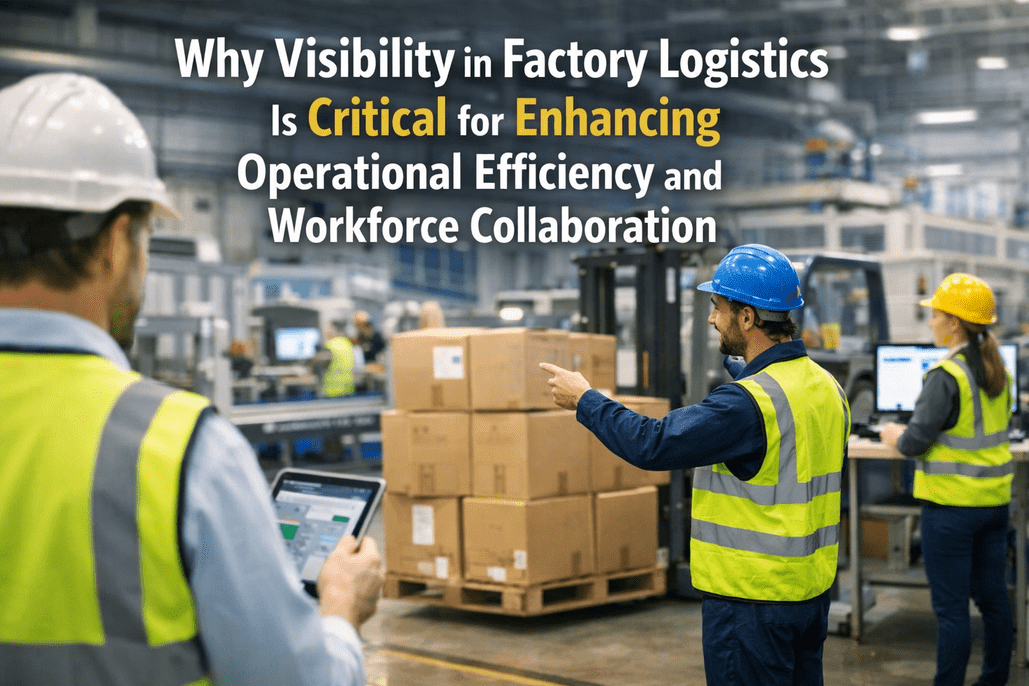
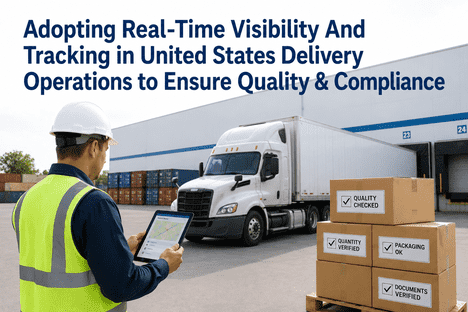
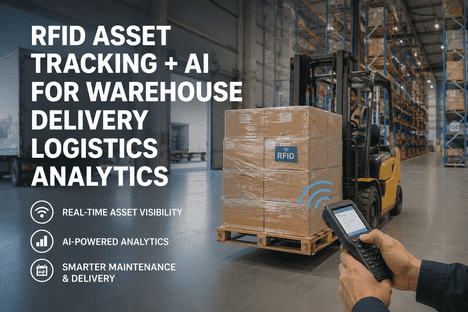
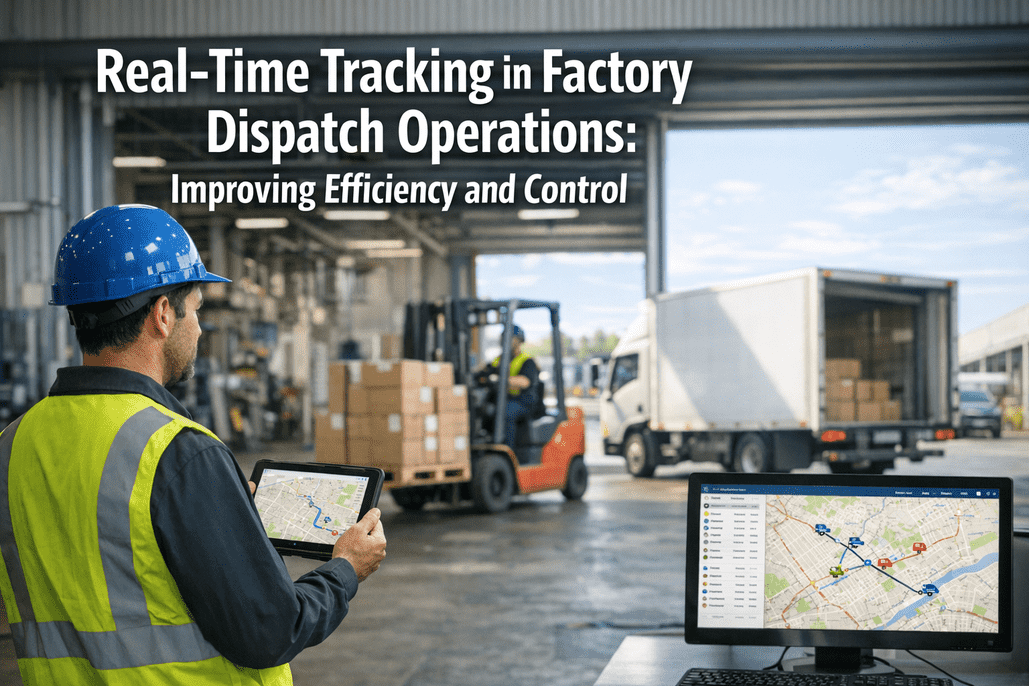
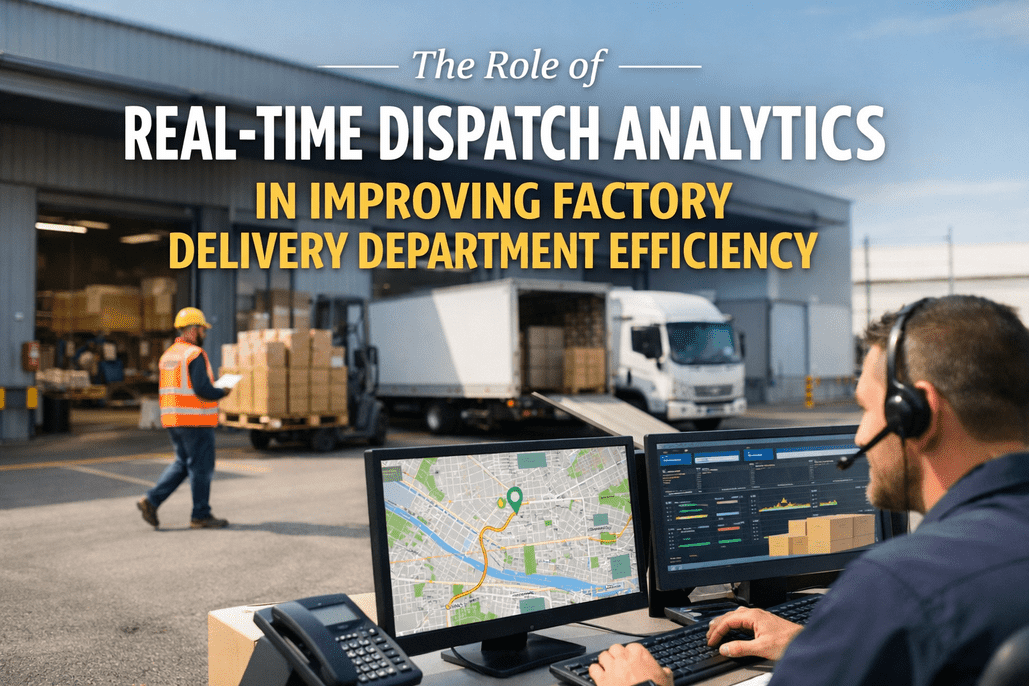
In 2026, operational agility has shifted from a competitive advantage to a survival requirement for manufacturers. Yet 72% of manufacturers have partially implemented smart factory strategies — and the factory delivery department remains the single largest visibility gap in the entire operation. Your production floor tracks OEE in real time. Your ERP monitors inventory levels. Your quality system logs every defect and rework event. But the department that controls every vehicle entering and leaving your plant — managing gate passes, inbound receipts, vehicle inspections, dispatch events, material transfers, and incidents — is still operating on paper logs, verbal handoffs, and disconnected spreadsheets. The result is predictable: supervisors make dispatch decisions without knowing which vehicles are actually available, receiving teams cannot locate materials two hours after dock arrival, and incidents in the yard are discovered in the following morning's briefing rather than in the moment they occur. 80% of manufacturing executives plan to invest 20% or more of their improvement budgets in smart manufacturing initiatives in 2026 — but smart manufacturing cannot deliver its promised efficiency gains while the factory delivery department remains invisible. This guide breaks down exactly what visibility means in factory logistics, why it directly determines operational efficiency and workforce collaboration, and how iFactory builds the real-time data layer your delivery department needs to function at the speed your operation demands. For questions about your specific facility, talk to our support team directly.
iFactory · Factory Delivery Department Module
Your production floor has dashboards. Your delivery department deserves the same visibility.
iFactory digitizes every gate pass, inbound receipt, material transfer, vehicle inspection, dispatch event, and incident report — giving your operations team real-time visibility into the department that controls everything that enters and exits your plant. Deploy in 7–14 days. No IT project. No hardware procurement. Results visible from day one.
87%Gate pass time reduction
78%Faster inbound receiving
100%Audit trail coverage
14 DaysFull deployment
What Visibility Actually Means in a Factory Logistics Department — and What It Is Not
Visibility in factory logistics is not a dashboard metric or a KPI report produced once a week. It is the ability of every person responsible for a delivery department function — gate security, receiving staff, dispatch supervisor, plant manager — to see what is happening right now, make decisions based on current facts, and produce a timestamped record of every action taken. Most factory delivery departments have none of this. They have information that is minutes, hours, or days old, communicated verbally or on paper that is already stale by the time it is read.
What Visibility Is NOT (Current State for Most Factories)
A gate register filled out by security at end of shift — not when vehicles arrived
A receiving log updated when the receiving clerk has time — not when materials arrive
A dispatch board with vehicle positions written in whiteboard marker
A verbal handoff from night shift to day shift about what was dispatched
An incident log written up the following morning from memory
A yard vehicle inspection checklist that may or may not have been completed
A material location that was accurate when it left the dock 4 hours ago
A compliance record assembled the week before an audit from scattered binders
What Real Visibility Looks Like (iFactory Digital Operations)
Every vehicle entry and exit timestamped to the second, with dwell time auto-calculated
Every inbound shipment logged at dock arrival — PO verified, photo POD captured, chain of custody started
Every dispatch event assigned by SLA priority, vehicle type, and route — error rate under 0.3%
Every shift handoff documented — dispatch status, pending vehicles, open incidents — retrievable instantly
Every incident captured on mobile at the moment it occurs — timestamped, photo-documented, auto-escalated
Every yard vehicle inspection completed on mobile — failed units automatically blocked from dispatch
Every material transfer logged — real-time location from dock to production floor usage
Every compliance record auto-generated from daily operations — retrievable in under 60 seconds
The 5 Visibility Gaps That Directly Destroy Operational Efficiency in Factory Logistics
Visibility gaps in the factory delivery department are not abstract information problems. Each one translates into a specific, measurable operational failure that costs time, money, and workforce capacity every single day. These are the five most consequential visibility gaps — and the direct efficiency loss each one produces.
01
Gate Pass Blindness — No Real-Time View of What Is at the Gate
Impact: 280–600 minutes of dock time lost daily
When dispatch supervisors cannot see gate queue depth in real time, they cannot proactively redirect vehicles to available docks, alert receiving teams to incoming deliveries, or identify queue buildups before they cascade into dock congestion. Manual gate processing at 15–20 minutes per vehicle creates a queue that grows silently until it becomes a crisis. By the time a supervisor learns that 8 vehicles are waiting at the gate, 3 receiving docks are blocked, and 2 outbound dispatches are delayed by incoming congestion, the morning's JIT schedule is already unrecoverable. Digital gate pass visibility gives the dispatch supervisor a real-time gate queue view — vehicle count, dwell time per vehicle, pending arrivals, and dock availability — making gate management a proactive function rather than a reactive emergency.
Manual: Gate queue status unknown until congestion is visible — 15–20 min processing creating invisible cascade delays
Digital: Real-time gate queue dashboard — 87% processing time reduction, congestion prevented before it occurs
02
Material Location Blindness — Materials That Disappear After Dock Entry
Impact: 30–40% of production stoppages are locating failures, not stock-outs
The most expensive visibility gap in most factory delivery departments is not at the gate — it is inside the plant. Materials that arrive at the dock and are logged as received disappear from the operational view the moment they enter the warehouse. Receiving records that production teams depend on to stage materials for the next shift are hours out of date by the time they are consulted. The result: 30–40% of production stoppages that are attributed to material unavailability are actually material location failures. The component is in the building. Nobody knows where it is. Digital internal tracking logs every material transfer in real time — dock to stores, stores to production, production to quality, quality to dispatch. Real-time location at every transfer point eliminates the search events that cause unnecessary yard vehicle movements, production delays, and frustrated workforce interactions that erode shift performance.
Manual: No location record after dock entry — production stoppages trigger yard search runs
Digital: Real-time location at every transfer — 30–40% of stoppages eliminated at source
03
Dispatch Status Blindness — No View of What Has Left and What Is at Risk
Impact: 2–3% error rate = 4–6 SLA failures daily on high-volume operations
When dispatch supervisors cannot see which vehicles have departed, which are staged, which are pending, and which SLA windows are at risk — all in real time — dispatch management becomes a guess. Manual dispatch boards and verbal updates create a status picture that is typically 30–60 minutes behind actual operations. At modern dispatch volumes, this lag is enough to convert a recoverable delay into a confirmed SLA breach. The workforce impact compounds this: drivers waiting for verbal dispatch instructions, receiving teams unsure which dock to clear, and plant managers who cannot answer a carrier query about departure time without calling the dispatch office. Digital dispatch visibility gives every stakeholder a live status view — staged, in-transit, completed, delayed, and at-risk shipments — with SLA alert thresholds that trigger notifications before windows close.
Manual: Dispatch status 30–60 minutes behind reality — SLA breaches discovered after they occur
Digital: Live dispatch dashboard — SLA alerts before windows close, 90% fewer errors
04
Yard Vehicle Status Blindness — No View of Equipment Availability and Compliance
Impact: Defective vehicles dispatched, compliance records incomplete, equipment failures unscheduled
Dispatch supervisors cannot assign yard vehicles, forklifts, or shunters optimally if they have no real-time view of which units are operational, which are under inspection, and which have failed an inspection item and must not be dispatched. Manual vehicle status tracking — a whiteboard in the workshop office, a verbal update from the yard supervisor — is always incomplete and always behind. At shift changes, the status picture is reset by whoever provided the last verbal handoff. Digital yard vehicle visibility gives dispatch the real-time operational status of every unit: available, in-use, under inspection, failed inspection, under repair, and cleared for dispatch. Failed inspection items are auto-blocked — vehicles cannot be assigned until a verified repair work order is completed and closed. Dispatch makes vehicle assignment decisions from facts, not from assumptions about what a whiteboard said two hours ago.
Manual: Vehicle status from verbal updates — defective units dispatched, compliance gaps undetected
Digital: Real-time vehicle status — failed units auto-blocked, 100% inspection coverage
05
Incident Blindness — Events That Are Discovered Hours or Days After They Occur
Impact: Delayed discovery = lost recovery window, escalated damage, compliance exposure
Factory delivery departments generate incidents — vehicle damage, loading errors, injury near-misses, gate disputes, inspection failures — at a frequency that paper-based incident management cannot capture in real time. When incidents are discovered hours after they occur, the recovery window is closed, the evidence has degraded, the responsible parties have left the shift, and the documentation is assembled from memory rather than from real-time observation. For workforce collaboration, delayed incident discovery creates a blame dynamic that erodes shift-to-shift trust. Digital real-time incident capture with automatic escalation closes this gap entirely: the moment an incident is logged on mobile — with timestamp, photo documentation, vehicle reference, and operator attribution — the responsible supervisor is notified automatically. Recovery decisions are made before the impact compounds, and every incident record is auditable and complete from the moment of capture.
Manual: Incidents discovered hours later — recovery window closed, documentation assembled from memory
Digital: Real-time capture and auto-escalation — immediate notification, complete audit trail
iFactory closes every visibility gap in your factory delivery department — gate, dispatch, materials, vehicles, and incidents — simultaneously, in 14 days.
Real-time dashboards, timestamped records, automated alerts, and complete audit trails — all generated from the same daily operations your team already performs.
Talk to our support team about your specific visibility gaps and configuration requirements.
How Factory Logistics Visibility Directly Enables Workforce Collaboration
Visibility is not just an operations efficiency problem — it is a workforce performance problem. When factory delivery department staff lack real-time information, they compensate with verbal communication, repeated checking, and manual coordination that consumes time and erodes the quality of cross-function collaboration. Here is how visibility gaps translate into workforce friction — and how digital operations eliminate them.
Gate Security ↔ Receiving Teams
Without visibility: Gate security processes vehicles on paper without notifying receiving teams until the truck physically arrives at the dock — creating dock congestion from simultaneous arrivals that nobody anticipated.
With iFactory: Pre-registration alerts receiving teams to incoming vehicles before arrival. Dock assignments are confirmed digitally. Gate clears the vehicle in under 2 minutes with receiving team already prepared at the assigned dock.
Receiving Teams ↔ Production Supervisors
Without visibility: Production supervisors call receiving to ask when a specific material will be available. Receiving staff search through paper receiving logs to answer. Materials are located in the yard by physical search — delays of 1–3 hours are common.
With iFactory: Production supervisors check the material tracking dashboard in real time. Every transfer — dock to stores, stores to production — is visible with timestamp. No calls, no searches, no delays.
Dispatch Supervisors ↔ Drivers and Carriers
Without visibility: Drivers wait for verbal dispatch instructions. Carriers calling for departure ETAs are told "we'll call you back." Dispatch supervisors manage from memory and whiteboards — creating errors and re-work when priorities change mid-shift.
With iFactory: Dispatch sequencing is digital and SLA-priority automated. Drivers receive mobile dispatch notifications. Carriers can be provided departure time estimates from live dispatch records. Priority changes auto-update the sequence without manual re-work.
Yard Supervisors ↔ Maintenance Teams
Without visibility: Yard vehicles with failed inspection items are either dispatched anyway or taken out of service verbally — with no work order created until the end of shift. Maintenance teams are unaware of pending repairs until they receive a verbal handoff, often too late to restore availability for the next shift.
With iFactory: Failed inspection items auto-generate a work order for the maintenance team at the moment of inspection failure. The vehicle is auto-blocked from dispatch. Maintenance has the repair request with photo documentation before the inspecting operator has left the yard.
Plant Managers ↔ All Delivery Department Functions
Without visibility: Plant managers have no real-time view of delivery department performance. They learn about problems from complaints, delays, and end-of-shift reports — always after the impact has compounded and the recovery window has closed.
With iFactory: Plant managers access a unified delivery department dashboard — gate queue depth, active dispatches, SLA status, open incidents, pending inspections — in real time. Problems are visible before they escalate. Decisions are made from facts, not reports.
Day Shift ↔ Night Shift Handoffs
Without visibility: Shift handoffs are verbal or written summaries that compress 8 hours of delivery department activity into 5 minutes of communication — with critical details omitted, misremembered, or misunderstood. Night shift begins without knowing what day shift left unresolved.
With iFactory: Shift handoff is a digital status view — every open dispatch, pending vehicle, active incident, and unresolved inspection item is visible to the incoming shift without requiring any verbal summary. Night shift begins with the same information quality as day shift had.
8 Visibility KPIs
The 8 Factory Logistics Visibility KPIs That Separate High-Performing Delivery Departments in 2026
87%
Gate Pass Time Reduction
From 15–20 minutes manual to under 2 minutes digital — with real-time gate queue visibility that prevents dock congestion before it occurs.
Manual: 15–20 min/vehicleDigital: under 2 min
78%
Faster Inbound Receiving
Mobile PO verification and photo POD cuts 45–60 minute receiving to under 10 minutes — with chain of custody generated automatically at dock arrival.
Manual: 45–60 minDigital: under 10 min
90%
Fewer Dispatch Errors
SLA-priority automated sequencing drops manual error rate from 2–3% to under 0.3% — with real-time SLA status visible to every stakeholder simultaneously.
Manual: 2–3% error rateDigital: under 0.3%
30–40%
Fewer Production Stoppages
Real-time material location at every internal transfer eliminates the locating failures that cause 30–40% of production stoppages — visible on the production floor dashboard before the search begins.
Manual: no location recordDigital: real-time location
100%
Inspection Coverage
Every yard vehicle inspection completed digitally — timestamped, operator-attributed, failed units auto-blocked. Yard supervisors see fleet status in real time, not from verbal updates.
Manual: incomplete recordsDigital: 100% coverage
<2 min
Incident Response Time
Real-time incident capture and auto-escalation. Supervisors are notified within minutes of an event — not hours. Recovery decisions made before impact compounds.
Manual: discovered hours laterDigital: real-time alert
3–6 mo
Full Platform Payback
Recovered dock time, eliminated SLA penalties, reduced compliance overhead, and workforce efficiency gains combine to deliver full payback within 3–6 months of go-live.
Legacy: 18–24 mo paybackiFactory: 3–6 months
14 Days
Go-Live Timeline
Cloud-based, mobile-first deployment. No server installation, no IT project, no hardware procurement. From decision to fully operational delivery department visibility in two weeks.
Legacy: 6–18 monthsiFactory: 14 days
Frequently Asked Questions
Questions plant managers, dispatch supervisors, and operations leaders ask when evaluating factory logistics visibility and what a digital delivery department platform actually delivers.
Why do most factories have strong visibility on the production floor but near-zero visibility in the delivery department?
The visibility gap between production and delivery departments exists for a structural reason: production floor digitization was driven by OEE metrics and quality systems that directly connect to output and profitability. MES, ERP, and predictive maintenance platforms were sold and implemented on the basis of production throughput improvement — a metric that every manufacturing executive tracks daily. The factory delivery department, by contrast, has historically been viewed as a logistics function rather than a production function — responsible for moving things in and out, but not directly accountable for OEE or production KPIs. This framing has allowed paper-based delivery department operations to persist even as every other factory function has digitized around them. In 2026, this framing is incorrect. When 30–40% of production stoppages are material location failures that originate in an invisible delivery department, when SLA penalties flow from dispatch errors that a visible dispatch system would have prevented, and when regulatory compliance documentation is missing from a function that generates the most compliance-relevant events in the entire facility — the delivery department is directly accountable for production outcomes. iFactory exists specifically to close this gap: a purpose-built platform for the factory delivery department that gives plant managers the same visibility into delivery operations that their MES gives them on the production floor.
Talk to our support team about your specific visibility gap assessment.
How does real-time factory logistics visibility directly reduce the operational efficiency losses that paper-based systems create?
Real-time visibility eliminates five categories of operational efficiency loss simultaneously. First, queue cascade prevention: when dispatch supervisors can see gate queue depth in real time, they redirect vehicles to available docks and alert receiving teams before congestion occurs — eliminating the cascade of delays that begins at the gate and runs through the entire dispatch schedule. Second, material search elimination: when every internal transfer is logged in real time, the 30–40% of production stoppages caused by material location failures disappear — because the location is visible without anyone searching. Third, dispatch error reduction: when SLA-priority dispatch sequencing runs automatically with real-time status visibility, the 2–3% manual error rate drops to under 0.3% — eliminating the re-dispatch runs, SLA penalties, and customer service recovery costs that manual dispatch errors generate. Fourth, yard vehicle compliance: when inspection status is visible in real time and failed units are auto-blocked, defective equipment is never dispatched — eliminating the breakdown-related delays and compliance exposure that paper inspection processes miss. Fifth, incident recovery: when incidents are captured and escalated in real time, the supervisor makes recovery decisions within minutes rather than discovering the problem the following morning — preserving the recovery window that paper-based discovery cycles close. The combined efficiency impact — recovered dock time, eliminated errors, faster receiving, fewer stoppages — typically delivers full platform payback within 3–6 months.
Book a demo to see a site-specific efficiency impact calculation for your delivery department.
How does factory logistics visibility specifically improve workforce collaboration and not just management oversight?
The distinction between visibility as a management tool and visibility as a workforce collaboration tool is important — and iFactory is designed around both. For management, visibility means dashboards and reports: plant managers see delivery department KPIs without calling supervisors. For workforce collaboration, visibility means shared operational context: every person involved in the delivery department function — gate security, receiving staff, dispatch supervisors, drivers, maintenance technicians, yard supervisors, and production schedulers — is working from the same real-time information rather than from fragmented verbal handoffs. Concretely: a receiving team member who logs a material transfer on mobile gives the production supervisor real-time location visibility without making a phone call. A yard vehicle inspector who logs a failed item on mobile gives the maintenance team a digital work order with photo documentation without walking to the workshop office. A dispatch supervisor who closes a dispatch event on mobile gives the plant manager a real-time KPI update without submitting a report. The operational friction that comes from verbal coordination — repeated calls, status checks, miscommunications, and shift handoff gaps — is replaced by a shared information layer that every team member updates and every stakeholder reads in real time. This is why iFactory customers report workforce collaboration improvements alongside efficiency gains: visibility reduces the coordination burden on every individual in the delivery department, freeing time and attention for the actual operational work rather than the communication overhead that manual systems require.
Talk to our support team about configuring iFactory for your specific team structure.
What does iFactory's visibility platform look like in daily operations — what do different roles actually see and do?
iFactory provides role-specific views that give each delivery department function exactly the information they need, in the format most useful for their work. Gate security staff use the mobile gate pass interface to process vehicle pre-registrations in under 2 minutes — verifying carrier, vehicle, and cargo manifest and logging the entry event with timestamp. They see the inbound vehicle queue in real time and can flag issues that require dispatch supervisor attention immediately. Receiving staff use the mobile inbound receiving interface to scan inbound materials against purchase orders, capture photo proof of delivery, and log receiving discrepancies at the dock — not at a desk 30 minutes later. The material is visible to production schedulers on the internal tracking dashboard from the moment it is logged as received. Dispatch supervisors use the dispatch management interface to see real-time SLA status for every outbound shipment — staged, at risk, delayed, completed — with automated alerts for windows approaching breach. Vehicle assignment is SLA-priority automated, with manual override available for exceptions. Yard supervisors use the vehicle inspection interface to manage the daily inspection completion status of every unit in the yard fleet — with failed items generating automatic work orders for maintenance and auto-blocking the vehicle from dispatch assignment. Plant managers access the unified delivery department dashboard — gate queue, dispatch status, inbound receiving progress, open incidents, inspection compliance rate — all in a single view without calling any supervisor. Every view updates in real time as events are logged by the team members in the field.
Book a demo to see each role-specific view in a live factory delivery environment.
How quickly does iFactory build factory logistics visibility from a standing start — and what does the deployment process involve?
iFactory goes live in 7–14 days for a full factory delivery department visibility deployment — covering gate pass management, inbound receiving, yard vehicle inspection, dispatch sequencing, internal material tracking, and incident management simultaneously. The deployment process has three phases. Days 1–3 cover data onboarding: iFactory's team loads the vehicle registry, driver roster, carrier list, supplier list, PO templates, and SLA rule set from existing records. This runs in parallel with ongoing operations — no operational disruption, no downtime. Days 4–7 cover configuration and training: inspection checklists, dispatch SLA rules, gate pre-registration workflows, material transfer points, and user access are configured for the specific operation. Training for each role — gate security, receiving staff, dispatch supervisors, yard supervisors, and maintenance teams — takes 2–4 hours through the mobile app. Staff do not need desktop computers for any core delivery department function. Days 8–14 cover go-live and verification: iFactory support monitors data quality and resolves any workflow gaps in real time as the platform goes live. The first week of live operations typically produces the most compelling evidence for the platform's value: gate processing times drop immediately, receiving records become complete for the first time, and the dispatch dashboard gives supervisors information they have never had before. For manufacturing operations leaders evaluating the investment, the fastest path to a decision is to see the platform running in a live factory environment.
Talk to our support team about your deployment timeline and facility configuration requirements.
iFactory · Factory Delivery Department Module
Your Factory Delivery Department Is the Last Undigitized Function. iFactory Changes That in 14 Days.
86% of manufacturers track OEE. Almost none track gate queue depth, dispatch SLA compliance, or real-time material location — the exact visibility that operational efficiency and workforce collaboration require. iFactory closes every visibility gap in your factory delivery department with a purpose-built digital platform that deploys in 7–14 days and generates real-time operational intelligence automatically.
87%Gate Pass Reduction
100%Audit Coverage
14 DaysTo Go-Live
3–6 moFull Payback