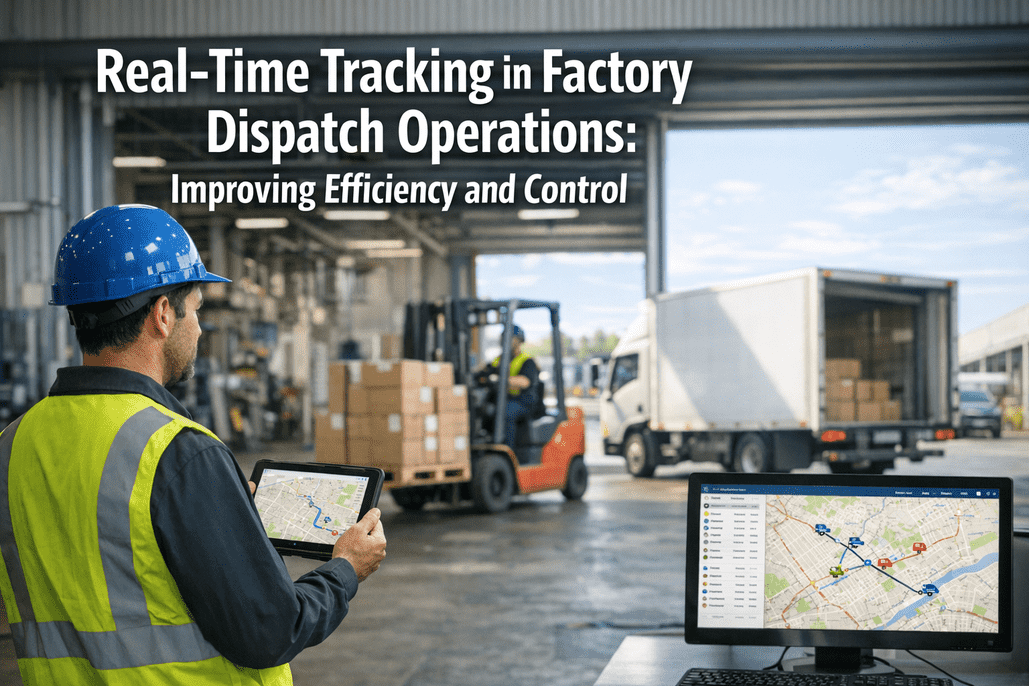
Factory dispatch operations run on trust — trust that the vehicle that left your gate carried what the manifest said, that the inbound shipment matched the purchase order, that the inspection was completed before dispatch, and that the incident report reflects what actually happened. In paper-based operations, that trust has no foundation. Records are altered, incidents are omitted, gate passes are backdated, and receiving discrepancies disappear into binder gaps. Blockchain technology applied to factory dispatch operations replaces that fragile trust with cryptographic certainty — an immutable, timestamped, tamper-proof record of every movement, every approval, and every exception in the delivery department cycle. The global blockchain in logistics market was valued at $3.31 billion in 2024 and is growing at 46.4% CAGR through 2030, driven by manufacturers who discovered that paper audit trails are not audit trails at all. iFactory's digital platform captures every gate pass, inbound receipt, vehicle inspection, internal material transfer, and dispatch event as a permanent, person-attributed record that no one can alter after the fact — generating the transparent, fraud-resistant operational data that modern factory compliance requires. For questions about your specific facility, talk to our support team directly.
Blockchain · Factory Dispatch · Audit Integrity
Blockchain Technology for Secure and Transparent Factory Dispatch Operations
86% of manufacturers track OEE on the production floor — almost none have tamper-proof records of who approved each gate pass, which vehicle failed inspection, or when a material transfer actually occurred. Blockchain-backed dispatch operations close every integrity gap in the factory delivery department in 7–14 days.
46.4%
CAGR of the global blockchain in logistics market through 2030 — fastest-growing compliance technology in manufacturing
100%
Audit trail coverage for every gate pass, receiving event, inspection, material transfer, and dispatch decision
87%
Reduction in gate pass processing time — from 15–20 minutes to under 2 minutes with digital pre-registration
14 days
iFactory go-live timeline — from decision to fully tamper-proof digital delivery department operations
The Integrity Gap
What Your Factory Records vs. What Your Dispatch Department Cannot Prove
Operational Records Your Plant Maintains
Production OEE data — timestamped, system-generated, tamper-resistant
Maintenance work orders — digitally attributed to specific technicians and timestamps
Quality rejection records — linked to specific batches, operators, and shift times
Employee safety incident reports — documented at time of occurrence
Finished goods inventory — system-updated with every production completion
ISO audit documentation — digitally signed and version-controlled
Supplier qualification records — current, retrievable, and person-attributed
Energy consumption logs — sensor-generated, continuously timestamped
Dispatch Records With Zero Integrity Guarantee
Gate pass approvals — paper, unsigned, alterable after the fact with no detection
Vehicle inspection results — paper checklists backdated or completed after dispatch
Inbound receiving discrepancies — omitted from paper POD, discovered weeks later
Internal material transfer records — verbal handoffs with no timestamped chain of custody
Dispatch authorization approvals — no cryptographic proof of who approved and when
Incident reports — filed days after occurrence, missing operator attribution
Driver departure compliance — no verifiable record of pre-departure checklist completion
SLA commitment records — no immutable log of what was promised vs. what departed
8 Integrity KPIs
The 8 Factory Dispatch Integrity KPIs That Blockchain-Backed Digital Operations Unlock
100%
Immutable Audit Trail Coverage
Every gate pass, inspection, receiving event, transfer, and dispatch decision timestamped and person-attributed — creating a permanent record that cannot be altered, omitted, or backdated after the fact.
Paper: alterable, incompleteDigital: 100% tamper-proof
87%
Gate Pass Processing Time Reduction
Digital pre-registration and mobile verification cuts per-vehicle gate processing from 15–20 minutes to under 2 minutes — with every approval recorded against the approving officer's credentials in real time.
Manual: 15–20 min/vehicleDigital: under 2 min
78%
Faster Verified Inbound Receiving
Mobile PO verification with photo proof of delivery cuts inbound receiving from 45–60 minutes to under 10 minutes — while generating a verifiable chain of custody record linking supplier, carrier, material, and timestamp.
Manual: 45–60 min/shipmentDigital: under 10 min
90%
Dispatch Error Rate Reduction
SLA-priority automated sequencing drops dispatch errors from 2–3% to under 0.3% — and every dispatch authorization is linked to the approving supervisor's credentials and timestamp, creating verifiable accountability.
Manual: 2–3% errorsDigital: under 0.3%
40%
Reduction in Inbound Delays
A factory receiving 20 vehicles per day loses 280+ minutes of dock time daily on paper gate processing. Digital workflows recover this time — and every recovered minute is documented with an immutable timestamp, not a manual log.
Manual: 280+ min lost/dayDigital: 40% reduction
30–40%
Material Chain of Custody Gaps Eliminated
Every internal material transfer — dock to stores, stores to production — generates a timestamped, person-attributed record. The 30–40% of production stoppages from material locating failures become impossible when every transfer is logged.
Manual: chain of custody ends at dockDigital: full internal traceability
3–6 mo
Full Platform Payback Period
Recovered dock time, eliminated dispatch errors, fraud prevention, and compliance overhead reduction combine for full payback in 3–6 months — with iFactory deploying in 7–14 days and generating immutable records from day one.
Legacy: 18–24 mo paybackiFactory: 3–6 months
$25.5B
Market Context — Digital Delivery Management
The global delivery management software market grows from $11.6B in 2025 to $25.5B by 2035. Blockchain-backed traceability is the primary differentiator — factories deploying immutable records now build compliance advantages competitors cannot replicate on paper.
2025: $11.6B market2035: $25.5B projected
Your Dispatch Department Needs Records That Cannot Be Altered. iFactory Generates Them Automatically from Every Operation.
Every gate pass, inspection result, receiving record, material transfer, and dispatch authorization captured as a permanent, tamper-proof record — no separate documentation step required. Live in 14 days.
Talk to our support team for a dispatch audit integrity assessment.
How It Works
5 Factory Dispatch Workflows That Generate Blockchain-Backed Immutable Records Through iFactory
Blockchain integrity in factory dispatch does not require a separate technology deployment. iFactory captures cryptographically secure, tamper-proof records as a natural byproduct of 5 operational workflows that already exist in every factory delivery department.
01
Digital Gate Pass — Immutable Entry and Exit Record Per Vehicle
Every vehicle entry and exit is processed through a mobile verification checklist completed by the authorizing security officer — with credentials, exact timestamp, vehicle details, driver identity, and cargo manifest captured at the point of approval. The record is immediately written and cannot be altered retroactively. Paper gate passes can be filled in hours after the event, backdated, or simply lost. iFactory gate pass records carry the approving officer's identity, the precise timestamp, and the device ID — creating a three-factor verification record that survives any audit challenge. A factory processing 20 vehicles per day generates 280+ minutes of verifiable dwell time data daily that paper cannot produce.
Tamper-proof entry record
Officer-attributed approval
Exact dwell time per vehicle
02
Mobile Inbound Receiving — Verifiable Chain of Custody from Supplier to Floor
Receiving staff verify inbound materials against purchase orders on mobile — scanning barcodes, capturing discrepancy photos, and logging receiving exceptions in real time against the receiving officer's credentials. Every inbound shipment generates a permanent record linking supplier identity, carrier details, material description, quantity received versus ordered, photo evidence of condition, and receiving officer timestamp. This record cannot be amended to hide discrepancies after the fact — which is the mechanism that allows under-delivery fraud and quality substitution to persist in paper receiving operations. Digital receiving cuts the inbound cycle from 45–60 minutes to under 10 minutes per shipment while simultaneously creating an unalterable chain of custody.
Verifiable supplier chain of custody
Photo discrepancy evidence
78% faster receiving
03
Vehicle Inspection with Auto-Block — Inspection Results That Cannot Be Falsified
Every vehicle inspection is completed on a mobile checklist against the inspecting officer's logged credentials. Each checklist item carries the timestamp of completion, pass or fail status, and optional photo evidence. Failed items trigger automatic dispatch blocking — the vehicle cannot be assigned to any job until a supervisor verifies repair completion. The inspection record is permanent: it cannot be changed to remove a failed item after the fact, and the blocking mechanism cannot be bypassed by the driver or dispatcher. This eliminates the vehicle inspection fraud pattern — where paper checklists are completed at the end of shift marking all items passed regardless of actual vehicle condition — that causes mid-route breakdowns and creates liability exposure when incidents occur.
Unfalsifiable inspection record
Auto-block enforcement
Repair verification required
04
SLA-Priority Dispatch Authorization — Verifiable Approval Chain per Dispatch Event
Every dispatch order carries a complete authorization chain — the dispatcher who created it, the supervisor who approved it, the driver who accepted it, and the timestamp of each action. Dispatch sequencing is automated by SLA priority tier, eliminating the manual judgment gaps where unauthorized priority overrides occur without record. The 2–3% manual dispatch error rate drops to under 0.3% — and every dispatch decision is linked to specific named personnel, creating accountability that paper dispatch logs cannot provide. Audit challenges to any dispatch decision can be answered with a complete, unalterable approval chain rather than "that's what the paperwork says."
Full authorization chain per dispatch
Named-personnel accountability
90% error rate reduction
05
Internal Material Tracking — Immutable Transfer Records at Every Handoff Point
Every internal material transfer — dock to stores, stores to production, production to quality hold, quality to dispatch — is recorded against the transferring officer's credentials, the receiving officer's credentials, and an exact timestamp. The material's complete movement history is permanently accessible: who handled it, when, where it went, and in what condition. This eliminates the 30–40% of production stoppages caused by material locating failures — and it eliminates the dispute between departments over where material disappeared between receiving and production, because every handoff is permanently on record with named accountability.
Named-personnel transfer record
Complete movement history
30–40% stoppage elimination
Measurable Results
What iFactory Customers Measure Within 90 Days of Go-Live
87%
Gate Pass Time Reduction
From 15–20 minutes manual processing to under 2 minutes digital — with every approval timestamped against the approving officer's credentials. A 20-vehicle-per-day factory recovers 280+ minutes of dock time while generating a tamper-proof entry record per vehicle.
100%
Audit Trail Coverage
Every gate event, receiving transaction, vehicle inspection, material transfer, and dispatch authorization is permanently recorded with timestamp and person attribution. Compliance documentation retrievable in under 60 seconds — not hours of manual paper assembly that produces gaps under scrutiny.
78%
Faster Verified Receiving
Inbound receiving drops from 45–60 minutes to under 10 minutes with mobile PO verification and photo POD — while simultaneously generating a verifiable supplier-to-floor chain of custody that discrepancy disputes and under-delivery fraud cannot survive.
90%
Fewer Dispatch Errors
Manual dispatch errors drop from 2–3% to under 0.3% with SLA-priority automation. Every dispatch decision carries a named authorization chain — eliminating the accountability gap where errors are discovered but no one can be held responsible because paper logs are unsigned.
3–6 mo
Full Platform Payback
Recovered dock time, eliminated dispatch errors, fraud prevention, and compliance overhead reduction combine for full payback in 3–6 months. iFactory deploys in 7–14 days — no IT project, no hardware procurement, no server installation required.
14 days
Go-Live Timeline
From decision to fully operational, blockchain-backed factory dispatch records in 7–14 days. Cloud-based, mobile-first deployment for security staff, receiving teams, dispatchers, and supervisors — with tamper-proof records generated from the first operational day.
Before vs. After
Paper-Based Factory Dispatch vs. iFactory Blockchain-Backed Digital Operations
iFactory · Factory Delivery Department Module
Your Production Floor Has Dashboards. Your Dispatch Department Deserves the Same Visibility.
iFactory digitizes every gate pass, inbound receipt, material transfer, vehicle inspection, dispatch event, and incident report — giving your operations team real-time visibility into the department that controls everything that enters and exits your plant. Deploy in 7–14 days. No IT project. No hardware procurement. Results visible from day one.
87%
Gate pass time reduction
78%
Faster inbound receiving
100%
Audit trail coverage
Frequently Asked Questions
Blockchain in Factory Dispatch — What Operations Leaders Ask First
How does blockchain technology apply specifically to a factory delivery department — and is iFactory a blockchain platform?
The core blockchain principle relevant to factory dispatch operations is immutability — the property that once a record is written, it cannot be altered without detection. iFactory applies this principle to every operational record in the factory delivery department: gate pass approvals are written at the moment of processing and cannot be modified retroactively; vehicle inspection results are captured at the point of inspection and the officer's credentials are permanently linked; receiving discrepancies are photo-documented at the moment of receipt and cannot be removed from the record to hide under-delivery; material transfers are logged with named personnel attribution and exact timestamps at the point of handoff. iFactory achieves immutable record integrity through cryptographic timestamping and person-attributed digital records rather than a public distributed ledger — delivering the same fraud-prevention and audit-integrity properties that blockchain provides, without the infrastructure complexity or implementation timeline that full blockchain deployment requires. The result is records that satisfy audit, compliance, and dispute-resolution requirements that paper operations cannot meet regardless of how many people sign the paper.
Talk to our support team for a dispatch audit integrity assessment specific to your facility.
What types of dispatch fraud and record manipulation does digital record integrity prevent in factory operations?
Factory dispatch departments operating on paper are vulnerable to six specific patterns of fraud and record manipulation that immutable digital records eliminate. Gate pass backdating: security officers process vehicles without documentation and fill in paper passes hours later — creating a fictional timeline that does not reflect actual dwell time, cargo, or driver identity. Receiving quantity manipulation: receiving staff record inflated quantities on paper POD forms, with actual shortfalls covered by supplier kickbacks or converted to personal benefit. Inspection falsification: vehicle inspection checklists are marked as passed without inspection being performed, dispatching defective vehicles that subsequently break down and generate insurance claims with fabricated inspection records. Unauthorized priority overrides: dispatchers accept payments to move certain loads ahead of SLA priority queue — with no digital record of the override to detect or audit. Material transfer diversion: materials are physically moved to unauthorized locations between dock and production without any record — a common vector for component theft in high-value manufacturing. Incident omission: incidents are not reported or are documented minimally to protect personnel from disciplinary consequences — creating liability exposure when insurance claims or regulatory investigations demand the full record. iFactory's person-attributed, timestamped records eliminate every one of these patterns because the record is created at the point of action by the responsible party, cannot be altered afterward, and carries the officer's credentials permanently.
Book a demo to see how iFactory's audit integrity model applies to your specific dispatch workflows.
How does iFactory's vehicle inspection auto-block work — and why is it critical for dispatch integrity?
iFactory's vehicle inspection auto-block is a system-enforced mechanism that prevents a vehicle with any failed inspection item from being assigned to any dispatch job until a supervisor logs and closes a verified repair work order. The mechanism works in three steps. First, the driver or yard operator completes the digital inspection checklist on mobile — each item carries a pass or fail response, optional photo evidence, and the inspector's credentials and timestamp. Second, any failed item immediately flags the vehicle as blocked in the system — visible to all dispatchers and supervisors. Third, the block cannot be lifted by the driver, dispatcher, or by simply marking the item passed on a second form — it requires a supervisor to log a repair work order, assign it to a technician, verify completion, and close the order with their own credentials. This three-step verification chain creates an integrity record that paper inspections cannot produce. In paper operations, the most common response to a failed inspection item under schedule pressure is to mark it passed anyway or simply not complete the checklist — creating the defective vehicle dispatch pattern that produces mid-route breakdowns, insurance fraud opportunities, and liability gaps when accidents occur.
Talk to our support team about inspection workflow configuration for your facility's vehicle types.
How does digital chain of custody for inbound receiving prevent under-delivery fraud and supplier disputes?
Under-delivery fraud in factory receiving operations depends on a single vulnerability: the gap between what arrives and what gets recorded on paper. A supplier delivers 950 units, the receiving officer records 1,000 on the paper POD, and the 50-unit discrepancy disappears — either converted to personal benefit or attributed to a "system discrepancy" that no one can prove or disprove weeks later when production runs short. iFactory eliminates this vulnerability by requiring mobile PO verification at the point of receipt — the receiving officer scans each item or pallet against the purchase order on their mobile device, and the system flags any quantity discrepancy in real time. The officer must either confirm the discrepancy or correct it before the receiving record closes. Any discrepancy is automatically flagged for supervisor review with photo evidence and the receiving officer's credentials attached. The record cannot be amended after closure to remove the discrepancy — making under-delivery fraud detectable, attributable, and undeniable. Supplier disputes over received quantities are resolved by the digital receiving record and photo evidence rather than dueling paper claims. The same workflow cuts inbound receiving from 45–60 minutes to under 10 minutes per shipment.
Book a demo to see the receiving verification workflow in a live factory environment.
How quickly does iFactory deploy and what does the implementation process involve for a factory dispatch department?
iFactory goes live in 7–14 days for a standard factory delivery department deployment — covering gate pass management, inbound receiving, vehicle inspection, dispatch sequencing, internal material tracking, and incident management simultaneously. The deployment process has three phases. Days 1–3: data onboarding — uploading vehicle registry, driver roster, supplier list, and PO templates. iFactory's onboarding team handles this directly with your operations team from your existing records. Days 4–7: configuration and training — setting up gate pass workflows, inspection checklists, dispatch SLA priority tiers, and user access by role. Training for security staff, receiving teams, drivers, and dispatchers takes 2–4 hours via the mobile app and can be scheduled across shifts without production disruption. Days 8–14: go-live — live operations with iFactory support monitoring data quality and record integrity. Because iFactory is cloud-based and mobile-first, there is no server infrastructure to install, no IT department project, and no hardware procurement required. Tamper-proof records are generated from the first operational day without any blockchain infrastructure deployment, smart contract development, or technical integration project.
Talk to our support team about your specific deployment timeline and facility configuration.
How does iFactory's audit documentation hold up under regulatory inspection — and which regulatory frameworks does it satisfy?
iFactory's audit documentation model is designed to satisfy the evidentiary standard for regulatory inspections across six frameworks simultaneously from the same operational dataset. In the USA, OSHA incident records and DOT vehicle inspection documentation require timestamped, person-attributed records — iFactory's mobile incident capture and inspection checklists generate both. FMCSA audit requirements for driver vehicle inspection reports (DVIRs) are satisfied by iFactory's pre-use inspection workflow linked to driver credentials. In India, Schedule M GMP compliance for pharmaceutical manufacturing requires complete chain of custody for materials entering and leaving production — iFactory's inbound receiving and internal transfer records satisfy this requirement. In Germany, Lieferkettensorgfaltspflichtengesetz (LkSG) supply chain traceability obligations require documented receiving records — iFactory's PO verification workflow generates the required documentation. In the UK, supply chain due diligence requirements are met by the same inbound receiving chain of custody records. In the UAE, Vision 2030 smart manufacturing documentation standards require digital, traceable operational records — iFactory's full audit trail satisfies this requirement. Every record in iFactory carries the timestamp of creation, the credentials of the responsible officer, and a permanent record of any subsequent actions — making the documentation defensible under audit challenge from any of these frameworks.
Book a demo to see iFactory's compliance documentation model applied to your specific regulatory requirements.
iFactory · Factory Delivery Department Module
Your Production Floor Has Dashboards. Your Dispatch Department Deserves the Same Visibility.
iFactory digitizes every gate pass, inbound receipt, material transfer, vehicle inspection, dispatch event, and incident report — giving your operations team real-time visibility into the department that controls everything that enters and exits your plant. Deploy in 7–14 days. No IT project. No hardware procurement. Results visible from day one.
87%
Gate pass time reduction
78%
Faster inbound receiving
100%
Audit trail coverage