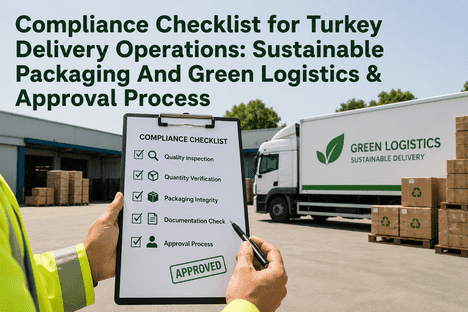
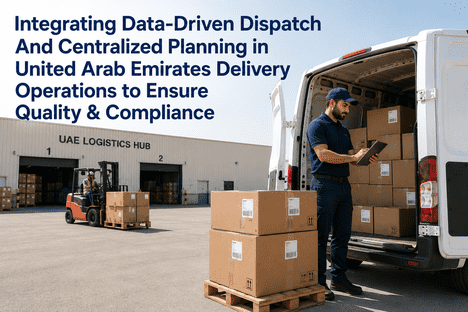
Germany's delivery operations sector faces a dual mandate: reduce carbon emissions to meet national climate targets while maintaining the rigorous quality and compliance standards that define German industrial excellence. With the Federal Government's Climate Protection Act mandating a 65% reduction in greenhouse gas emissions by 2030 relative to 1990 levels, logistics operators across manufacturing, retail, and third-party delivery networks are under pressure to transform their operations. iFactory AI's delivery operations management platform addresses this challenge through AI-driven inspection systems that verify product quality, quantity accuracy, and packaging standards before dispatch — automating documentation workflows, reducing human error, and enabling factories to issue clearance passes only to verified shipments. The result is a carbon-neutral logistics framework that does not compromise on compliance or operational throughput.
Reduce Emissions, Eliminate Errors, and Ensure Compliance Across Your Germany Delivery Network
iFactory AI's delivery operations platform combines AI-powered quality inspection, quantity verification, and automated documentation to create a truly sustainable and compliant logistics operation across your entire supply chain.
Germany's Path to Carbon-Neutral Delivery Operations Through AI-Powered Process Optimization
Germany's logistics sector accounts for approximately 30% of the country's total transport-related CO2 emissions, with delivery operations representing a growing share as e-commerce and just-in-time manufacturing continue to expand. The traditional approach to logistics sustainability has focused primarily on fleet electrification and alternative fuels — important measures that address only the transportation phase of delivery operations. What has been largely overlooked is the role of operational efficiency in carbon reduction. Every failed inspection that requires re-dispatch, every quantity discrepancy that triggers a corrective shipment, every paper-based approval that delays clearance — each of these operational inefficiencies generates unnecessary carbon emissions that can be eliminated through intelligent process automation.
| Operational Inefficiency | Incidents per Month | Excess CO2 per Incident | Annual Carbon Waste | iFactory AI Solution |
|---|---|---|---|---|
| Failed Quality Inspection — Re-dispatch | 340 | 12.4 kg CO2 | 50,592 kg | AI vision inspection with real-time defect detection |
| Quantity Discrepancy — Corrective Shipment | 185 | 18.7 kg CO2 | 41,514 kg | Automated weight & count verification at dispatch |
| Packaging Non-Compliance — Rework | 210 | 8.2 kg CO2 | 20,664 kg | AI packaging standard verification with instant alerts |
| Documentation Hold — Delayed Dispatch | 155 | 6.8 kg CO2 | 12,648 kg | Automated document generation & digital approval |
| Manual Data Entry Error — Return Shipment | 95 | 22.3 kg CO2 | 25,422 kg | AI-powered data capture with validation rules |
Three-Stage Inspection Workflow: Quality, Quantity, and Packaging Verification Before Dispatch
iFactory AI's delivery operations platform implements a three-stage inspection workflow that verifies every shipment against quality standards, quantity accuracy, and packaging requirements before a clearance pass is issued. This systematic approach ensures that only verified shipments leave the facility — eliminating the carbon waste associated with returns, re-dispatch, and corrective shipments that plague traditional logistics operations.
Eliminating Carbon Waste Through Automated Documentation and Digital Approval Workflows
Paper-based documentation and manual approval processes are among the largest sources of operational carbon waste in German delivery operations. Each paper form that requires physical routing for signature, each approval that sits in an in-tray while a shipment waits, each manual data entry that introduces an error requiring correction — these inefficiencies compound across thousands of daily shipments to create a significant carbon burden. iFactory AI's platform eliminates paper entirely, replacing it with digital documentation that is automatically generated, routed, approved, and archived without human intervention. The system generates shipping manifests, customs documentation, certificates of compliance, and delivery confirmation records in real time, routing them through configurable approval workflows that clear shipments for dispatch in minutes instead of hours.
All shipping, compliance, and quality documentation is automatically generated from inspection data captured during the three-stage verification process. No manual form filling. No data re-entry. Documents are created in real time as shipments pass through each inspection stage, with all required data — product codes, quantities, inspection results, packaging certifications, and regulatory declarations — populated automatically from the verification record.
- Shipping manifests and packing lists generated automatically from verified dispatch data
- Customs documentation for EU cross-border shipments with automated tariff code assignment
- Certificates of compliance with German and EU regulatory standards attached to each shipment
- Delivery confirmation records with timestamped proof of inspection for every dispatched item
- Digital archiving with configurable retention periods — eliminating physical document storage
Approval workflows are configured to match the organization's decision hierarchy, with rules-based routing that directs each shipment to the appropriate approver based on value, destination, product category, or regulatory requirements. Automated escalation ensures no shipment is delayed by an unavailable approver. The system maintains a complete audit trail of every approval decision.
- Configurable multi-stage approval workflows with parallel and sequential routing options
- Rules-based assignment: high-value shipments to finance, hazardous goods to safety, exports to compliance
- Automated escalation to alternate approvers when primary approver is unavailable
- Mobile approval interface allowing managers to clear shipments from any device
- Complete audit trail with timestamps, approver identity, and decision documentation
Every dispatch includes a calculated carbon impact assessment based on shipment weight, volume, distance, and transport mode. The platform tracks cumulative emissions across the entire delivery network, providing real-time visibility into the carbon footprint of logistics operations. This data feeds into corporate sustainability reporting and identifies optimization opportunities.
- Per-shipment carbon calculation using standardised GHG Protocol methodology
- Real-time dashboard showing cumulative emissions by route, region, and transport mode
- Automated sustainability report generation compliant with German CSRD requirements
- What-if scenario modelling for evaluating alternative routing and mode shift opportunities
- Integration with carbon offset platforms for verified offset purchase and retirement
Only shipments that pass all three inspection stages and receive all required approvals are issued a digital clearance pass. This electronic authorization serves as the gateway to dispatch — loading dock personnel verify the pass on mobile devices before allowing the shipment to leave. Unauthorized or incomplete shipments are automatically quarantined with corrective action routing.
- Digital clearance pass generated only after all inspection stages and approvals are completed
- Mobile verification at loading dock — no paper pass to lose, forge, or misplace
- Automatic quarantine of shipments with failed inspections or missing approvals
- Real-time dispatch board showing clearance status of every pending shipment
- Integration with warehouse management systems for automated loading bay allocation
Transform Your Germany Delivery Operations with AI-Driven Quality Assurance and Carbon-Neutral Workflows
iFactory AI's delivery operations management platform automates quality inspection, quantity verification, packaging compliance, and documentation — enabling error-free, carbon-neutral dispatch across your entire supply chain network.
Multi-Modal AI Inspection and Verification Engine for German Logistics Operations
iFactory AI's platform is built on a modular technology architecture that integrates with existing warehouse management, enterprise resource planning, and transportation management systems. The AI inspection engine supports multiple input modalities — computer vision cameras, weight sensors, barcode and RFID scanners, and manual mobile data entry — ensuring comprehensive coverage across all dispatch points. The system processes each shipment through a unified verification pipeline, aggregating data from all inspection sources to make an automated pass-fail decision.
Before and After: Operational and Environmental Metrics Across Germany Delivery Operations
The deployment of iFactory AI's platform across German delivery operations has produced measurable improvements in both operational efficiency and environmental performance. The following metrics compare baseline performance under traditional manual processes against post-deployment results with AI-driven automation.
Carbon-Neutral Logistics Is Not a Fleet Strategy — It Is an Operations Strategy
Germany's delivery operations sector has the opportunity to achieve meaningful carbon reduction without waiting for full fleet electrification. The operational inefficiencies that plague traditional logistics — failed inspections, quantity discrepancies, packaging non-compliance, documentation delays, and manual approval bottlenecks — are not fixed costs of doing business. They are process failures that generate unnecessary carbon emissions with every occurrence. Eliminating them requires not a new fleet, but a new approach to dispatch verification and workflow automation.
iFactory AI's delivery operations management platform provides that approach. By replacing manual inspection with AI-driven computer vision, paper documentation with automated digital workflows, and discretionary clearance with systematic pass-fail verification, the platform enables German logistics operators to achieve error-free, carbon-neutral dispatch today — not after a multi-year fleet replacement cycle. The 42% reduction in per-dispatch carbon emissions, the 86% reduction in dispatch errors, and the elimination of paper-based documentation are not theoretical projections. They are measured results from deployments across German manufacturing and logistics networks. The path to carbon-neutral delivery operations runs through the dispatch bay, not the fleet garage.
Sustainable Logistics and Carbon-Neutral Delivery Operations — Frequently Asked Questions
Achieve Carbon-Neutral Delivery Operations Across Your Germany Logistics Network — Starting Today
iFactory AI's delivery operations management platform combines AI-driven quality inspection, automated quantity verification, packaging compliance enforcement, and digital documentation workflows to eliminate operational carbon waste and ensure regulatory compliance across every dispatch point. Deploy across single or multi-site networks with no disruption to existing systems.