A pharmaceutical components factory running three shifts lost 14 hours of production time in a single quarter — not because raw materials didn't arrive, but because nobody could confirm where they were between the gate and the production floor. The materials had been received, weighed, and cleared at inspection. But the production supervisor had no visibility into which dock they were unloading at, and the stores team assumed QC hadn't finished yet. Three departments, one facility, and zero real-time information connecting them. After deploying iFactory's real-time tracking across factory dispatch operations — covering gate entry, weighbridge, dock status, material stage, and internal movement — that invisible gap disappeared. Inbound materials now have a live digital status from the moment a vendor's vehicle enters the gate to the moment the batch reaches the production line. The result: 42% faster dock-to-floor transfer time, 87% reduction in internal "where is the material?" escalations, and zero production stoppages traced to internal visibility gaps since go-live. Book a demo to see iFactory's real-time factory dispatch tracking in your operation.
Logistics Technology · High Priority · 2026
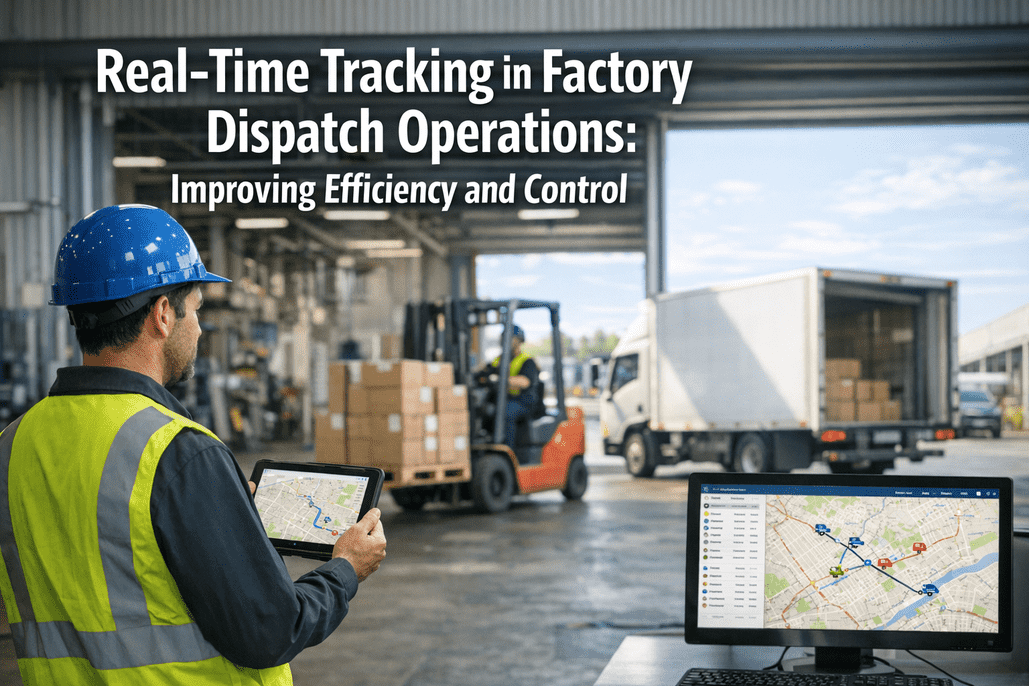
Real-Time Tracking in Factory Dispatch Operations: Improving Efficiency and Control
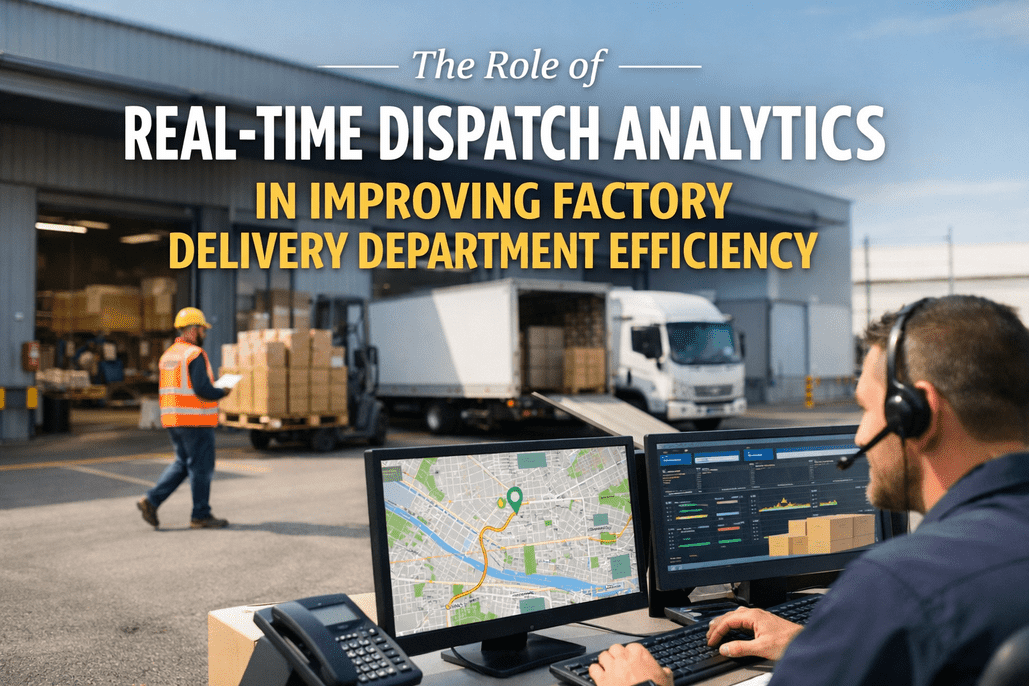
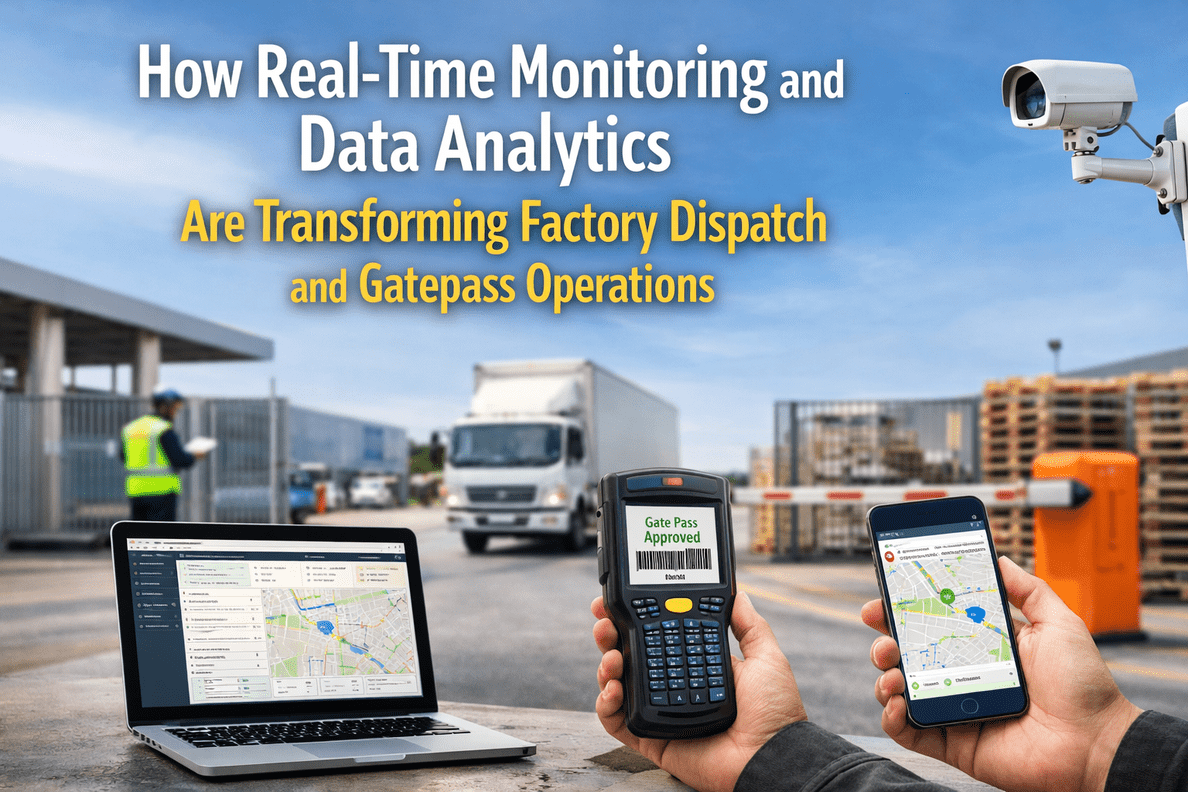
Real-time tracking in factory dispatch isn't a GPS dot on a map. It's live status visibility across every stage of internal material movement — gate entry, weighbridge, quality inspection, dock assignment, unloading, and floor transfer — connected into a single operational dashboard that eliminates the guesswork that causes production disruptions.
42%
Faster dock-to-floor material transfer time with live stage tracking
87%
Reduction in internal material status escalations after real-time tracking deployment
40%
Faster gate pass approval workflows vs. paper-based manual systems
30%
Reduction in manual administrative costs through digital dispatch tracking automation
Context First
What Real-Time Tracking Means Inside a Factory — Not on a Delivery Route
Most conversations about real-time tracking focus on external last-mile delivery: GPS on trucks, customer-facing ETAs, route monitoring. Inside a factory, the tracking challenge is different — and the cost of getting it wrong is higher. Production lines don't slow down while someone hunts for a batch that cleared the gate 90 minutes ago. The tracking gap in factory dispatch operations is not between cities. It's between the gate and the production line — a journey that might span 400 meters but passes through five distinct handoff stages where visibility breaks down completely without a connected digital system.
01
Gate Entry
Vehicle registration, driver verification, gate pass generation, and entry timestamp. First tracking event — the moment the vendor vehicle becomes a tracked entity inside your facility.
02
Weighbridge
Gross weight, tare weight, net material weight recorded. Linked automatically to the purchase order and inward GRN — no manual entry, no weight dispute risk, automatic progression to next stage.
03
QC Inspection
Material routed to inspection queue with real-time status: waiting, in-progress, passed, or held. Production planners see QC status live — allowing schedule adjustment before a stoppage risk materializes.
04
Dock Assignment
Pre-scheduled dock slot allocated. Vehicle directed to assigned dock. Supervisor dashboard shows all dock occupancy in real time — no first-come congestion, no idle dock waste, no manual dock allocation decisions.
05
Unloading to Stores
Material unloaded, batch and quantity confirmed against GRN. Stores receipt recorded digitally with timestamp and handler identification. Inventory record updated automatically on confirmation.
06
Floor Transfer
Internal gate pass issued for material movement from stores to production floor. Production supervisor receives confirmation when material arrives at line — closing the loop on the entire inbound journey in a single connected record.
Why Visibility Breaks Down
8 Factory Dispatch Tracking Gaps That Trigger Production Disruptions
Each of these gaps exists in factories running paper-based or disconnected dispatch systems. Each one is individually manageable — until three of them coincide on a high-pressure production day and the compounding effect cascades into a stoppage.
01
Gate arrival not linked to production schedule
Security logs vehicle entry. Production planner has no notification. The 40-minute window between gate arrival and when someone thinks to check the dock is the first invisible delay in every inbound cycle.
02
Weighbridge data not reaching the GRN
Weight recorded in a standalone weighbridge terminal or paper register. Someone has to manually transfer this to the purchasing or ERP system — introducing transcription errors that cause supplier payment disputes averaging 11 days to resolve.
03
QC inspection status invisible to production
QC team records results in their own register. Production planner has to physically walk to the inspection area or call someone to find out if a batch has cleared — consuming 15–20 minutes per query, several times per shift on high-volume days.
04
No dock assignment system — congestion unmanaged
Vehicles arrive at whatever dock is physically open. Dock supervisors make verbal allocation decisions. On high-volume arrival days, dock congestion creates vehicle queues that compound into detention charges and inbound material delays simultaneously.
05
Stores receipt confirmation not reaching production
Materials are received and shelved. Production has no notification. The batch is available, but the production supervisor doesn't know — potentially waiting on a material that has been in stores for 30 minutes while holding a planned production start.
06
Internal material transfers not tracked
Material moved from stores to production floor on a handwritten internal gate pass or verbal instruction. No timestamp, no confirmation, no record. When quantities don't match at the end of the shift, nobody can reconstruct what moved where and when.
07
Outbound dispatch status not linked to sales
Finished goods physically leave the gate before the sales team's system shows a dispatch event — because the ERP dispatch update waits for a manual entry that happens hours later. Customer delivery expectations set against wrong data.
08
Returnable item location unknown after exit
RGP items dispatched to vendors tracked on a spreadsheet that accumulates errors over time. Nobody receives an alert when a returnable pallet, fixture, or container is 10 days past its return-due date. Loss detection happens only at periodic audits — typically quarterly.
See How iFactory Connects Every Dispatch Stage in Real Time
iFactory's factory dispatch tracking module gives production managers, dispatch supervisors, and quality teams live visibility across the entire inbound and outbound material journey. Deploy in under 14 days.
iFactory Coverage
4 Layers of Real-Time Tracking in iFactory's Factory Dispatch Module
iFactory's tracking architecture covers every layer of factory dispatch and delivery operations — from vehicle movement in the yard to material movement on the production floor — with a unified data model that connects each layer to the others.
Layer 1: Vehicle and Gate Tracking
What's tracked
Vehicle entry and exit timestamps with photo capture
Driver identity, vehicle registration, and fitness verification
Gate pass type (inbound, outbound RGP, NRGP, visitor)
Vendor and transporter identification against approved list
Real-time yard position — which bay, dock, or waiting zone
Why it matters
Every inbound material journey starts at the gate — without a timestamped digital gate event, the entire downstream tracking chain has no anchor.
Gate tracking creates the audit trail for unauthorized exit prevention and GST compliance documentation simultaneously.
Vehicle yard position gives dispatch supervisors real-time awareness of dock occupancy and waiting queue — enabling proactive dock allocation before congestion forms.
Layer 2: Material Stage Tracking
What's tracked
Weighbridge gross, tare, and net weight — auto-linked to GRN and purchase order
QC inspection queue position, in-progress status, and pass/hold/reject outcome
Unloading start and completion time by dock and material batch
Stores receipt confirmation with quantity, batch, and bin location
Why it matters
Production planners get live material status — not just "arrived at gate" but specifically which stage the material is at and when it's expected at the floor.
Automatic weighbridge data capture eliminates the manual transcription errors that cause 11-day average payment cycle delays in dispute-heavy sites.
QC status visibility allows production to start replan decisions before a stoppage materializes — shifting from reactive firefighting to proactive scheduling.
Layer 3: Internal Movement Tracking
What's tracked
Internal gate pass issuance and confirmation for stores-to-floor transfers
Material movement between departments with timestamps and handler ID
WIP movement between processing stages linked to production order
Tool and fixture movement under returnable gate pass with return-due date alerts
Why it matters
Every internal material movement creates a timestamped digital record — eliminating the "where is it?" question that consumes supervisor time in paper-based operations.
Linking internal transfers to production orders enables accurate material consumption tracking and job cost calculation without manual data entry.
Return-due alerts for tools and fixtures eliminate the 8–12% annual returnable asset loss rate documented in facilities with manual RGP tracking.
Layer 4: Outbound Dispatch Tracking
What's tracked
NRGP generation status and multi-level authorization chain completion
Loading supervision — quantity loaded vs. dispatch order confirmed
Vehicle seal number, driver authorization, and exit clearance timestamp
Outbound GPS tracking until delivery confirmation or handoff to carrier
Why it matters
Real-time outbound status gives the commercial team accurate dispatch confirmation — not a manual ERP update hours after the vehicle has left the gate.
Complete outbound documentation chain — NRGP, e-waybill, vehicle seal, loading photos — stored digitally and immediately accessible for GST audits or customer quality assessments.
Exit clearance timestamp as the final tracking event completes the audit trail from vendor arrival to customer dispatch — creating a full cycle record per consignment.
Results Framework
Before vs. After: Factory Dispatch Tracking With and Without iFactory
The operational performance gap between paper-based factory dispatch and iFactory's real-time tracking platform is visible across six measurable dimensions. These are not projected benefits — they are documented outcomes from iFactory-deployed manufacturing sites.
Without Real-Time Tracking
34 min
avg gate wait — manual paper processing, no pre-authorization
11 days
avg payment delay from weighbridge entry disputes
8–12%
annual returnable asset loss from untracked RGP items
35–40%
dock underutilization — first-come assignment, no scheduling
3–7×
longer audit preparation time with paper dispatch records
Zero
real-time visibility from gate to production floor — all blind spots
With iFactory Real-Time Tracking
Under 4 min
gate processing — digital pass, mobile approval, QR scan exit
Same day
GRN reconciliation — auto-linked weighbridge eliminates disputes
97%+
returnable item recovery — automated return-due alerts and escalation
88–92%
dock utilization — pre-scheduled slots, live yard status dashboard
Under 4 hrs
full dispatch audit response — all records permanently searchable
100%
stage visibility gate to floor — live dashboard for all stakeholders
Technology Stack
The iFactory Factory Dispatch Tracking Technology Stack
iFactory's real-time factory dispatch tracking is not a standalone GPS tool. It's a connected operational platform where each technology layer feeds the next — creating a data chain that eliminates the handoff gaps where visibility breaks down in disconnected systems.
Data Capture Layer
QR Code Gate Scanning
Weighbridge Auto-Integration
Mobile Digital Gate Pass
Photo and Signature Capture
Barcode Material Scanning
GPS Vehicle Entry/Exit
Workflow Automation Layer
Multi-Level Digital Approvals
Dock Scheduling Engine
Return-Due Alert Automation
Stage Progression Triggers
Exception Escalation Workflows
Production Notification System
Integration Layer
ERP / SAP GRN Linkage
Inventory Management Sync
Production Order Integration
Sales Order Dispatch Update
Accounting Invoice Matching
Vendor Portal Notifications
Analytics and Compliance Layer
Live Dispatch Operations Dashboard
Returnable Asset Register
Dock Utilization Reports
Audit-Ready Dispatch Records
GST / e-Waybill Documentation
Material Movement Trend Analytics
Stop Operating with Blind Spots in Your Factory Dispatch
iFactory connects every stage of your factory's internal material journey — from vendor gate arrival to production floor confirmation — in a single real-time dashboard. Free to start. Deployed in under 14 days. No IT infrastructure required.
Frequently Asked Questions
Detailed answers to the questions operations managers and factory dispatch supervisors ask when evaluating real-time tracking systems for internal factory dispatch operations.
What exactly does "real-time tracking" cover in factory dispatch — and how is it different from delivery tracking software?
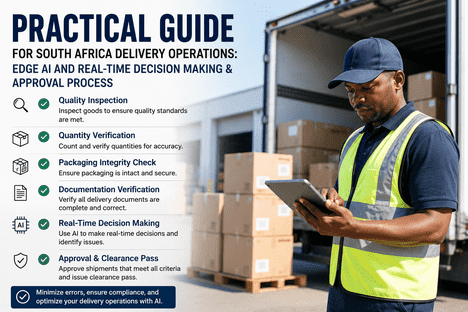
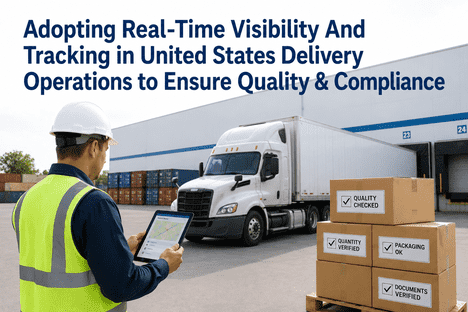
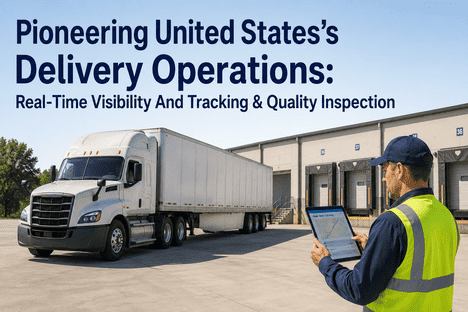
Real-time tracking in factory dispatch covers the internal journey of materials and vehicles through your facility — from vendor vehicle gate entry through weighbridge, quality inspection, dock assignment, unloading, stores receipt, and internal floor transfer. This is fundamentally different from delivery tracking software, which monitors vehicles moving between locations on public roads. Factory dispatch tracking focuses on status visibility across internal handoff stages — the points where materials change hands between gate staff, weighbridge operators, QC inspectors, dock supervisors, stores teams, and production supervisors. In manual operations, each of these handoffs is invisible to everyone except the person physically present. iFactory's tracking creates a live digital status at each stage — accessible to production planners, dispatch managers, and quality teams from a single dashboard without anyone needing to physically check or make phone calls.
Book a demo or
talk to support to see iFactory's tracking dashboard configured for your facility layout.
How does iFactory's weighbridge integration work — and why does it matter for GRN accuracy and supplier payments?
iFactory integrates directly with weighbridge terminals via standard communication protocols — capturing gross weight, tare weight, and net material weight automatically when a vehicle is weighed. This data is immediately linked to the corresponding inbound gate pass, purchase order, and inward GRN record — with no manual transcription step. The business impact is significant: manual weighbridge entry creates discrepancies between supplier-invoiced weight and received weight that generate disputes requiring cross-referencing of paper records across the procurement, accounts payable, and stores teams. These disputes average 11 days to resolve and often trigger payment holds that damage supplier relationships and create procurement team workload that should be spent on value-added activities. With automatic weighbridge-to-GRN linking in iFactory, weight discrepancies are identified at the time of weighing — not days later when the invoice arrives — enabling real-time query and resolution with the driver and transporter still at your facility. The result is same-day GRN reconciliation and near-zero payment cycle delays attributable to weight entry errors.
Book a demo to see the weighbridge integration configured for your weighing equipment.
How does real-time QC inspection tracking help production planners avoid line stoppages?
In facilities without real-time QC visibility, production planners have two data states for inbound material: "not arrived" and "in stores." The stages in between — at the gate, in the weighbridge queue, in QC inspection, at the dock — are invisible. When a critical material is 45 minutes from store receipt but the production planner doesn't know it's at the QC inspection stage, they may begin escalation procedures, call alternative material sources, or make schedule changes based on incomplete information. iFactory's material stage tracking gives production planners live QC status — specifically: which batches are in the inspection queue, which are in-progress, which have passed and are moving to unloading, and which are held for quality issues requiring re-inspection or rejection. With this visibility, production planners can make informed replan decisions based on real data — adjusting start times, resequencing work orders, or holding material preparation — before a stoppage occurs rather than after. The 42% dock-to-floor transfer time reduction documented in iFactory deployments reflects in part the elimination of delays caused by production teams waiting for status information that was already available but invisible to them.
Talk to support to discuss your specific QC workflow integration requirements.
What happens to returnable gate pass items — how does iFactory's tracking prevent the 8–12% annual loss rate?
Returnable gate pass (RGP) items — pallets, fixtures, containers, tooling, and equipment sent to job workers or vendors — are one of the most consistently undertracked asset categories in manufacturing facilities. The typical manual tracking method is a spreadsheet or paper register logging dispatch date and expected return date. In practice, nobody reconciles these registers systematically, return-due alerts depend on someone remembering to check the spreadsheet, and overdue items accumulate for weeks before being noticed. By the time an overdue item is actioned, the vendor may have difficulty locating or returning it — and if the dispatch documentation is weak, the liability claim is difficult to enforce. iFactory maintains a live RGP asset register with automated return-due alerts at configurable intervals before and after the expected return date. When a return is approaching, the system notifies the relevant vendor coordinator and escalates to procurement management if the item becomes overdue. The vendor receives notification through the portal or SMS, and the return is tracked when the item comes back through the gate — updating the RGP record and closing the dispatch loop. Facilities using iFactory's RGP tracking document recovery rates of 97%+ versus the 60% or less typical in manual systems — directly eliminating the 8–12% annual returnable asset loss rate.
Book a demo to see the RGP tracking module configured.
How quickly can iFactory's real-time factory dispatch tracking be deployed — and what does implementation involve?
Most iFactory factory dispatch tracking deployments go live within 7–14 days for standard configurations. Implementation follows four stages. First, process mapping: iFactory's team documents your gate pass types, approval chains, weighbridge setup, dock layout, and key stakeholder roles — typically a 1–2 day session conducted at your facility or via video walkthrough. Second, platform configuration: gate pass templates, stage tracking workflows, dock scheduling setup, RGP return-date parameters, and notification recipients configured in iFactory to match your documented processes — 3–5 days. Third, integration setup: weighbridge data feed configuration, ERP or inventory system linkage for GRN and purchase order data — timeline depends on your existing system APIs but standard integrations typically complete in 3–7 days. Fourth, team training and parallel run: gate staff, dispatch supervisors, QC team, stores, and production planners trained on mobile and web interfaces — typically 1–2 days of structured training followed by a 3–5 day parallel run where both paper and digital systems operate simultaneously before full transition. Unlike ERP implementations requiring months and large implementation teams, iFactory's deployment approach is designed to be operationally live in the first week with configuration refinements made based on real usage in subsequent weeks.
Book a demo to discuss your facility's specific deployment timeline.
How does factory dispatch tracking connect to compliance documentation — GST, customer audits, and internal management reviews?
Factory dispatch documentation serves three distinct compliance purposes, and iFactory's tracking platform addresses all three simultaneously. For GST compliance, every outbound NRGP in iFactory is linked to its e-waybill number, invoice, transporter details, and vehicle seal number — creating a GST-audit-ready dispatch record retrievable by any search parameter within seconds. The 3–5 days typically spent reconstructing dispatch records for a GST assessment becomes a 2-hour exercise with iFactory. For customer quality audits — standard in automotive, pharma, FMCG, and electronics supply chains — iFactory's inbound tracking records demonstrate that every batch received passed documented QC stages with digital sign-offs from qualified inspectors, with timestamped evidence showing no production-floor use before QC clearance. For internal management audits reviewing material losses, dock efficiency, weighbridge accuracy, and returnable asset status, iFactory's analytics dashboard provides trend data and exception reports that manual systems cannot generate. The combination of real-time tracking data and immutable digital records makes iFactory-deployed facilities audit-ready by default — not through a pre-audit documentation scramble, but because the records are continuously maintained as a byproduct of normal operations.
Talk to support about configuring iFactory's compliance documentation for your industry's specific audit requirements.