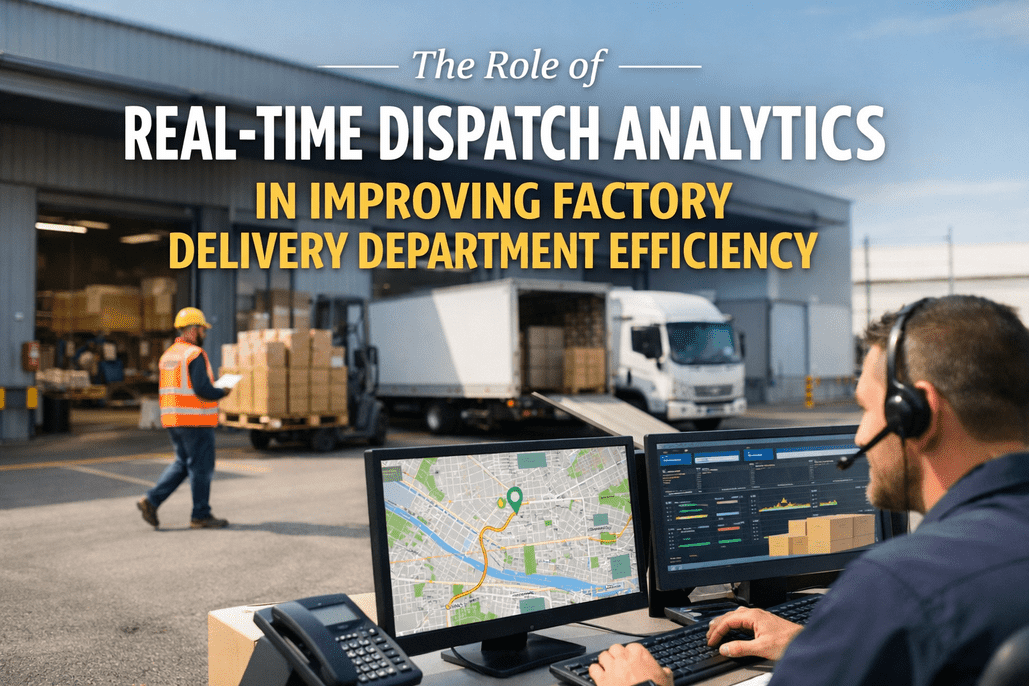
The Role of Real-Time Dispatch Analytics in Improving Factory Delivery Department Efficiency

By Fonly Huny on March 6, 2026

real-time-deliveries-analytics-customer-satisfaction

Digital transformation in manufacturing has reached a $440 billion market in 2025, growing toward $847 billion by 2030 at 13.83% annually. Production lines have MES dashboards. Maintenance departments have CMMS platforms. Quality teams have digital inspection systems. Yet the factory delivery department — the function that controls every vehicle entering the gate, every inbound shipment at the dock, every internal material transfer, every dispatch event, and every vehicle inspection before goods leave the plant — is still operating on paper registers, WhatsApp groups, and handwritten challans in the majority of manufacturing plants worldwide. Modern manufacturing has reshaped the production floor completely. The gate and dispatch department has been left behind. That gap is closing fast — and the plants that close it first are building operational advantages that compounding every day. More than 67% of manufacturers report having an ongoing smart factory initiative, yet delivery department digitization consistently lags behind every other function in the plant. This guide covers exactly how modern manufacturing trends are reshaping factory dispatch and gate pass operations, what the data shows, and what iFactory's delivery department platform delivers for plants ready to bring the gate and dock into the same digital standard as the production floor. For plant-specific questions, talk to our support team directly.

Modern Manufacturing  ·  Factory Dispatch  ·  Gate Pass Operations 2026

How Modern Manufacturing Is Reshaping Factory Dispatch and Gate Pass Operations

The production floor has been transformed by Industry 4.0. The factory delivery department — gate passes, inbound receiving, dispatch sequencing, vehicle inspection, material tracking, incident management — still runs on paper. Modern manufacturing trends are closing that gap. iFactory delivers the digital delivery department in 7–14 days.

$440B
Digital transformation in manufacturing market 2025 — growing to $847B by 2030 at 13.83% CAGR
67%+
Of manufacturers have an active smart factory initiative — but delivery department digitization consistently lags
35%+
Of manufacturers cite transportation and logistics expenses as their primary business challenge — Deloitte 2025
14 Days
iFactory go-live timeline — from decision to fully operational digital delivery department, no IT project required
The Digitization Gap

Modern Manufacturing Has Transformed the Production Floor — and Left the Delivery Department Behind

Already Digitized in the Modern Plant
Production floor — MES dashboards, real-time OEE tracking, shift logs, 86% of manufacturers
Maintenance — CMMS work orders, technician attribution, scheduled PM with digital completion
Quality control — digital inspection records, batch traceability, non-conformance logs
Inventory — ERP-integrated stock records, lot tracking, digital goods receipt in stores
EHS — digital incident reports, safety training records, regulatory compliance logs
Energy — continuous IoT sensor data, consumption dashboards, sustainability reporting
Procurement — supplier portals, PO management, vendor qualification records
HR and shift management — digital rosters, attendance tracking, shift handover logs
Still Running on Paper in the Same Plant
Gate passes — paper register, phone-call authorization, no dwell time data, no audit trail
Inbound receiving — paper challans, hours-long lag to inventory update, no photo capture
Internal material transfers — handwritten slips, frequently lost, chain of custody breaks at dock
Dispatch management — WhatsApp coordination, verbal authorization, no SLA tracking
Vehicle inspections — paper checklists, often skipped, no timestamped history per vehicle
Incident management — email after the fact, no photo, no GPS, no immutable record
Vendor arrival scheduling — no time windows, dock congestion from simultaneous arrivals
Gate dwell time tracking — zero digital record, impossible to measure or optimize
8 Reshaping Forces

Eight Modern Manufacturing Trends Directly Reshaping Factory Dispatch and Gate Pass Operations

Industry 4.0
Connected Data Across Every Department
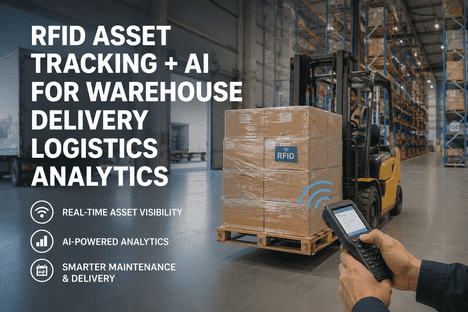
Industry 4.0 demands a connected data layer across every plant function. Gate passes, inbound receipts, and dispatch events that exist only on paper are structural gaps in the Industry 4.0 data architecture — breaking the digital thread that connects production planning to material availability.
Paper gate: zero data contributionDigital gate: real-time data feed
AI Analytics
Predictive Operations Require Historical Data
AI-powered dispatch optimization and predictive gate management require historical data on vehicle dwell times, dock utilization patterns, receiving cycle durations, and dispatch SLA compliance. Plants without digital delivery department records have no data for AI to analyze — making them structurally unable to adopt predictive operations tools.
Manual: no historical data existsDigital: full historical dataset
87%
Gate Pass Processing Time Reduction
Modern manufacturing's velocity demands compressed gate processing times. Manual gate passes take 15–20 minutes per vehicle — generating 280+ minutes of dock time loss daily on a 20-vehicle factory. Digital pre-authorization processes this in under 2 minutes, recovering time that JIT production schedules cannot absorb as waste.
Manual: 15–20 min/vehicleDigital: under 2 min
Supply Chain Traceability
Regulations Demand Digital Custody Records
Modern regulatory frameworks — EU Digital Product Passport, India Schedule M, FSMA traceability rules — require a documented chain of custody from supplier delivery to production floor consumption. Plants processing inbound receipts on paper cannot satisfy these requirements without a digital delivery department platform generating records at the dock.
Paper: chain breaks at dock entryDigital: full custody chain
90%
Dispatch Error Reduction
Modern dispatch management requires SLA-priority automated sequencing with real-time exception alerts — not WhatsApp coordination where SLA misses go undetected until a customer complaint arrives. Digital dispatch reduces error rates from 2–3% to under 0.3%, directly improving customer SLA performance.
Manual: 2–3% error rateDigital: under 0.3%
Mobile-First
Operational Personnel Need Mobile Tools
Modern manufacturing platforms are mobile-first for operational personnel — security staff, receiving teams, drivers, and dispatch coordinators cannot use desktop ERP terminals at the gate or dock. iFactory's delivery department platform is designed for mobile use by operational personnel, not adapted from a back-office system.
Legacy ERP: desktop-only workflowsiFactory: mobile-first operations
30–40%
Material Search Time Elimination
The most cited cause of production stoppages — material unavailability — is actually a material location failure in most plants. Material is physically present at dock, stores, or transfer point but has no digital location record. Modern material tracking eliminates 30–40% of production search time and converts location failures into production throughput.
Manual: no location post-dockDigital: real-time location
$847B
Market Pressure Accelerating Adoption
The $440B digital manufacturing transformation market, growing to $847B by 2030, is creating a competitive divide between plants with complete digital operations and those with paper gaps in the delivery department. The delivery department is the last undigitized function — and it is rapidly becoming a competitive liability for plants that have not addressed it.
2025: last undigitized function2026: competitive requirement
Modern Manufacturing Has Digitized the Production Floor. iFactory Digitizes the Delivery Department — in 14 Days.
Gate passes, inbound receipts, material transfers, dispatch events, vehicle inspections, and incident reports — all captured digitally, all audit-ready, all feeding your operations dashboard from day one. No IT project. No hardware procurement. Results visible in week one. Talk to our support team for a delivery department gap assessment specific to your plant.
How iFactory Modernizes Each Function

Five Core Delivery Department Functions Transformed by Modern Manufacturing Digitization

Modern manufacturing trends do not leave the delivery department behind — they demand that the gate, dock, and dispatch department operate at the same digital standard as the production floor. iFactory delivers this transformation through five core workflows that connect every inbound and outbound movement to the plant's digital operations layer.

01
Digital Gate Pass Management — From 20-Minute Queues to 90-Second Clearance
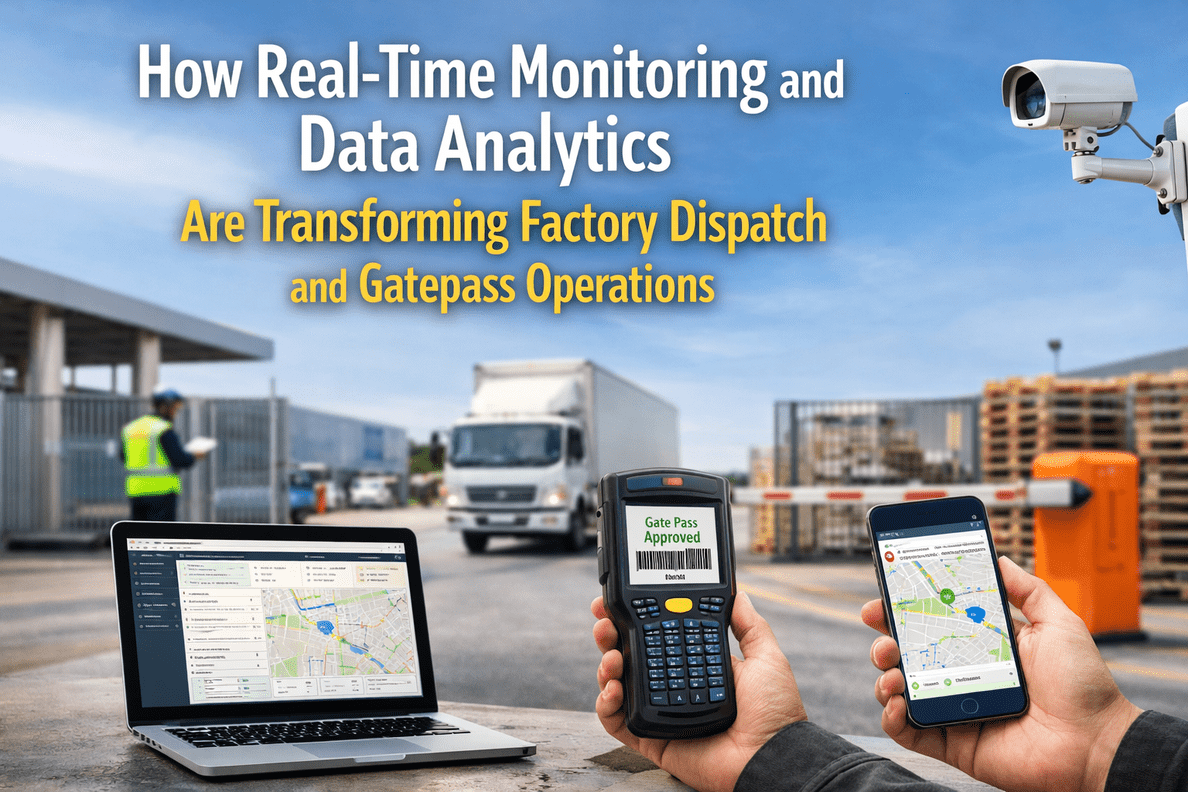
Modern manufacturing's JIT production schedules cannot tolerate gate queues that average 20–45 minutes per vehicle during peak receiving windows. iFactory's digital gate pass system pre-authorizes vehicles before arrival — drivers submit vehicle details and cargo reference in advance, and security resolves entry by scanning the vehicle ID on mobile in under 90 seconds. No callbacks. No hold queues. No paper register. Every gate event generates a timestamped, person-attributed digital record: vehicle ID, driver identity, authorization source, cargo reference, arrival time, and exit time — creating the dwell-time data that AI-powered gate management optimization requires and that modern regulatory compliance frameworks increasingly mandate. A plant receiving 20 vehicles daily recovers 280+ minutes of dock time per day by modernizing this single process. Unauthorized access attempts trigger instant alerts to the shift manager — creating a security layer that paper gate logs structurally cannot provide.
87% gate processing reduction Real-time dwell-time data Unauthorized access alerts
02
Mobile Inbound Receiving — Dock-to-Inventory in Real Time
Modern supply chain traceability requirements demand that material receipt records are generated at the point of physical confirmation — not hours later when a paper challan reaches the back office. iFactory's inbound receiving module runs on mobile devices at the dock: receiving staff scan the delivery reference, confirm quantities against the purchase order, capture discrepancy photographs, log quality holds, and digitally sign the receipt. Inventory records update in real time — eliminating the documentation lag that causes production planning to show zero inventory for material that is physically present at the dock. Every inbound receipt generates a complete digital record linking supplier ID, carrier, PO reference, material code, quantity received versus ordered, receiving officer's digital signature, and timestamp — satisfying supply chain traceability requirements including EU Digital Product Passport, India Schedule M GMP, and ISO 9001:2015 documentation standards. Inbound receiving time drops from 45–60 minutes per shipment to under 10 minutes — a 78% improvement — while simultaneously generating the compliance record that paper processes cannot produce.
78% faster receiving Real-time inventory update Regulatory traceability record
03
SLA-Priority Dispatch Management — Automated Sequencing, Zero WhatsApp
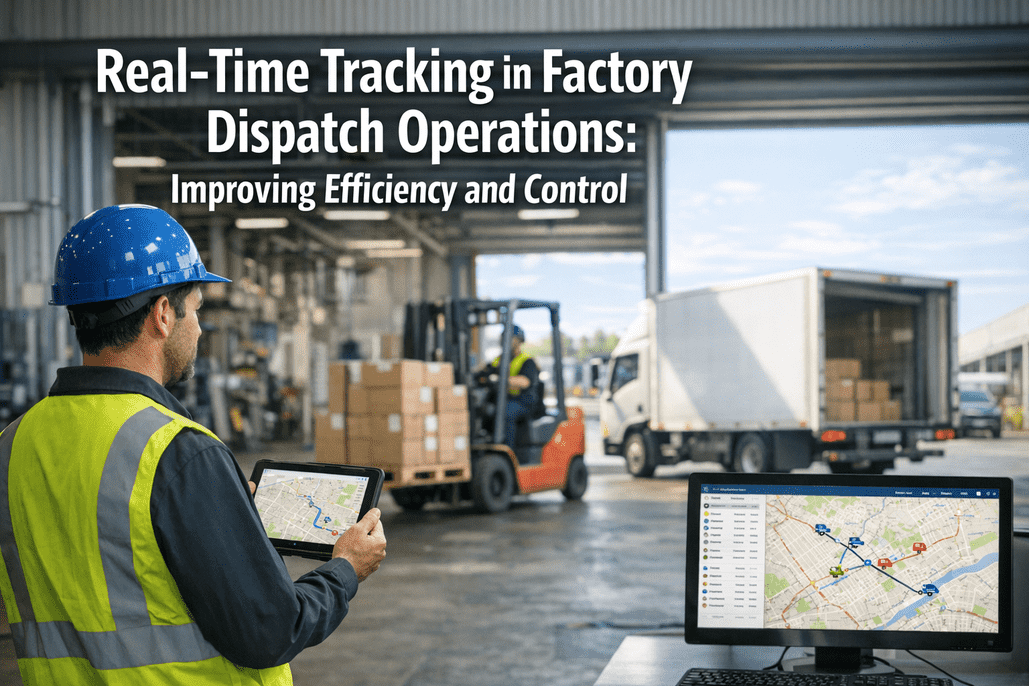
Modern dispatch management in a manufacturing plant is not about route optimization for courier fleets — it is about sequencing outbound vehicle movements according to SLA priority tiers, production schedule dependencies, load readiness, and vehicle availability, in a way that every authorized team member can see simultaneously and that does not collapse when the dispatch coordinator is absent. iFactory's dispatch module maintains every schedule, assignment, load confirmation, and departure record in a shared digital environment. Dispatch orders are sequenced by SLA priority automatically — the system flags orders approaching their departure window without confirmed loading, giving supervisors advance warning to intervene before a miss occurs. Dispatch error rates drop from 2–3% manual to under 0.3% digital. Changes are logged with the authorizing user and timestamp — creating a change audit trail that holds team members accountable and provides documentation for any customer SLA dispute. Because the dispatch schedule is not in one person's WhatsApp or spreadsheet, absenteeism does not halt dispatch operations — any authorized deputy can pick up in real time.
90% error reduction SLA miss early warning Absenteeism-proof operations
04
Digital Vehicle Inspection — Mandatory Checks, Auto-Block on Failure
Modern manufacturing compliance frameworks — OSHA in the USA, Motor Vehicles Act in India, DVSA regulations in the UK — require documented vehicle inspection records with operator attribution and timestamped condition status. Paper checklist binders in filing cabinets do not satisfy these requirements at audit standard. iFactory's vehicle inspection module delivers pre-trip and arrival inspection checklists on mobile, with mandatory completion before dispatch authorization is granted. Failed inspection items are logged with timestamp, operator ID, and photo evidence — and vehicles with unresolved failures are automatically blocked from dispatch until a repair work order is completed and digitally signed off. Every vehicle builds a continuous, searchable inspection history that is exportable for compliance audits in under 60 seconds. This creates the operational safety standard that modern manufacturing demands — vehicles that should not move do not move, and every inspection decision is documented regardless of who conducted it.
Mandatory pre-dispatch inspection Auto-block on failure Exportable compliance history
05
Internal Material Tracking — Dock to Production Floor in Real Time
The most damaging and least visible operational gap in most manufacturing plants is what happens to material after the dock. Material arrives, is logged on a paper challan, and disappears into the plant — with no digital record of its location at any subsequent point until it appears in a production batch record, if ever. iFactory's internal material tracking module logs every transfer between department sections: dock to incoming quality, incoming quality to stores, stores to production, production to quality, quality to dispatch. Each transfer is logged on mobile with origin, destination, quantity, material reference, and the transferring person's digital signature — creating a continuous, searchable location record for every material item from supplier delivery to production consumption. This eliminates the 30–40% of production stoppages that are actually material location failures — production teams search for material that is physically present somewhere in the plant but has no digital location record. With iFactory tracking, real-time material location is visible from the operations dashboard at all times.
30–40% search time eliminated Stoppage prevention Complete chain of custody
Measurable Results

What Plants Measure After Modernizing Their Factory Delivery Department with iFactory

87%
Gate Pass Processing Time Reduction
From 15–20 minutes per vehicle on paper to under 2 minutes with digital pre-authorization. A 20-vehicle/day plant recovers 280+ minutes of dock time daily — time previously lost to phone-call authorization queues.
78%
Faster Inbound Receiving
Mobile dock receipts cut inbound receiving from 45–60 minutes to under 10 minutes per shipment — while simultaneously generating the supply chain traceability record that modern regulatory frameworks require, without any separate documentation step.
90%
Dispatch Error Reduction
SLA-priority digital dispatch sequencing reduces errors from 2–3% manual to under 0.3% — converting the delivery department from a source of customer SLA penalties into a consistently reliable outbound operation.
100%
Audit Trail Coverage
Every gate pass, inbound receipt, material transfer, vehicle inspection, dispatch event, and incident report generates a timestamped, person-attributed digital record — creating 100% audit coverage from day one of deployment, with zero additional documentation effort.
3–6 mo
Full Platform Payback
Recovered dock time, eliminated dispatch errors, reduced audit overhead, and production stoppage prevention combine to deliver full payback within 3–6 months. Industry 4.0 legacy system implementations average 18–24 months payback by comparison.
14 Days
Go-Live Timeline
Cloud-based, mobile-first deployment means iFactory is fully operational in 7–14 days — versus the 6–18 month implementation timeline of legacy ERP-integrated delivery modules. No IT department project. No server installation. No hardware procurement.
Before vs. After

Factory Delivery Department — Legacy Paper Operations vs. Modern iFactory Digital Platform

Function
Legacy / Paper Operations
Modern iFactory Platform
Gate Pass
15–20 min wait, phone authorization, paper register, zero dwell-time data, no audit trail
Under 2 min, pre-authorized, mobile scan, timestamped digital record, instant unauthorized access alert
Inbound Receiving
Paper challan, hours lag to inventory update, no photo, no traceability record, discrepancies disputed
Mobile dock receipt, real-time inventory update, photo capture, complete traceability record at point of receipt
Dispatch
WhatsApp coordination, verbal authorization, 2–3% error rate, SLA misses undetected until complaint
Digital schedule, SLA-priority sequencing, under 0.3% errors, real-time SLA miss alerts
Vehicle Inspection
Paper checklist, frequently skipped, no timestamps, no photo, failed vehicles still dispatched
Mobile checklist, mandatory completion, photo evidence, auto-block on failed inspection
Material Transfer
Handwritten slips, frequently lost, no digital location record, 30–40% production stoppages from search failures
Mobile transfer log, digital signature, real-time location, dock-to-production chain of custody
Incident Reporting
Email after the fact, no photo, no GPS, discovered days after occurrence, no auto-escalation
Real-time mobile report, photo + GPS stamp, digital signature, auto-escalation to managers
Operations View
Manager learns of issues 30–90 min after occurrence, reactive firefighting, no live data
Live operations dashboard, anomalies surface instantly, structured early response enabled
Deployment
Legacy ERP modules: 6–18 months, heavy IT involvement, high upfront cost, long payback
iFactory: 7–14 days, cloud-based, mobile-first, no IT project, 3–6 month payback

Modern Manufacturing Has Transformed Every Function in Your Plant. The Delivery Department Is Last. iFactory Closes That Gap in 14 Days.

67% of manufacturers have active smart factory initiatives. Almost none have applied the same digital standard to gate pass management, inbound receiving, dispatch sequencing, vehicle inspection, and internal material tracking — the functions that control everything entering and leaving the plant. iFactory is the purpose-built platform that closes this gap. Cloud-based. Mobile-first. Deployed in 7–14 days. Full payback in 3–6 months. No hardware. No IT project. Book a demo to see every delivery department module running in a live plant environment.

Frequently Asked Questions

Modern Manufacturing, Factory Dispatch, and Gate Pass Digitization — What Operations Leaders Ask First

Why has the factory delivery department been the last function to be digitized — and why is that changing now in 2025–2026?
The factory delivery department has lagged in digitization for three structural reasons that are now converging to force change. First, it was not a production function — ERP implementations, MES deployments, and CMMS rollouts all focused on production efficiency metrics like OEE and unit output, where digitization ROI was easiest to quantify. The delivery department's contribution — getting material in and product out — was treated as a support function rather than a strategic one, even though it controls every input that feeds production. Second, the operational personnel in the delivery department — security staff at the gate, receiving teams at the dock, drivers and dispatch coordinators — were not the target users of enterprise software vendors, whose products assumed desktop computers and trained software users. iFactory's mobile-first design addresses this directly. Third, the technology simply was not cost-effective or fast to deploy for this specific use case until cloud-based mobile platforms made deployment possible in 7–14 days at a fraction of the cost of ERP module implementations. The reason this is changing in 2025–2026 specifically is the convergence of three pressures: regulatory frameworks requiring traceability records that paper cannot provide, JIT production schedules creating measurable production losses from gate and dock inefficiency, and competitive pressure from plants that have already digitized their delivery departments gaining measurable velocity advantages. Talk to our support team for a specific assessment of your plant's delivery department digitization gap.
How does digitizing the gate pass and dispatch process specifically connect to modern manufacturing trends like Industry 4.0 and AI-powered operations?
Industry 4.0 requires a connected data architecture across every plant function — where data from every operational domain feeds a unified platform that enables real-time decision-making, predictive analytics, and AI-powered optimization. Gate passes, inbound receiving, dispatch events, vehicle inspections, and material transfers that exist only on paper are structural gaps in this architecture. They do not contribute data to any analytical system, they cannot be queried or trended, and they cannot serve as inputs to AI-powered tools. Specifically, AI-powered gate management optimization — scheduling inbound vehicle arrival windows to minimize dock congestion and labor peaks — requires historical data on vehicle dwell times, arrival patterns, dock utilization by time of day, and receiving cycle durations. Plants without digital gate records have no such dataset and cannot deploy these tools regardless of how advanced their production floor technology is. Similarly, predictive dispatch optimization — pre-positioning vehicles based on production schedule data, anticipating material readiness, and sequencing departures to minimize SLA risk — requires dispatch history data that paper logs cannot provide. iFactory generates this foundational data as a byproduct of daily delivery department operations — creating the data layer that connects the delivery department to the plant's broader Industry 4.0 architecture from day one. Book a demo to see how iFactory's data architecture connects to your existing systems.
What is the real cost of maintaining paper gate passes and manual dispatch in a modern manufacturing environment — and how is it calculated?
The cost of paper gate passes and manual dispatch in a modern manufacturing environment has five distinct components, each of which delivers independently measurable value when eliminated. Gate queue cost: a factory processing 20 vehicles per day at 15–20 minutes per vehicle loses 300–400 minutes of dock time daily to authorization queues. At average dock labor rates, this represents $30,000–$80,000 in annual dock labor waste depending on plant size and labor market. Production delay cost: inbound material that takes 2–4 hours to reach the inventory system from the dock creates structural production planning lags that generate artificial shortages and line stoppages — the cost of a single production line stoppage typically ranges from $5,000 to $50,000 depending on the production process and plant scale. Dispatch error cost: a 2–3% dispatch error rate on a plant dispatching 30 vehicles per day generates roughly 180–270 erroneous dispatch events annually — each requiring re-dispatch, customer communication, and SLA penalty exposure. At $500–$2,000 per dispatch error event, this represents $90,000–$540,000 in annual avoidable cost. Audit overhead cost: manual compliance documentation assembly for a single regulatory audit typically requires 4–8 hours of management time across multiple staff. Plants facing quarterly customer audits, annual ISO recertification, and regulatory inspections accumulate 50–100+ hours of management time annually in audit preparation that iFactory eliminates entirely. Material search cost: 30–40% of production stoppages attributed to material unavailability are actually location failures — production teams searching for material that is physically present. Each search-related stoppage costs production throughput equivalent to the line's hourly output rate. iFactory customers typically achieve full platform payback within 3–6 months of go-live when all five components are included in the calculation. Talk to our support team for an ROI calculation specific to your facility's vehicle volume, dispatch frequency, and production profile.
How does iFactory's delivery department platform fit alongside the ERP systems, MES platforms, and CMMS tools already deployed in a modern manufacturing plant?
iFactory is designed to complement existing manufacturing technology stacks — not to replace or compete with ERP, MES, or CMMS platforms that are already embedded in plant operations. The platform operates as the factory delivery department's dedicated digital layer, capturing the gate, dock, dispatch, inspection, material transfer, and incident data that existing ERP and MES systems do not collect because they were not designed for operational personnel working at the gate and dock. The most operationally important integration is between iFactory's inbound receiving module and the plant's ERP inventory system. When material is confirmed at the dock in iFactory, the quantity and material reference can push directly to the inventory system — eliminating the hours-long lag between physical receipt and ERP update that causes production planning errors. For SAP users specifically, iFactory's SAP integration module handles goods receipt confirmation and material document creation automatically from the dock-level record. For plants using other ERP platforms, iFactory provides structured export formats that reduce manual re-entry to a single upload step. For MES integration, iFactory's material transfer records can feed production planning data with real-time material availability updates — eliminating the inventory lag that causes production schedulers to plan on yesterday's data. iFactory deploys in 7–14 days as a standalone delivery department platform and subsequently integrates with existing systems during or after the deployment phase — meaning the operational benefit begins immediately while integration work proceeds in parallel. Book a demo to see integration options for your specific technology stack.
Does iFactory support factory delivery department operations across multiple manufacturing sites — and how does it handle different regional regulatory requirements?
iFactory is built as a multi-depot, multi-site platform from the ground up. A single deployment covers all manufacturing facilities in a portfolio under one corporate operations dashboard, with each site having its own specific configuration for gate pass workflows, vehicle inspection checklists, dispatch SLA priority tiers, material transfer routes, and compliance documentation templates. Corporate operations and compliance teams see cross-site performance data in a unified view while site managers operate their facility-specific workflows independently. For multi-region operations, iFactory's compliance documentation framework is configured to local regulatory requirements per site. In the USA, this covers OSHA vehicle inspection requirements, DOT driver qualification documentation standards, and FSMA supply chain traceability requirements. In India, the platform supports Schedule M GMP documentation for pharmaceutical and food manufacturing delivery departments, including inbound material chain of custody, temperature-controlled receiving logs, and vehicle qualification records. In the UK, it covers Supply Chain Due Diligence Act obligations and DVSA vehicle inspection compliance. In Germany, it supports Lieferkettensorgfaltspflichtengesetz supply chain documentation requirements. In the UAE, it aligns with Vision 2030 smart manufacturing traceability standards. In Australia, the high labor cost environment makes the dock time recovery and dispatch efficiency gains from iFactory particularly high-ROI, especially for remote depot operations where management oversight is limited. The underlying data model — timestamped, person-attributed records for every gate, receiving, inspection, dispatch, transfer, and incident event — satisfies all of these frameworks from the same operational dataset. Talk to our support team about multi-site configuration and regional compliance requirements for your specific plant portfolio.
What makes iFactory different from adapting a general logistics or fleet management software to handle factory delivery department operations?
The most significant difference is that iFactory was built specifically for the factory delivery department — not adapted from a courier logistics tool, a fleet management platform, or an ERP delivery module. This distinction matters operationally because the factory delivery department solves fundamentally different problems than the use cases those platforms were designed for. A courier logistics platform optimizes routes between customer delivery points — it does not manage gate authorization for inbound vendor vehicles, inbound material receiving with PO matching, internal material transfers between plant sections, or dispatch sequencing based on production schedule dependencies. A fleet management platform tracks vehicles on road — it does not manage dock allocation, receiving discrepancy documentation, or internal material chain of custody. An ERP delivery module processes goods receipt transactions in a back-office system — it does not support real-time mobile workflows for security staff at the gate, receiving teams at the dock, and dispatch coordinators managing vehicle loading. iFactory's operational coverage of the complete factory delivery department — gate pass management from pre-arrival to exit, mobile inbound receiving at the dock, internal material transfer tracking, SLA-priority dispatch sequencing, digital vehicle inspection with auto-block, and real-time incident reporting with photo evidence — is purpose-built for this specific operational context. The mobile-first design for operational personnel rather than office workers, the 7–14 day deployment timeline, and the gate-to-dispatch data layer connecting every inbound and outbound movement are differentiators that cannot be replicated by adapting a platform designed for a different use case. Book a demo to see each module demonstrated in a live factory delivery department context.

The $440 Billion Manufacturing Digitization Wave Is Transforming Every Plant Function. Your Delivery Department Should Not Be the Exception.

86% of manufacturers track OEE. Almost none track gate pass dwell time, inbound receiving cycle duration, or dispatch SLA compliance — the operational metrics that determine how much production throughput the delivery department delivers or destroys. iFactory closes this gap with a purpose-built digital platform for factory delivery departments that deploys in 7–14 days, delivers full payback in 3–6 months, and generates compliance documentation automatically from daily operations. Book a demo to see it running in a live plant environment.

Share This Story, Choose Your Platform!