Delivery Control Checklist United States Delivery Operations: Real-Time Visibility And Tracking & Approval Process
By Arel Dixon on June 9, 2026
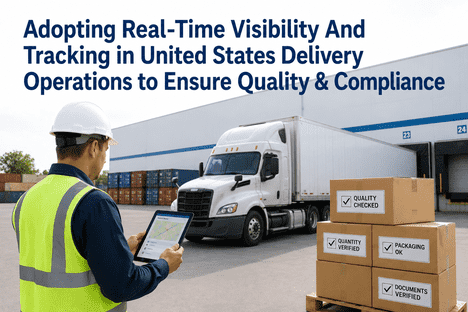
This checklist is a practical framework for US manufacturers implementing AI-driven delivery operations with real-time visibility, tracking, and digital approval processes. Use it to ensure every shipment leaving your facility is inspected for quality, counted for quantity accuracy, checked for packaging integrity, and verified for correct documentation — before the carrier departs. Only shipments that meet every criterion receive a digital clearance pass. Apply this checklist systematically to minimize errors, eliminate damaged or incorrect shipments, reduce chargebacks, and optimize your entire logistics process with artificial intelligence.
Your Delivery Control Checklist — Digital, Automated, Enforceable
See How iFactory AI Powers Real-Time Visibility and Digital Approval
Why a Delivery Control Checklist Matters for US Manufacturers
Every day, US manufacturers ship finished goods to retailers, distributors, and end customers under tight delivery windows, stringent quality requirements, and customer-specific compliance rules. A single shipment that leaves the dock with an undetected quality defect, a quantity discrepancy, damaged packaging, or missing documentation triggers a chargeback that erodes margin — or a rejected shipment that disrupts the customer's operation and damages the relationship.
The delivery control checklist solves this by codifying every check that must pass before a shipment is released. In a manual environment, these checks are performed by memory, paper forms, and shift-level discretion — producing inconsistent results depending on who is working, how busy the loading dock is, and whether the correct documentation template was used. With iFactory AI, the same checklist is enforced digitally, in real time, with automated data capture from barcode scanners, weighbridges, quality inspection devices, and ERP integration. Shipments that do not pass every check are blocked at the dock. No discretion. No shortcuts. No shipments released with unchecked items.
The result is a predictable, repeatable delivery control process that eliminates the variation introduced by human-dependent checks and ensures every customer receives exactly what they ordered, in the condition they expect, with the documentation they require. This is the operational foundation for zero-defect shipping in US manufacturing.
63%
Of US manufacturers report chargebacks from customers due to shipment errors — most commonly quantity discrepancies, packaging damage, and documentation errors that a digital checklist prevents at the loading dock
86%
Reduction in shipment-related customer complaints achieved by manufacturers deploying digital delivery control checklists with real-time visibility and automated approvals
90 Days
Typical deployment timeline for iFactory AI's delivery control platform — from checklist configuration to live enforcement across all shipment types
The Four-Layer Delivery Control Checklist
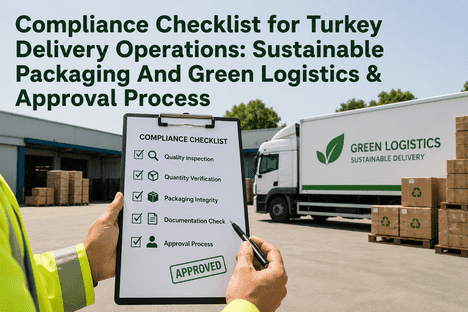
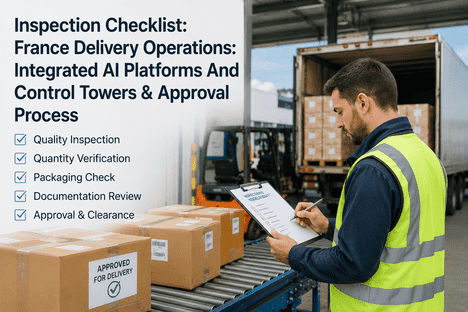
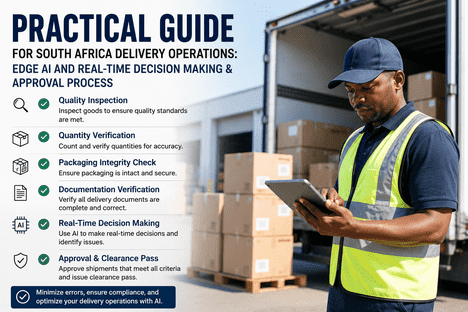
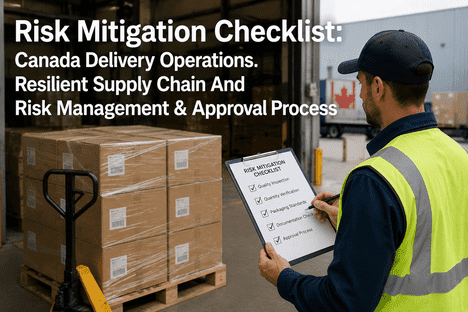
Every shipment leaving a US manufacturing facility must pass four distinct inspection layers before it receives a digital clearance pass. Each layer is a gate that the shipment must pass through — if any layer fails, the shipment is flagged for resolution and cannot proceed to the loading dock. Below is the complete checklist for each layer, designed for digital enforcement through iFactory AI's delivery operations platform.
01
Quality Inspection Checklist
Product visual inspection — AI vision camera confirms surface defects, dimensional accuracy, and cosmetic standards per customer specificationFunctional sample test — random sample from shipment batch tested against customer acceptance criteriaInspection result recorded in digital format with timestamp and inspector IDAuto-generated pass/fail result linked to shipment record
02
Quantity Verification Checklist
Barcode scan of every pallet or carton — count matched against packing listWeighbridge verification — actual weight compared against expected weight per shipment recordERP order quantity cross-reference — system confirms shipped quantity matches sales orderDiscrepancy alert generated if any count or weight does not match
03
Packaging Integrity Checklist
Pallet condition check — no broken pallets, protruding nails, unstable stacksCarton condition verification — no crushed, torn, or water-damaged cartonsStretch wrap integrity and banding security per customer specificationAI vision camera captures packaging condition images — stored in shipment record for audit
04
Documentation Verification Checklist
Bill of lading present, correctly completed, and customer-approved formatPacking list matches actual shipped items and quantitiesCustomer-specific compliance documentation — Walmart ASN, Amazon carrier docs, etc.Digital document attached to shipment record with OCR content validation
Real-Time Visibility and Tracking Checklist
After the shipment passes the four-layer inspection and receives its digital clearance pass, real-time visibility and tracking capabilities ensure the shipment remains under observation from the loading dock to the customer's receiving dock. The checklist below covers the tracking infrastructure and monitoring capabilities that every US manufacturing facility should have in place for comprehensive delivery operations visibility.
01 GPS Tracking
Real-time GPS tracking on every outbound shipment — carrier telematics integration with Samsara, Geotab, Motive for live location updates at 30-second intervals.
02 Predictive ETA
AI-powered ETA predictions that update dynamically based on traffic, weather, route conditions, and driver behavior — enabling proactive customer notification of delivery timing.
03 Status Alerts
Automatic alerts for delivery window deviations, route deviations, unscheduled stops, and estimated late arrivals — with escalation to dispatch and customer teams.
04 POD Capture
Digital proof of delivery with electronic signature, delivery photos, and timestamp — captured at the customer site and synced to the shipment record in real time.
Digital Approval Process Checklist
The digital approval process is the enforcement mechanism that ensures no shipment leaves without passing every item on the delivery control checklist. iFactory AI's digital clearance pass system automates this approval workflow, replacing paper-based sign-offs with real-time digital approvals that are auditable, enforceable, and integrated with your existing ERP and dispatch systems.
Digital Clearance Pass Generation
Every shipment that passes all four inspection layers automatically receives a digital clearance pass — a unique, time-stamped digital token linked to the shipment record. The pass is generated in real time when the final inspection check is completed and confirmed by the system. No manual signature, no paper form, no supervisor override required for standard shipments. The clearance pass is the single authorization that the shipment can proceed to the loading dock and the carrier can depart.
Inspection Failure Resolution Workflow
When a shipment fails any inspection check, the system automatically creates a resolution workflow. The failed item is routed to the responsible team — quality for inspection failures, warehouse for quantity or packaging issues, documentation team for paperwork errors. Each workflow has a defined resolution path and escalation timer. The shipment cannot proceed until all failures are resolved and the relevant inspection layer is re-executed and passed. This ensures that every failure is addressed systematically, not bypassed under pressure to meet a dispatch deadline.
ERP Integration for Approval Sync
The digital clearance pass is synced to your ERP system in real time. When the pass is generated, the ERP shipment status is automatically updated from "Picking" to "Approved for Dispatch." When the carrier departs, the status updates to "In Transit." This integration ensures that your order management, inventory, and accounting systems reflect the actual shipment status without manual data entry. ERP integration covers SAP Business One, SAP S/4HANA, Microsoft Dynamics 365, Oracle NetSuite, and Epicor.
Customer Compliance Profile Enforcement
Each customer's specific compliance requirements are encoded as a digital profile that is automatically applied when a shipment is created for that customer. Walmart shipments require ASN submission verification, carton labelling format validation, and delivery window compliance. Amazon shipments require carrier performance validation and packaging standards verification. The customer profile automatically adds compliance-specific checklist items to the relevant inspection layers — so the right checks are enforced for every customer without the dispatch team tracking 47 different compliance manuals.
Manual Dispatch vs AI-Powered Delivery Control: The Operational Difference
The table below compares the delivery control process before and after deploying iFactory AI's digital checklist and real-time visibility platform. The data reflects documented outcomes from US manufacturing facilities across automotive, FMCG, and industrial goods sectors.
Operational Metric
Manual / Paper-Based
AI-Powered Digital
Checklist enforcement method
Paper forms / operator discretion
Digital auto-enforcement via barcode + AI vision
Time to complete full inspection cycle
18-30 minutes per shipment
4-7 minutes per shipment
Customer compliance integration
Manual reference to customer manuals
Digital profile auto-applied per customer
Real-time shipment visibility
Carrier phone calls / manual tracking
GPS + predictive ETA + status alerts
Customer chargeback rate
3-7% of shipments
Under 0.5% of shipments
Audit readiness
Paper records, manual compilation
Digital records, 60-second export
Deployment Roadmap: From Checklist Configuration to Live Enforcement
iFactory AI's delivery control platform is deployed incrementally, starting with checklist configuration and progressing to full digital enforcement with real-time visibility. The typical deployment timeline is 90 days from project kickoff to live operation across all shipment types.
Week 1-2
Checklist configuration and process mapping
Map your existing delivery control checks to the four-layer framework. Configure quality, quantity, packaging, and documentation checklists per shipment type and customer profile. No production disruption.
Week 3-4
System integration and device setup
ERP integration (SAP, Dynamics 365, NetSuite, Epicor). Barcode scanner configuration. Weighbridge interface. AI vision camera setup at inspection stations. GPS/telematics carrier integration.
Week 5-6
Parallel running and team training
Digital checklist runs alongside manual process. Dispatch team trained on digital clearance pass workflow. Quality inspectors trained on AI vision inspection. System fine-tuned on site-specific patterns.
Week 7-10
Go-live and real-time visibility activation
Digital checklist becomes primary enforcement method. Real-time tracking dashboard live. Predictive ETA alerts activated. Customer portal access configured. Full digital clearance pass enforcement.
Week 11-12
Optimization and continuous improvement
Chargeback trend analysis against baseline. Checklist refinement based on root cause data. Customer compliance profile updates. Performance review with plant executive team.
Before deploying iFactory AI's digital delivery control checklist, we were shipping 40 to 50 loads per day with a paper-based inspection process that relied on each operator remembering the correct checks. Our chargeback rate from Walmart and Amazon was running at 4.8 percent of shipments — predominantly quantity discrepancies and labelling errors that the paper system was catching inconsistently. The digital checklist eliminated the inconsistency on day one. In the first 90 days, our chargeback rate dropped to 0.3 percent. But the bigger impact was operational: our dispatch team stopped spending two hours per shift chasing missing signatures and lost paperwork. The digital clearance pass replaced an entire administrative layer. Our loading dock throughput increased 22 percent without adding a single person.
— Distribution Center Manager, US Industrial Manufacturing Company
Delivery Control Checklist · US Manufacturing · Real-Time Visibility
Every Shipment That Leaves Your Dock Without a Digital Clearance Pass Is a Chargeback Waiting to Happen. Automate Your Checklist with iFactory AI.
iFactory AI powers the complete delivery control workflow — four-layer digital inspection, real-time GPS tracking with predictive ETA, automated customer compliance enforcement, and digital clearance pass approval. Deployed in 90 days on your existing infrastructure.
Frequently Asked Questions About the Delivery Control Checklist
The digital clearance pass is generated automatically when the system confirms that every item on the four-layer checklist has passed — quality inspection, quantity verification, packaging integrity, and documentation validation. The pass is a unique digital token linked to the shipment record with a timestamp and the ID of the inspector who executed each check. No manual signature is required. The dispatch system checks for the presence of a valid clearance pass before releasing the shipment to the loading dock. If the pass does not exist or any check has failed, the shipment is blocked in the system. This replaces the paper-based sign-off sheet where a supervisor would manually initial each check — a process that is slow, prone to missed checks, and produces paper records that must be filed and retrieved for audits. The digital pass is instant, enforceable, and creates a complete digital audit trail for every shipment. Book a Demo to see the clearance pass workflow from inspection to dispatch release.
Yes. Each customer's compliance requirements are encoded as a digital profile in the system. When a shipment is created for a specific customer, the system automatically applies that customer's compliance profile, which adds customer-specific checklist items to the relevant inspection layers. For Walmart OTIF compliance, the system adds ASN submission status verification, carton labelling format validation against Walmart's Spec 2.0 requirements, pallet configuration standards, and delivery window compliance. For Amazon scorecard compliance, the system adds carrier performance validation, appointment scheduling checks, and packaging standards per Amazon's FBA and FBM requirements. The compliance profile is maintained centrally, so when a customer updates their requirements, the change is applied automatically to every future shipment for that customer. No manual tracking of customer compliance manuals is needed. Talk to an Expert to see customer compliance profiles configured for your key accounts.
iFactory AI integrates with all major telematics providers used by US carriers — including Samsara, Geotab, Motive (formerly KeepTruckin), Platform Science, and Verizon Connect. The integration works through API connections to the telematics provider's platform, pulling GPS location data at 30-second intervals for each tracked vehicle. When a carrier is assigned to a shipment, the system automatically associates the vehicle's telematics feed with that shipment record. The live location is displayed on the dispatch dashboard alongside the shipment status, inspection results, and clearance pass information. Predictive ETA is calculated using AI that analyzes historical route data, current traffic conditions, weather data, and the specific vehicle's performance characteristics. Alerts are generated automatically for deviations from the planned route, unscheduled stops, or estimated late arrivals. The customer portal also displays live tracking information, so your customers can see their shipment's location without calling your dispatch team. Talk to an Expert to discuss telematics integration for your carrier network.
When a shipment fails any inspection check, the system automatically creates a resolution workflow and routes the failed item to the responsible team. The shipment is blocked from dispatch until all failures are resolved. However, iFactory AI includes an authorized override capability for genuine emergency situations. The override requires a manager-level authorization with a mandatory reason code and supporting justification. Every override is logged with the authorizing manager's ID, timestamp, the specific override reason, and the failed check items that were overridden. Override reports are automatically generated for the weekly operations review, and any pattern of overrides triggers a workflow review notification to the plant executive. This ensures that overrides are genuinely exceptional rather than a routine workaround, while providing the flexibility needed for critical shipments where a minor packaging issue must be accepted to avoid a production line shutdown at the customer site. Talk to an Expert to discuss override configuration for your facility's specific scenarios.
Checklist configuration is managed through the iFactory AI administration console. Changes to any inspection layer can be made by authorized personnel and are applied immediately to all applicable shipments. When a new customer is added, their compliance profile is configured in the system, and the customer-specific checklist items are automatically attached to shipments created for that customer. The system also supports checklist template versioning, so you can maintain different checklist versions for different shipment types — domestic versus export, hazardous materials versus standard freight, full truckload versus LTL — and assign the correct template automatically based on shipment attributes. All checklist changes are logged with the authorizing user ID and timestamp, providing a complete change history for audit purposes. Book a Demo to see the checklist configuration console and customer profile setup workflow.
Your Delivery Control Checklist Should Be Automated, Enforceable, and Auditable — Not a Stack of Paper Forms at the Loading Dock.
iFactory AI digitizes your entire delivery control workflow — from four-layer inspection to digital clearance pass to real-time GPS tracking — so every shipment is checked, approved, and visible from dock to delivery. Deployed in 90 days on your existing infrastructure.