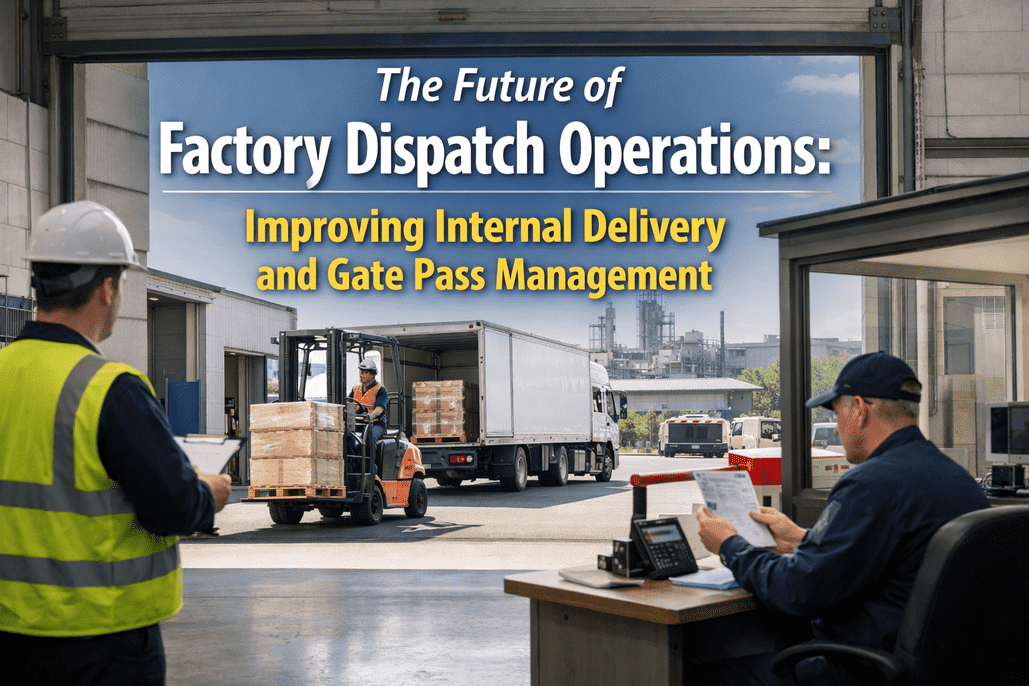
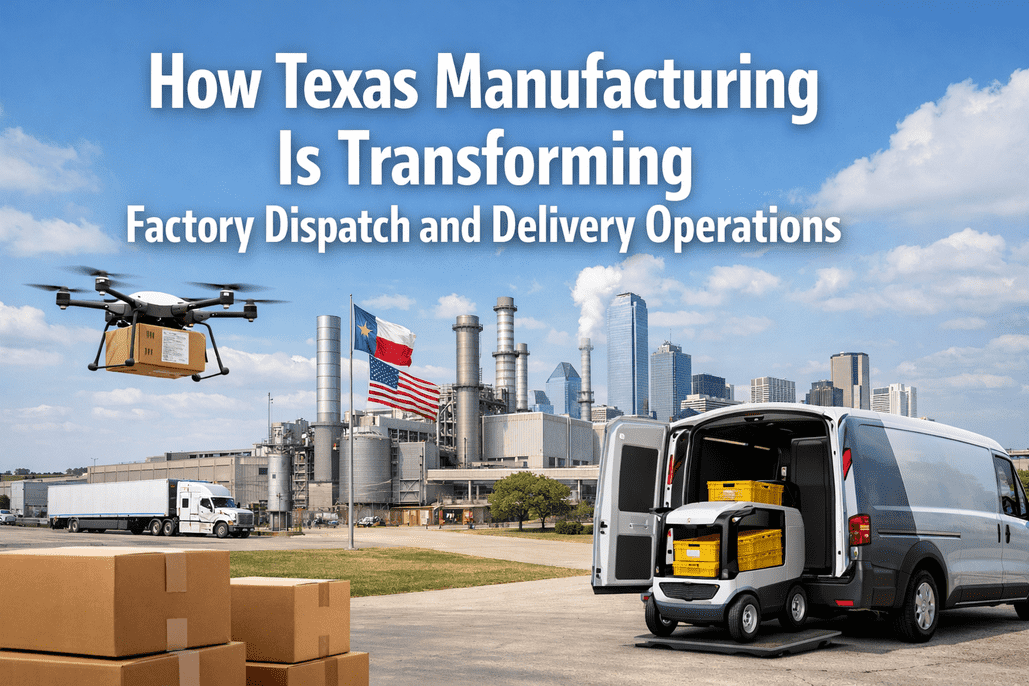
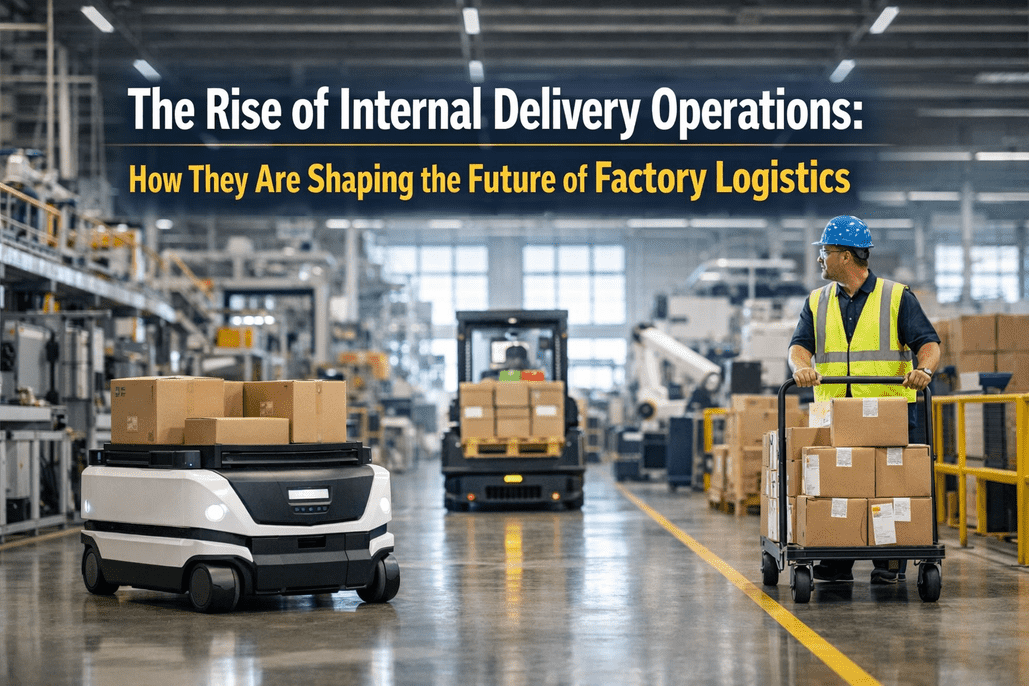
Factory dispatch departments are still running on clipboards, paper gate passes, and manual material requests that generate hours of daily overhead and chronic inter-departmental delays. A production line waiting on a spare part from the stores department. A quality sample sitting in dispatch waiting for someone to walk it to the lab. A gate pass being physically signed by three people before a material can move. These are not edge-case inefficiencies — they are the daily friction that compounds into measurable production downtime, missed delivery commitments, and avoidable workforce costs. Drone technology, once associated exclusively with outdoor last-mile delivery, is now entering factory floors as a legitimate intralogistics tool — and the early results are redefining what internal material movement can look like.
Drone Technology in Factory Dispatch Departments: Transforming Internal Material Movement
From carrying spare parts between workshops to flying quality samples to the lab, indoor drones are redefining how factory dispatch departments move materials, manage gate passes, and track inter-departmental transfers — all without human runners, paper trails, or coordination delays.
The factory dispatch department sits at the intersection of every material flow in a plant — inbound raw materials, outbound finished goods, inter-departmental transfers, spare parts dispatch to maintenance, sample movement to quality labs, and gate pass management for every vehicle and material entering or leaving the facility. In most factories, this department operates the same way it did thirty years ago: manual registers, paper gate passes, telephone-based coordination, and human runners who carry small items between floors and departments. The inefficiency is so embedded it has become invisible — accepted as "just how things work" until a production line stops waiting for a part that is already in the building.
Indoor drones — compact autonomous aircraft specifically engineered for GPS-denied, enclosed environments — are beginning to change this picture systematically. Unlike outdoor delivery drones that navigate streets and weather, indoor drones use computer vision, ultrasonic sensors, and pre-mapped flight paths to navigate factory floors, aisles, and inter-floor routes autonomously. They carry tools, spare parts, quality samples, documents, and small components between departments on demand — triggered by a digital dispatch request rather than a phone call to a supervisor asking for someone to be spared from their task to walk something across the plant.
What Actually Happens in Factory Dispatch Every Day — And Why It Costs More Than You Think
Before evaluating drone technology, it is worth being precise about the operational costs of the status quo. The inefficiencies of manual factory dispatch are rarely tracked as a discrete cost category — they are absorbed into production overheads, written off as downtime, or simply accepted as normal. They are not normal. They are measurable and addressable.
In a typical large factory, a request for a spare part from the stores to the maintenance workshop involves a manual requisition, physical walk to the stores, sign-out, and physical transport — a process that routinely takes 20–45 minutes per transaction. Multiply that by dozens of requests per shift and the hidden labour overhead becomes significant. Production downtime waiting on internal material delivery is rarely attributed correctly — it appears as "maintenance delay" or "parts delay" rather than "dispatch inefficiency."
Paper gate passes require physical generation, multi-level signature approval, physical handover to the security gate, and manual logging in dispatch registers. For factories with high vehicle and material movement, gate pass queues create measurable entry and exit delays — sometimes 15–30 minutes per vehicle — that compound into driver waiting costs, transport scheduling problems, and supplier relationship friction. Manual gate pass registers are also prone to errors, missing entries, and untraceable disputes when goods cannot be verified at a later date.
In manufacturing plants with on-site quality labs, sample transit from the production floor to the lab is a recurring operational bottleneck. Samples waiting to be physically carried delay test results, slow production decisions, and in worst cases result in continued processing of material that should have been quarantined for testing. The transit problem is especially acute in large factories where the production floor and quality lab are on different floors or at opposite ends of the building — where a human runner represents a 15–20 minute round-trip interruption to their primary role.
Inward material from suppliers passes through the dispatch gate, is logged manually, and is supposed to be routed to the correct storage or production point. In practice, manual logging generates discrepancies between what was physically received and what was recorded — creating inventory inaccuracies that surface later as production shortages or over-ordering from suppliers. Dispatch teams without real-time visibility of material location after gate entry cannot answer basic questions about where a delivery is at any point in its internal journey.
How Indoor Drones Actually Work in a Factory Dispatch Environment
Indoor drones for factory intralogistics are a fundamentally different technology from consumer drones or outdoor delivery drones. Understanding how they work dispels the common misconception that drone deployment requires runway-scale infrastructure or specialist aviation expertise.
Indoor drones use visual SLAM (Simultaneous Localisation and Mapping) algorithms, ultrasonic sensors, and computer vision to navigate enclosed spaces without GPS. Visual SLAM achieves positioning accuracy to within 5 centimetres — sufficient for precise corridor navigation, inter-floor movement, and targeted delivery to a specific workstation or shelf position. No GPS infrastructure, no signal dependency, no interference from metal structures or heavy equipment. The drone builds and continuously refines its map of the factory environment as it operates.
Factory dispatch drones operate on pre-mapped routes — digitally defined flight corridors between the dispatch hub, stores, maintenance workshops, production bays, and quality labs. New routes are added by mapping sessions where the drone scans the environment and builds the path autonomously. Once mapped, routes are available on-demand via dispatch software: a maintenance technician requests a part, the system assigns a route, and the drone departs without any manual coordination. Most industrial drone intralogistics deployments achieve full route commissioning within 1–2 weeks of installation.
Industrial indoor drones are equipped with real-time obstacle detection using LiDAR, infrared, and ultrasonic sensors that identify and avoid unexpected objects — including humans crossing the flight path. When an obstacle is detected, the drone halts, hovers, and waits for the path to clear before resuming. Most systems operate at 3–6 metres altitude in high-bay environments, keeping the flight corridor above normal human head height and machinery movement zones. Factory floor deployment requires a safety assessment and route design that accounts for machinery layouts, personnel movement patterns, and height restrictions.
6 Factory Dispatch Operations Where Drone Technology Is Delivering Measurable Results
Drone intralogistics is no longer theoretical. These six application areas are being deployed in manufacturing and industrial environments globally — each solving a specific factory dispatch bottleneck that manual processes have failed to eliminate.
The most common and highest-ROI application in factory environments. When a maintenance technician raises a work order and requests a specific spare part, the digital dispatch system routes the request to stores, the part is loaded onto the drone at the dispatch bay, and the drone delivers it directly to the maintenance team's workstation. Transit time drops from 20–45 minutes to under 8 minutes. Production downtime attributable to parts waiting is reduced by 40–60% in facilities that have measured the impact accurately. The drone returns to the dispatch bay autonomously, ready for the next request — no runner required, no interruption to any other team member's primary task.
Quality control depends on sample integrity and transit speed. Drone-based sample transport ensures samples move from the production line to the quality lab the moment they are ready — without waiting for a runner, without the chain of custody breaking, and without samples sitting untracked in a tray waiting to be collected. The drone's chain-of-custody log — including departure time, route taken, arrival time, and handoff confirmation — is automatically recorded in the QMS, providing the audit trail that many quality certifications require. Labs operating drone-based sample receipt report faster test turnaround times and fewer contested results arising from sample handling discrepancies.
One of the most commercially mature drone applications in factory and warehouse environments. Autonomous drones equipped with barcode scanners, RFID readers, and cameras scan storage racks, bins, and shelving continuously — providing real-time inventory counts that are verified against the WMS or ERP. Gather AI, one of the leading providers in this category, reports clients going from 20–30 pallet emergencies per day to 1–2 after drone-based inventory scanning deployment, with a 5x productivity increase in counting vs. manual processes. Most clients achieve measurable ROI within 6 months. The accuracy improvement — from 65–75% in manual cycle counting to 99%+ with drone scanning — eliminates the stock discrepancies that cause production material shortages and emergency procurement.
Factories with multi-floor layouts or adjacent buildings present the highest opportunity for drone intralogistics — because human transport between floors or across buildings is the most time-consuming and disruptive form of internal material movement. Drones configured for vertical movement navigate between floors via purpose-designed access openings or existing freight elevator shafts (with appropriate retrofitting). Inter-building drones can operate in covered corridors or enclosed links, carrying tools, documents, and small materials at speeds that eliminate the 10–20 minute round-trip that human runners currently perform for every such transfer. No modification to the main production environment is required.
Factory dispatch departments are often responsible for compliance-related inspections — checking storage areas, verifying material placement, confirming that inward goods are stored correctly, and auditing dispatch records. Drones equipped with cameras and sensors perform these inspections autonomously on pre-set schedules, generating photo and video evidence with GPS-equivalent position data and timestamps. Over 43% of large North American manufacturers already use drones for facility inspections, with that figure rising above 60% by 2026. Drone inspections cover in 20 minutes what manual inspection teams take several hours to complete, with higher consistency and a full digital evidence record.
Unplanned tool replacement and consumable restocking during a production run creates a choice between stopping the line and waiting, or sending someone on an unplanned trip to stores. Drone-based emergency dispatch eliminates this choice. When a production supervisor identifies a tool failure or consumable shortfall via the digital dispatch request system, the request triggers an automatic drone dispatch from stores or dispatch hub. The item is at the line in under 10 minutes — production continues without a line stoppage. For high-throughput manufacturing lines where every minute of stoppage has a quantifiable cost, the ROI of this single use case alone frequently justifies the entire drone deployment.
iFactory: The Digital Dispatch Layer That Connects Drone Hardware to Factory Operations
Drone hardware solves the physical transit problem. iFactory's dispatch management platform solves the coordination, tracking, and documentation problem that drone hardware alone cannot address — creating a complete digital dispatch system that connects inward goods, internal material movement, gate passes, and maintenance parts requests into a single managed workflow.
Generate, approve, and log gate passes digitally — inward and outward. Multi-level approval workflows replace paper sign-off chains. Gate records are searchable, auditable, and linked to delivery documentation.
Every inward delivery is logged at gate entry with supplier details, material description, quantity, and expected destination. Material location is tracked from gate to storage to production point — zero untracked deliveries.
Digital requisitions replace phone calls and paper forms. Maintenance raises a spare part request, stores confirms availability, dispatch triggers the drone — all in the same system, with a complete request-to-delivery audit trail.
iFactory's CMMS integration links work orders directly to spare parts dispatch — when a work order is created, parts availability is checked automatically and the dispatch request is generated without manual intervention.
Outbound material dispatch — finished goods, scrap, returns, and vendor samples — is documented with digital delivery notes, transport records, and gate pass linkage. Every outward movement has a full digital record.
Live dashboards showing gate traffic, material movement volumes, parts request turnaround times, and pending dispatches — giving dispatch managers the visibility to proactively manage workload and identify bottlenecks before they become production incidents.
Factory Dispatch: Manual Operations vs. Drone-Integrated Digital Dispatch
The operational difference between a traditional factory dispatch department and a drone-integrated digital dispatch system is not marginal. It is structural — touching every process the department manages from gate to production floor.
Frequently Asked Questions
Your Factory Dispatch Department Can Operate Without Paper, Runners, or Delays — Starting Today
Digital gate passes. Real-time material tracking. Inter-department digital requisitions. CMMS-integrated parts dispatch. And the platform foundation that makes drone intralogistics actionable rather than aspirational. iFactory connects every part of your factory dispatch operation into a single managed digital system.