Most factories have a live dashboard for every machine on the production floor — OEE, cycle time, downtime minutes, energy consumption per shift. Walk into the same plant's delivery department and you find a handwritten gate pass logbook, a whiteboard showing which bays are occupied, a stack of paper dispatch notes, and a clipboard that represents the entire dispatch schedule. The factory that cannot afford a 10-minute production stoppage is running its entire inbound and outbound flow on processes built for a different era. In 2026, that gap is both a competitive liability and a solvable problem — and factories that close it are reducing delivery department operating costs by 25–40% while achieving compliance readiness and measurable SLA improvement within the first 30 days.
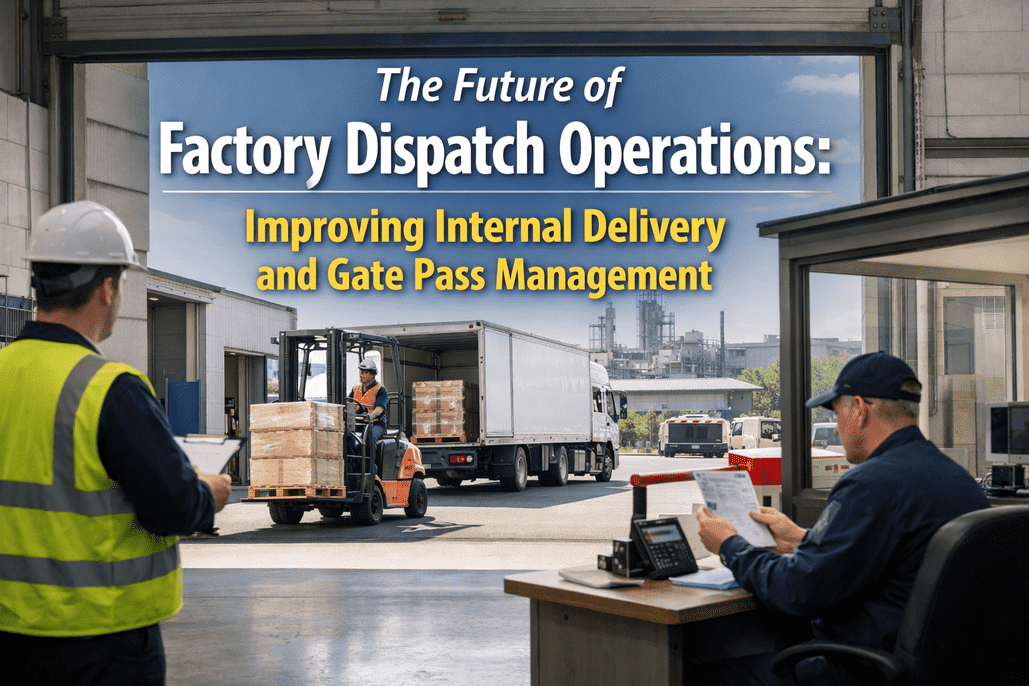
The Future of Factory Dispatch Operations: Improving Internal Delivery and Gate Pass Management
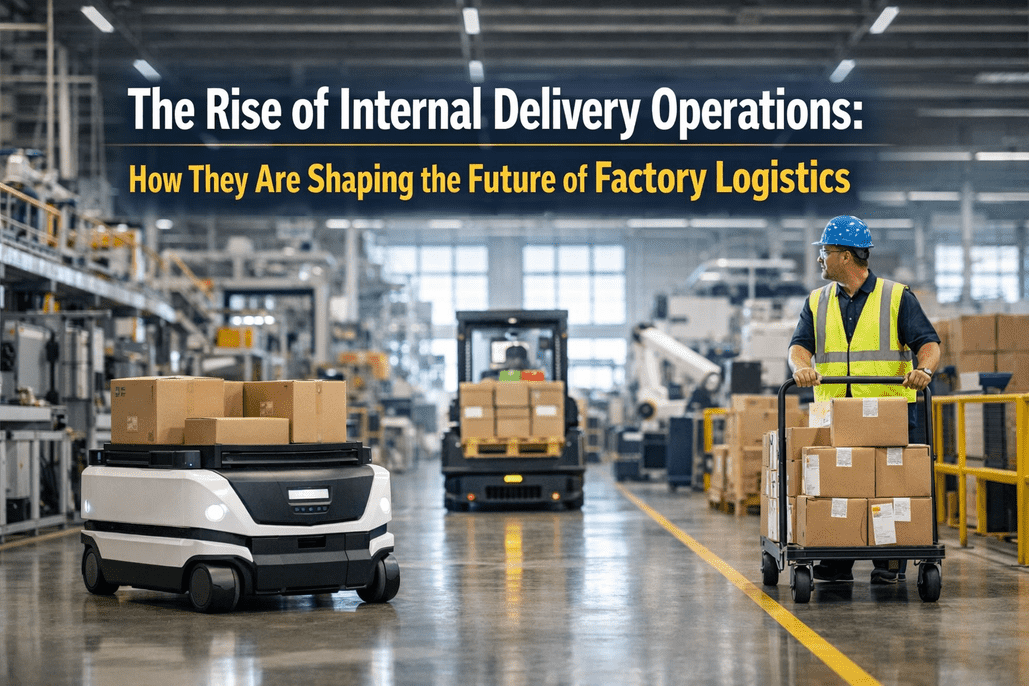
Gate pass management, inbound receiving, internal material movement, dispatch sequencing — these are the four pillars of a factory's internal delivery department. When all four run on paper and gut feel, the result is invisible cost, missed SLAs, and zero audit readiness. Here is how modern factories are transforming each pillar into a data-driven, measurable, digital operation.
The Factory Delivery Department Is Not a Logistics Company — It Is an Internal Control Function
When people think "delivery operations," they think last-mile courier fleets and e-commerce routes. The factory delivery department is an entirely different function. It is the internal control layer that governs every vehicle and every material movement entering or leaving the plant. It manages security clearance at the gate, receiving verification at the dock, chain-of-custody tracking across internal zones, dispatch loading and sequencing, pre-departure vehicle inspection, and incident escalation. Every single one of these functions generates data that today's paper-based operations throw away — and every single one of them has a direct financial consequence when it fails.
What Paper-Based Factory Delivery Operations Is Actually Costing You — Every Single Day
The cost of running the factory delivery department on paper is almost never calculated because nobody is measuring it. It shows up as production delays attributed to "material unavailability," SLA penalties attributed to "customer issues," compliance failures attributed to "documentation gaps," and maintenance costs attributed to "unexpected breakdowns." None of these have the delivery department's name on them — but all of them originate there.
How Modern Factories Are Digitalizing Their Delivery Department — Step by Step
Digitalization of the factory delivery department doesn't require a six-month ERP implementation or an IT project. The factories achieving the fastest results are deploying purpose-built delivery management platforms that go live in 7–14 days, starting with the highest-cost manual function first and expanding from there.
Paper-Based Factory Delivery vs. iFactory Digital Operations — The Full Comparison
8 KPIs the Factory Delivery Department Can Track from Day One of Digital Operation
These are the metrics that paper-based operations cannot see — and that digital delivery management makes visible from the first day of live operation.
What the Future of Factory Dispatch Looks Like — Results Within 30 Days
Factory Delivery Digitalization: Which Industries See the Fastest Results
Every manufacturing sector benefits from digital factory delivery operations, but regulatory environment and operational complexity shape where the urgency is highest.
Gate pass analytics, inbound receiving dashboards, real-time material location, SLA compliance tracking, vehicle inspection records, and incident trend analysis — all in one platform. Deploy in days. Measurable results in the first month.